

Your skin is more than just what you see in the mirror. It’s a reflection of your overall health and the care you give yourself every day. With so many products and trends online, it’s totally normal to feel confused about what your skin actually needs. The truth is: healthy skin doesn’t require complicated steps or expensive routines. It just starts with knowing your skin type and building consistent habits.
What is your skin type?
Different skin types need different care, so before you can care for your skin properly, you need to know what type of skin you have. The better you understand it, the better you can support it.
Your skin may belong to one of these common types:
Normal skin:
Your skin feels balanced - not too oily or dry, and doesn’t react much to products.
Oily skin:
Oily skin produces extra sebum, making your face look shiny, especially around your nose and forehead. You may also have more visible pores.
Dry skin:
If you have dry skin, it usually feels tight after washing, and sometimes you may also notice flaky patches.
Combination skin:
It’s when you get oily in your T-zone while your cheeks stay dry.
Sensitive skin:
You’ll feel uncomfortable right away when something’s wrong. Your skin is easily irritated and may react to products or environmental changes with redness and discomfort.
There is a simple test you can try at home to identify your skin type: wash your face with a gentle cleanser, pat it dry, and wait an hour without applying any products. Then notice how your skin feels. Is it tight? Comfortable? or Shiny?This can give you clues about what your skin needs.
How to build an effective skincare routine?
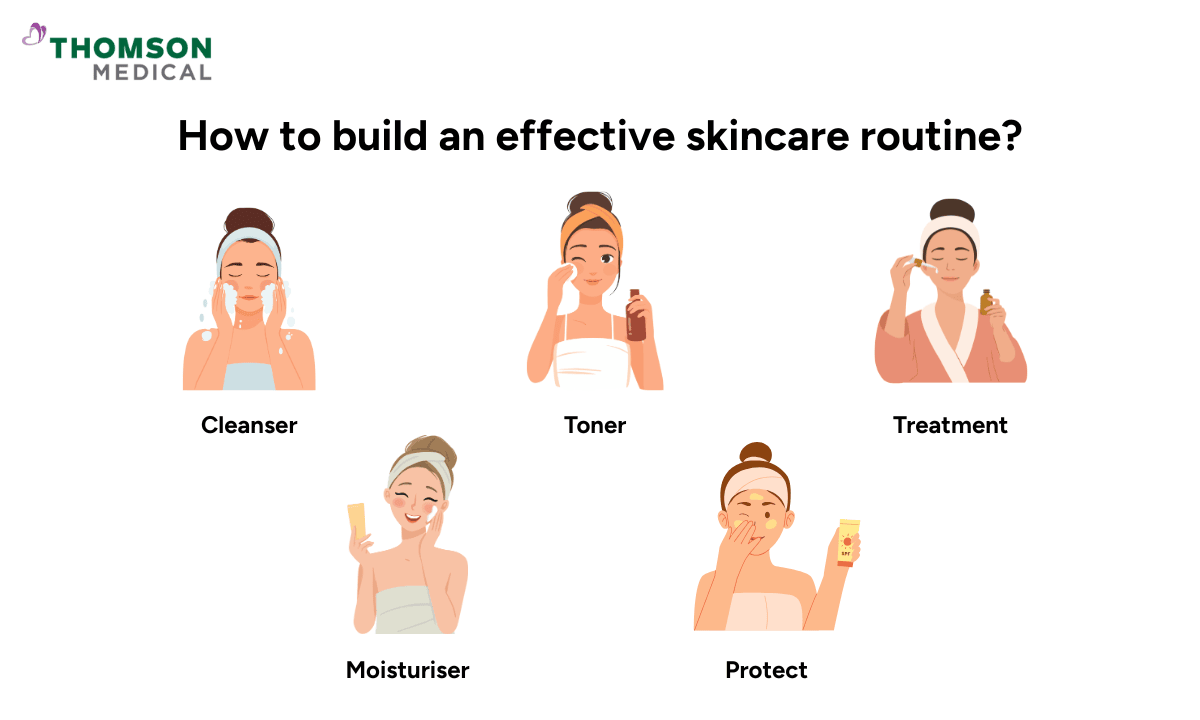
Once you understand your skin type, you can create a skincare routine that is suitable for your skin. A good skincare routine doesn’t have to be complicated or expensive. Instead, it’s about choosing the right products that work with your skin, not against it.
Essential steps you may need in a daily routine include:
Cleanser:
Cleansing helps remove dirt, oil, and impurities without stripping your skin. It’s best to avoid harsh soaps or very strong cleansers, as they can dry out your skin.
Toner:
This step is optional. Using toner helps balance your skin’s pH, making it easier for your skin to absorb the ingredients in the next steps.
Treat:
In this step, you’ll apply serums or treatments to target your specific concerns.
Moisturise:
Moisturising locks in hydration to keep your skin soft and protected.
Protect:
Finally, don’t forget to apply sunscreen during the day. You should consider using sun cream with SPF 30 or higher to protect your skin from UV rays.
Your routine can stay simple but effective. In the morning, focus on protection: Cleanse, moisturise, and, most importantly, apply sunscreen, even on cloudy or rainy days. In the evening, your focus shifts to repair and renewal. Washing off the day, then applying treatments and a good moisturiser, will help your skin recover while you sleep.
If you have dry skin, you can add a hydrating serum before your moisturising cream or lotion. This layering technique helps lock in more moisture and prevent flaking. However, if you have oily skin, lighter gels and lotions work better than heavy creams.
Your skin is unique, and finding the right routine may take some time. Be patient with yourself, and if you need help along the way, schedule an appointment with Thomson Medical.
Our skin specialist in Singapore
Loading...
Foods good for skin
What you put into your body shows up on your skin. No cream or serum can replace the glow that comes from within. That's why choosing food good for skin is one of the most important steps you can take.
Your skin needs a balanced diet that includes sufficient protein from both plant and animal sources, along with essential minerals such as iron and zinc.
Foods your skin will love include:
Colourful vegetables:
Vegetables like papayas, carrots, pumpkins, and spinach are rich in vitamin A, which helps your skin look fresh and renew itself.
Tomatoes:
Tomatoes are very helpful in protecting your skin from external damage and maintaining its youthful look.
Fatty fish:
Salmon, tuna, and sardines are good sources of omega-3 fatty acids, which keep your skin nourished and healthy.
Green tea:
Each cup shields your skin from daily environmental damage.
Water:
Drinking enough water helps your skin stay plump, fresh, and radiant.
The antioxidants in these foods also help remove free radicals that cause premature ageing and skin damage.
You don't need to change your entire diet overnight. Instead, you can start by adding one or two skin-loving foods to your meals and build from there. While there is no food that can transform your skin right away, consistently nourishing your body with these nutrients will create a strong foundation for your long-term skin health.
Daily habits that support your skin health

Beyond products and food, your daily habits also play an important role in how your skin looks and feels. With small and consistent actions, you can see a real change over time.
Here are some habits you can follow to support the health of your skin:
Be sun smart:
This may be the most important habit you can develop. Using sunscreen regularly protects your skin from UV radiation, which causes premature skin ageing, wrinkles, and pigmentation
Get enough rest:
Your skin repairs itself while you sleep. When you don’t get enough sleep, your skin doesn’t have the time it needs to recover. That’s why getting 7-9 hours of quality sleep at night is very important.
Manage stress:
Stress can trigger inflammation and worsen skin disorders. Gentle movement, meditation, or just doing something you love can help both your mind and skin unwind.
Avoid smoking:
Smoking accelerates ageing and damages your skin’s ability to heal and renew itself. Quitting this habit can make a difference in your skin health.
Moisturise regularly:
This habit is especially important if you have dry skin, skin allergies or inflammatory skin diseases like eczema. When your skin stays hydrated, it’s less prone to irritation, inflammation, and itchy rashes.
It may take some time and discipline to build these habits, but the healthier skin you gain along the way is truly worth your effort.
If you're dealing with persistent skin concerns, schedule an appointment with Thomson Medical for personalised guidance.
FAQ
How long does it take to see results from a new skincare routine?
Most routines usually need 4-6 weeks to work before you'll notice visible changes. Your skin cells naturally renew themselves over several weeks, so give products time to work. If you experience irritation or uncomfortable symptoms, reach out to your doctor for advice.
What factors affect skin health?
Many factors can influence your skin, including genetics, age, hormone levels, diet, sleep quality, stress, sun exposure, environmental pollution, and the products you use.
Even medications can affect how your skin behaves. This is why you may need a holistic approach to take care of your skin.
What are the best practices for maintaining healthy skin?
Consistently maintaining healthy habits and a lifestyle is key to having healthy skin. You can start by:
Protecting your skin from the sun daily
Maintaining a balanced diet and staying hydrated
Getting enough sleep and managing stress
Moisturising regularly and avoiding harsh treatments
Instead of investing in expensive or complicated formulas, listen to your skin and adjust your routine as needed.
Which skincare ingredients are most effective for healthy skin?
The most effective ingredients are the ones that match your skin's needs. Depending on your goals, you can consider these options:
Hyaluronic acid for hydration
Niacinamide for reducing redness and improving texture
Vitamin C for brightness
Retinoids for anti-aging
Ceramides for barrier repair
If you are unsure which ingredients you should focus on, consult your dermatologist. They will assess your skin conditions, discuss your concerns, and help you choose the ones that suit your specific needs.
How does ageing affect skin health?
As you age, your skin produces less collagen and elastin, leading to fine lines, wrinkles, and loss of firmness. Cell turnover slows down, and your skin may become drier.
While you can't stop ageing, sun protection, good nutrition, proper hydration, and appropriate skincare can help slow down the process.
How often should I change my skincare routine?
Your routine might need adjustments with seasonal changes, as you age, or when your skin's needs shift.
However, avoid switching products too frequently, give each routine time to work. If something isn't working after 6-8 weeks, or if you develop new concerns, that's when you and your doctor can explore changes together.
The information is intended for general guidance only and should not be considered medical advice. For personalised recommendations and advice based on your unique situation, please consult a specialist at Thomson Medical. Request an appointment with Thomson Medical today.
Dr Tan Hiok Hee
Dermatology (Skin)
Thomson Specialist Skin Centre (Novena Specialist Center)
English, Mandarin
.png%3Fbranch%3Dprod&w=640&q=75)