

If you have been experiencing heavy or painful periods, severe pelvic pain or persistent cramping, you may be wondering what is causing these symptoms. Fibroids are one possible cause, but another uterine condition called adenomyosis may also present with these symptoms.
As these conditions could overlap, it is not always possible to tell them apart based on symptoms alone. Knowing the differences between adenomyosis and fibroids, including how they are diagnosed and managed, may help you to have a clearer conversation with your doctor about your treatment options.
What are adenomyosis?
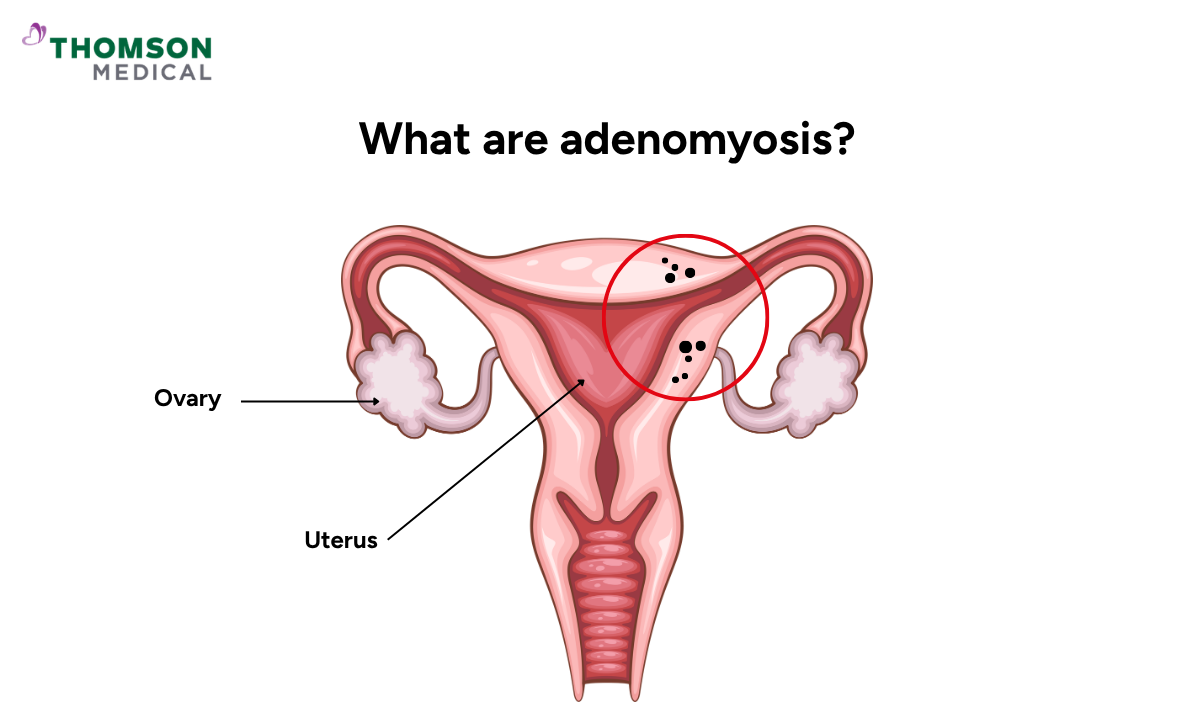
Adenomyosis occurs when the tissue that lines the inside of your uterus (the endometrium) grows into its muscle wall, causing it to become thickened and the uterus to become enlarged. The condition is commonly diagnosed in women between the ages of 35 and 50, particularly those who have had children.
Symptoms of adenomyosis
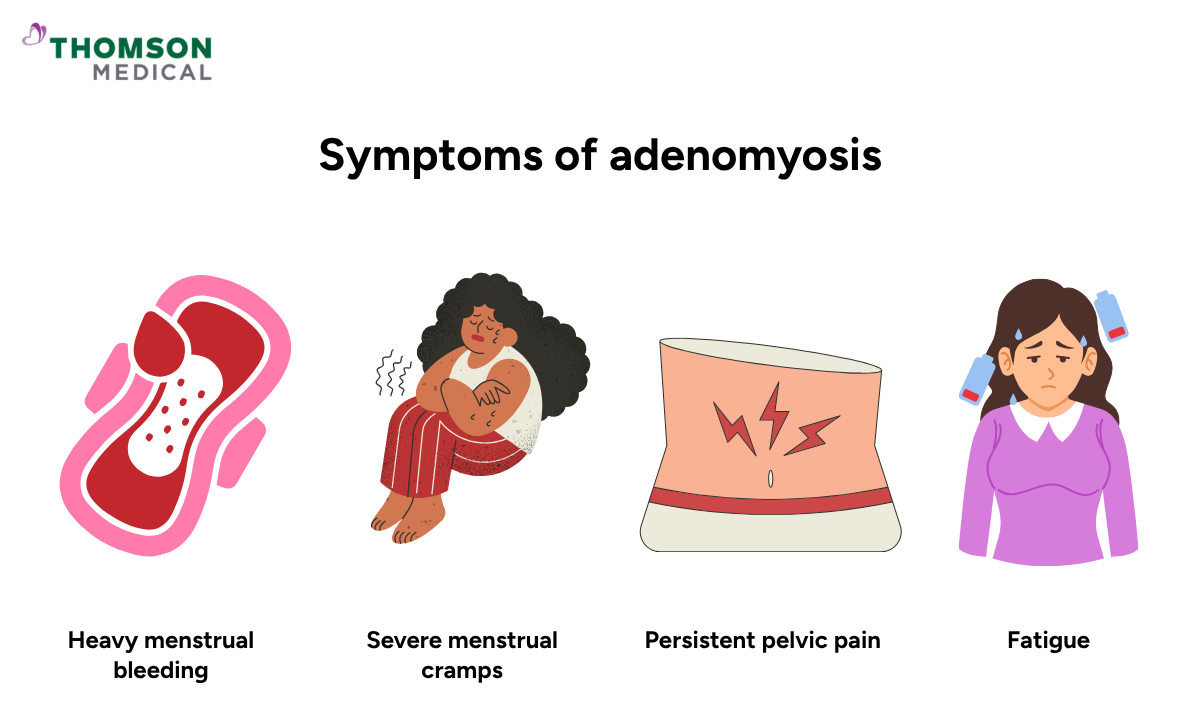
These symptoms may range from mild to more severe, and they may change over time. Symptoms may include:
Prolonged and heavy menstrual bleeding
Severe menstrual cramps (dysmenorrhoea)
Persistent pelvic pain, even outside of your menstrual cycle
Pain during sexual intercourse
An enlarged and tender uterus
Fatigue or iron-deficiency anaemia due to heavy menstrual bleeding
What may increase the risk of adenomyosis?
While the exact cause of adenomyosis is not fully understood, certain factors have been associated with a higher likelihood of developing the condition. These may include:
Previous uterine surgery, such as a caesarean section or dilatation and curettage (D&C)
Having given birth
Prolonged oestrogen exposure
Chronic inflammation of your uterine lining
Older age, as it tends to be more common in the years leading up to menopause
While these factors may increase your risk, having them does not necessarily mean that you will develop the condition. If any of these factors apply to you and you are experiencing symptoms, your doctor could help to clarify the cause.
What are fibroids?
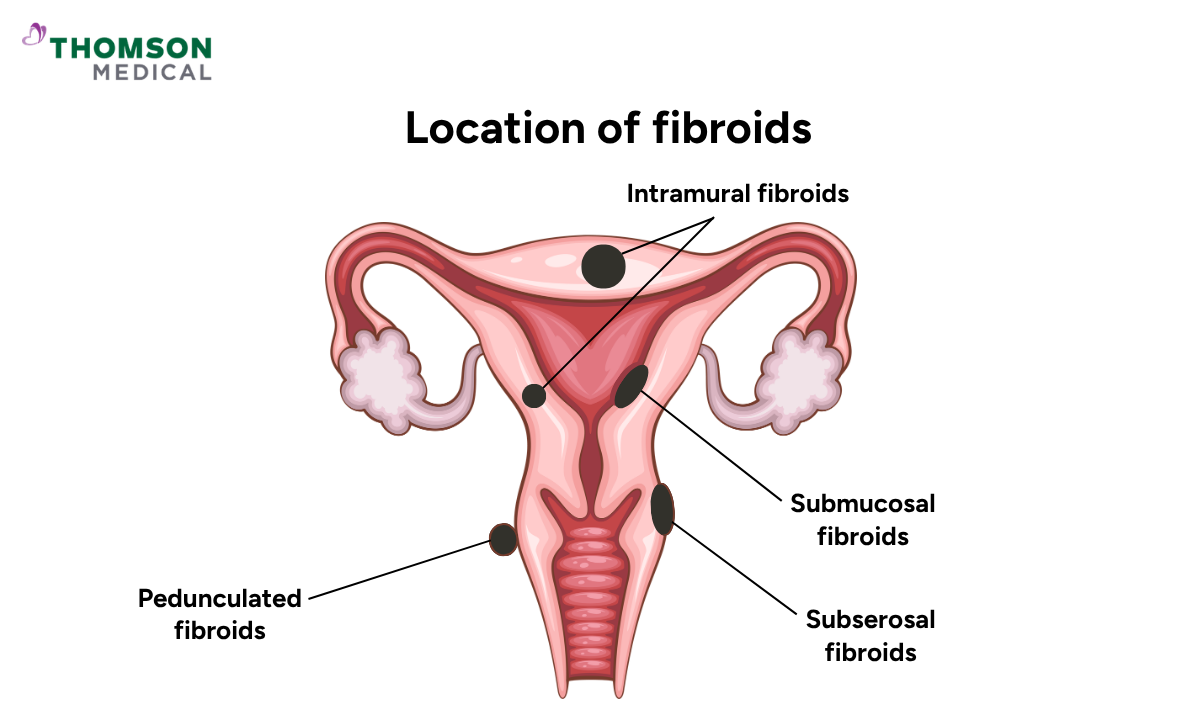
Fibroids are common non-cancerous growths that develop from the muscle of the womb. They may vary in size, from as small as a seed to as large as a melon, and may appear as a single growth or in clusters.
Fibroids are classified by location:
Intramural fibroids grow within your uterine wall and are the most common type
Submucosal fibroids grow into the inner cavity of your uterus
Subserosal fibroids grow outward from the outer surface of your uterus
Pedunculated fibroids are attached by a stalk and could be found either inside or outside your uterus
The location of a fibroid could influence whether it causes symptoms and the type of symptoms you may experience.
Symptoms of fibroids
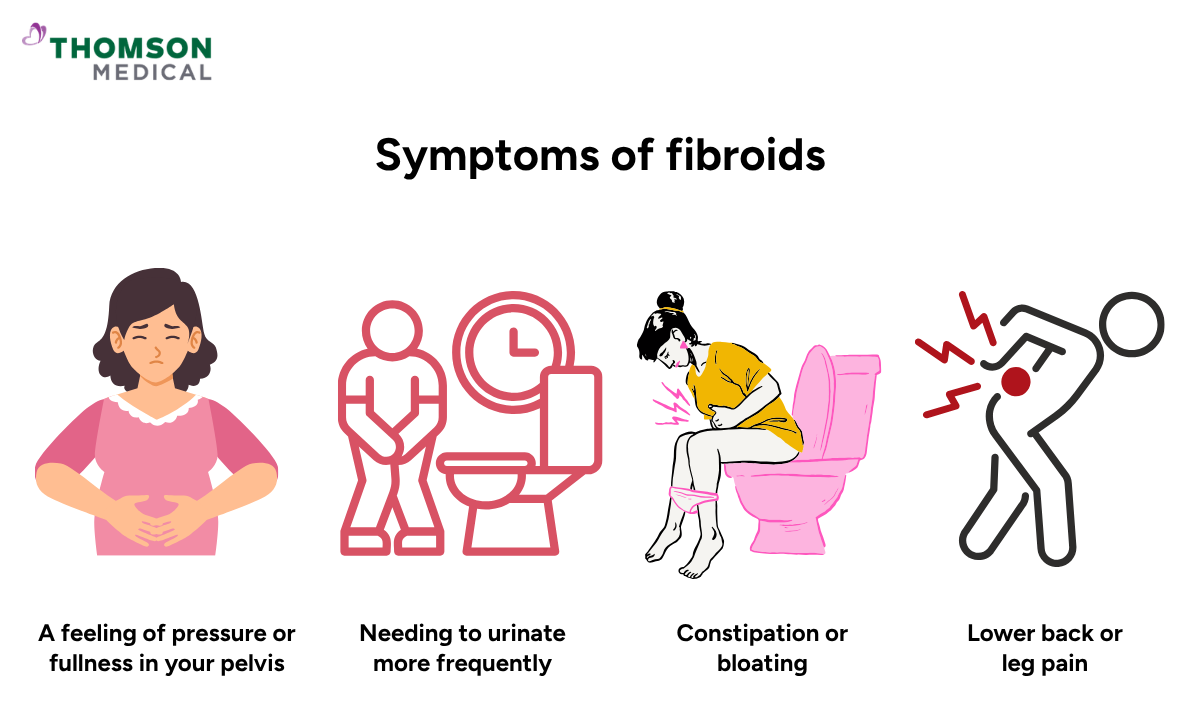
Like adenomyosis, you may have fibroids without noticing any symptoms. Many women only discover them after a routine scan.
You might experience:
Heavy menstrual bleeding and prolonged periods
A feeling of pressure or fullness in your pelvis
Needing to urinate more frequently
Constipation or bloating
Lower back or leg pain
Pain during sexual intercourse
What causes fibroids?
Fibroids often grow during your reproductive years and tend to shrink after menopause, showing how hormones influence their development.
Your risk of developing fibroids may be higher if you have:
High reproductive hormone levels
A family history of fibroids
Started your periods at an early age
A higher body weight
Low vitamin D levels
However, having these risk factors does not guarantee you will develop fibroids. If you have symptoms that concern you, speaking with your doctor is a good first step.
Experiencing heavy periods, pelvic pain, or pressure symptoms? Request an appointment with Thomson Medical to determine whether adenomyosis or fibroids may be the cause and explore suitable treatment options.
Our o&g specialists
Loading...
Differences between adenomyosis vs. fibroids
Although adenomyosis and fibroids may sometimes feel similar, they are actually different conditions. However, it is possible to have both conditions at the same time, which could lead to more severe symptoms.
Here is how the two conditions compare:
| Adenomyosis | Fibroids | |
|---|---|---|
What it is | Endometrial tissue within the muscular wall of the uterus | Non-cancerous growths arising from the muscle of the uterus |
Where it grows | Within the uterine muscle wall | Within, on the surface of, or projecting from the uterus |
Typical effect on the uterus | May cause the uterus to become enlarged | May alter the shape or size of the womb |
Symptoms may include | Heavy or painful periods and pelvic pain | Heavy bleeding, pelvic pressure, pain, or other symptoms depending on location and size |
How are they diagnosed?
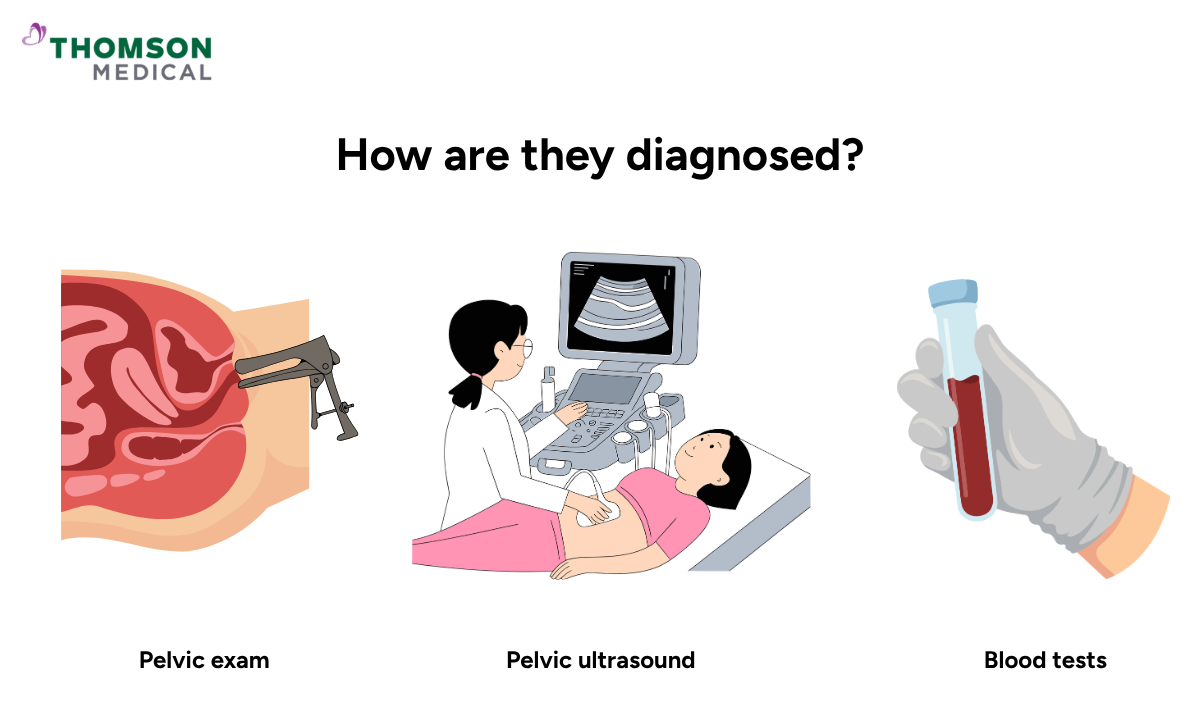
As these conditions have many similar symptoms, it is not always possible to tell the difference yourself. During your assessment, you can expect the following:
A pelvic exam to assess the size and texture of your uterus
A pelvic or transvaginal ultrasound, which is usually the first imaging test
An MRI scan, which may provide more detailed imaging and could be helpful for confirming adenomyosis
Blood tests to check for anaemia if heavy bleeding is present
What your doctor will look for to detect adenomyosis
Because adenomyosis affects your muscle wall rather than appearing as a distinct lump, it can be harder to spot on a scan. Instead, your doctor will look for the following:
An enlarged uterus
Thickening of your uterine wall
Areas within your uterine muscle that are less clearly defined
Thickening of the junctional zone on an MRI, which is a specific inner layer of the uterine wall
In some cases, the diagnosis may remain uncertain even after an examination. So, your doctor may also consider your symptoms, examination findings, and imaging results when assessing the condition.
What your doctor will look for to detect fibroids
Fibroids tend to be more straightforward to identify on imaging because they appear as distinct growths.
Fibroids may often be identified on ultrasound or other imaging because they typically appear as distinct growths. Your doctor will look for the following:
Well-defined, round masses with clear borders
Changes to the shape or contour of your uterus
Growths that vary in size and location within or around your uterus
Based on the imaging test, your doctor will guide you on the next steps and suitable treatment options.
Treatment options for adenomyosis and fibroids
Treatment for adenomyosis and fibroids can look different from woman to woman. The approach usually depends on your symptoms, age, overall health, and whether you plan to become pregnant.
Treating adenomyosis
Adenomyosis is usually managed rather than cured, unless the uterus has been medically removed. Most treatments focus on relieving symptoms and improving quality of life.
Medications to help manage symptoms include:
Hormonal contraceptives (such as pills, patches, or hormonal coils like IUDs) to help reduce bleeding and pain
Hormonal medicines, including progestins or GnRH agonists, to help manage bleeding and pain
Anti-inflammatory medicines such as ibuprofen for pain relief
Tranexamic acid to reduce heavy menstrual bleeding
Procedures to consider include:
Uterine artery embolisation, which blocks blood flow to affected areas and may reduce symptoms in some women
Hysterectomy, which involves removing the uterus, may be considered in selected cases when symptoms are severe and other management options are unsuitable or have not provided sufficient relief. It may not be an option for those who wish to carry a future pregnancy.
Because adenomyosis is influenced by hormones, symptoms may return if treatment is stopped before menopause. This is worth discussing when planning longer-term care with your doctor.
Treating fibroids
Fibroids do not always require treatment, particularly if they are not causing symptoms. When treatment is needed, options depend on factors such as the size and location of the fibroids, your symptoms and whether you wish to have children in the future.
Medications to help manage fibroids include:
Hormonal contraceptives such as the pill or a hormonal coil
Hormone injections that temporarily shrink fibroids before a procedure
Tranexamic acid
Treatment procedures may include:
Uterine artery embolisation, which cuts off the blood supply to fibroids to shrink them
Myomectomy, which removes fibroids surgically while preserving the uterus. This is an option to explore if you wish to preserve your fertility.
MRI-guided focused ultrasound is a non-invasive treatment that uses focused ultrasound energy to treat selected fibroids.
Hysterectomy
Fibroids may recur after a myomectomy, especially before menopause. Your doctor could advise whether follow-up is appropriate based on your individual circumstances.
When should you see a doctor?
If symptoms are persistent, worsening, or affecting your daily life, it is worth speaking with a doctor so that the possible causes could be assessed and appropriate management may be discussed.
See your doctor if you experience:
Periods that are very heavy or last longer than 7 days
Severe pelvic or period pain that affects your daily life
Pain during sexual intercourse
Difficulty getting pregnant
Symptoms such as frequent urination, bloating, or lower back pain that are getting worse
If your symptoms are affecting your daily life or not improving, request an appointment with Thomson Medical. Early assessment may help you explore more treatment options and prevent complications.
FAQ
Is adenomyosis more painful than fibroids?
Pain can vary considerably from women to women. Adenomyosis is commonly associated with painful periods and pelvic pain, while fibroids may cause pressure, heaviness, or pain depending on their size and location. Having severe symptoms does not necessarily indicate one condition over the other, so an assessment may be needed to understand the cause.
Can adenomyosis or fibroids affect my ability to conceive?
Both adenomyosis and fibroids may be associated with fertility difficulties in some women, although the impact varies depending on factors such as the location and extent of the condition.
For example, fibroids that affect the uterine cavity may have a greater impact on fertility than some other types. If you are trying to conceive, your fertility specialist can assess your individual circumstances and discuss whether treatment may be appropriate.
Do fibroids and adenomyosis go away after menopause?
Symptoms of both conditions may improve after menopause as reproductive hormone levels decline. Fibroids may shrink after menopause, although they do not necessarily disappear completely. Adenomyosis-related symptoms may also become less prominent after menopause.
Can birth control help with adenomyosis or fibroids?
Hormonal contraceptives and other hormonal treatments may help manage symptoms such as heavy bleeding and period pain. They do not remove fibroids or eliminate adenomyosis but may help reduce symptoms for some women.
Can you have adenomyosis and fibroids at the same time?
Yes, it is possible to have both conditions at the same time, and their symptoms can overlap. Your doctor may use a combination of your symptoms, examination findings and imaging results to assess which conditions may be present and discuss appropriate management options.
The information provided is intended for general guidance only and should not be considered medical advice. For personalised recommendations and tailored advice based on your unique conditions, request an appointment with Thomson Medical today.
Reference:
Marsh, E. E., Al-Hendy, A., Kappus, D., Galitsky, A., Stewart, E. A., Kerolous, M. (2018). Burden, prevalence, and treatment of uterine fibroids: A survey of U.S. women. Journal of Women S Health, 27(11), 1359-1367. https://doi.org/10.1089/jwh.2018.7076
For more information, contact us:
Thomson Specialists (Women's Health)
Thomson Women's Clinic (TWC)
- Novena:
6592 6686 (Call), 8611 8986 (WA) - Bukit Batok:
6569 0668 (Call), 8686 3525 (WA) - Choa Chu Kang:
6893 1227 (Call), 8282 1796 (WA) Jurong:
6262 8588 (Call), 6262 8588 (WA)- Katong (female doctor):
6970 2272 (Call), 8611 9020 (WA) - Punggol:
6243 6843 (Call), 8811 0328 (WA) - Sembawang: 6753 5228
- Sengkang: 6388 8125
- Serangoon (female doctor): 6382 3313
- Tampines: 6857 6266
- Tiong Bahru: 6276 1525