

If your doctor has recommended laparoscopic surgery, it is completely natural to feel uncertain or even a little anxious. You may be asking questions like “How is it different from traditional open surgery?”, “It is safe for my condition?”, and “What will my recovery look like afterwards?”
Laparoscopic surgery is a minimally invasive approach that many patients find allows for a gentler recovery. Understanding how it works, how it compares with open surgery, and the potential advantages can help you feel more informed and confident as you prepare for your procedure.
What is laparoscopic surgery?
Laparoscopic surgery (also called keyhole surgery) is a technique where operations are performed through small incisions rather than one large cut. It can be used for both diagnosis and treatment of various medical conditions.
For diagnosis, laparoscopy may be used to help identify conditions such as:
Appendicitis
Pelvic inflammatory disease
Liver cancer, ovarian cancer
For treatment, laparoscopy is commonly used to:
Remove organs such as the appendix or gallbladder
Hernia repairs
Remove ovarian cysts, prostate cancer, or liver tumours
Treat an ectopic pregnancy
Remove the womb (hysterectomy) or fibroids
Laparoscopic surgery is becoming increasingly popular worldwide, giving many patients a gentler surgical experience and a smoother path to recovery.
What makes laparoscopic surgery "minimally invasive"?
You've probably heard laparoscopy called minimally invasive surgery, but what exactly does that mean for you?
With laparoscopic surgery or keyhole surgery, your surgeon works through small incisions (usually 0.5 to 1 cm long). They slide a small camera, which is called a laparoscope, through one of these cuts so they can see inside your body on a high-definition screen. The other small openings are for the surgical instruments they need to complete the operation.
Laparoscopic VS open surgery: what is the difference?
The main difference comes down to incision size. Open surgery needs a larger cut so your surgeon can directly see and access the treatment area. Laparoscopic surgery uses some small incisions instead.
Open surgery often results in a longer, more visible scar on your chest or abdomen, while minimally invasive techniques leave just a few small scars that fade and become less noticeable over time.
But for most patients, what matters most isn't the scars – it's how you feel after surgery. A larger incision means more trauma, which usually means more pain and a longer recovery time.
Since laparoscopic surgery is easier on your body, you'll typically feel the difference during those first days and weeks of healing. That's when the benefits of this minimally invasive approach really show up.
5 key advantages of laparoscopic surgery
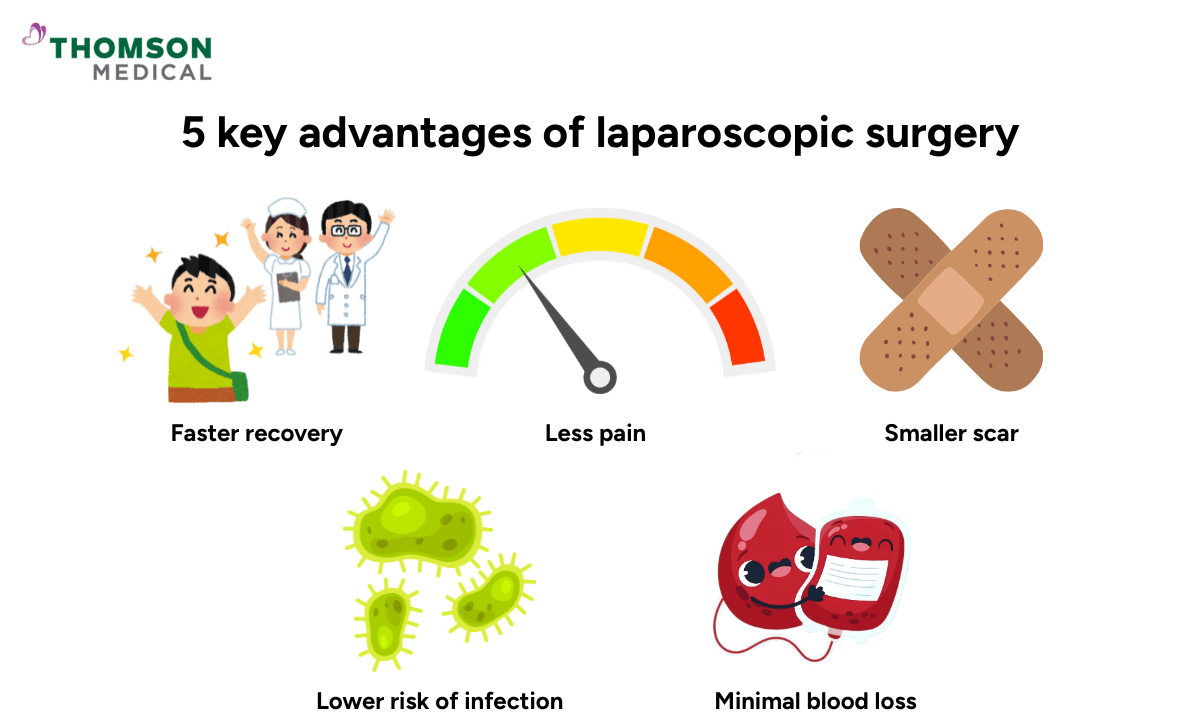
Laparoscopic surgery has been used for decades in millions of procedures around the world, and it has shown lots of advantages. For many people, that means effective treatment, less interruption to their daily routine, and faster recovery.
Faster recovery
One of the first questions people ask is, "How long until I feel like myself again?"
With minimally invasive surgery, recovery is usually much faster compared to open surgery. Most people go home within 1–2 days and get back to their regular activities within 1–2 weeks.
You won't need a long hospital stay, and you can usually return to work sooner. That can make a big difference, especially if you're managing family, work, or caring for others.
Less postoperative pain
Smaller incisions mean less tissue disruption, so you'll usually have less pain after surgery and need less postoperative pain medication.
Most patients describe discomfort as soreness or bloating rather than sharp pain, and the pain usually gets better within 3–5 days.
Smaller scar
You might not be thinking about scars before surgery, but they often matter once you're healing.
Laparoscopic incisions are small and usually placed in less visible spots. The scars are smaller and easier to hide, and many fade quite a bit overtime.
For many people, especially younger patients, having smaller, less noticeable scars helps them feel more confident and comfortable in their bodies after surgery.
Lower risk of infection
Smaller incisions mean less exposure of your internal tissues to the external environment, which lowers your risk of postoperative infection. You'll also likely need fewer antibiotics after surgery.
If you have diabetes, obesity, or other health conditions, infections can happen more easily, which is why this becomes an important factor.
Minimal blood loss
Because minimally invasive procedures damage less tissue, you often lose less blood during surgery. This can help reduce the chance of needing a blood transfusion and support a smoother, faster recovery, with fewer concerns related to anaemia.
Laparoscopic surgery is more than a technical advancement – it’s a patient-centred approach designed to reduce pain, support smoother recovery, and help you return to daily life sooner.
If you’re considering this option and would like to understand whether it’s right for you, our experienced doctors at Thomson Medical are here to guide you. Request a consultation to discuss your options with confidence.
Our specialist in laparoscopic surgery
Loading...
Who should not have laparoscopic surgery?
Minimally invasive techniques have many benefits, but they're not right for everyone.
Your doctor may not recommend laparoscopic surgery if you have:
Severe heart or lung disease:
Laparoscopic surgery requires inflating your abdomen with gas, which puts extra pressure on your heart and lungs.
This can make it harder for you to breathe or for your blood to circulate properly.
Extensive internal scarring from previous surgeries:
Scar tissue can change your normal anatomy, making it riskier to accidentally injure your organs or blood vessels.
Emergency conditions that require rapid open access:
Open surgery allows your doctors to get inside faster and gives them better control of bleeding or contamination.
Advanced or complex medical conditions:
Open surgery gives your doctor better visibility and more flexibility to handle anything unexpected that comes up during the surgery.
Since every case is different, your surgeon will look at your medical history, scan results, and overall health to decide what's safest for you.
Preparing for laparoscopic surgery
While your surgical team will walk you through the medical details, there are some things you can do beforehand to help your surgery go smoothly.
Follow pre-surgery instructions
You'll likely need to fast for 6-8 hours, stop certain medications, or adjust your supplements. These steps help keep you safe during anaesthesia and surgery.
Tell your doctor everything
Let them know about any past surgeries, medical conditions, allergies, or medications you're taking, including herbal remedies and vitamins. This helps your surgeon plan the safest approach for you.
Get enough rest and eat well
It's normal to feel anxious before surgery. Even if you're not sleeping or eating as well as usual, do your best to rest and eat balanced meals. Staying hydrated and well-fed helps your body get ready to heal.
Stop smoking if possible
Smoking slows down wound healing and raises your risk of complications. Even quitting a few weeks beforehand can make your recovery easier.
Set up help at home
If you need it, arrange for someone to help with childcare, household chores, or work. Having that support lets you rest instead of feeling like you need to get back to normal right away.
For many people, laparoscopic surgery makes the thought of having an operation less overwhelming. Its benefits, including smaller incisions, gentler recovery, and a quicker return to daily life, can offer reassurance during an already stressful time.
Every patient is unique, and the right surgery is the one that balances effectiveness, safety, and recovery in a way that fits your health needs and life circumstances. If you’re ready to explore your treatment options, request an appointment with Thomson Medical to meet our specialists today.
FAQ
What surgeries can be done laparoscopically?
Laparoscopy can be used for both diagnosis and treatment of various medical conditions.
For diagnosis, laparoscopy may be used to help identify conditions such as:
Appendicitis
Pelvic inflammatory disease
Endometriosis
Liver cancer, ovarian cancer
For treatment, laparoscopy is commonly used to:
Remove organs such as the appendix or gallbladder
Hernia repairs
Remove ovarian cysts, prostate cancer, or liver tumours
Treat an ectopic pregnancy
Remove the womb (hysterectomy) or fibroids
What are the benefits of minimally invasive surgical techniques?
Laparoscopic surgery has many advantages over open surgery. Most patients have:
Less postoperative pain
Shorter recovery times
Less time in the hospital
Smaller, less visible scars
What happens to your body after laparoscopic surgery?
After laparoscopic surgery, your body starts healing right away. You'll likely feel some swelling, soreness, or tiredness in the first few days, while your internal tissues continue healing over the next few weeks.
Do laparoscopy scars go away?
Laparoscopy scars usually fade a lot over time, but they may not disappear completely.
What are the long-term post-operative complications?
Most people do not experience long-term side effects after laparoscopic surgery. In rare cases, internal scar tissue, which is called adhesions, can form.
Do you lose body weight from a laparoscopy?
Laparoscopy itself won't make you lose weight. You might notice small, temporary changes on the scale during recovery, as you're eating less or moving differently than usual.
The information provided is intended for general guidance only and should not be considered medical advice. For personalised recommendations and advice based on your unique situation, please consult a specialist at Thomson Medical. Request an appointment with Thomson Medical today.
For more information, contact us:
Thomson Specialists (Women's Health)
Thomson Women's Clinic (TWC)
- Novena:
6592 6686 (Call), 8611 8986 (WA) - Bukit Batok:
6569 0668 (Call), 8686 3525 (WA) - Choa Chu Kang:
6893 1227 (Call), 8282 1796 (WA) Jurong:
6262 8588 (Call), 6262 8588 (WA)- Katong (female doctor):
6970 2272 (Call), 8611 9020 (WA) - Punggol:
6243 6843 (Call), 8811 0328 (WA) - Sembawang: 6753 5228
- Sengkang: 6388 8125
- Serangoon (female doctor): 6382 3313
- Tampines: 6857 6266
- Tiong Bahru: 6276 1525