

Many women assume that any growth found in the uterus is a red flag for cancer, but uterine fibroids are almost never cancerous and are far more common than most people realise. The question worth asking is not, "Are fibroids dangerous?" But, "Which symptoms should I look out for?”
Knowing what fibroids are, how they differ from cancerous conditions, and when to seek medical advice can help you feel calmer and more informed about your diagnosis.
What are uterine fibroids?
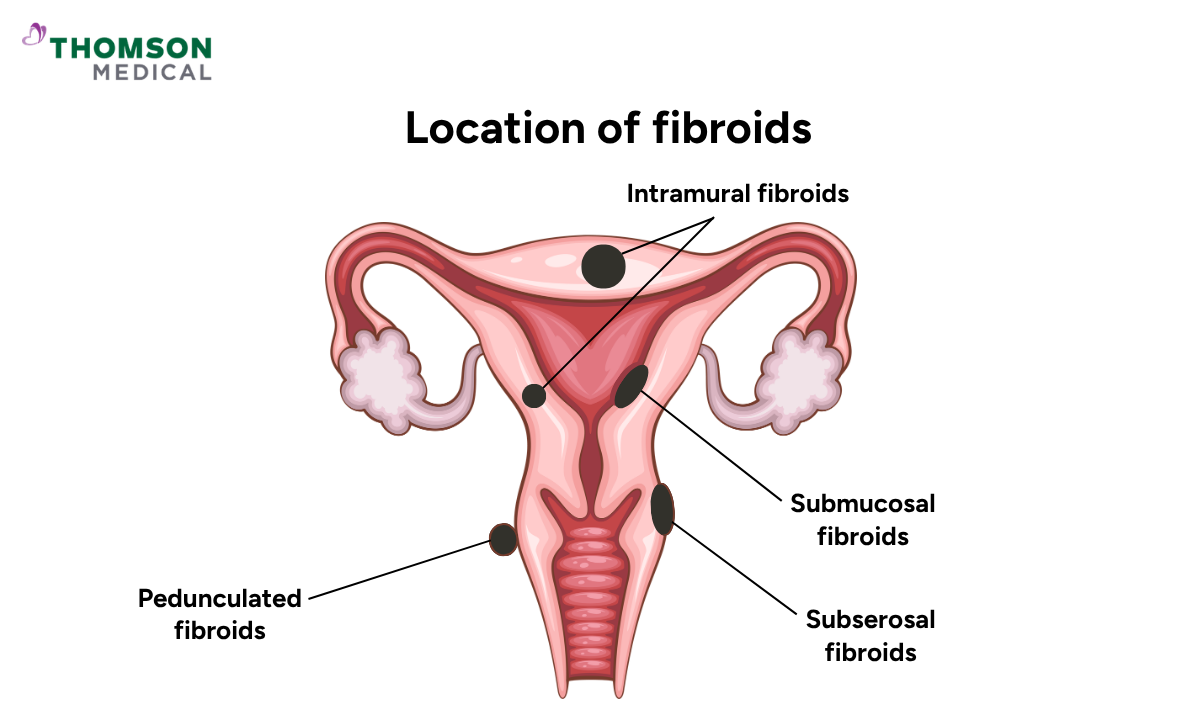
Uterine fibroids are benign (non-cancerous) growths that develop from the smooth muscle tissue of your uterus. They can vary in size, number, and location.
Depending on where they grow, they are described as:
Intramural fibroids grow within the wall of your uterus
Submucosal fibroids grow into your uterine cavity
Subserosal fibroids grow on the outer surface of your uterus
Pedunculated fibroids grow on a stalk attached to your uterus, either inside or outside the uterine wall
Because fibroids are sensitive to hormones, they tend to develop during your reproductive years and often shrink naturally after menopause.
How are fibroids different from uterine cancer?
While they may seem similar at first, they behave very differently in your body. The table below sets out the key differences.
Fibroids | Uterine cancer | |
Type | Benign (non-cancerous) | Malignant (cancerous) |
Spread | Do not spread | Can spread to nearby tissue |
Growth | May grow slowly or quickly, remain stable, or shrink | Rapid and aggressive |
Cells | Uniform and organised | Abnormal and disorganised |
Growth pattern alone cannot confirm whether a uterine mass is benign or cancerous. Fibroids can sometimes grow quickly for non-cancerous reasons. However, rapid growth, especially after menopause, should be assessed by a doctor.
Not sure how to tell the difference between fibroids and uterine cancer? Request an appointment with Thomson Medical for a thorough evaluation and personalised advice.
Can fibroids turn into cancer?
This is one of the most common concerns women have after a fibroid diagnosis, and it is a very fair question to ask. The short answer is no. Fibroids do not turn into cancer.
In rare cases, a cancer called leiomyosarcoma can develop in the muscle wall of the uterus. It is not usually thought of as a fibroid turning cancerous. Rather, it is a separate and rare cancer that can sometimes resemble a fibroid on scans.
Published risk estimates vary, especially among women undergoing surgery for presumed fibroids, so your doctor will assess your individual risk based on your symptoms, age, menopausal status and scan findings.
How doctors diagnose cancerous vs benign fibroids
Your doctor will not rely on just one test to understand what is going on. Instead, they will use a combination of tools to assess your symptoms and rule out anything that needs further attention.
These may include:
A detailed medical history and pelvic exam
An ultrasound scan
An MRI scan for a more detailed view
Blood tests, particularly to check for anaemia caused by heavy bleeding
A tissue examination if a biopsy or surgery is performed
Imaging can provide useful information, but it cannot always confirm whether a uterine mass is benign or malignant. If there is concern about the lining of the uterus, your doctor may recommend an endometrial biopsy.
If the concern is within the muscle wall of the uterus, a definite diagnosis may only be possible after surgical removal and laboratory examination of the tissue.
Why might your doctor order a biopsy?
If your doctor recommends a biopsy, it does not necessarily mean something serious is suspected. It is often a precautionary step to make sure nothing is missed, because a small number of uterine conditions can look similar to fibroids on scans but need a different type of care.
Two conditions that share symptoms with fibroids are worth knowing about.
Uterine sarcoma
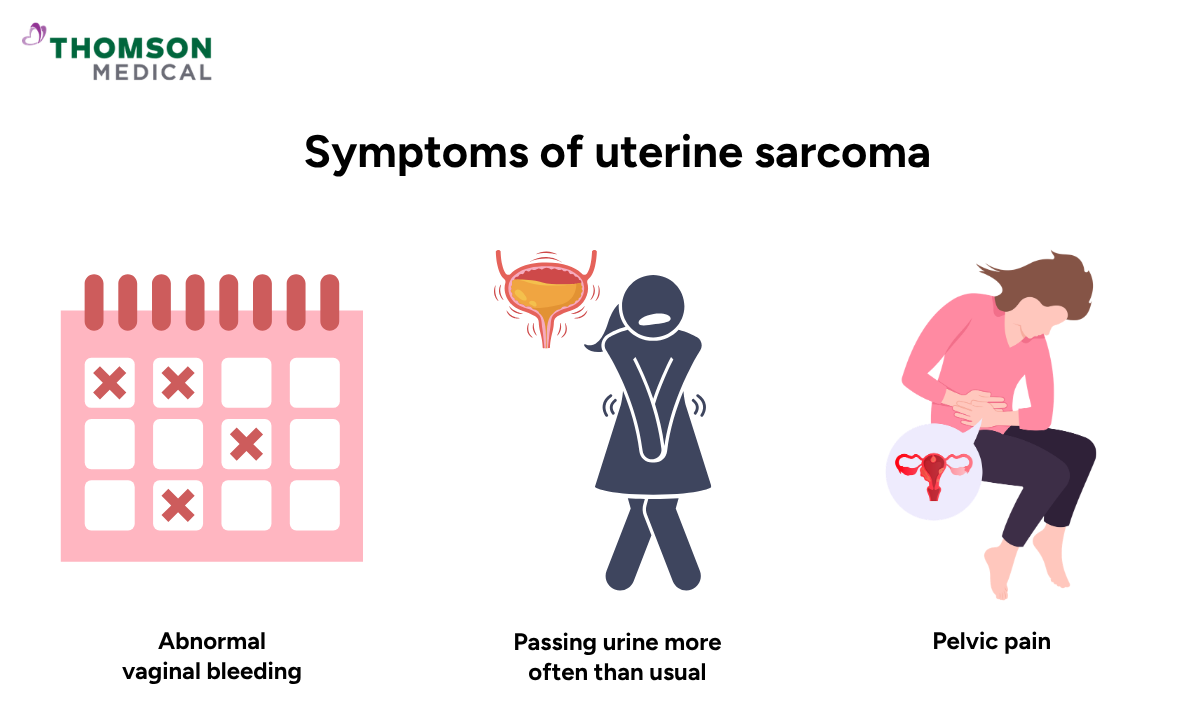
Uterine sarcoma that forms in the muscle tissue of the uterus. Because it can look similar to a fibroid on imaging, your doctor may want to examine the tissue more closely to be sure.
Even so, uterine sarcomas make up only about 2 to 5 percent of all uterine cancers, which makes them relatively rare. Uterine cancer is the fourth most common cancer affecting women in Singapore, but the majority of those cases are endometrial in origin, not sarcomas arising from the muscle tissue where fibroids form.
Symptoms that may appear with uterine sarcoma include:
Abnormal vaginal bleeding outside of your normal period
Passing urine more often than usual
Pelvic pain or a feeling of fullness in your lower abdomen
A rapidly enlarging uterus or pelvic mass
Endometrial cancer
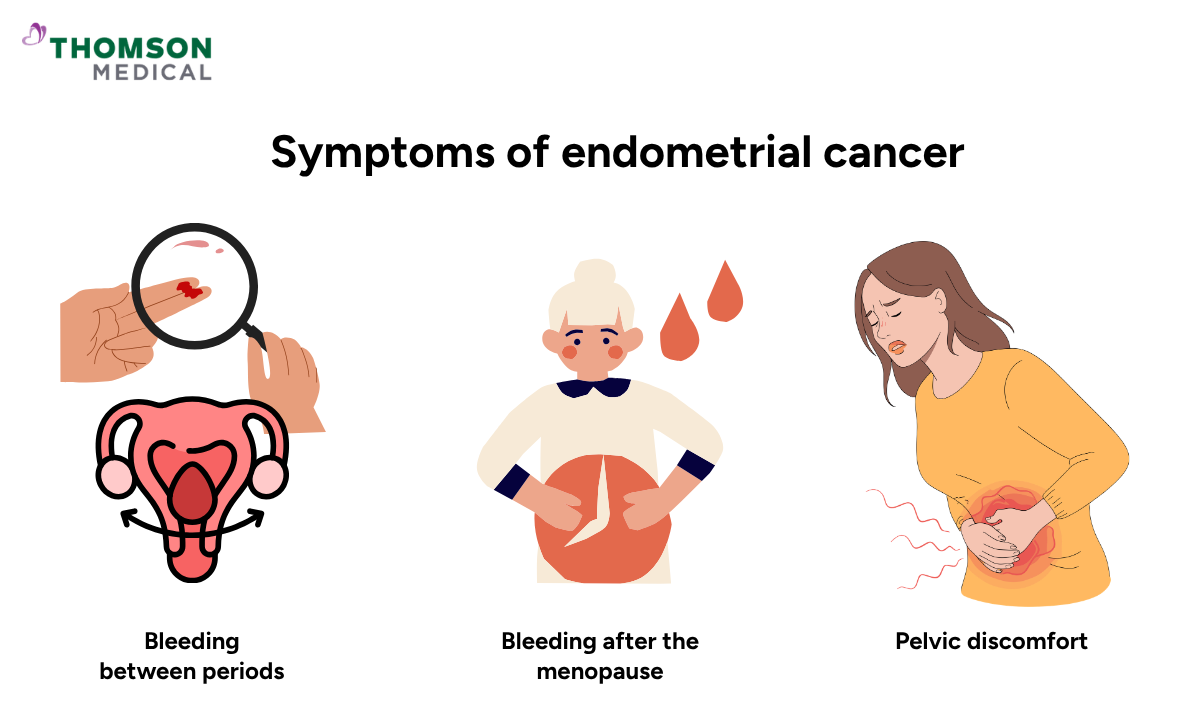
This type of cancer develops in the tissue that lines the uterus. It begins in a different layer of the uterus than sarcoma, but it can produce similar symptoms to fibroids, which is why further investigation is sometimes needed when the picture is unclear.
You may notice:
Bleeding between periods
Bleeding after the menopause
Pelvic discomfort
Unlike fibroids, endometrial cancer is most commonly diagnosed in women after menopause. Any bleeding once your periods have stopped should always be checked promptly, regardless of a prior fibroid diagnosis.
Our gynaecologists
Loading...
When fibroid symptoms may need further evaluation
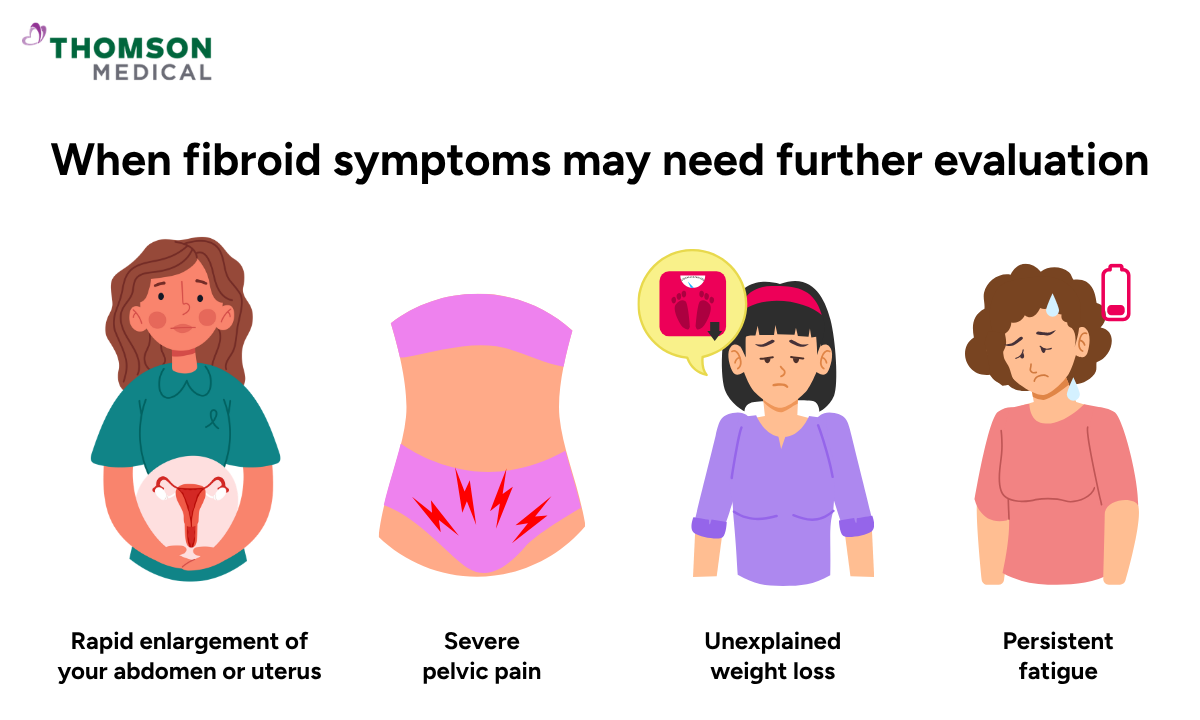
Most fibroids do not need urgent attention. However, certain symptoms overlap with conditions that should be checked sooner rather than later, especially those that appear after the menopause or worsen rapidly.
Speak to your doctor if you notice any of the following:
Rapid enlargement of your abdomen or uterus
Severe or worsening pelvic pain
Any bleeding after the menopause
Unexplained weight loss
Persistent fatigue that does not improve with rest
Any new or unusual symptoms after the menopause
None of these symptoms necessarily mean something serious is happening. Fibroids are very common and not cancerous. For most women, they are manageable with the right care and support from your doctor.
Experiencing symptoms such as postmenopausal bleeding or rapid changes in your abdomen can feel worrying. If this applies to you, request an appointment with Thomson Medical to ensure proper evaluation.
FAQ
Are fibroids cancerous?
No. The vast majority of uterine fibroids are benign (not cancerous) and do not turn into cancer.
What is a leiomyosarcoma, and how is it different from fibroids?
Leiomyosarcoma is a rare and aggressive cancer that develops from the smooth muscle of the uterus. Unlike fibroids, it tends to grow rapidly, spread into nearby tissues, and may spread to other parts of the body.
Can a biopsy determine if a fibroid is cancerous?
Biopsies are not usually done for fibroids, because sampling the tissue accurately can be difficult. In most cases, the fibroid needs to be surgically removed and examined before a clear answer can be given.
Do rapidly growing fibroids mean cancer?
Not usually. Fibroids can grow more quickly because of hormonal changes, pregnancy, or certain medications. However, rapid growth, especially after the menopause, is worth raising with your doctor.
Should I remove my fibroids to prevent cancer?
Removing your fibroids to prevent cancer is not usually necessary. Treatment decisions are based on your symptoms, the size and location of your fibroids, and your overall health and fertility plans.
Can an ultrasound detect cancerous fibroids?
Ultrasound can help identify fibroids and may show features that look unusual, but it cannot confirm cancer on its own. Further checks with MRI or tissue analysis are needed to confirm the diagnosis.
The information provided is intended for general guidance only and should not be considered medical advice. For personalised recommendations and tailored advice based on your unique situations, please consult a specialist at Thomson Medical. Request an appointment with Thomson Medical today.
Reference:
American Cancer Society. (2022, September 19). Key statistics for uterine sarcoma. https://www.cancer.org/cancer/types/uterine-sarcoma/about/key-statistics.html
National Registry of Diseases Office. (n.d.). Cancer registry. https://nrdo.gov.sg/publications/cancer
For more information, contact us:
Thomson Specialists (Women's Health)
Thomson Women's Clinic (TWC)
- Novena:
6592 6686 (Call), 8611 8986 (WA) - Bukit Batok:
6569 0668 (Call), 8686 3525 (WA) - Choa Chu Kang:
6893 1227 (Call), 8282 1796 (WA) Jurong:
6262 8588 (Call), 6262 8588 (WA)- Katong (female doctor):
6970 2272 (Call), 8611 9020 (WA) - Punggol:
6243 6843 (Call), 8811 0328 (WA) - Sembawang: 6753 5228
- Sengkang: 6388 8125
- Serangoon (female doctor): 6382 3313
- Tampines: 6857 6266
- Tiong Bahru: 6276 1525