

If you are planning to start IVF treatment or are currently undergoing it, you may wonder about the average number of cycles required for a conception to occur. However, this varies from woman to woman and depends on a range of factors.
Knowing which factors affect your chances and how to improve them could help you to make more informed decisions throughout your fertility journey.
What is an IVF cycle?
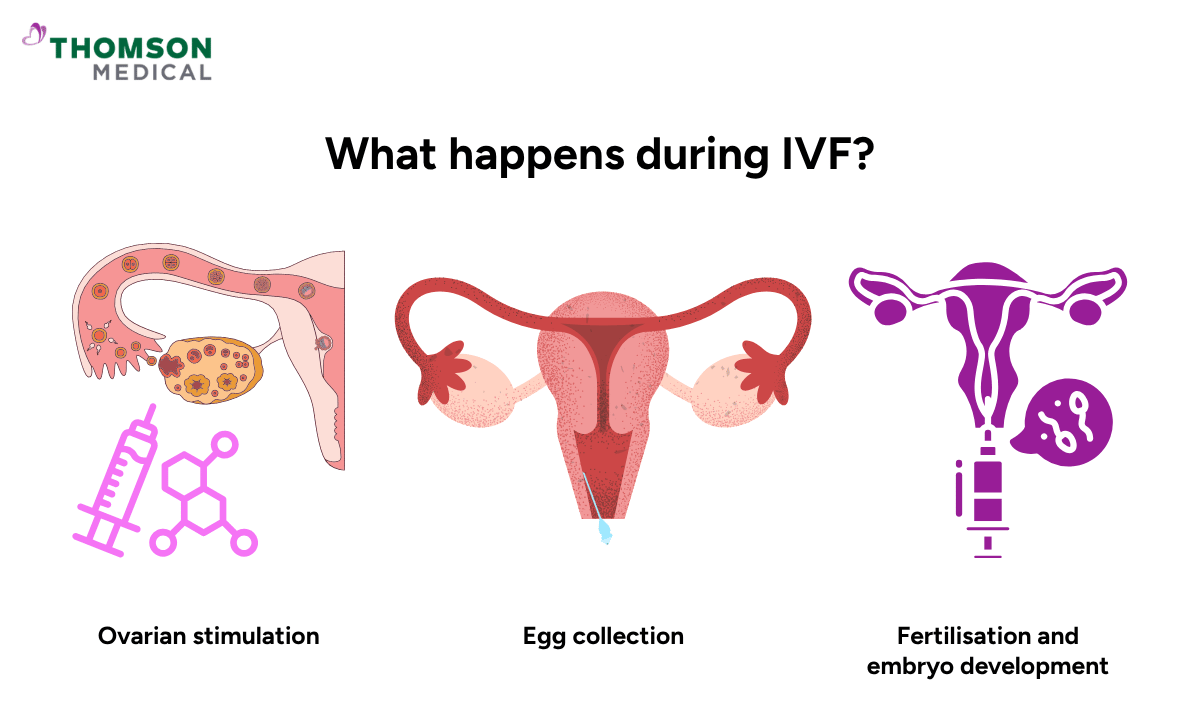
In vitro fertilisation (IVF) is a fertility treatment that helps women to conceive when pregnancy has not happened naturally. During IVF, eggs are collected from the ovaries and fertilised with sperm in a laboratory. If an embryo develops successfully, it’s then transferred into the uterus (womb), any remaining suitable embryos may be frozen for future use.
The process involves four main stages:
Ovarian stimulation:
Hormone injections to encourage your ovaries to produce multiple eggs
Egg collection:
A minor procedure to retrieve the eggs
Fertilisation and embryo development:
Eggs and sperm are combined in the laboratory, and the embryos are monitored over several days
Embryo transfer and pregnancy testing:
Your doctor transfers one embryo into your uterus, and you take a pregnancy test around two weeks later
From start to finish, a typical IVF cycle takes around 4 to 6 weeks, although the exact timeline may vary depending on your treatment plan.
What do IVF outcomes actually mean?
When fertility specialists talk about the outcomes of IVF treatment, they are usually referring to a successfully delivered baby. Although a positive pregnancy test is an encouraging milestone, it doesn’t guarantee that the pregnancy will continue to deliver. For this reason, achieving a successful birth is considered the most meaningful measure of IVF outcomes.
How many IVF cycles does it take before pregnancy?
Although there is no guaranteed number of cycles, the outcome of IVF tends to be cumulative. This means that your overall chance of becoming pregnant increases over several cycles rather than depending on any single attempt.
Studies in Singapore have also found that IVF outcomes vary by age. One study of 3,412 IVF/ICSI cycles at a fertility centre in Singapore found that the rates of pregnancy and successful delivery varied across age groups, with the most favourable results observed in patients under 30.
As your body condition may be unique to you, speaking with your doctor will allow for a more personalised treatment process. They may suggest reviewing your treatment plan after a few unsuccessful cycles to assess how your body has responded, identify anything that may be affecting your chances, and discuss whether any adjustments could help.
Our fertility doctors in Singapore
Loading...
What factors affect how many cycles you may need?
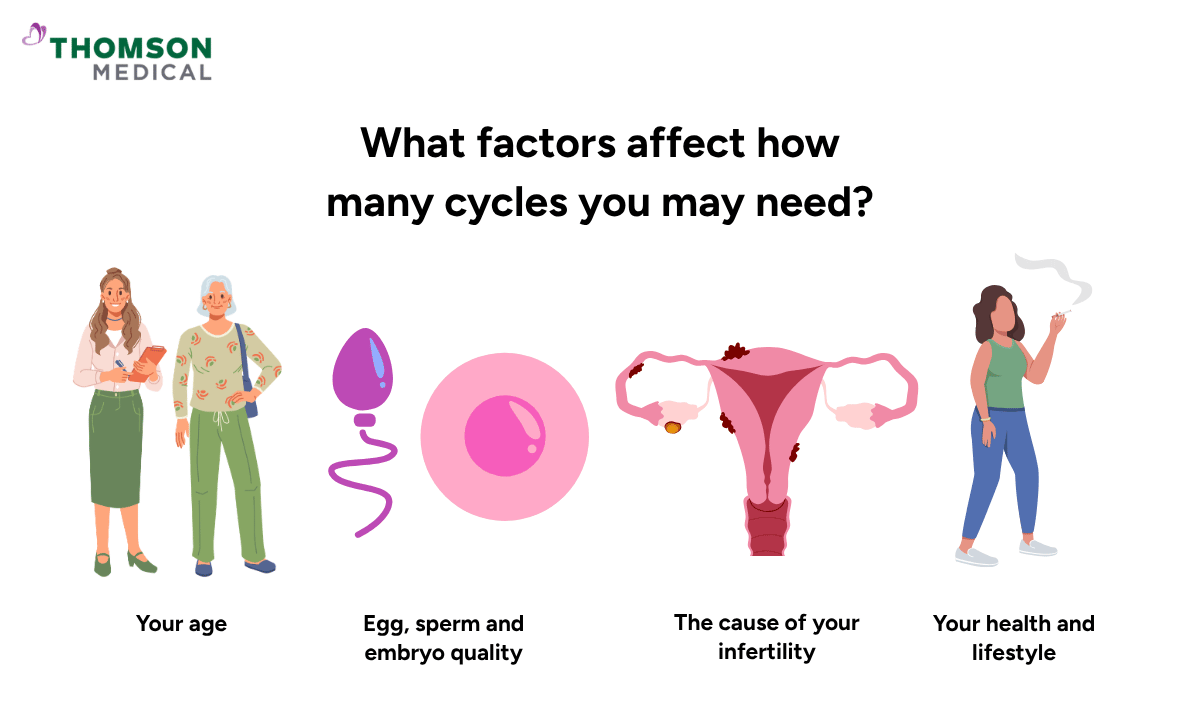
There are several factors that may influence both your chance of pregnancy in each cycle and the total number of cycles needed overall.
Your age
Age is one of the strongest predictors of IVF outcomes. From age 35 onwards, both egg quantity and egg quality naturally decline, which may affect fertilisation, embryo development, and implantation. For this reason, younger women often achieve success in fewer cycles than older women.
Egg, sperm, and embryo quality
Healthy eggs and sperm are more likely to produce healthy embryos, and good embryo quality improves the chance of implantation. When embryos are of better quality, fewer treatment cycles may be needed to achieve pregnancy.
The cause of your infertility
Different fertility conditions may affect how many IVF cycles are needed. Some causes, such as blocked fallopian tubes, are often treatable with IVF. Others, including endometriosis, diminished ovarian reserve (where the number of available eggs is lower than expected for your age), or a combination of fertility factors, may lower the chance of success in each cycle.
Your health and lifestyle
Day-to-day factors play a part. Smoking, high stress, and excess body weight could all affect egg and sperm quality, and some underlying medical conditions may make implantation or pregnancy more difficult.
Treatment choices
The choices you make on your treatment may also make a difference. For example, whether fresh or frozen embryos are used, or whether preimplantation genetic testing (PGT) is used to check embryos before they’re transferred.
If you are wondering how many IVF cycles you may need, request an appointment with our fertility specialists at Thomson Medical. They may be able to assess your individual circumstances and help you understand the factors that may influence your chances of pregnancy.
Why do IVF cycles sometimes not work?
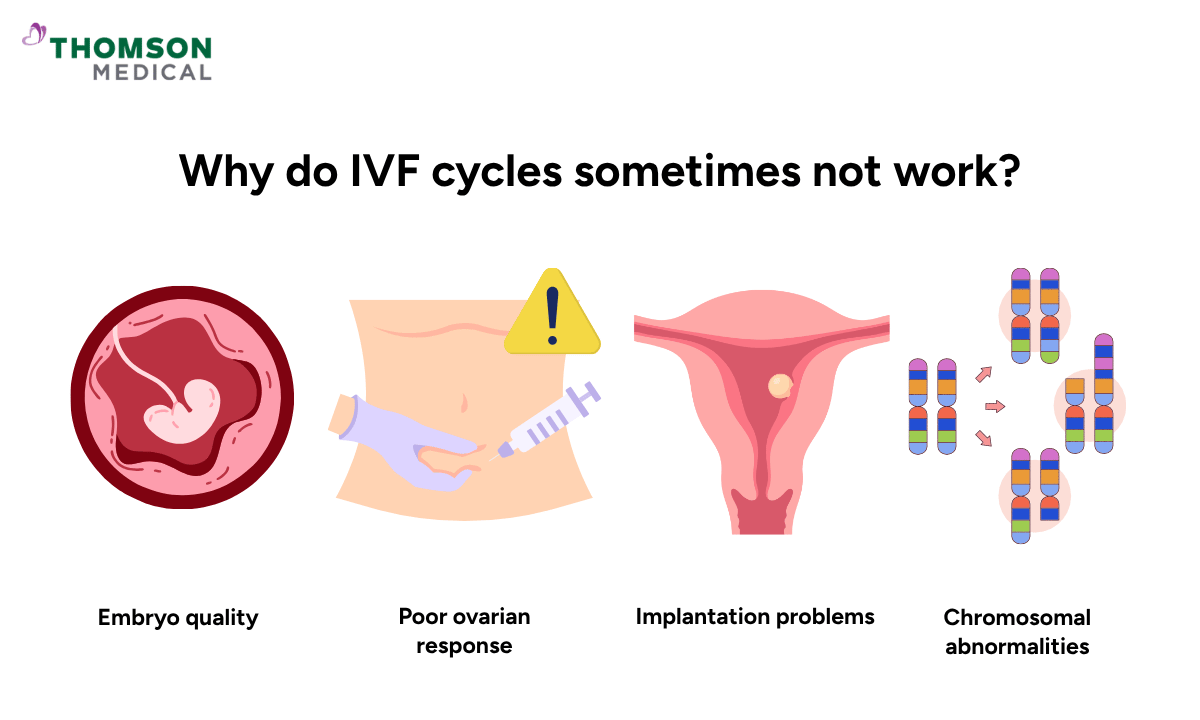
An unsuccessful cycle is difficult news, and it’s understandable to want to know why. Rather than indicating that IVF may not work, it often points to something specific that your doctor could investigate and address before the next cycle. Common reasons include:
Embryo quality:
An embryo may appear healthy in the laboratory but fail to develop normally after transfer.
Poor ovarian response:
Some women's ovaries do not respond as well to the stimulation medication.
Implantation problems:
Chromosomal abnormalities:
If the embryo has an incorrect number of chromosomes, the body may naturally reject it.
After a cycle that has not worked, your body goes through a process similar to a natural menstrual cycle. You may notice symptoms such as bloating, breast tenderness, and fatigue as the uterine lining sheds and bleeding similar to a period follows. Your doctor may be able to review what happened and discuss whether any adjustments to your plan might help going forward.
When should you consider stopping or changing your approach?
The decision to continue, pause, or explore other options is deeply personal and depends on factors such as your age, treatment response, emotional health, financial circumstances, and the advice of your fertility specialist.
It may be worth discussing a change in approach if:
You’ve undergone multiple unsuccessful cycles, often around 3 to 6, depending on your individual circumstances.
You’re over 45, when egg quality, implantation rates, and overall outlook rates tend to decline.
The emotional, physical, or financial impact of treatment is becoming difficult to manage.
If you decide to explore other options, your doctor could help you understand the alternatives available and what each path may involve.
How to improve your chances of an IVF outcome
No fertility treatment approach guarantees a pregnancy, but certain lifestyle habits support your reproductive health and improve your response to treatment.
These include:
Maintaining a healthy weight:
Maintaining a healthy weight may improve how your body responds to fertility treatment.
Stopping smoking:
Smoking may affect both egg and sperm quality and may reduce success rates.
Limiting alcohol intake:
Alcohol may affect fertility and treatment outcomes.
Prioritising sleep and managing stress:
Both may affect your hormone balance and your body's response to treatment.
Following your treatment plan carefully:
Timing and medication schedules are important during IVF.
Seeking emotional support:
Counselling, support groups, or trusted loved ones may help you cope with the challenges of treatment.
While these steps cannot remove every barrier, they may help you start each cycle feeling as healthy and prepared as possible.
Taking positive steps before undergoing IVF treatment could help you feel more prepared. Consider consulting a fertility specialist for guidance on lifestyle factors, treatment planning and emotional support. Request an appointment with Thomson Medical.
FAQ
Is it common to get pregnant on the first IVF cycle?
Some women do conceive during their first IVF cycle, though how likely this is varies from person to person. The likelihood of success depends on factors such as your age, embryo quality, underlying fertility conditions, and overall reproductive health.
Do IVF outcomes improve with each cycle?
The chance of pregnancy in any single cycle does not increase over time. In fact, the per-cycle outcome rate tends to fall with each attempt, from around 29% in the first cycle to approximately 17% by the sixth.
What does improve is the cumulative chance of pregnancy. Each additional cycle gives you another opportunity, and by the sixth cycle, research indicates that roughly 65% of women achieve a live birth.
How many IVF cycles are usually recommended?
There is no fixed number of IVF cycles that works for everyone. Because the outcome tends to build over more than one cycle, your specialist may suggest looking at your chances across several attempts rather than a single one. The right number for you is best decided together with your fertility specialist.
How long should I wait between IVF cycles?
You may begin another cycle after one normal menstrual period, although the exact timing will depend on your recovery, the treatment plan and your doctor's recommendations.
What affects IVF outcomes the most?
Several factors influence IVF outcome, including:
- Your age
- Egg and sperm quality
- Embryo quality
- Uterine health
- Underlying fertility conditions
The information provided is intended for general guidance only and should not be considered medical advice. For personalised recommendations and tailored advice based on your unique conditions, request an appointment with Thomson Medical.
References
Tan, T. Y., Lau, S. K., Loh, S. F., Tan, H. H. (2014). Female ageing and reproductive outcome in assisted reproduction cycles. Singapore Medical Journal, 55(6), 305-309. https://doi.org/10.11622/smedj.2014081
For more information, contact us:
Thomson Fertility Centre
- Paragon: 6252 7766
- Novena: 6399 3758, 8811 0358 (WA)