

You're excited to introduce your baby to solid foods, but the thought of them gagging or choking on pieces of food makes you nervous. You've heard about baby-led weaning and wonder if it's safe. After all, skipping purées and letting your baby self-feed seems risky.
Your concerns are valid, especially when you want to protect your little one. When done correctly, baby-led weaning can be a safe and beneficial approach to introducing solids. Knowing how to prepare foods properly and recognise the difference between gagging and choking can help you feel more confident as you start this feeding journey.
What is baby-led weaning?
Baby-led weaning is a method of introducing solid foods where your baby feeds themselves from the very start. Instead of being spoon-fed purees, your baby is offered soft, appropriately sized pieces of food that they can pick up and eat independently.
The term might sound confusing at first. ‘Weaning' means introducing solid foods alongside milk feeds, not stopping breastfeeding or formula feeding entirely. Your baby continues having their usual milk while gradually exploring solid foods.
Why baby-led weaning can benefit your baby
Baby-led weaning helps your baby develop important skills at every mealtime. When babies feed themselves, they practise hand-eye coordination and fine motor skills each time they eat.
These early skills set your baby up for later abilities like dressing themselves, playing with toys, and eventually learning to write.
Key benefits include:
Learning to recognise when they feel full, which may support healthy eating habits throughout childhood
Becoming comfortable with different textures and flavours
Practicing self-regulation of appetite
Enjoying social mealtimes with the whole family
Early exposure to varied foods may help prevent fussy eating as your child grows. Many babies become eaters who enjoy a wide variety of tastes and textures.
How do you know when your baby is ready?
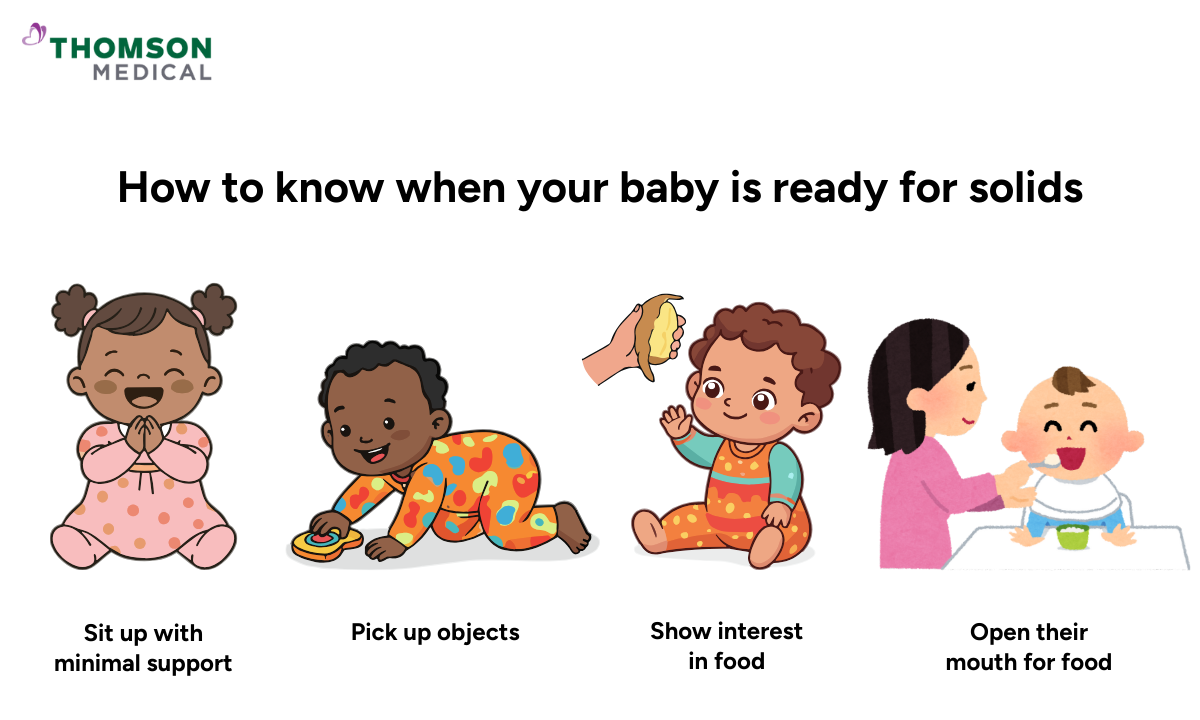
Most babies show signs of readiness for solid foods around six months of age. While some babies show interest in food earlier, waiting until around six months gives their digestive system time to mature.
Your baby is likely ready when they can:
Sit up with minimal support and hold their head steady
Pick up objects and bring them to their mouth
Show interest in food when others are eating
Reach for your plate or open their mouth when food comes near
Young babies automatically push food out of their mouths with their tongues because their digestive system isn't mature enough to process solids safely.
This tongue-thrust reflex needs to fade before your baby can keep food in their mouth to chew and swallow. Most babies lose this reflex around six months of age.
If you notice these signs and your baby is around six months old, they may be ready to start. When in doubt, speak with your doctor about your baby's individual development.
Our ParentCraft trainers
Loading...
How to start baby-led weaning?
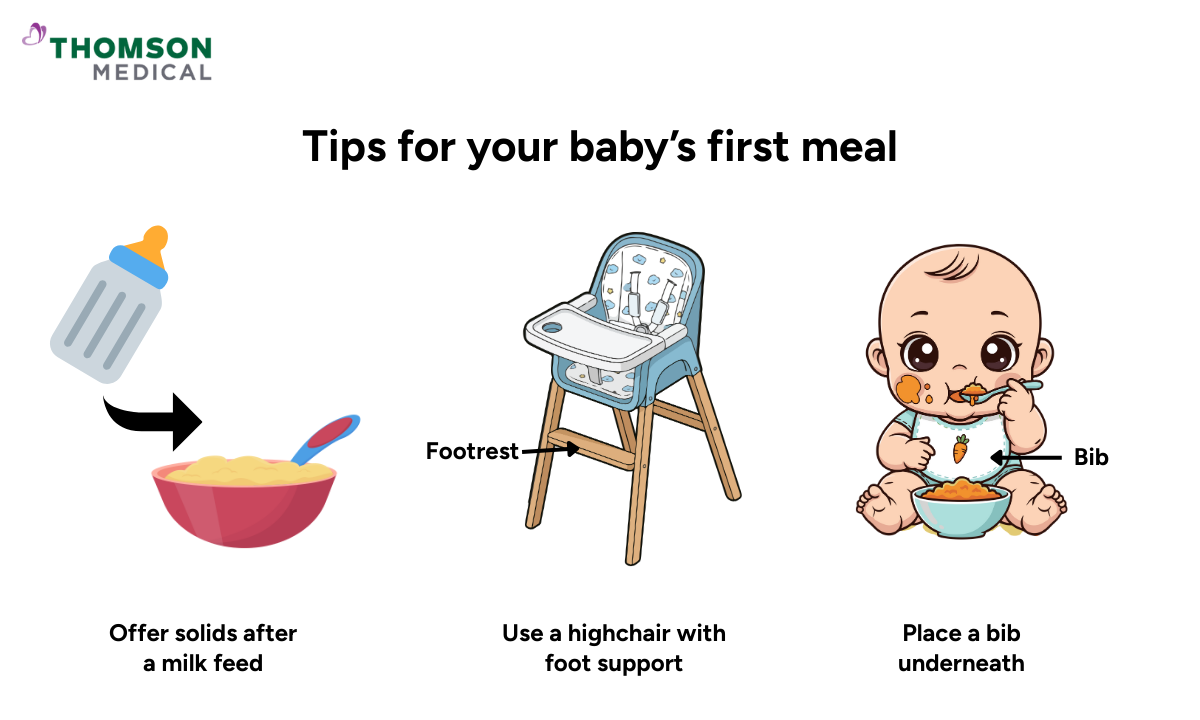
The first few meals might feel messy and chaotic, and it’ll start to feel easier when you take things slowly. Choose a time when your baby is happy and alert, not too tired or hungry.
For the baby's first meal, you can:
Offer solids after a milk feed at first
Use a sturdy highchair where baby can sit upright
Ensure their feet are supported on a footrest
Place a large bib or mat underneath to catch dropped food
Start with one or two pieces of food. Choose foods that are soft enough to squash between your fingers but large enough for your baby to hold. Stick-shaped pieces work well, as babies can grip them in their fists with some sticking out to chew on.
You can expect mess and play. Even when it looks like your baby is just squashing and dropping everything, they're learning how food feels and building the grip strength they'll need for using a spoon. By around 9 to 12 months, you'll notice them actually eating more and playing less.
Starting baby-led weaning can feel messy, but proper guidance helps your baby learn safely and confidently. Contact us to learn more about baby-led weaning at the Thomson ParentCraft Centre, where parents are guided on safe feeding techniques, food preparation, and practical tips for your baby’s first meals.
What first foods should you offer your baby?
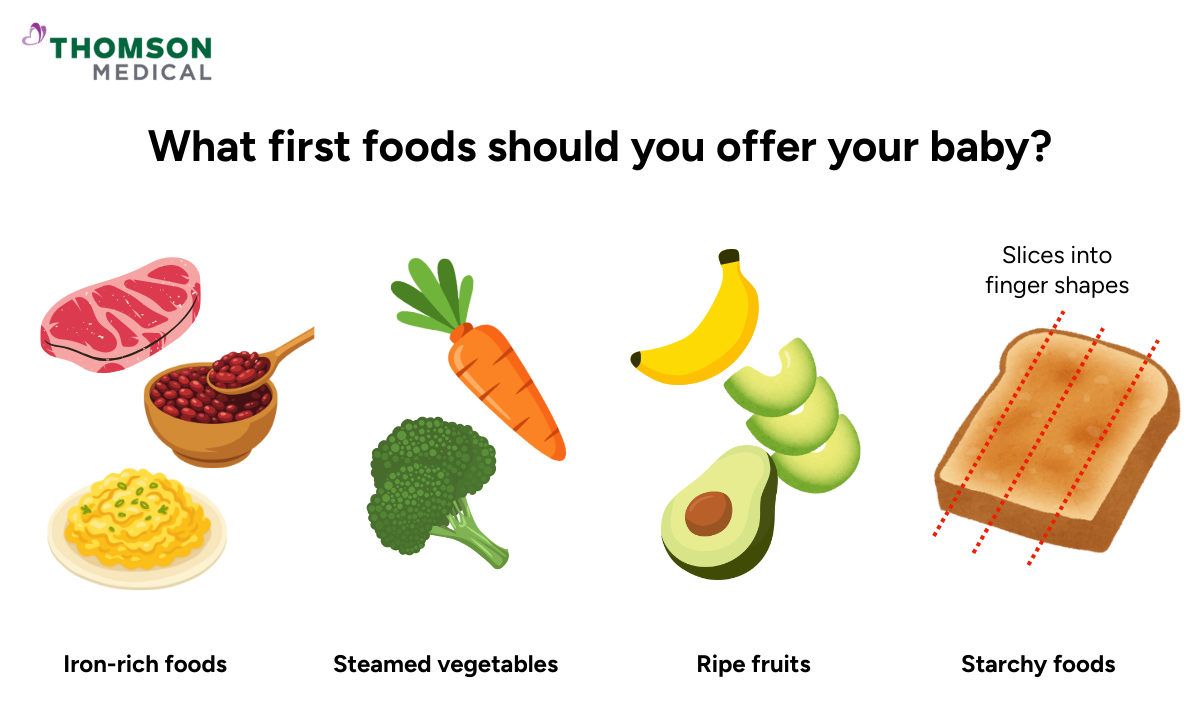
Starting around six months, focus on foods that are soft, easy to hold, and packed with nutrients. Your baby is just learning to coordinate their hands and mouth, so shape and texture matter.
Fruits and vegetables
Iron supports brain development and prevents anaemia. Around six months, babies benefit from iron-rich foods as their birth stores naturally decrease.
Iron-rich foods include:
Strips of well-cooked meat or fish
Scrambled eggs
Mashed beans
Steamed vegetables
Vegetables work beautifully when cooked until soft enough to squash between your fingers but firm enough for baby to hold.
Different coloured vegetables provide different nutrients:
Orange vegetables like carrots offer vitamin A for vision
Green vegetables like broccoli provide iron and folate
Ripe fruits offer natural sweetness and soft textures that are easy to manage:
Banana slices
Avocado slices
Mango chunks
Cut them into chunky stick shapes rather than thin slices or rounds. This makes them easier for little hands to grip.
You don't need to offer everything at once. Start simple and build gradually.
Starchy foods
Toasted fingers, well-cooked pasta, or soft rice cakes give sustained energy for play and development. These foods introduce your baby to different textures while being soft enough to gum safely.
Allergenic foods
Introducing eggs, peanut butter, fish, and dairy from around six months may help reduce the risk of developing allergies. If you have concerns about allergies, especially if there's a family history of allergies or eczema, speak with your doctor about the better approach for your baby.
Remember that milk remains your baby's main source of nutrition for now. Solid foods complement milk feeds rather than replace them during the first months.
What foods should you avoid?
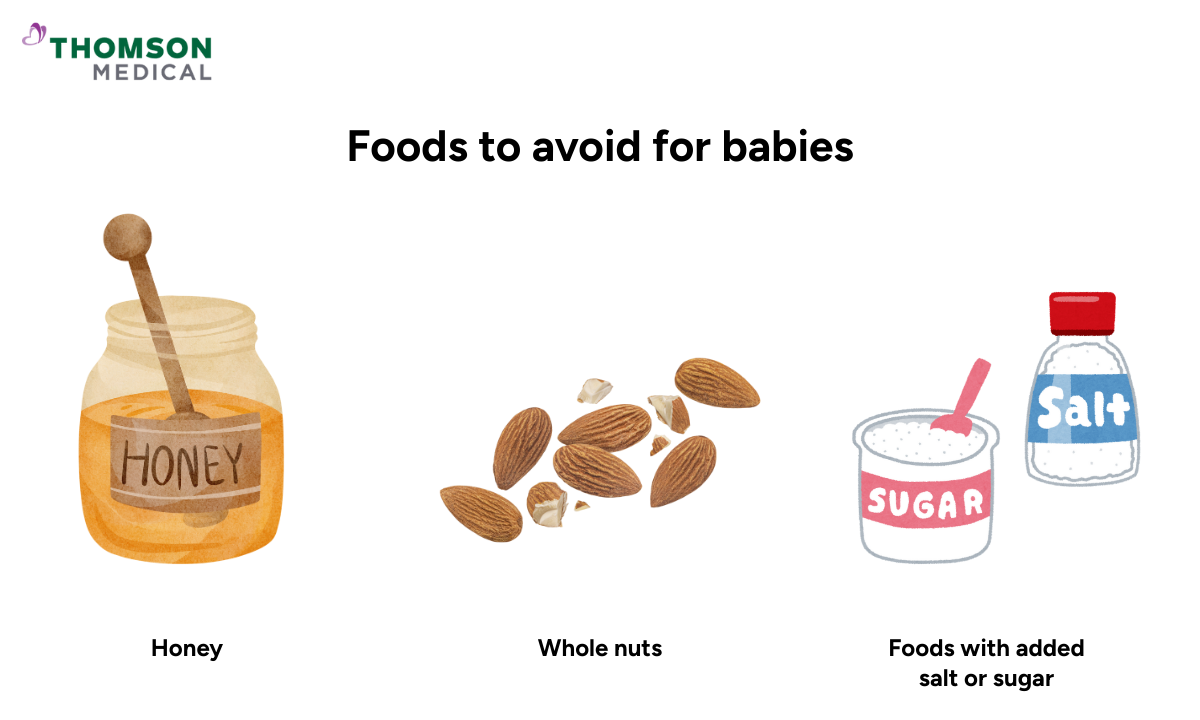
Many parents worry about keeping their baby safe while allowing them to explore independently. Some foods pose safety risks or aren't suitable for babies under one year.
Foods to avoid:
Honey (wait until after first birthday due to risk of infant botulism)
Whole nuts (choking hazard)
Foods with added salt or sugar
Your baby's kidneys cannot process excess salt, and early sugar exposure may influence taste preferences.
What if my baby gags while baby-led weaning?
Seeing your baby gag can be alarming, especially during the early meals. Your instinct might be to leap in and pull the food out or abandon baby-led weaning altogether because it feels too dangerous.
Gagging is your baby's protective reflex working exactly as it should. Your baby might cough, splutter, or push food forward with their tongue. It can look alarming, but it shows your baby's natural protective reflexes are working well. As they practise, gagging becomes less frequent.
Choking is silent. A choking baby cannot cough or cry. Learning infant first aid can give you confidence, helping you feel more prepared to handle emergencies and calm during mealtimes.
Understanding the difference between gagging and choking is key when starting baby-led weaning. Contact us to learn more about infant first aid courses at the Thomson ParentCraft Centre, where parents are taught how to respond confidently to choking emergencies and feel more at ease during mealtimes.
FAQ
What is traditional weaning?
Traditional weaning often involves spoon-feeding purees and using food pouches to introduce solid foods. Baby-led weaning takes a different approach, allowing your baby to feed themselves from the start and follow their own appetite cues.
When can my baby start baby-led weaning?
Most babies are ready for baby-led weaning around six months. Look for signs like being able to sit upright with good head control and sit safely in a high chair. These abilities help your baby explore foods comfortably and safely.
Does self-feeding help my baby’s development?
Self-feeding gives your baby wonderful opportunities to develop motor skills. Picking up different foods helps build fine motor skills and hand-to-eye coordination. Exploring various textures also helps your little one learn how to manage food in their mouth.
Can baby-led weaning meet my baby’s nutritional needs?
Yes. However, breast milk or formula remains the main source of nutrition in the early months. Foods rich in iron, protein, and healthy fats support your baby's growth as solid foods gradually become a bigger part of their diet.
Is baby-led weaning safe?
Baby-led weaning is safe when you follow basic safety guidelines. Gagging is normal and common as babies learn to manage food. This reflex actually protects them.
To keep mealtimes safe, offer foods in appropriate sizes and avoid whole nuts, peanuts, and very hard foods like rice cakes. Staying with your baby during meals helps you feel confident and respond if needed.
How do I introduce allergenic foods safely?
Common allergenic foods like eggs, dairy, fish, wheat, and nut butters can be introduced from around six months. Early introduction may actually help reduce the risk of food allergies. Avoid raw shellfish and unpasteurised cheeses for food safety reasons.
The information provided is intended for general guidance only and should not be considered medical advice. For personalised recommendations and tailored advice based on your unique situations, please consult a specialist at Thomson Medical. Request an appointment with Thomson Medical today.