

Noticing bleeding after a hysterectomy can feel worrying, especially when you are still recovering. Many women wonder whether this is part of the normal healing process or a sign that something needs medical attention.
In some cases, light bleeding or spotting can occur as the body heals after the procedure. However, certain types of bleeding may require a doctor’s review. Understanding what is considered normal after a hysterectomy – and when it's sensible to seek medical advice – can help you feel more confident during recovery.
What is a hysterectomy?
A hysterectomy is a surgery to remove the uterus. After the surgery, your menstrual cycle will stop, and natural pregnancy will no longer be an option. For that reason, this decision is always approached with care and consideration.
For many women, reaching this decision comes after months or even years of managing a condition that has affected their quality of life.
Some common reasons include:
Uterine fibroids that cause pain or heavy bleeding
Chronic abnormal uterine bleeding that hasn't responded to other treatments
Endometriosis or adenomyosis
Severe pelvic inflammatory disease
Uterine prolapse
Obstetric emergencies, where the surgery can be life-saving
Your doctor will only suggest this procedure when other treatments are not effective enough.
There are a few types of hysterectomy, depending on how much tissue is removed:
Total hysterectomy:
Both the uterus and cervix are removed. This is the most common type.
Subtotal (partial or supracervical) hysterectomy:
The uterus is removed, but the cervix is left in place.
Radical hysterectomy:
The uterus, cervix, part of the vagina, and surrounding tissues are removed. This is usually performed when cancer is involved.
Your doctor may perform the procedure through one of several approaches, including abdominal, vaginal, laparoscopic, or robotic, depending on your specific situation and medical history.
Each approach has its own benefits and considerations. Your doctor will help you understand which option is right for you and ensure that you can feel informed and confident before the procedure begins.
What is considered normal bleeding after a hysterectomy?
Some bleeding is completely expected after a hysterectomy. Of course, even if you’ve been warned about it, noticing blood after surgery can still feel concerning.
Your body has just been through a major procedure, and what you’re seeing is a part of the healing process. Most of the time, it doesn’t mean something is wrong.
What to expect week by week
Post-operative bleeding usually follows a gradual pattern as your body heals:
First 24-72 hours:
Light to moderate spotting is normal as your body begins to settle after surgery.
Weeks 1-2:
You may notice pink, brown, or watery discharge. Brown discharge is old blood clearing from your body.
Weeks 3-6:
Intermittent spotting may come and go as the internal sutures slowly dissolve.
After 6 weeks:
Bleeding should stop.
That said, every woman’s timeline is different. If your bleeding doesn’t seem to follow this pattern, or something just doesn’t feel right, it’s always worth checking in with your doctor.
Why does this bleeding happen?
The bleeding may come from:
Surgical tissues as they heal
The vaginal cuff – the sutured area at the top of the vagina where the uterus was removed – is gradually dissolving
Minor irritation of small blood vessels
You may also notice a small amount of bleeding after everyday movement, such as walking, standing, or climbing stairs, as these can temporarily increase pressure in the area.
Signs that your bleeding is normal
Normal postoperative bleeding is usually:
Light enough to be managed with just a pantyliner
No large clots
No strong smell
Getting lighter over time
If that sounds like what you’re experiencing, that’s a good sign your body is healing well.
It's worth paying attention to how your bleeding changes from week to week. The better you know what's normal for your recovery, the sooner you'll notice if something shifts.
If you're unsure about what you're experiencing, a visit to your doctor can give you the clarity and peace of mind you need.
What are the signs of abnormal bleeding?
Most bleeding after a hysterectomy is nothing to worry about. However, there are signs that you should pay attention to.
Signs to watch out for:
Bright red bleeding after the first week
Bleeding heavier than a normal period
Passing clots larger than a grape
Soaking through one or more pads per hour
Bleeding that restarts after it had stopped
Bleeding with pelvic pressure or sharp pain
A fever above 38°C (100.4°F)
Foul-smelling discharge (suggests infection)
Dizziness or shortness of breath (possible blood loss)
Having one or more of these signs doesn’t mean that something has definitely gone wrong. However, they do mean your body needs a closer look. If something feels off, it’s always better to reach out and be reassured than to wait and wonder.
If you notice any of the signs above, schedule an appointment with Thomson Medical. Our specialists can evaluate your symptoms and help you understand what your body needs.
Gynaecologists at Thomson Medical
Loading...
What causes abnormal bleeding after a hysterectomy?
When your body doesn't feel quite right after surgery, it's natural to want answers. If you're experiencing abnormal bleeding, knowing what might be behind it can help ease some of that uncertainty. The sooner a cause is recognised, the sooner it can be addressed.
Early causes (In the first two weeks)
This is when your body is doing the most active healing.
During this time, bleeding can sometimes be linked to:
Vaginal cuff bleeding
A collection of blood forming under the tissues (haematoma formation)
Inadequate vessel sealing
Infection at the surgical site
While this can feel worrying, most early causes can be managed safely with medical care.
Delayed causes (Weeks to months later)
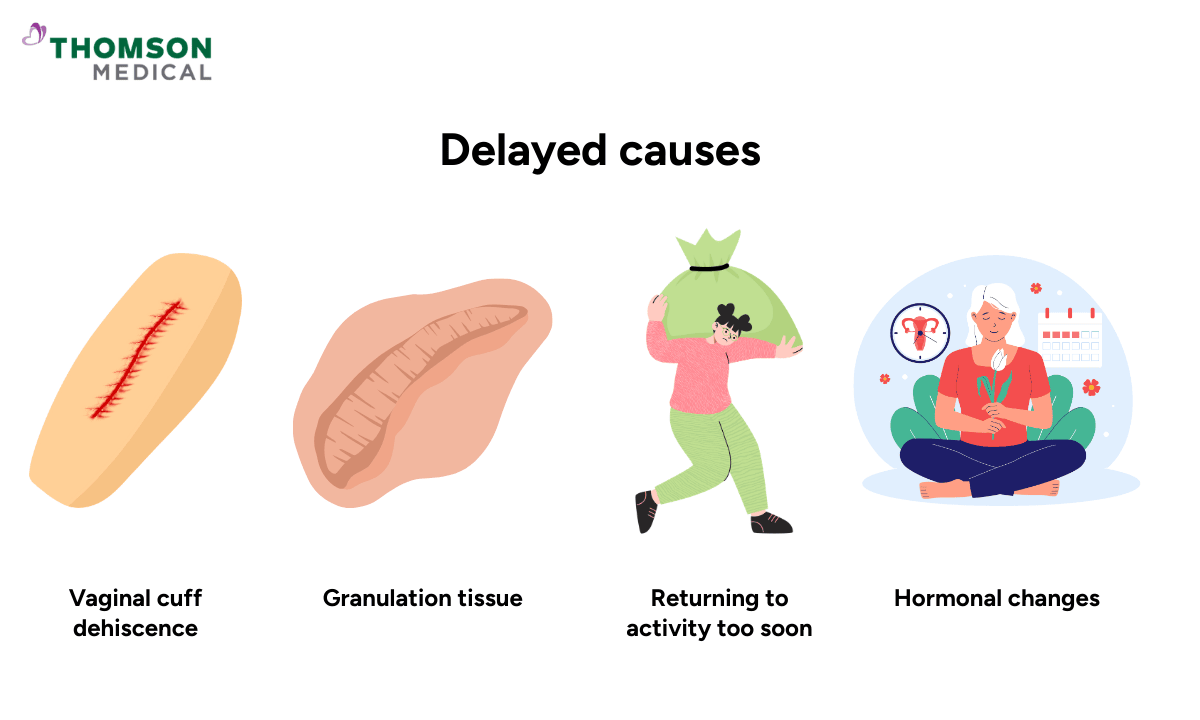
After the initial healing phase, you may experience bleeding, which can be due to:
Vaginal cuff dehiscence:
In rare cases, the vaginal cuff sutures can partially separate. This requires prompt medical attention.
Granulation tissue:
Sometimes your body produces too much healing tissue, causing persistent spotting. However, it’s actually quite treatable.
Returning to activity too soon:
Resuming sex or heavy lifting before your body is ready can put strain on healing tissues.
Underlying health factors:
Conditions like diabetes and smoking can affect how well and how quickly wounds heal.
Hormonal changes:
If your ovaries were removed during the procedure, the hormonal shift can affect vaginal tissue and occasionally contribute to bleeding.
If you notice any of these, it's important to let your doctor know. Many of them are treatable once caught early.
Less common causes
In rare cases, bleeding may be related to:
Injury to nearby structures, such as the bladder or bowel
Vaginal atrophy (thinning and dryness of the vaginal tissue)
Cancer recurrence (very rare)
These are uncommon, but they are why any unusual bleeding should always be evaluated rather than left unchecked.
Understanding the possible causes isn’t meant to worry you. Instead, it helps you feel informed and in control of your own recovery.
How can bleeding be managed after a hysterectomy?

When abnormal bleeding is identified, your doctor will assess what's happening and put together a plan that's right for your situation. Most cases are straightforward to manage, particularly when caught early.
Mild bleeding
For light or minor bleeding, the approach is usually simple:
Reducing activity:
Taking things slower and avoiding anything strenuous gives your body the space it needs to heal.
Pelvic rest:
This means avoiding sex, tampons, and douching while tissues are still recovering.
Staying hydrated and well-nourished:
Good nutrition can support the healing process.
For many women, bleeding often settles on its own within a few days.
Moderate bleeding
If bleeding is more than light spotting, your doctor will want to take a closer look. This might involve:
A vaginal examination to identify the source of the bleeding
Silver nitrate cauterisation – a straightforward procedure to seal off any small bleeding points
Medication such as tranexamic acid to help slow the bleeding
Antibiotics, if there are signs of infection
You will not need all of these. Your doctor will recommend the steps that are most suitable for your situation.
Severe bleeding
In more serious cases, treatment will be managed in a hospital setting.
This may include:
IV fluids or a blood transfusion to stabilise you
Imaging, such as an ultrasound or CT scan, to locate the source of the bleeding
Surgical repair of the vaginal cuff if it has opened or is bleeding
Emergency intervention if internal bleeding is identified
Severe bleeding is uncommon. But when it does happen, it’ll be managed with urgency and care. Your doctor will monitor you closely and support you throughout.
Whatever level of care you need, the goal is always to keep you safe, comfortable, and moving forward. Don't hesitate to speak up if something doesn't feel right. You deserve prompt attention and clear answers every step of the way.
If you're unsure whether your bleeding needs attention, schedule an appointment with Thomson Medical. Our specialists will assess your recovery and recommend the most appropriate care for you.
When to see a doctor
Recovery looks different for every woman, and it is not always easy to know what is worth a phone call and what can wait.
If something is keeping you up at night, whether it is a question, a worry, or just a feeling that something is not quite right, speaking to your doctor can help you figure out what to do next.
Call your doctor if:
Spotting is still happening after six weeks
Bleeding seems to be increasing rather than decreasing
You notice new bleeding after a period of feeling healed
These aren’t necessarily emergencies, but it’s still important to get them checked. A quick call or a visit to your doctor can help identify the cause early and address the problem promptly.
Go to emergency care immediately if you experience:
Bleeding heavy enough to soak through a pad in under an hour
Passing large clots
Fainting, dizziness, or sudden weakness
Severe abdominal or pelvic pain
Fever accompanied by bleeding
If any of these apply, don’t hesitate to go straight to your nearest emergency department or call for help. These symptoms can signal a complication that needs prompt treatment, and getting the right care early can prevent your issue from becoming more serious.
FAQ
Why is a hysterectomy performed?
To treat gynaecological conditions, like fibroids, endometriosis, cancer, or uterine prolapse, when other treatments haven't worked or aren't appropriate.
How long does bleeding last after a hysterectomy?
Most women experience some form of spotting or discharge for four to six weeks. By week six, it should have stopped. If it hasn't, it’s worth checking in with your doctor.
Is spotting normal 6 weeks after a hysterectomy?
Light spotting 6 weeks after a hysterectomy can still be within the normal range, especially as sutures finish dissolving. But if it's continuing beyond six weeks or getting heavier, that's worth checking.
Can hormonal changes cause bleeding after a hysterectomy?
Yes. If your ovaries were removed, the sudden drop in oestrogen can lead to vaginal atrophy over time, which may cause light bleeding, particularly with any friction or activity.
Can bleeding after a hysterectomy signal complications?
It can. Vaginal cuff dehiscence, infection, haematoma, and, in rare cases, internal bleeding are all possible causes of abnormal bleeding after a hysterectomy.
What does it mean if bleeding suddenly increases after it had stopped?
This needs prompt medical attention. Bleeding that returns or worsens after a period of recovery can point to cuff separation, infection, or granulation tissue. Don't monitor it at home – contact your doctor or go to A&E, depending on how heavy it is.
The information provided is intended for general guidance only and should not be considered medical advice. For personalised recommendations and advice based on your unique situation, please consult a specialist at Thomson Medical. Request an appointment with Thomson Medical today.
For more information, contact us:
Thomson Specialists (Women's Health)
Thomson Women's Clinic (TWC)
- Novena:
6592 6686 (Call), 8611 8986 (WA) - Bukit Batok:
6569 0668 (Call), 8686 3525 (WA) - Choa Chu Kang:
6893 1227 (Call), 8282 1796 (WA) - Jurong:
6262 8588 (Call), 6262 8588 (WA) - Katong (female doctor):
6970 2272 (Call), 8611 9020 (WA) - Punggol:
6243 6843 (Call), 8811 0328 (WA) - Sembawang: 6753 5228
- Sengkang: 6388 8125
- Serangoon (female doctor): 6382 3313
- Tampines: 6857 6266
- Tiong Bahru: 6276 1525
Notice
The range of services may vary between TWC/TS locations. Please contact your preferred branch directly to enquire about the current availability.
Request an Appointment