

Having a hysterectomy is a significant step, and it's completely natural to wonder how your body might change afterwards. One aftereffect of hysterectomy that often surprises women is changes to their breasts. You may notice shifts in how they feel, look, or respond to touch, which can feel unexpected if you're not prepared for it.
Many of these changes are a normal response to hormonal shifts after surgery. Understanding why they happen, what to expect, and which changes need medical attention can help you navigate this transition with more confidence.
How a hysterectomy affects your hormones
Oestrogen and progesterone, produced mainly by your ovaries, directly influence your breast tissue density, firmness, and sensitivity. Whether your ovaries were removed during the hysterectomy determines how significantly your hormone levels change and, in turn, how your breast tissue may respond.
If your ovaries were removed
Removing your ovaries causes a sudden drop in oestrogen and progesterone. This is known as surgical menopause, and it happens abruptly rather than gradually like natural menopause.
Surgical menopause brings a range of symptoms such as hot flushes, night sweats, vaginal dryness, and mood changes. Because the hormone shift is sudden, your breasts may respond more noticeably and more quickly than they would during a natural menopause.
In the first few weeks to months after surgery, you may notice breast tenderness, changes in firmness, or a difference in size. These changes most often appear within the first three to six months as your body adjusts to the new hormone levels. Most symptoms gradually settle over the following year. For some women, changes in firmness may be long-lasting, though this varies widely from person to person.
If your ovaries were kept
Your ovaries will continue producing hormones, so any breast changes tend to be more subtle. Some women do notice minor shifts, possibly linked to temporary hormonal fluctuations during the healing process.
For most women whose ovaries were kept, any breast changes that do appear settle within a few weeks to months as their bodies complete their healing.
What breast changes after hysterectomy surgery might you notice?
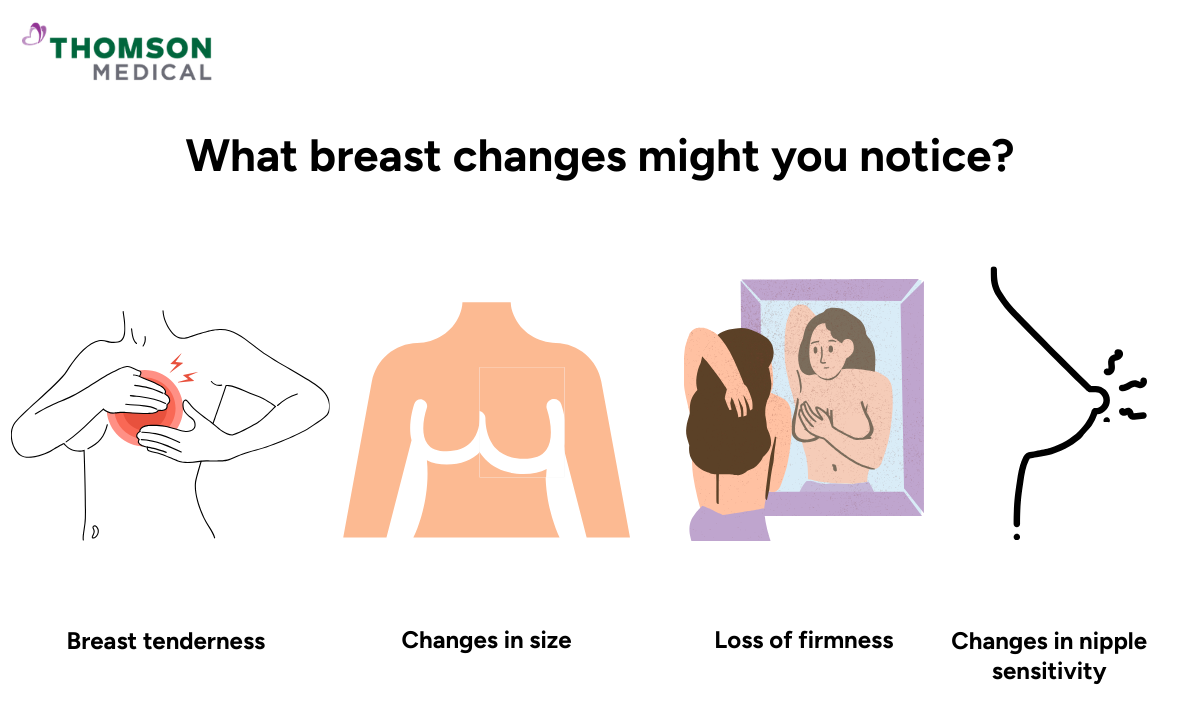
Breast changes after a hysterectomy can take many forms. Most of these changes are temporary and improve as your body adjusts.
You may experience:
Breast tenderness or swelling:
Particularly common in the first few weeks following surgery, especially if your ovaries were removed.
This usually settles within one to three months as hormone levels stabilise.
Changes in size:
Your breasts may feel larger or smaller, which can be linked to hormone shifts affecting breast tissue density, fluid retention in the early weeks after surgery, or weight changes during recovery.
Size changes are most noticeable in the first six months.
Loss of firmness:
Breast tissue may feel softer or less full than before.
This develops gradually over months to years as oestrogen levels decline and breast tissue becomes more fatty and less dense.
Changes in nipple sensitivity:
Some women notice their nipples feel more or less sensitive than before.
This is less common than the other changes but does affect some women.
Not every woman will experience all of these changes, and some women notice very little change at all. Which changes you experience and how noticeable they are depend on your personal factors.
Breast changes can vary widely in how they feel and how long they last, and it’s not always easy to tell what is part of normal recovery. Request an appointment with Thomson Medical to review your symptoms, assess whether your changes are expected, and get clear guidance on what to monitor over time.
What influences how much your breasts change?
Several personal factors shape how much breast change you experience after a hysterectomy.
Your hormone status
This is the most significant factor. A sudden drop in oestrogen causes breast tissue to become less dense and more fatty over time. If your ovaries were removed, you're more likely to notice pronounced changes than someone whose ovaries were preserved.
Your age
Younger women whose ovaries were preserved often experience less dramatic changes, as their ovaries continue producing oestrogen. If you were already in perimenopause before your surgery, you may notice more pronounced shifts, as your hormones were already declining before the procedure.
Your body weight and fat distribution
Weight gain after surgery can make your breasts feel heavier or appear larger, while weight loss may reduce size or alter shape. Changes in how your body stores fat can also affect breast appearance, even when the breast tissue itself hasn't changed.
Your genetics and breast density
Women with naturally denser breast tissue may notice more obvious changes in texture and firmness as oestrogen levels decline. Your natural breast density affects how visibly these shifts appear, which is why two women with similar surgeries can have quite different experiences.
Breast changes after a hysterectomy reflect your unique combination of age, hormonal status, and body composition. For most women, these changes are a natural part of recovery – not a sign that something is wrong.
If you are unsure what is driving the changes you are noticing, your doctor can help make sense of it all.
Our gynaecologists in Singapore
Loading...
How to manage breast changes after hysterectomy surgery
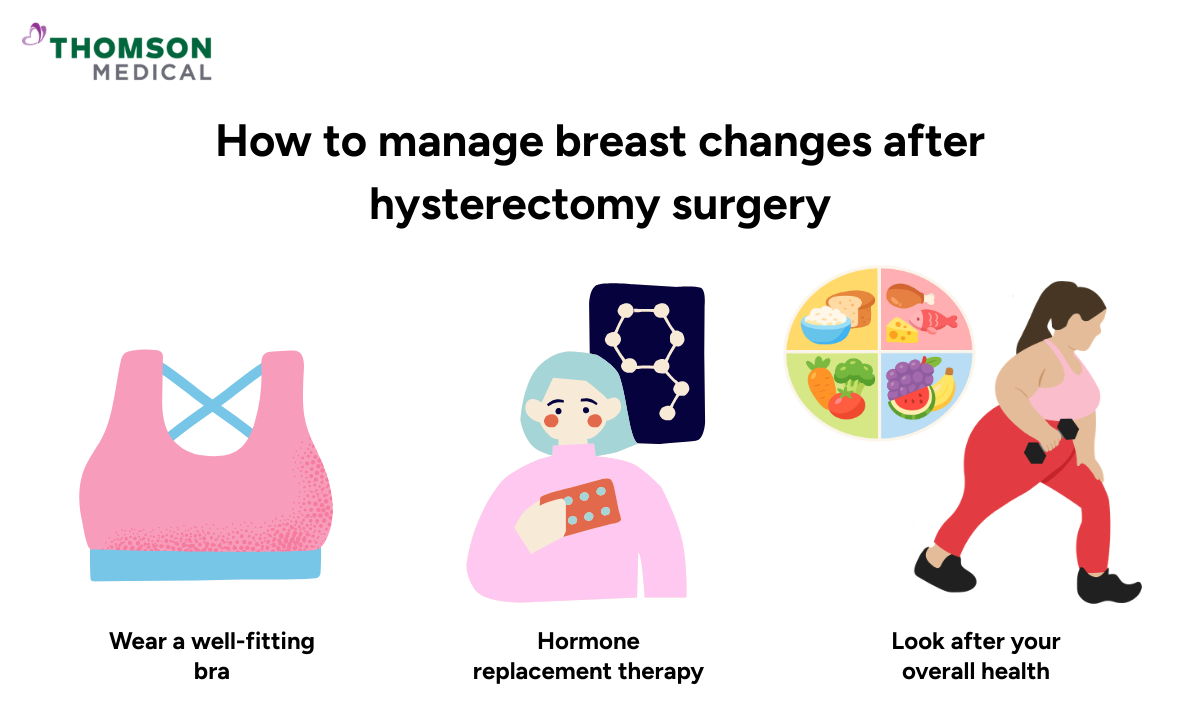
While some degree of change is normal after a hysterectomy, there are steps you can take to stay comfortable as your body adjusts.
You can support your comfort at home by:
Wear a well-fitting bra:
A supportive and well-fitting bra may help ease discomfort, support breast tissue changes, and ease feelings of heaviness.
Look after your overall health:
Maintaining a balanced diet and staying active can help manage weight and fat distribution after surgery, which may reduce some breast changes.
You can explore medical and treatment options such as:
Hormone replacement therapy (HRT):
HRT may help manage breast changes by supporting tissue density and easing tenderness.
If you have a history of breast cancer, blood clots, or certain other conditions, speak to your doctor before considering HRT, as it may not be suitable for you.
Non-hormonal options:
Some women find relief through non-hormonal approaches, such as topical treatments for breast discomfort or including phytoestrogen-rich foods in their diet, such as soya, flaxseed, and legumes.
These will not suit everyone, so it is worth discussing your options with your doctor.
It also helps to:
Keep up with breast screening:
Regular mammography remains important after a hysterectomy for women on HRT. If you are unsure whether you are due for a screening, please speak with your doctor.
These approaches may work well together rather than on their own. A well-fitting bra provides immediate comfort, while hormone therapy and healthy lifestyle habits address the underlying hormonal symptoms and physical changes over time.
When should you see a doctor?
Most breast changes after a hysterectomy are a normal response to hormonal shifts. However, some changes need prompt medical attention.
Contact your doctor if you notice:
A sudden or unexplained increase in breast size
A persistent lump or area of thickening
Nipple discharge or changes to the skin on your breast
Breast pain that is getting worse or not settling
Skin dimpling, puckering, or any changes in skin texture
Redness, warmth, or swelling that does not settle
A newly inverted nipple or any change in nipple position
Asymmetrical changes that appear suddenly
Getting to know how your breasts normally look and feel is one of the most useful things you can do for your health. Check your breasts once a month, ideally at the same time each month, so you can notice any changes early. Having something checked and being reassured is always better than waiting and worrying.
If you notice any of these changes, request an appointment with Thomson Medical for a clinical breast assessment and, if needed, imaging such as an ultrasound or mammogram to clarify the cause and guide next steps.
FAQ
Are breast changes after hysterectomy surgery normal?
Indirectly, yes. Hormonal symptoms and shifts in hormone production after a hysterectomy can alter breast size, firmness, and tenderness, depending on whether your ovaries were removed or kept.
Why are my breasts getting bigger after a hysterectomy, and will my body shape change?
This is quite common. Weight gain, fat redistribution, and hormonal shifts can all make breasts feel fuller or heavier. You may also notice changes around your abdomen and midsection. These shifts tend to be more noticeable if your ovaries were removed, as the sudden drop in oestrogen can affect how your body stores fat.
What causes breast tenderness after a hysterectomy, and will it go away?
Tenderness can be caused by residual hormone fluctuations, HRT, weight changes, or fibrocystic breast tissue. For most women, discomfort does improve over time as the body adjusts to its new hormone levels. If you are on HRT, your doctor may be able to adjust your dosage if tenderness is persistent.
Do hormonal changes from a hysterectomy increase breast cancer risk?
A hysterectomy itself does not increase breast cancer risk. However, hormone therapy can slightly affect risk depending on the type and duration of use.
Can surgical menopause after a hysterectomy affect breast tissue differently from natural menopause?
Yes, it can. With natural menopause, oestrogen levels decline gradually over several years, giving breast tissue time to adjust slowly. Surgical menopause, which occurs when the ovaries are removed during a hysterectomy, causes a much more sudden drop in oestrogen.
This can lead to more rapid changes in breast density, firmness, and sensitivity than women going through natural menopause may experience.
Can the type of hysterectomy I had affect how much my breasts change?
Yes, and the key factor is whether your ovaries have been removed. When the ovaries are taken out alongside the uterus, oestrogen levels drop sharply, which can lead to more noticeable breast changes.
If your ovaries were kept, hormonal shifts tend to be more gradual. It is the removal of the ovaries – not the surgical technique – that makes the biggest difference.
The information provided is intended for general guidance only and should not be considered medical advice. For personalised recommendations and advice based on your unique situation, please consult a specialist at Thomson Medical. Request an appointment with Thomson Medical today.
For more information, contact us:
Thomson Specialists (Women's Health)
Thomson Women's Clinic (TWC)
- Novena:
6592 6686 (Call), 8611 8986 (WA) - Bukit Batok:
6569 0668 (Call), 8686 3525 (WA) - Choa Chu Kang:
6893 1227 (Call), 8282 1796 (WA) Jurong:
6262 8588 (Call), 6262 8588 (WA)- Katong (female doctor):
6970 2272 (Call), 8611 9020 (WA) - Punggol:
6243 6843 (Call), 8811 0328 (WA) - Sembawang: 6753 5228
- Sengkang: 6388 8125
- Serangoon (female doctor): 6382 3313
- Tampines: 6857 6266
- Tiong Bahru: 6276 1525