
_(1).png%3Fbranch%3Dprod&w=3840&q=75)
Your breasts feel swollen, tight, and tender to touch. Every movement is uncomfortable, and even your baby struggles to latch properly. If you're experiencing this overwhelming fullness in the early weeks after giving birth, you're likely dealing with breast engorgement – and you're certainly not alone in feeling frustrated by it.
The encouraging news is that gentle massage techniques can help ease the discomfort by encouraging milk to flow more easily through your ducts. With the right approach, most mothers find relief within 24-48 hours, making feeding more comfortable for both you and your baby.
What is breast engorgement?
Breast engorgement happens when your breasts become overly full with milk, leaving them feeling swollen, firm, and tender to touch. It occurs when your body produces more milk than your baby removes during feeds or when there's an unexpected change in your usual feeding pattern.
You might notice engorgement starting when:
Your milk comes in around 2-5 days after giving birth
Feeds are skipped or delayed longer than usual
Your baby isn't latching on properly
You're weaning more quickly than your body can adjust
Many breastfeeding mothers experience some degree of engorgement, particularly in the early weeks.
The encouraging news is that it's usually temporary. Most women find relief within 24-48 hours once they start using gentle management techniques, though your body may take a few days to fully adjust its milk production to match your baby's needs.
How to relieve breast engorgement with massage
Gentle massage can help ease the discomfort of engorgement by encouraging milk to flow more easily through your ducts and reducing the fluid buildup that contributes to swelling.
The approach matters – your breasts are already tender, so gentle, steady pressure is what works. Too much force can irritate delicate tissue or worsen the inflammation you're trying to reduce.
Step-by-step breast massage technique
This straightforward technique can be used before feeds to help milk flow and make latching more comfortable for your baby:
Prepare your hands:
Wash thoroughly with warm water and soap.
Begin at the outer edges:
Place your fingertips on the outer areas of your breast.
Using gentle pressure, make small circular motions as you gradually work your way towards the nipple.
Check your pressure:
The massage should feel comfortable, never painful. If you're feeling sharp discomfort, ease up on the pressure.
Focus on firm areas:
Spend 3-5 minutes on each breast, paying attention to sections that feel particularly tight or lumpy. There's no need to overwork the tissue.
Finish with gentle strokes:
End by stroking softly from the outer breast toward the nipple to encourage milk flow in the right direction.
You may find it helpful to lean slightly forward while massaging, using gravity to assist the milk movement through your ducts.
Lymphatic drainage massage for engorgement
This technique takes a different approach by targeting fluid buildup and swelling in the surrounding breast tissue, rather than focusing solely on milk movement.
If your breasts feel puffy or swollen in a way that goes beyond typical milk fullness, lymphatic drainage may bring you relief.
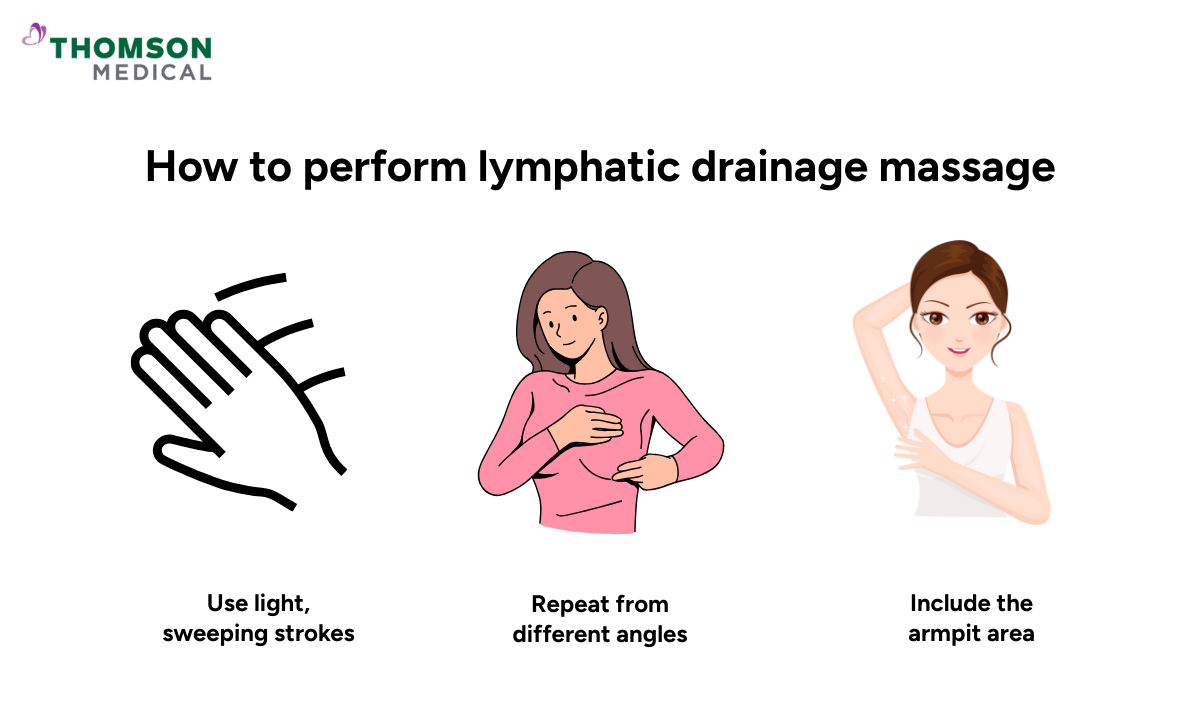
Here’s how to perform lymphatic drainage massage:
Position your hand:
Place your flat hand gently on the upper part of your breast, close to your collarbone.
Use light, sweeping strokes:
With very light pressure, make slow strokes moving downward and outward towards your armpit.
The touch should be lighter than a standard massage – imagine gently encouraging water to move beneath your skin rather than pressing into the tissue itself.
Repeat from different angles:
Make these gentle strokes 5-10 times on each breast, starting from various positions (top, sides, lower areas).
Each stroke should move towards your armpit, where your lymph nodes naturally drain fluid.
Include the armpit area:
You can also massage around your armpit itself with the same light touch to support drainage.
This approach is softer than traditional breast massage and works on the tissue around your milk ducts rather than the ducts directly.
Both massage techniques are tools you can use whenever you need them. As you practise, you'll develop a sense for which approach works better for you at different times. Remember that relief often comes gradually rather than instantly, and that's completely normal as your body adjusts.
How often should you massage engorged breasts?
.png?branch=production)
Finding the right balance with massage can make a real difference to your comfort. You want to use it often enough to help, but not so much that it irritates already sensitive tissue.
Before each feed (3-5 minutes per breast):
A brief massage before nursing helps soften your breast and encourages milk to flow, making it easier for your baby to latch.
2-3 times throughout the day during active engorgement:
If you're dealing with significant fullness, you can massage between feeds as well to ease the pressure.
Whenever you notice uncomfortable fullness:
Addressing fullness early tends to bring quicker relief.
If you find yourself massaging more than 5-6 times daily without noticing improvement, this may signal that some other condition is affecting milk removal. Getting support from a healthcare provider can help identify what's happening and find an approach that works better for you.
If you're massaging frequently but not seeing improvement, or you're unsure whether you're using the right technique for your situation, schedule an appointment with Thomson ParentCraft Centre. Our lactation consultants can assess what's affecting milk removal and help you adjust your approach to find relief.
What not to do when massaging engorged breasts
Massage can bring real relief when done properly, but certain practices can actually increase your discomfort. Knowing what to avoid helps protect your breasts while you're working towards feeling better.
Keep away from these approaches:
Squeezing or kneading your breast like dough
Applying excessive heat while massaging (this can increase swelling)
Massaging away from the nipple instead of towards it
Using massage tools or devices without guidance from a healthcare professional
If you notice red streaks, a fever above 38°C, a hot tender lump, or flu-like symptoms, stop massaging immediately. These signs suggest mastitis rather than simple engorgement and need medical attention, not massage.
Pain during massage isn't normal. If you're consistently experiencing discomfort while massaging, or if the technique just doesn't seem right, reach out to a lactation consultant or your doctor. They can observe your technique and check whether something else might be contributing to the problem.
Our ParentCraft trainers
Loading...
Other remedies for breast engorgement
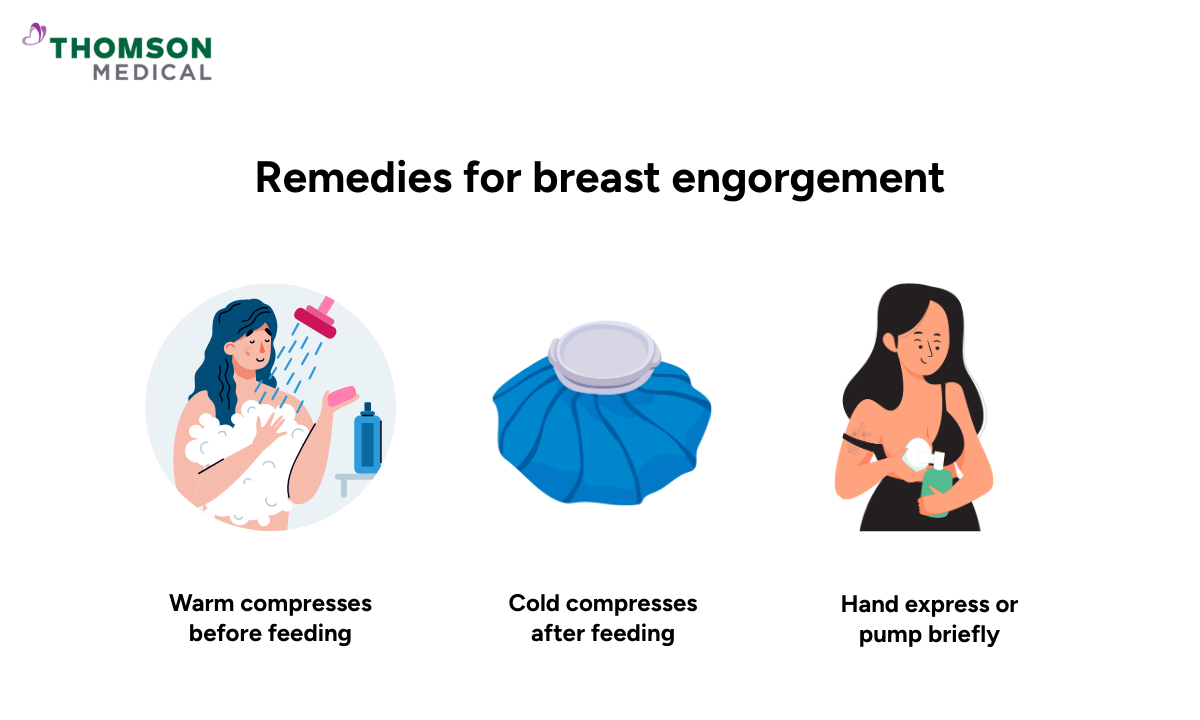
Massage often works more effectively when you combine it with other gentle relief methods. These complementary approaches can help you manage engorgement more comfortably:
Warm compresses before feeding:
Apply a warm cloth to your breasts for 3-5 minutes or take a warm shower before nursing or massaging to help stimulate milk flow.
Cold compresses after feeding:
Wrap a cold pack in a thin cloth and apply for 10-15 minutes to reduce swelling and ease discomfort.
Hand expressing before feeding:
If your areola feels very firm, expressing a small amount of milk by hand can soften the area and make latching easier.
Express just enough to relieve pressure, not empty your breast.
Pumping when needed:
If your baby isn't feeding effectively, pump only until you feel comfortable, not until your breasts are completely empty. Removing too much milk can increase production and worsen engorgement.
You may find that one or two of these methods work particularly well for you. Trust what your body is telling you and use what brings you the most relief.
When to see a doctor
Most engorgement eases within a few days with gentle home care, and you'll likely find your rhythm as your body adjusts. However, there are times when reaching out for professional support is the right step.
Contact your doctor or lactation consultant if you notice:
Fever above 38°C
Severe pain that doesn't improve with home remedies
Red, warm, or hard areas on your breast
Symptoms continuing beyond 5-7 days
Signs your baby isn't getting enough milk (fewer wet nappies, poor weight gain)
These symptoms may indicate mastitis or other concerns that benefit from medical care. Getting help early means you can address what's happening and get back to feeling more comfortable.
Your healthcare provider is there to support you through this, and reaching out is always the right choice when something doesn't feel right.
If you're experiencing any of these symptoms, schedule an appointment with Thomson ParentCraft Centre. Our team can assess whether you're dealing with mastitis or another concern and recommend an appropriate treatment plan to help you feel comfortable again.
FAQ
How long does breast engorgement last?
Breast engorgement typically lasts 24 to 48 hours with proper management. For new mothers, it usually occurs 2 to 5 days postpartum and resolves within a week as your body adjusts to your baby's needs.
Should I massage engorged breasts before or after feeding?
Before feeding is best. Massaging for 5 to 10 minutes beforehand helps soften the breast, improve milk flow, and make latching easier for your baby.
Is it normal for breast massage to hurt when engorged?
Some tenderness is normal, but massage shouldn't cause sharp or severe pain. If it hurts significantly, use lighter pressure or apply a warm compress first to help soften the tissue.
Can I use a breast pump instead of massage for engorgement?
Yes, you can combine both for better results. Massage before pumping helps improve milk flow and emptying. Pumping alone may not fully relieve engorgement, especially in the early stages.
How do I know if my breast engorgement has turned into mastitis?
Watch for fever above 38.3°C (101°F), flu-like symptoms, a hot or red wedge-shaped area on your breast, and worsening pain. Mastitis requires medical attention and often antibiotics.
Does cabbage really help with breast engorgement?
Cold cabbage leaves may provide relief by reducing swelling and discomfort. Place chilled leaves inside your bra for 20 minutes, but use this method sparingly, as it can decrease milk supply if overused.
The information is intended for general guidance only and should not be considered medical advice. For personalised recommendations and advice based on your unique situation, please consult a specialist at Thomson Medical. Request an appointment with Thomson Medical today.
For more information, contact us:
Thomson ParentCraft Centre
Thomson Breast Centre
Request an Appointment