

A fibroid diagnosis doesn’t mean surgery is coming. Many fibroids are found incidentally, cause little to no symptoms, and need nothing more than periodic monitoring. Surgery is considered when symptoms are affecting daily life, when fibroids are large or growing, or when they’re thought to be contributing to difficulty conceiving.
Even then, it’s one option among several. Here’s what your doctor weighs up when deciding whether surgery is appropriate, including the size and location of the fibroids, your symptoms, your age, and whether you’re planning a pregnancy, along with what the alternatives involve.
What are uterine fibroids?
Uterine fibroids are non-cancerous growths that develop around or within your uterus (womb). They are made of muscle and fibrous tissue and may range from very small (about the size of a pea) to several centimetres across. Fibroids are a common condition but usually cause no symptoms and often go unnoticed until detected in a routine scan.
They are most commonly diagnosed during a woman's reproductive years, typically between the ages of 30 and 50. This is because, although the exact cause of fibroids is not fully understood, oestrogen and progesterone – the hormones that regulate your menstrual cycle – play a role in stimulating their growth.
Can fibroids go away on their own?
Because fibroids depend on oestrogen and progesterone hormones to grow, drops in hormone levels may cause them to become smaller. However, this does not happen in every case. Whether a fibroid shrinks largely depends on your hormonal environment, such as:
During and after menopause:
As your oestrogen and progesterone levels fall permanently during menopause, uterine fibroids lose the hormonal signals that support their growth, which could lead them to gradually shrink.
After pregnancy:
During pregnancy, higher hormone levels may cause fibroids to grow. After childbirth, and particularly during breastfeeding when oestrogen levels drop, fibroids may decrease in size as the uterus returns to its normal state.
Through medical hormone suppression:
When natural shrinkage does not occur, doctors could intentionally lower hormone levels using medications such as GnRH therapies.
These treatments temporarily reduce fibroid volume prior to surgery or help manage severe symptoms during perimenopause.
Of these three situations, menopause tends to lead to the most lasting reduction, because the decline in oestrogen is permanent. Outside of menopause, changes in fibroid size are often temporary or less predictable.
When fibroids are less likely to disappear
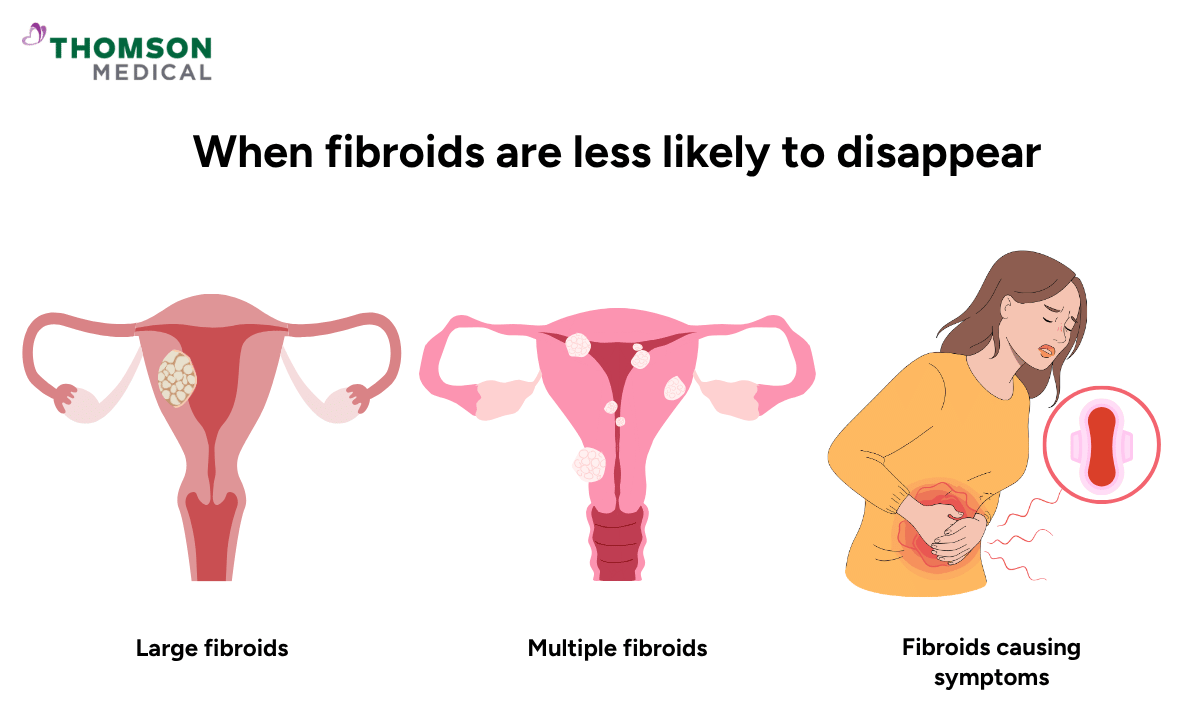
Though some uterine fibroids may go away on their own, not all will behave the same way. Several factors may make natural shrinkage less likely, especially if you have:
Large fibroids:
Larger fibroids tend to be less likely to shrink naturally because they have hardened tissue that persists.
As a result, they may continue exerting pressure on the bladder or bowel and cause lasting discomfort without medical treatment.
Multiple fibroids:
If you have several fibroids, they may not all behave the same way. Some may stay stable while others grow or cause increasing discomfort.
Fibroids causing symptoms:
Fibroids that are already causing heavy bleeding, persistent pelvic pain, or pressure on nearby organs are unlikely to ease without medical support.
How do you know if a fibroid is shrinking or growing?
As symptoms could change gradually, it may be easy to miss these changes without paying close attention over time.
If a fibroid is shrinking, you may notice:
Lighter or shorter menstrual period
Less pelvic pain or pressure
Reduced bloating
Needing to urinate less often
If a fibroid is growing, you might experience:
Longer or heavier periods
More noticeable pelvic pain
Increased bloating or a fuller feeling in your abdomen
Frequent urination
Worsening menstrual cramps
As fibroid symptoms may overlap with other conditions, they are not always an accurate reflection of what is happening. Consulting a specialist could help you understand your options; schedule an appointment with Thomson Medical.
Our O&G specialists
Loading...
Do fibroids always need treatment?
Not all fibroids need treatment. If your fibroids are small and not causing symptoms, your doctor may suggest a "watch and wait" approach, where your fibroids are monitored over time without immediate treatment.
Monitoring usually involves:
Pelvic examinations to check for any physical changes
Ultrasound scans to track the size and position of your fibroids
Magnetic resonance imaging (MRI) scans if a more detailed view is needed
When should you consider treatment?
Fibroid treatment may be worth considering when fibroids start to cause symptoms that are difficult to manage with monitoring alone.
This is usually the case if your fibroids are:
Causing heavy menstrual bleeding that affects your daily life or leads to anaemia
Leading to ongoing pelvic pain or discomfort
Pressing on nearby organs such as your bladder or bowel
Increasing in size over time
Causing fertility issues that affect your ability to conceive or carry a pregnancy
Treatment options vary depending on your situation. Your doctor may suggest medications, such as hormonal therapies, to help manage symptoms or reduce fibroid size. Surgical options, such as myomectomy or hysterectomy, may also be considered.
Your doctor will guide you through the options based on your symptoms, age, and any plans for pregnancy.
What could help fibroids shrink?
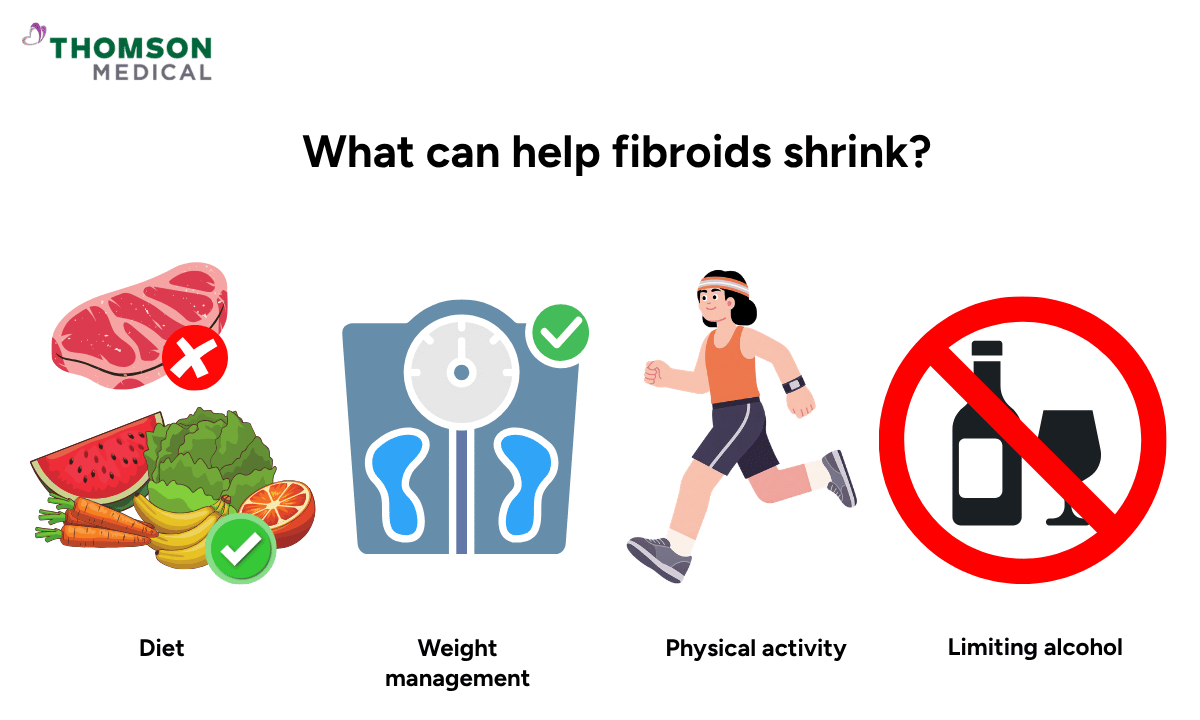
Alongside monitoring, some lifestyle changes and medical options may support hormonal balance and help keep symptoms manageable. These changes are not meant to shrink any existing fibroids you may already have, but they may help slow growth and reduce the risk of new fibroids appearing.
These changes include:
Diet:
Eating more fruit, green leafy vegetables, and whole grains to help support hormone balance and lower the risk of fibroid development.
Reducing red meat and processed foods to help limit excess oestrogen.
Weight management:
Excess body fat could increase oestrogen production, which may encourage fibroid growth.
Maintaining a healthy weight may help support hormonal balance.
Physical activity:
Regular exercise may help regulate oestrogen levels and support overall health.
Limiting alcohol:
Alcohol may raise oestrogen levels, so reducing your intake may be helpful.
Although these steps do not guarantee that uterine fibroids will shrink, they may help slow their growth and make symptoms easier to manage. If you have questions about managing fibroid symptoms or want to discuss suitable monitoring options, schedule an appointment with Thomson Medical.
FAQ
Do fibroids disappear after menopause?
Not always. While lower oestrogen levels after menopause often reduce fibroid growth, some fibroids, particularly larger ones, may persist and continue to cause symptoms.
How long does it take for fibroids to shrink?
The time it takes varies depending on factors such as fibroid size, location, and hormonal changes. Some uterine fibroids may shrink gradually over months or years, particularly after menopause.
Can fibroids come back after they shrink?
Yes, fibroids can return, especially if they were not fully removed or if hormonal influences remain active. Regular monitoring may be needed in some cases.
Can exercise or weight loss help with fibroids?
Regular exercise and maintaining a healthy weight may help regulate hormone levels and slow fibroid growth. However, lifestyle changes alone are unlikely to shrink existing fibroids significantly.
What is the difference between a shrinking fibroid and one that is just not growing?
A shrinking fibroid usually brings noticeable improvements, such as lighter menstrual periods, reduced pelvic pain, and less bloating. A stable fibroid may cause no new symptoms but will not bring those improvements either.
Can hormonal birth control help manage fibroid symptoms?
Birth control pills and other forms of hormonal birth control can help reduce heavy menstrual bleeding and menstrual cramps caused by fibroids. They do not shrink uterine fibroids but can make symptoms more manageable day to day.
How often should fibroids be monitored?
Monitoring frequency depends on symptoms, fibroid size, and how quickly they are growing. You should see your doctor if you experience heavy periods, persistent pelvic pain, or fertility issues. A pelvic exam and imaging tests can help your doctor assess your fibroids and discuss suitable treatment options.
The information provided is intended for general guidance only and should not be considered medical advice. For personalised recommendations and tailored advice based on your unique conditions, request a consultation with Thomson Medical.
For more information, contact us:
Thomson Specialists (Women's Health)
Thomson Women's Clinic (TWC)
- Novena:
6592 6686 (Call), 8611 8986 (WA) - Bukit Batok:
6569 0668 (Call), 8686 3525 (WA) - Choa Chu Kang:
6893 1227 (Call), 8282 1796 (WA) Jurong:
6262 8588 (Call), 6262 8588 (WA)- Katong (female doctor):
6970 2272 (Call), 8611 9020 (WA) - Punggol:
6243 6843 (Call), 8811 0328 (WA) - Sembawang: 6753 5228
- Sengkang: 6388 8125
- Serangoon (female doctor): 6382 3313
- Tampines: 6857 6266
- Tiong Bahru: 6276 1525