

Learning that you have abnormal cervical cells can feel worrying, but the good news is that many changes can be treated effectively if caught early. Cryotherapy is a gentle, fertility-preserving option that helps remove abnormal cells, allowing your cervix to heal naturally and stay healthy.
What is cervical cryotherapy?
Cervical cryotherapy, sometimes called cryosurgery, uses very cold gas to safely freeze and remove abnormal cells on the cervix. These cell changes are often caused by human papillomavirus (HPV), and treating them early helps prevent them from potentially developing into something more serious down the line.
Who may need cervical cryotherapy?
Your doctor may suggest cervical cryotherapy if your test results show mild or moderate cell changes that can be safely managed with this approach. This treatment is typically considered when the area of concern is visible and limited to the surface of your cervix.
Cryotherapy may be an option for you if you have:
Moderate abnormal cervical cell changes (mainly CIN 2 and some carefully selected CIN 1) confirmed by Pap smear and colposcopy.
HPV-related cervical lesions confined to the surface of the cervix
A visible transformation zone (the area where abnormal cells are identified during colposcopy)
No signs of invasive cervical cancer
Your doctor will determine if this treatment is suitable based on your Pap test, HPV test, and colposcopy or biopsy results.
Who should avoid cryotherapy?
Cryotherapy isn't the right choice for everyone, and in some situations, a different treatment may be safer or more suitable for you. Your doctor will discuss other options with you if any of the following apply:
Invasive cervical cancer:
This condition requires surgical or oncologic treatment rather than cryotherapy
Extensive or deep cervical lesions:
When abnormal cells extend beyond where the freezing probe can reach, your doctor will recommend a different approach.
Active pelvic infection or cervicitis:
Any infection should be treated before the procedure can be performed
Pregnancy:
Cryotherapy is usually postponed until after your baby arrives, to keep you and your pregnancy safe
Unclear colposcopy findings:
If your doctor cannot see the full extent of the abnormal cells during colposcopy, you may need further assessment before treatment begins
Whatever your situation, your doctor will work closely with you to find the most appropriate treatment plan tailored to your needs.
Pros and cons of cervical cryotherapy
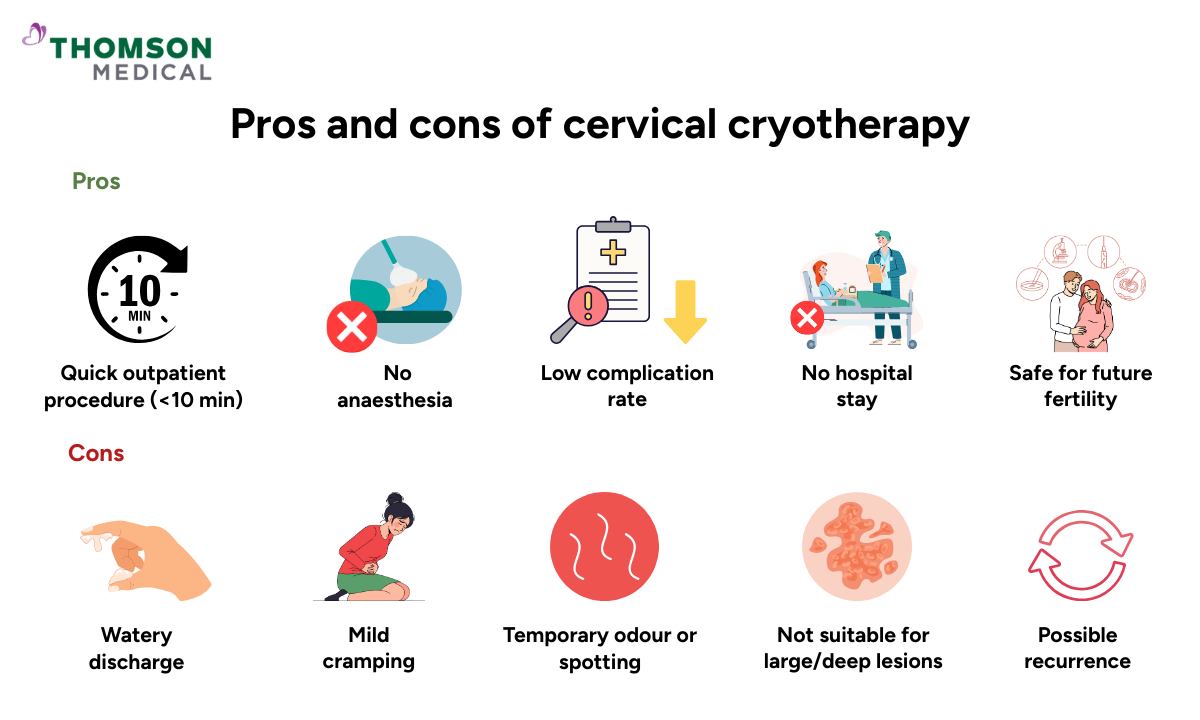
Every treatment comes with its own benefits and things to be aware of, and cervical cryotherapy is no different. Here's what you can expect:
Pros:
Quick outpatient procedure, usually completed in under 10 minutes
Does not require anesthesia or hospital admission
Generally well-tolerated with a low complication rate
Can address mild to moderate precancerous changes
Has not been shown to significantly affect fertility and is generally considered safe for women planning future pregnancies
Cons:
Watery vaginal discharge may occur for 2 to 4 weeks as the cervix heals
Mild cramping or discomfort during or after the procedure is common
Temporary vaginal odor or light spotting may be experienced
Not suitable for large, deep lesions or those extending into the cervical canal, where the abnormal area cannot be fully covered by the freezing probe.
Abnormal cells may recur if they extend beyond the treated area, which may require additional treatment
If you are unsure whether cervical cryotherapy is suitable for you, you may request an appointment with Thomson Medical. Our fertility specialists can guide you through your options and recommend the most appropriate next steps for your care.
Prepare for cervical cryotherapy
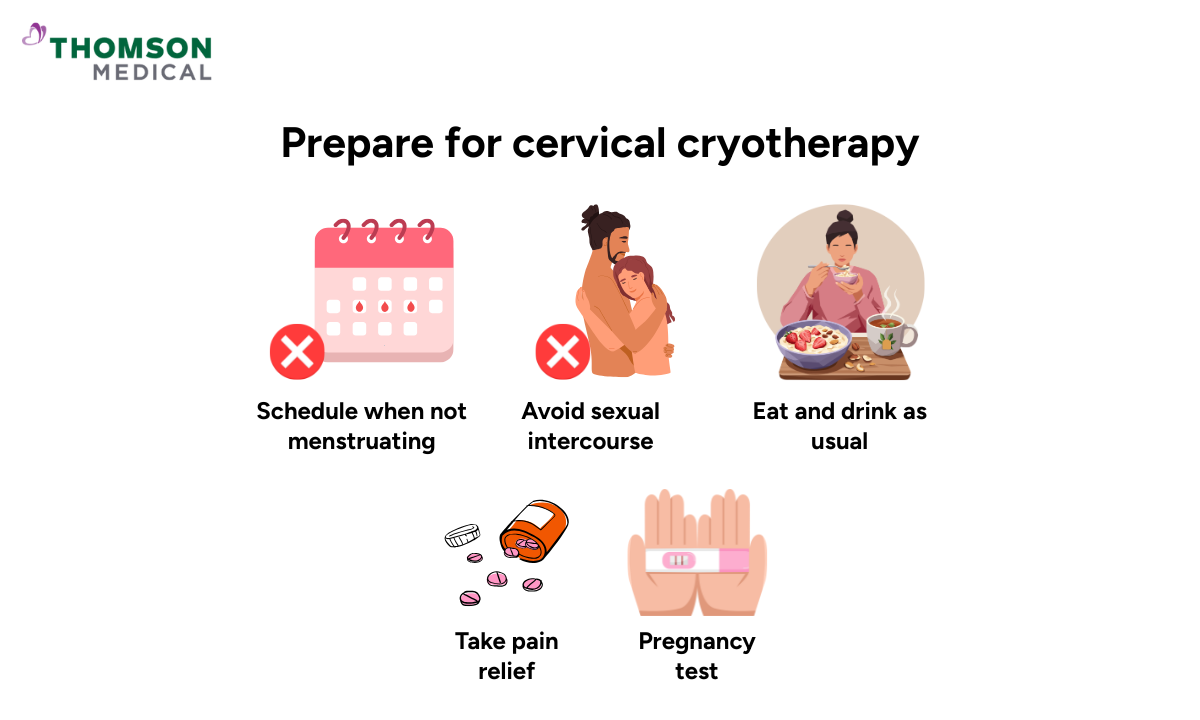
Feeling a bit nervous beforehand is completely natural. A few simple steps can make all the difference:
Schedule the appointment when you are not menstruating
Avoid sexual intercourse, tampons, or douching for 24 to 48 hours before your appointment
Your doctor may perform a pregnancy test before proceeding
You can eat and drink normally – fasting is not required
If recommended by your doctor, you may take an over-the-counter pain reliever such as ibuprofen 30 to 60 minutes before the procedure
These simple preparations can help ensure the experience is as smooth and stress-free as possible.
What to expect during cervical cryotherapy?
The procedure itself is straightforward, and your doctor will guide you through each step so you feel informed and at ease.
You will lie on an exam table in a position similar to a Pap smear
A speculum is gently inserted to provide a clear view of your cervix
The doctor applies a freezing probe (cryoprobe) directly to the abnormal area
The area is frozen for approximately 3 minutes, then thawed, and may be refrozen for another 3 minutes
You may experience:
Cold, burning, or cramping sensations
Lightheadedness (though this is uncommon)
The entire procedure typically takes about 10 to 15 minutes, and you'll be able to go home shortly afterwards.
Recovery from cervical cryotherapy
Most women recover comfortably after cervical cryotherapy. Your body will need a little time to heal, and these gentle care tips can support you through the process.
What to expect:
Watery vaginal discharge is completely normal and may last for 2 to 4 weeks as your cervix heals
Use pads to manage the discharge, as they're more comfortable than tampons during this time
Mild cramping may occur and can be eased with over-the-counter pain relief
For the next 3 to 4 weeks, it's best to avoid:
Sexual intercourse, tampons, and douching
Swimming or soaking baths, as these can increase the risk of infection
Your follow-up care:
A follow-up Pap or HPV test will be scheduled in 6 to 12 months to check how you're healing and ensure everything is progressing well
When to reach out to your doctor:
Whilst most recoveries are smooth, you should contact your doctor if you experience:
Heavy bleeding (soaking through a pad in less than an hour)
Foul-smelling discharge
Fever or severe pelvic pain
If you have any questions or concerns during your recovery, don't hesitate to reach out to your doctor. Support is always available when you need it.
Our women's cancer specialist
Loading...
FAQ
Can cryotherapy treat cervical cancer?
Cryotherapy is designed to treat precancerous lesions (CIN 1-2), not cervical cancer itself. If cancer is present, your doctor will recommend other treatments such as cone biopsy, surgery, and/or chemoradiation, depending on the stage, rather than cryotherapy.
How painful is cryotherapy of the cervix?
How many sessions do you need for cryotherapy?
In most cases, one session is sufficient. Your doctor will schedule follow-up tests to monitor your healing. If abnormal cells are still present at your follow-up, a repeat session or alternative treatment such as loop electrosurgical excision procedure (LEEP) may be recommended.
What is the success rate of cervical cryotherapy?
Cryotherapy has proven effective for treating mild to moderate cervical dysplasia, with success rates of approximately 85 to 90%. Your follow-up tests will help confirm that the abnormal cells have been successfully removed.
Can cervical cancer come back after cryotherapy?
Cryotherapy reduces your risk of developing cervical cancer by removing abnormal cells. However, new lesions can develop if you are reinfected with HPV or if regular screening is not maintained. This is why routine Pap and HPV tests remain an important part of your ongoing cervical health care.
How long does it take for the cervix to heal after cryotherapy?
The cervix typically heals within 4 to 6 weeks. During this time, watery discharge and mild spotting will gradually decrease as healthy tissue regenerates.
The information provided is intended for general guidance only and should not be considered medical advice. For personalised recommendations and tailored advice based on your unique situations, please consult a specialist at Thomson Medical. Request an appointment with Thomson Medical today.
For more information, contact us:
Thomson Specialists (Women's Health)
Thomson Women's Clinic (TWC)
- Novena:
6592 6686 (Call), 8611 8986 (WA) - Bukit Batok:
6569 0668 (Call), 8686 3525 (WA) - Choa Chu Kang:
6893 1227 (Call), 8282 1796 (WA) Jurong:
6262 8588 (Call), 6262 8588 (WA)- Katong (female doctor):
6970 2272 (Call), 8611 9020 (WA) - Punggol:
6243 6843 (Call), 8811 0328 (WA) - Sembawang: 6753 5228
- Sengkang: 6388 8125
- Serangoon (female doctor): 6382 3313
- Tampines: 6857 6266
- Tiong Bahru: 6276 1525