

After a stomach polyp removal, it's natural to feel cautious about what comes next, especially when it comes to eating. The idea of eating the wrong thing feels risky, and that concern is hard to let go of.
Your stomach lining needs time and care to heal after the procedure, and what you eat in the days and weeks that follow directly affects how well and how quickly that happens. Knowing what to eat at each stage of recovery, what to avoid, and when it's safe to return to your normal diet can help you move through this period with greater ease and peace of mind.
What is stomach polyp removal?
A stomach polyp is a small, benign growth that forms on the lining of your stomach. In most cases, they cause no noticeable symptoms and are only discovered during a gastroscopy (a procedure where a thin, flexible camera is used to examine your stomach).
While most cases are harmless, certain types of stomach polyps can turn cancerous over time. If your doctor identifies one of these, they may recommend removing it during the same gastroscopy.
The removal procedure, called endoscopic polypectomy, is well-established – most people can go home the same day, and recovery is usually straightforward.
Why diet matters after stomach polyp removal
Your stomach normally secretes gastric juice to break down proteins and process the food you eat. After a polyp removal, that same gastric juice directly touches the treated area of your stomach lining and can irritate it before it has had a chance to fully heal.
This is why dietary modifications are important in the first one to two weeks after your procedure.
Following a modified diet helps:
Protect the operative site
Minimise digestive stress
Lower the risk of complications such as bleeding or infection
Allow the stomach lining to heal without irritation
For most people, these dietary changes are temporary. As your stomach heals, you will gradually be able to reintroduce your usual foods.
What to expect immediately after the procedure
After the procedure, you may experience some temporary discomfort. These are completely normal and usually resolve within a few days.
Throat discomfort
You may notice a sore throat or a hoarse voice after the procedure, which is very common. It happens because during the procedure, a small breathing tube is inserted to keep your airway open. This can leave the throat feeling irritated or tender afterwards.
In most cases, the discomfort is mild and can be relieved with painkillers. Many people find that these symptoms improve within three days to a week.
Mild stomach sensitivity
Some stomach discomfort is normal in the hours after the procedure, caused by air and instruments used during the endoscopy.
You may experience cramping, bloating, or a feeling of being unusually full. All of these issues usually settle within a few hours as your stomach adjusts.
What foods are suitable in a diet after stomach polyp removal?
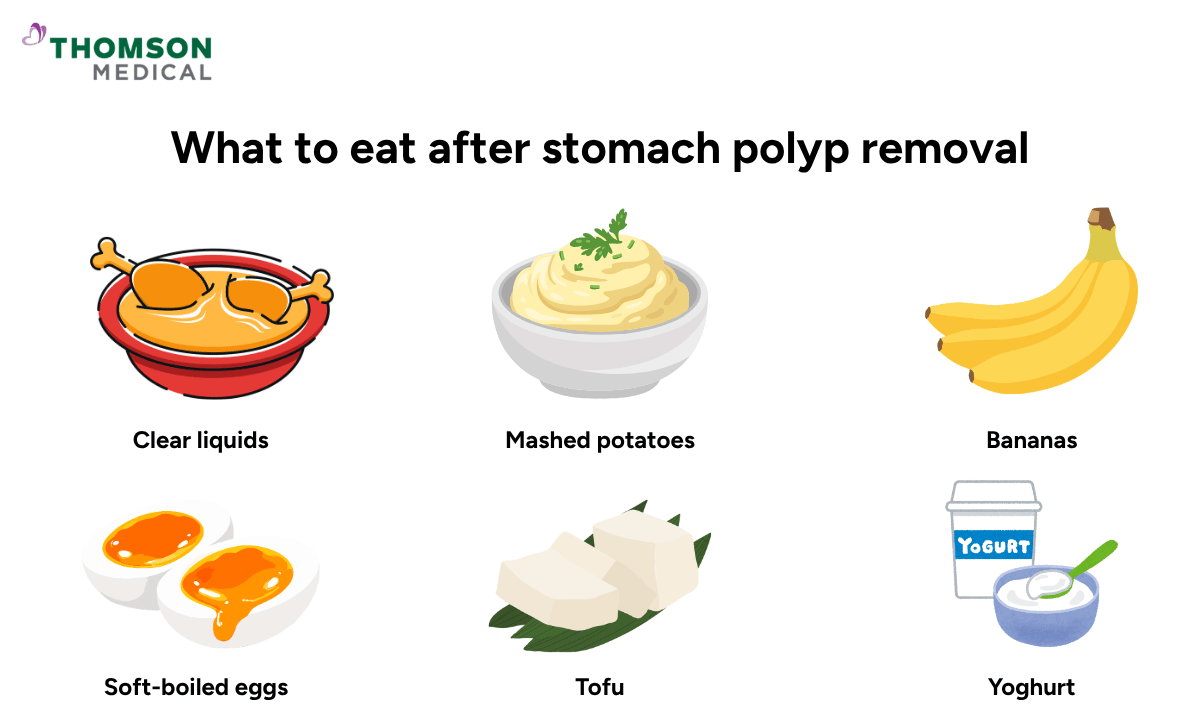
In the days following your procedure, your stomach needs extra care. The goal is to give it nourishment without pushing it too hard. It’s best to start gently and gradually build back up to your usual diet as you feel ready.
Clear liquids for the first 24 hours
Your doctor may recommend starting with clear liquids for the first 24 hours after your procedure. This gives your stomach a chance to rest while still keeping you hydrated and comfortable.
Good options include:
Water
Clear broths (chicken or vegetable)
Non-caffeinated tea
Pulp-free apple juice
Electrolyte drinks (non-red varieties)
Keeping portions small and sipping slowly will be gentler for your stomach at this stage.
Soft, easy-to-digest foods
As you begin to feel more comfortable eating, soft, bland foods are your next step. These foods are easy on your stomach lining and less likely to cause irritation or discomfort as it heals.
You can try:
Porridge
White rice
Mashed potatoes
Applesauce
Bananas
Canned fruits (without skins)
Soft-boiled or scrambled eggs
White toast
Skinless chicken
Tofu
Cooked vegetables
Yoghurt with gut-healthy probiotics
Start with smaller portions than you normally eat, and pay attention to how your stomach responds. If something feels uncomfortable, stop for a day or two and try again when you feel better.
If you're unsure which foods are appropriate for your recovery, or if you'd like personalised dietary recommendations, schedule an appointment with Thomson Medical. Our gastroenterology specialists will assess your recovery and create a plan tailored to your specific needs.
Our gastrointestinal surgery specialist at Thomson Medical
Loading...
Foods to avoid during recovery
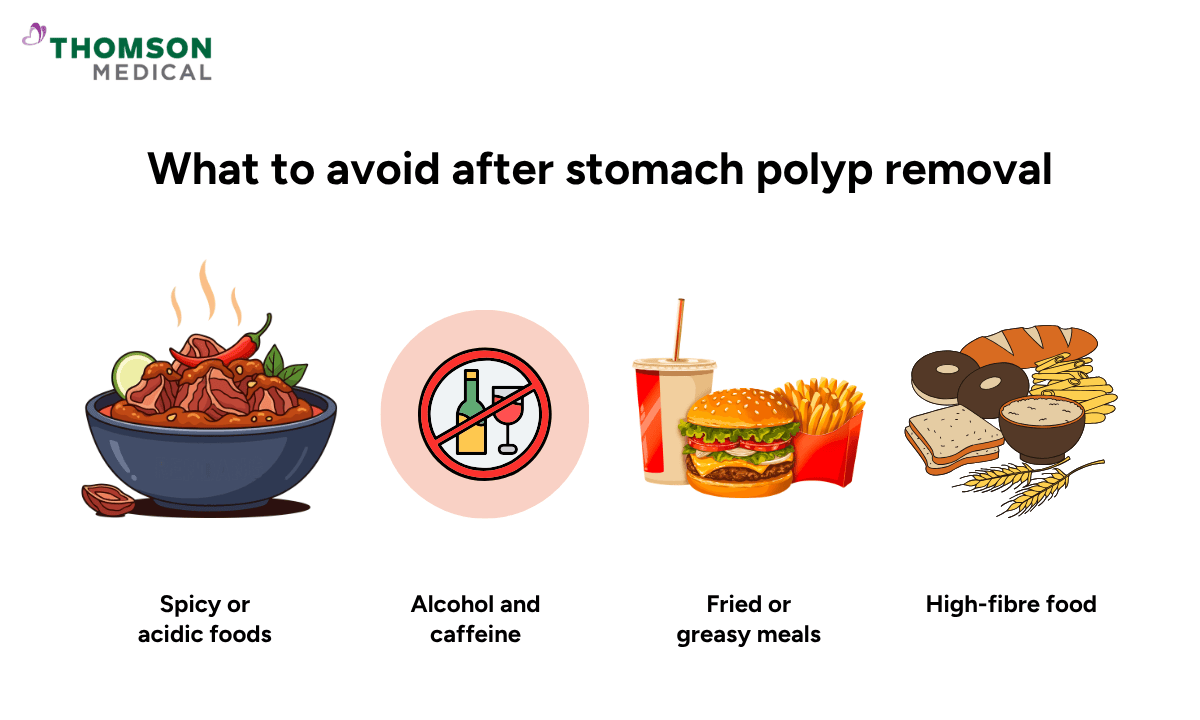
Certain foods can irritate your stomach lining, slow down healing, or increase complication risk. Being aware of what these are and why makes it much easier to make choices that support your body right now.
Spicy or acidic foods
This includes fermented and sour foods such as fish sauce and pickled vegetables. These can irritate your stomach lining and potentially affect your healing wound. That’s why it’s worth skipping them until your stomach fully heals.
Alcohol and caffeine
Both alcohol and caffeine increase gastric acid production, which can put extra stress on your stomach while it needs rest. They also raise the risk of gastric ulcers. For that reason, your doctor will usually advise avoiding both until they confirm your stomach has healed sufficiently.
Fried or greasy meals
High-fat foods significantly slow digestion. During recovery, this can lead to nausea, bloating, and general discomfort.
In some cases, they may increase the risk of irritation and bleeding at the surgical site. Many people find it helpful to avoid these for the first one to two weeks – your doctor can advise based on your specific situation.
High-fibre food (early phase only)
Whole grains, raw vegetables, fruits with skin, legumes, and beans are healthy choices under normal circumstances. But in the early phase of recovery, they can irritate the healing tissue. Once you're further along in your recovery, these can gradually be reintroduced.
These foods may not be suitable for your body at this stage, but this doesn’t mean you should avoid them forever. You can gradually reintroduce them as your body recovers.
How to reintroduce regular foods
It can feel frustrating to hold back on the foods you enjoy, especially when you’re starting to feel like yourself again. Even so, moving through the stages at a steady pace is what helps your stomach heal smoothly.
Gradual progression
A gentle approach over one to two weeks gives your stomach the time it needs to adjust.
Here’s a general progression:
Days 1-2: Clear liquids only
Days 3-5: Full liquids and puréed foods that are smooth, moist, and soft, similar to baby food
Days 5-7: Soft foods you can mash with a fork
Week 2 and beyond: Gradually reintroduce higher-fibre foods and regular solids, one at a time
If a food causes pain or discomfort, delay it for a few more days before trying again.
Signs you may be moving too fast
Your body will let you know if you’re moving faster than it’s ready for.
You may notice signs such as:
Nausea or vomiting
Cramping pain
Bloating or distension
Diarrhoea
Feeling full after just a few bites
If you notice any of these signs, it may be a good idea to slow down and return to softer, easier foods for a day or two. If symptoms are severe or persistent, it's worth checking in with your doctor to rule out any complications.
Habits that support recovery
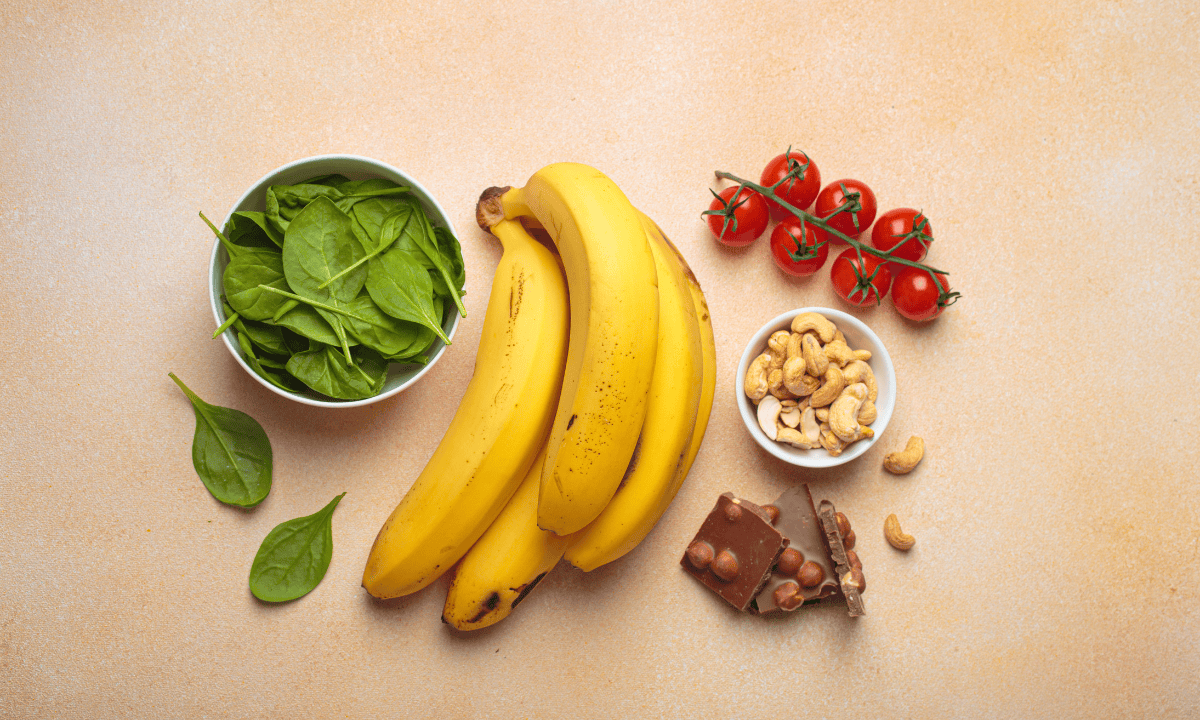
Other than choosing the right foods, a few simple habits can help you feel more comfortable as your stomach recovers.
Eating smaller, more frequent meals
Your stomach capacity is temporarily reduced after the procedure. Many people find it helpful to aim for five to six small meals throughout the day rather than three large meals. You may also not feel as hungry as you normally do, and that's completely expected. Even so, eating regularly is important to keep your body nourished and support the healing process.
After eating, try to remain upright for at least 30 to 60 minutes. Lying down too soon can trigger reflux, which can be uncomfortable.
Eating slowly
Chew thoroughly until food has a near-puréed consistency before swallowing. Rushing through meals can put unnecessary stress on your stomach. Eating in a relaxed way, on the other hand, gives your stomach time to process food comfortably.
Keeping evening meals light
Many people find it helpful to keep evening meals light, soft, and easy to digest. Choose options that are higher in protein and calories to help meet your nutritional needs without overwhelming your stomach.
A few other habits are worth keeping in mind across all your meals:
Try to avoid drinking large amounts during meals, as this can make you feel uncomfortably full more quickly. Instead, aim to have most of your fluids 30 minutes before or after eating – and continue sipping small amounts throughout the day to stay hydrated.
Skip foods high in insoluble fibre and gas-producing foods
Avoid foods with added sugars
As your stomach heals and your tolerance improves, you'll be able to ease back into your usual eating habits.
Staying hydrated
Aim for small, consistent sips about every 10 to 15 minutes. Keeping a water bottle nearby makes this easier to keep up with.
It helps to avoid straws during this time. Drinking through a straw causes you to swallow air, which may worsen bloating and gas.
When to contact your doctor
Most people recover without complications. Even so, it is worth knowing which symptoms to look out for so you can act quickly if needed.
Contact your doctor if you notice:
Persistent or worsening stomach cramps
Nausea and vomiting that doesn't settle
Fever
Black stools or blood in stools
Dizziness or faintness
While these can be signs of bleeding or infection at the surgical site, this is uncommon. Being aware of these signs simply means being prepared so that if your body sends a signal that something is off, you know exactly what to do.
If you experience any of the symptoms above, or if something about your recovery doesn't feel right, schedule an appointment with Thomson Medical. Our gastroenterology specialists will evaluate your condition and provide the appropriate care.
FAQ
How long should I follow a soft diet?
Most people follow a soft diet for a few days to two weeks, depending on how recovery progresses and their doctor's guidance.
Is it normal to feel bloated after a polyp removal?
Yes, it is very common to have mild gastric bloating after the surgery. However, it should ease within a few hours.
Can I drink coffee after the procedure?
Many doctors advise avoiding coffee for at least 24 to 48 hours after the procedure – your doctor can confirm what is right for your situation.
When can I return to my usual diet?
Many people begin gradually returning to their normal diet around the two-week mark, though this varies from person to person.
Are probiotics helpful after stomach polyp removal?
Yes, probiotics may be helpful after stomach polyp removal, as they help support recovery and manage post-procedure symptoms.
What if eating causes discomfort?
If eating causes discomfort, it may help to return to softer foods for a day or two. If symptoms persist, check in with your doctor.
Can diet prevent future stomach polyps?
While a diet cannot guarantee the prevention of future stomach polyps, it can help reduce chronic gastritis, one of the causes of stomach polyps.
The information provided is intended for general guidance only and should not be considered medical advice. For personalised recommendations and tailored advice based on your unique situations, request an appointment with Thomson Medical today.
For more information, contact us:
Thomson Medical Concierge
- 8.30am - 5.30pm
- WhatsApp: 9147 2051
Need help finding the right specialist or booking for a group?
Our Medical Concierge is here to help you. Simply fill in our form, and we'll check and connect you with the right specialist promptly.
Notice:
The range of services may vary between Thomson clinic locations. Please contact your preferred branch directly to enquire about the current availability.
Get In Touch