

Fibroids may affect your periods, and heavier or longer bleeding is often the first sign people notice. Whether they do depends mainly on where they sit. Fibroids could be the cause. But do fibroids actually affect periods, and if so, how?
Knowing how and when fibroids interfere with your period may help you to better understand what is happening to your body.
What are fibroids?
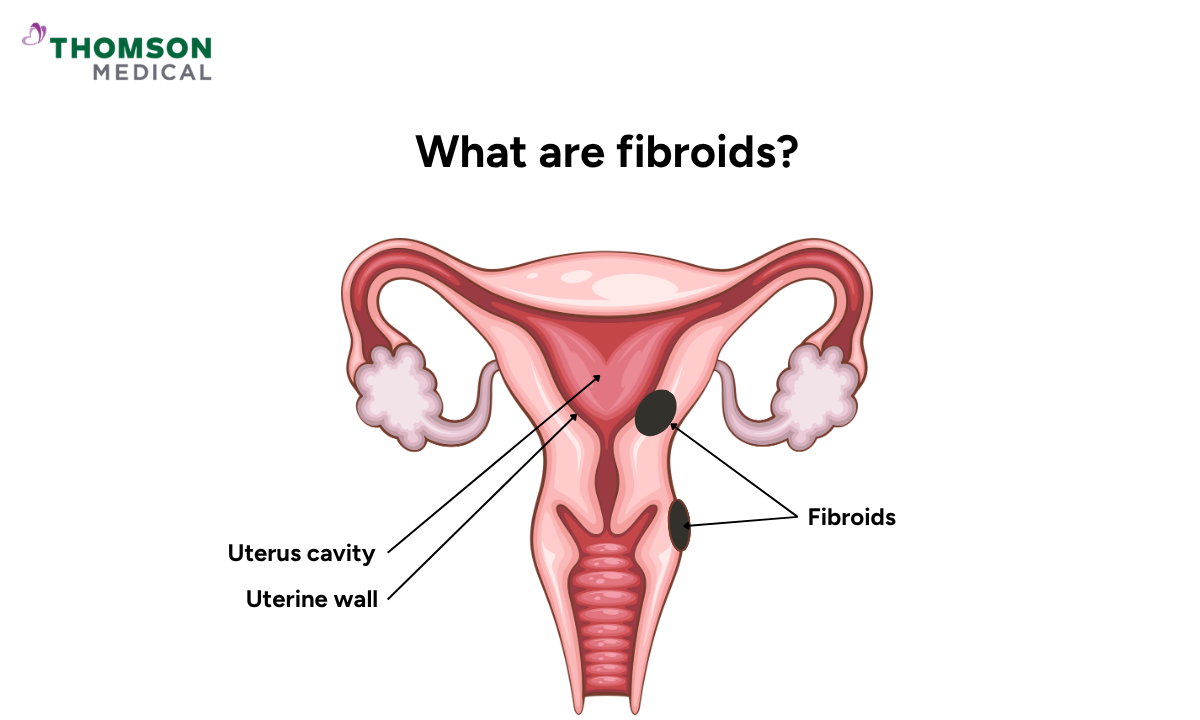
Uterine fibroids are non-cancerous growths that develop around or within your uterus (womb). They are made of muscle and fibrous tissue and may range from very small (about the size of a pea) to several centimetres across. However, women who have fibroids might not even realise it, as these growths often cause no symptoms at all.
They are most commonly diagnosed during a woman's reproductive years, typically between the ages of 30 and 50. This is because, although the exact cause of fibroids is not fully understood, oestrogen and progesterone – the hormones that regulate your menstrual cycle – play a role in stimulating their growth. This is why fibroids often shrink after menopause, when these hormone levels naturally decline.
How do fibroids affect periods?
While not all fibroids will affect your periods, when they do, it is usually because they alter the behaviour of the lining of your uterus (the endometrium). Fibroids may affect your periods in several ways:
They could enlarge the area of the uterine lining that sheds each month, which may lead to heavier menstrual blood flow.
They may interfere with the muscle contractions of the uterus that help slow menstrual bleeding.
Fibroids growing inside the uterine cavity (known as submucosal fibroids) may directly disrupt the lining.
They may trigger the formation of extra blood vessels around the fibroid, adding to a heavier flow.
These changes may occur alone or together, which is why bleeding related to fibroids could vary from woman to woman, even when their fibroids appear similar in imaging tests.
What symptoms might you notice?
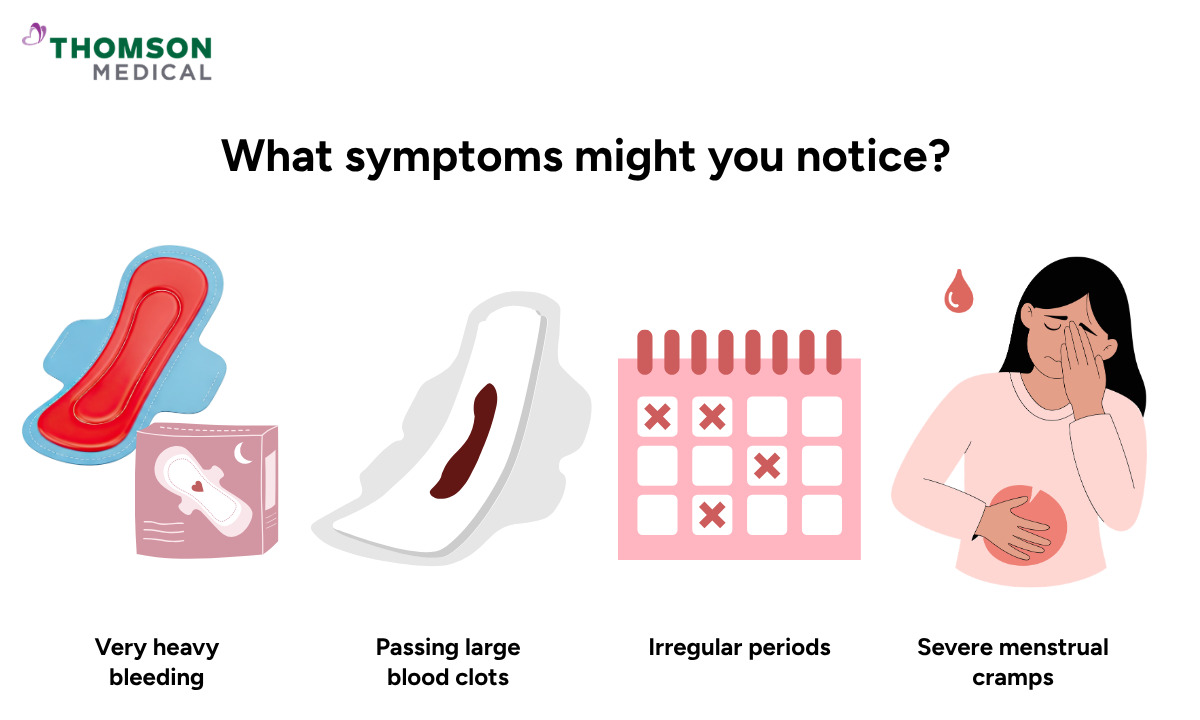
The symptoms of fibroids that affect periods may vary from woman to woman. While some women may only experience minor discomfort, others may find that their symptoms have a significant impact on their daily lives.
You may experience:
Heavy bleeding, for example, soaking through a pad or tampon every one to two hours
Passing large blood clots
Irregular periods or periods lasting longer than seven days
Painful periods with severe menstrual cramps
Spotting between periods
Fatigue, dizziness or breathlessness, which may be signs of anaemia from ongoing blood loss
Additionally, if you experience symptoms, you may find that fibroid-related pain becomes more noticeable during menstruation. This is because, during menstruation, your hormone levels shift, your uterus contracts more strongly, and blood flow to the uterus increases.
These factors could make the pressure, cramps and pelvic pain caused by your fibroids feel more intense.
If your periods have become more painful over time, fibroids may be the underlying cause. In this case, it would be appropriate to consult a gynaecologist. Request a consultation with Thomson Medical.
Our O&G specialists
Loading...
Do all fibroids cause period problems?
Whether or not symptoms develop depends on several individual factors. Fibroids are more likely to affect your periods if they are:
Location:
Fibroids growing inside the uterine cavity (submucosal fibroids) are more likely to cause heavier bleeding.
Size:
Large fibroids are more likely to lead to noticeable symptoms.
Number:
Having multiple fibroids may increase the chance of symptoms.
Your hormone levels:
These vary from woman to woman and may influence how fibroid symptoms change over time.
Hormone levels are the most variable and unpredictable factor. This is one reason why symptoms may fluctuate across your cycle and change over time, even if the fibroids themselves remain the same size.
What are the broader signs of fibroids?
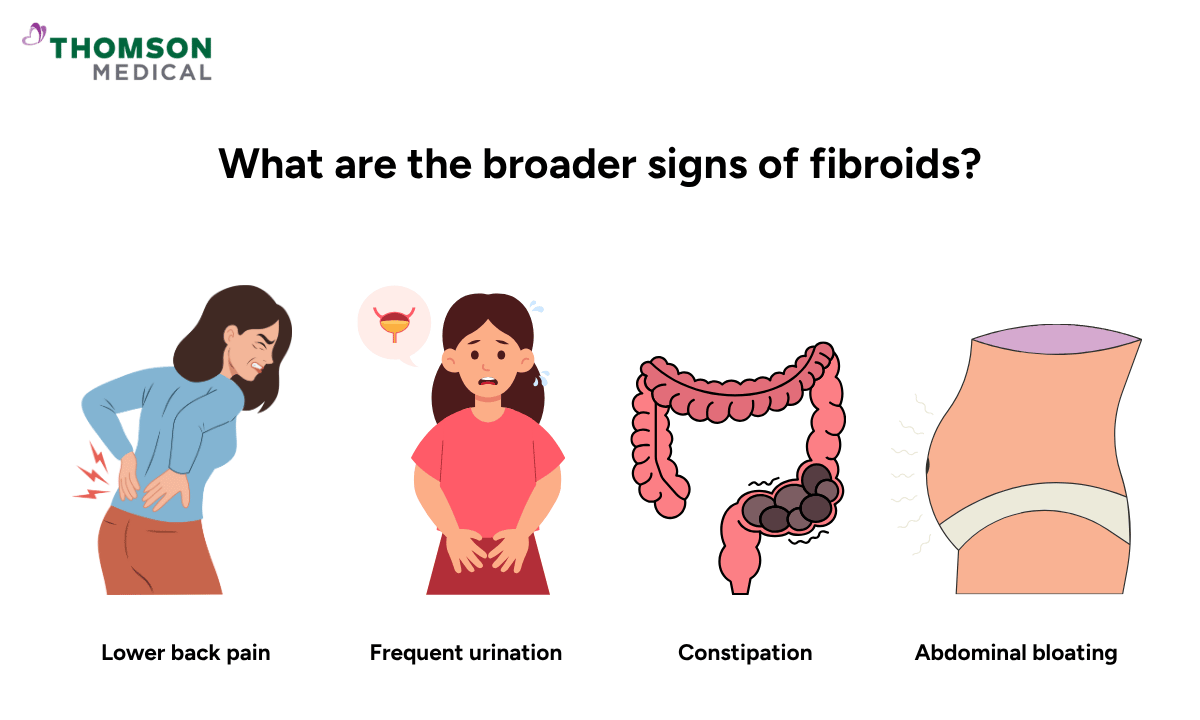
Changes to the menstrual cycle are a common sign of fibroids, but not the only one. Fibroids may also cause the following:
Feeling of fullness in the pelvic area
Lower back pain
Frequent urination or constipation
Abdominal bloating
Difficulty getting pregnant
As these symptoms could be mistaken for other conditions, fibroids are sometimes undetected for a while. However, once suspected, fibroids may usually be confirmed with an ultrasound scan.
How are fibroids managed?
There are several ways to manage fibroids. Your doctor will discuss the options that best suit your symptoms, your stage of life, and whether you are planning a future pregnancy.
Medication
Medication is usually the first step in managing fibroid symptoms, particularly if your symptoms are manageable but still affecting your daily life. Most medications work by easing symptoms such as heavy bleeding or pain, rather than shrinking the fibroids themselves.
Options may include:
Anti-inflammatory pain relief, such as ibuprofen, to ease pain and reduce bleeding
Hormonal contraception, such as the combined pill or progestogen-only pill
A progestogen-releasing intrauterine device (IUD)
Tranexamic acid taken during your period to help reduce blood loss
GnRH agonists or antagonists, which may temporarily shrink fibroids and are often used for a short period before surgery
If one medication does not ease your symptoms enough, your doctor may suggest trying a different option or a combined approach. Your doctor will assess which approach is most appropriate based on your symptoms and response to initial treatment.
Minimally invasive procedures
If medication does not bring enough relief, there are procedures that may help reduce fibroids without major surgery while preserving the uterus.
These include:
Uterine artery embolisation (UAE): which blocks the blood supply to fibroids, causing them to shrink
MRI-guided focused ultrasound: which uses sound waves to break down fibroid tissue
Radiofrequency ablation: which uses heat energy to shrink fibroids
Surgical options
Surgery may be recommended if fibroids are large, causing significant symptoms, or have not responded to other treatments.
Surgical options include:
Myomectomy: which removes the fibroids while preserving the uterus, may be suitable if you would like to conceive in the future
Hysterectomy: which involves removing the uterus entirely
For women who have experienced repeated recurrences and no longer wish to conceive, a hysterectomy may provide a more lasting solution. However, if you are still planning a family or would prefer to preserve your womb, your doctor will help you explore suitable alternatives.
If you are unsure which treatment is right for you, request an appointment with Thomson Medical. Our specialist could evaluate your condition and explain your treatment options to you.
What happens if fibroids are left untreated?
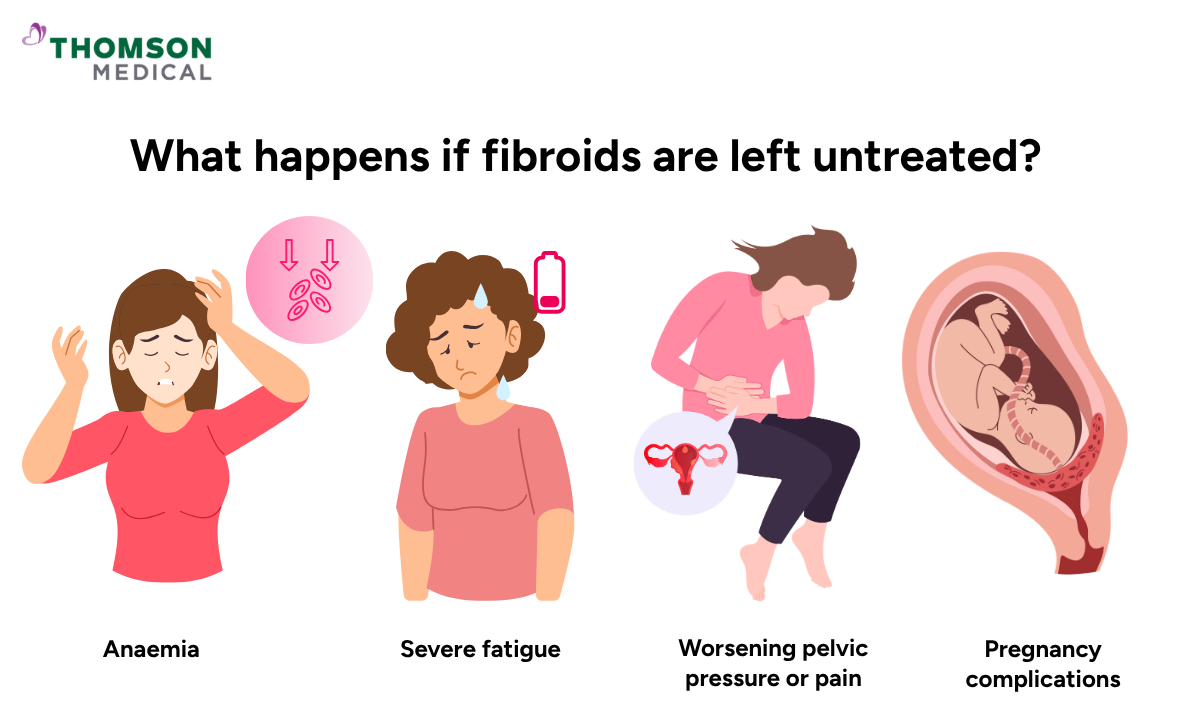
For some women, fibroids remain small and cause no significant problems over time. For others, however, symptoms may gradually build up and lead to complications such as the following:
Anaemia from persistent heavy blood loss
Severe fatigue that affects your daily activities
Worsening pelvic pressure or pain
Fertility or pregnancy complications, depending on the size and location of the fibroids
Fibroids rarely shrink on their own before menopause. In most cases, symptoms are unlikely to improve without some form of treatment or a significant hormonal change, such as menopause.
When should you see a doctor?
Fibroid symptoms could develop gradually, which means the shift from your usual pattern may feel slow rather than sudden.
It is worth speaking to your doctor if you notice:
Your periods are much heavier than they used to be
You are regularly passing large clots
Your periods last longer than seven days
You feel tired, dizzy, or breathless around the time of your period
Pelvic pain is affecting your daily routine
You do not need to wait until symptoms feel severe to seek advice. If something feels different from what is normal for you, it is always okay to check in with a doctor. Seeing your doctor early means fibroids could be identified and supported with the right care before symptoms become more difficult to manage.
FAQ
Can a fibroid block your period?
Fibroids usually do not completely block your menstruation. However, in rare cases, especially with fibroids located near or inside the uterine cavity (submucosal fibroids), they can disrupt normal menstrual flow.
This may lead to very light periods, irregular bleeding, or difficulty in blood passing out smoothly, rather than a complete stop to menstruation. Most often, fibroids are associated with heavy periods instead of blocked periods.
Can fibroids cause hormonal mood swings?
Fibroids themselves do not directly cause mood swings. However, related factors such as hormonal fluctuations, heavy menstrual bleeding, anaemia, and chronic pain can contribute to fatigue and mood changes.
Do hormones change after fibroid removal?
This depends on the type of procedure. Hormone levels usually remain the same after a myomectomy or minimally invasive treatments, and many women notice an improvement in symptoms that are sensitive to hormonal activity.
Hysterectomy does not directly change hormone levels if the ovaries are preserved, but if the ovaries are also removed, this brings on menopause.
What does fibroid discharge smell like?
Fibroids typically do not cause foul-smelling vaginal discharge. A strong or unpleasant odour is more likely to indicate an infection or another condition.
The information provided is intended for general guidance only and should not be considered medical advice. For personalised recommendations and tailored advice based on your unique conditions, request a consultation with Thomson Medical.
For more information, contact us:
Thomson Specialists (Women's Health)
Thomson Women's Clinic (TWC)
- Novena:
6592 6686 (Call), 8611 8986 (WA) - Bukit Batok:
6569 0668 (Call), 8686 3525 (WA) - Choa Chu Kang:
6893 1227 (Call), 8282 1796 (WA) Jurong:
6262 8588 (Call), 6262 8588 (WA)- Katong (female doctor):
6970 2272 (Call), 8611 9020 (WA) - Punggol:
6243 6843 (Call), 8811 0328 (WA) - Sembawang: 6753 5228
- Sengkang: 6388 8125
- Serangoon (female doctor): 6382 3313
- Tampines: 6857 6266
- Tiong Bahru: 6276 1525