

Endometrial cancer, which starts in the lining of the womb, is a commonly diagnosed gynaecological cancer in Singapore. It also tends to announce itself through abnormal vaginal bleeding, which is part of why it’s frequently picked up at a stage when treatment works well.
Here’s what raises the risk factors of endometrial cancer, the signs worth acting on, and how it’s diagnosed and treated.
What is endometrial cancer?
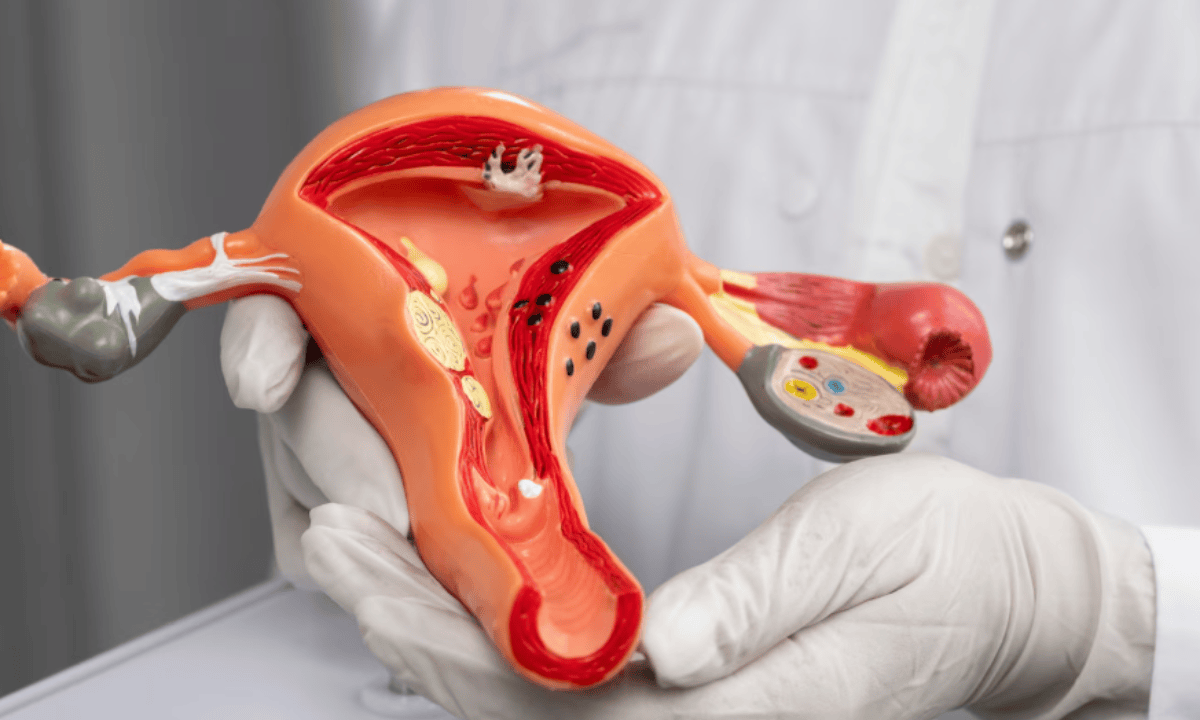
Endometrial cancer is a type of gynaecological cancer that develops in the endometrium, the inner lining of the uterus (womb). It is one of the most common gynaecological cancers and typically occurs after menopause, though it may also affect younger women.
Although this cancer is often referred to as uterus or uterine cancer, the two terms are not exactly the same. Uterus cancer is a broader term that describes cancers originating in the uterus, including endometrial cancer and the much rarer uterine sarcoma, which develops in the muscle or supporting tissues of the uterus.
What are the risk factors of endometrial cancer?
As of now, the exact cause of endometrial cancer is not yet known. But the risk of developing this condition may increase as you get older, especially if you are over 50 and have gone through menopause.
This increased risk is linked to longer exposure to oestrogen (the hormone that helps the uterine lining grow and thicken), especially when its effects are not adequately balanced by progesterone (the hormone that supports the menstrual cycle and early stages of pregnancy).
After menopause, your ovaries largely stop producing oestrogen and progesterone. However, the body can still produce small amounts of oestrogen from other tissues. When oestrogen is not balanced by enough progesterone, this is sometimes referred to as “unopposed oestrogen”, which can overstimulate the uterine lining and increase the likelihood of developing endometrial cancer.
There are also several other factors that may increase your chances of developing endometrial cancer, such as:
Excess body weight or obesity: this may increase oestrogen levels and contribute to the abnormal growth of the endometrium, particularly after menopause.
Endometrial hyperplasia: this is a condition where the endometrium grows excessively thick, which may increase the risk of endometrial cancer if left untreated.
Starting menstruation at an early age or reaching menopause later in life: this may increase the length of time the endometrium is exposed to oestrogen.
Metabolic conditions, including type 2 diabetes, high blood pressure, and metabolic syndrome: these are associated with an increased risk of endometrial cancer.
Polyendocrine metabolic ovarian syndrome (PMOS), infertility, or irregular menstrual cycles: these may result in prolonged exposure to oestrogen without sufficient progesterone to balance them.
Furthermore, a small proportion of endometrial cancers are associated with inherited genetic conditions such as Lynch syndrome and Cowden syndrome.
What are the symptoms of endometrial cancer?
Endometrial cancer could cause symptoms even at an early stage, which may make it easier to detect and treat. However, these symptoms can vary between individuals and depend on the stage of the disease. You should see your doctor or gynaecologist promptly if you notice any of the following:
Abnormal vaginal bleeding (bleeding between periods, unusually heavy periods, and any bleeding or spotting after menopause).
Vaginal bleeding after menopause (12 months after your last menstrual period).
Abnormal vaginal discharge, especially if it is watery, pink, blood‑stained or has an unpleasant odour.
Persistent pelvic or lower abdominal pain or pressure.
Pain during sexual intercourse or urination.
Unexplained weight loss.
If you experience abnormal vaginal bleeding or other symptoms mentioned above, it’s recommended that you consult a doctor. Schedule an appointment with Thomson Women's Clinic & Cancer Surgery for a consultation with a gynaecological oncologist.
Our women's cancer specialists
Loading...
How is endometrial cancer diagnosed?
If you have symptoms that may suggest endometrial cancer, your doctor will review your symptoms, medical history, family history, and overall health. They may also carry out a pelvic examination and further tests to check for any unusual changes in the uterus or surrounding areas.
Common tests used to diagnose endometrial cancer include:
Pelvic examination:
During a pelvic exam, your doctor will examine the vagina, cervix, uterus and surrounding areas to check for any unusual changes, lumps, or swelling.
Transvaginal ultrasound:
During a transvaginal ultrasound, your doctor gently inserts an ultrasound probe into the vagina to create detailed images of the uterus.
This procedure helps assess the thickness of the endometrium and identify any areas that may need further investigation.
Endometrial biopsy:
This is the main test used to confirm endometrial cancer. Your doctor takes a small sample of tissue from the lining of the uterus through the cervix and examines it under a microscope for cancer cells.
Dilation and curettage (D&C):
If an endometrial biopsy does not provide enough tissue or the diagnosis remains unclear, your doctor may recommend a D&C.
This procedure involves gently widening the cervix to collect tissue from the lining of the uterus for further examination.
Hysteroscopy:
During a hysteroscopy, your doctor passes a thin, lighted instrument called a hysteroscope through the vagina and cervix to look directly inside the uterus.
If they find an abnormal area, they may take a small tissue sample for testing. In some cases, hysteroscopy is performed together with a D&C procedure.
Imaging tests:
Once your doctor confirms endometrial cancer, they may recommend imaging tests to assess the size and location of the tumour. These tests can also check whether the cancer has spread beyond the uterus.
Depending on your individual conditions, these may include CT scans, MRIs, PET scans, and chest X-ray tests.
What are the types and stages of endometrial cancer?
Endometrial cancer can be classified into two main types based on how the cancer develops and behaves. Type 1 endometrial cancer is generally less aggressive, tends to develop slowly over several months or years, and is often detected at an early stage. Type 2 endometrial cancer is less common but tends to be more aggressive and has a higher likelihood of spreading beyond the uterus.
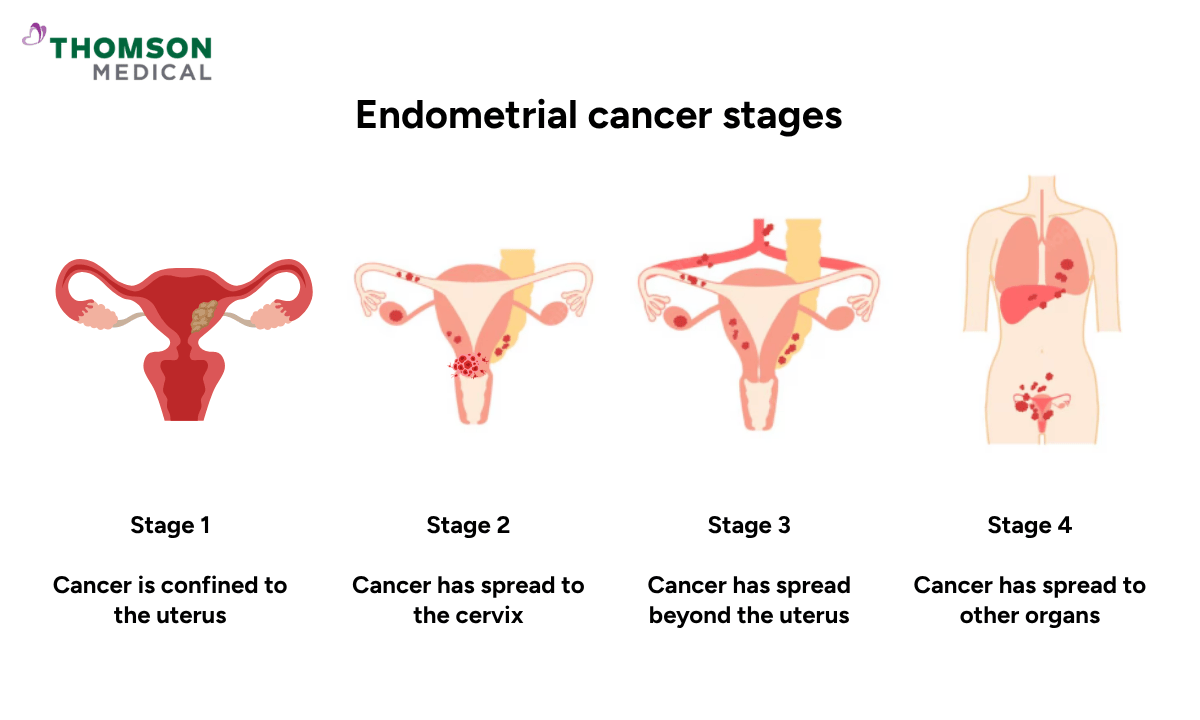
Endometrial cancer is also classified into four main stages, based on how far the cancer has spread. Generally, a higher stage indicates that the cancer has spread further from where it first developed.
Stage 1:
The cancer is confined to the uterus and has not spread to nearby lymph nodes or distant organs. It may be limited to the endometrium, the inner uterine lining of the uterus, or may have grown deeper into the myometrium, the muscular layer of the uterus.
Stage 2:
The cancer has spread from the uterus into the connective tissue of the cervix, known as the cervical stroma, but remains within the uterus and cervix.
Stage 3:
The cancer has spread beyond the uterus but remains in nearby areas of the pelvis or abdomen. It may affect the ovaries, fallopian tubes, vagina, surrounding tissues, or nearby lymph nodes.
Stage 4:
The cancer has spread beyond the pelvic region. It may affect nearby organs such as the bladder, bowel, or more distant parts of the body, including the lungs, liver, or bones, as well as distant lymph nodes.
What are the treatment options for endometrial cancer?
The most appropriate treatment for endometrial cancer depends on several factors, including the stage and grade of the cancer, whether it has spread beyond the uterus, your age, overall health, and your future fertility goals. Your gynaecological oncologist will assess your individual circumstances and recommend a personalised treatment plan.
Surgical treatment
Hysterectomy is the main surgical treatment for endometrial cancer, especially when the cancer is diagnosed at an early stage and remains within the uterus (womb). The primary aims of surgery are to remove the cancer and to assess whether it has spread (metastasised) to nearby tissues or lymph nodes.
During the operation, your surgeon will carefully examine the abdominal and pelvic regions, including the peritoneum (the membrane that lines the inside of the abdomen and pelvis), and other suspicious areas to check for cancer cells. If cancer is found outside the uterus, your doctor may recommend additional treatments such as radiotherapy or chemotherapy.
Non-surgical treatment
Non-surgical treatments may be recommended in addition to surgery (as adjuvant therapy) or, in some situations, as an alternative when surgery is not suitable. The treatments are commonly used to control the cancer, slow its growth, and relieve symptoms.
Radiotherapy:
Radiotherapy is a cancer treatment that utilises high‑energy radiation to destroy cancer cells, reduce the risk of the cancer coming back, or control cancer in specific areas such as the pelvis or vaginal vault (the upper part of the vagina that surrounds the cervix).
Chemotherapy:
Anti‑cancer medicines that travel through the bloodstream to destroy cancer cells that may have spread beyond the uterus or to treat higher‑risk or recurrent cases.
Hormone therapy:
Hormone therapy may be suitable for certain endometrial cancers that respond to hormones.
It can provide a temporary alternative to hysterectomy for women who wish to preserve their fertility.
Immunotherapy:
This treatment works by helping the immune system recognise and attack cancer cells. This treatment may be recommended for some patients with advanced, recurrent, or metastatic endometrial cancer.
Targeted therapy:
This treatment uses medicines that target specific genetic or molecular abnormalities that enable cancer cells to grow and survive.
These drugs are usually offered to selected patients with advanced or recurrent disease, often in combination with other treatments
For higher or advanced stages of endometrial cancer, treatment is often more complex. It typically involves a combination of surgery, radiotherapy, chemotherapy, hormone therapy, or newer options such as immunotherapy or targeted therapy.
How much does endometrial cancer treatment cost in Singapore?

The cost of endometrial cancer treatment in Singapore varies depending on the type and stage of cancer, the treatment required, and whether you receive care at a public or private hospital. Your final bill may also depend on the complexity of your treatment, length of hospital stay, medications, and available subsidies or insurance coverage.
Surgical treatment
The total cost of a hysterectomy for endometrial cancer and related procedures in Singapore typically includes anaesthesia, surgeons’ fees, hospital and operating theatre charges, and medications, as well as standard inpatient care for that admission.
Based on bill information from the Ministry of Health (MOH), such as SI825U, SI827U, and SI830U, typical inpatient bills for a total hysterectomy for a cancerous uterine condition for Singapore citizens in public hospitals are as follows:
For subsidised patients in B2 or C wards, the typical bill for a single surgical admission is roughly around SGD 2,600 to 8,500.
For B1 wards, which are 20% subsidised, and A-class (unsubsidised) wards, the typical bill is higher, ranging from approximately SGD 15,000 to 27,000.
In private hospitals, typical hysterectomy costs can range from around SGD 25,800 to about SGD 53,000 or more, depending on the specific procedure, its complexity, and the length of stay.
Non-surgical treatment
The cost of non-surgical treatment for endometrial cancer in Singapore varies depending on the type of treatment, number of treatment sessions or cycles, hospital setting, medications used, and your available subsidies or insurance coverage.
Hormone therapy: SGD 25 to 250 for a typical full course or ongoing management over several months.
Chemotherapy: the cost is charged per cycle, and most patients need several cycles. In a public setting it can cost from around SGD 300 to 3000, but in a private setting it can reach up to SGD 14,000 per cycle on average.
Targeted therapy: SGD 5,000 to 15,000 per cycle or month, depending on the specific medication and how long treatment continues.
Immunotherapy: the cost is charged per infusion, and how many infusions you need depends on your treatment plan. It can cost around SGD 8,000 to 10,000 per infusion in private-care settings.
Please note that these are estimated costs based on the information available at the time of writing, and they may have changed since then. These costs may also vary depending on the required treatment, hospital, and location of care.
If you are considering treatment, please contact our medical concierge team at Thomson Medical, who can discuss your specific situation with you and provide personalised cost guidance.
Available insurance
Singapore citizens and permanent residents may be able to use national healthcare schemes and private insurance to help manage the cost of endometrial cancer treatment.
MediSave:
MediSave can be used to help offset the cost of endometrial cancer treatment, which may include daily ward charges, treatment fees, investigations, and medicines. MediSave can be used up to SGD 1,130 per day for the first two days, then SGD 400 per day for subsequent days.
MediSave can also be used for selected outpatient cancer treatments, with monthly withdrawal caps tied to the cancer drug list (CDL) categories, as well as separate limits for cancer drug administration set out by MOH.
Integrated Shield Plans (IPs):
You may use integrated shield plans (IPs), which are private insurance providers that sit on top of your national medical insurance (MediShield Life) and offer additional coverage beyond what is provided. However, you will still need to pay some money out of pocket as a co-payment.
As treatment costs and insurance coverage can vary, you should check your eligibility and level of coverage with your hospital, insurer, or financial counsellor before starting treatment. Withdrawal limits are reviewed periodically, so they may have changed since this article was written.
FAQ
What is the outlook of treatment when endometrial cancer has spread?
If uterine cancer is detected early, while it is still confined to the uterus, treatment is generally effective. However, once the cancer has spread to distant organs such as the lungs, liver or bones, the outcome is less favourable.
If I have endometrial cancer, can I still get pregnant?
Pregnancy is usually not possible after a hysterectomy because the surgical removal of the uterus prevents you from carrying a pregnancy. However, some younger women with very early-stage, low-grade endometrial cancer may be suitable for treatment that preserves fertility, with hormone therapy and close monitoring.
However, this approach is not suitable for everyone and should be carefully discussed with your gynaecological oncologist and fertility specialist.
Where is the most likely place for endometrial cancer to spread?
Endometrial cancer is most likely to spread first within the pelvis, especially to nearby pelvic tissues and lymph nodes. Meanwhile, when endometrial cancer has become distant metastasis (the spread of cancer cells from the site of the primary tumour to other organs or tissues), it is most likely to spread to the lungs.
What are the possible complications of endometrial cancer?
When diagnosed and treated at an early stage, endometrial cancer generally responds well to treatment. However, if left untreated or diagnosed at a more advanced stage, complications may occur, including:
- Spread of the cancer to nearby organs or distant metastasis to other parts of the body.
- Anaemia, which may develop due to prolonged or heavy vaginal bleeding.
The information provided is intended for general guidance only and should not be considered medical advice. For personalised recommendations and advice based on your individual circumstances, schedule an appointment with Thomson Medical.
For more information, contact us:
Thomson Medical Concierge
- 8.30am - 5.30pm
- WhatsApp: 9147 2051
Need help finding the right specialist or booking for a group?
Our Medical Concierge is here to help you. Simply fill in our form, and we'll check and connect you with the right specialist promptly.
Notice:
The range of services may vary between Thomson clinic locations. Please contact your preferred branch directly to enquire about the current availability.
Get In Touch