

After experiencing a failed IVF cycle, it is understandable if you are feeling emotionally drained and physically exhausted. You may also wonder how soon you could try again and whether you need to take a break.
Knowing about your recovery time and the factors that may affect when you try again could help you to feel more informed and prepared for your next cycle.
What does a failed IVF cycle mean?
A failed IVF cycle means that the treatment did not result in an ongoing pregnancy. This may happen at different stages of treatment, such as when a cycle is stopped before egg retrieval because the ovaries do not respond well to the medication. In other cases, no embryos may be available for transfer, an embryo may be transferred but fail to implant, or it may already implant but result in an early pregnancy loss.
A failed cycle is usually confirmed through a human chorionic gonadotropin (hCG) blood test, specifically the beta-hCG test. If the result is negative, it may mean that pregnancy has not been established. But, if the beta hCG blood test rises before falling again, this may indicate a chemical pregnancy, which is a very early pregnancy loss.
What happens to your body after a failed IVF cycle?
After a failed IVF cycle, your hormone levels may gradually return to their normal baseline over time. However, if you are still taking progesterone or oestrogen, these medications may prevent your period from starting while you continue taking them, as they help to maintain the lining of your womb.
Once your fertility clinic advises you to stop taking these medications, your hormone levels will fall and the lining of your womb will begin to shed, causing a menstrual period. You may also experience bloating, breast tenderness, fatigue, or mild cramping for a short time while your hormone levels adjust. These symptoms may usually subside as your body returns to its normal menstrual cycle.
How soon to try again after a failed IVF cycle?
There is no fixed waiting period after a failed IVF cycle; the timing depends on your treatment plan, whether you have frozen embryos available, and how your body has recovered from the previous cycle.
If you have frozen embryos, you may be able to have a frozen embryo transfer (FET) in your next menstrual cycle, once your period has returned and your fertility specialist confirms that you are ready.
However, if you require another cycle involving ovarian stimulation and egg retrieval, your specialist may advise waiting one or two menstrual cycles to give your ovaries time to recover. You may also need a longer rest period if you experienced complications such as ovarian hyperstimulation syndrome (OHSS).
What factors determine when you could try IVF treatment again?
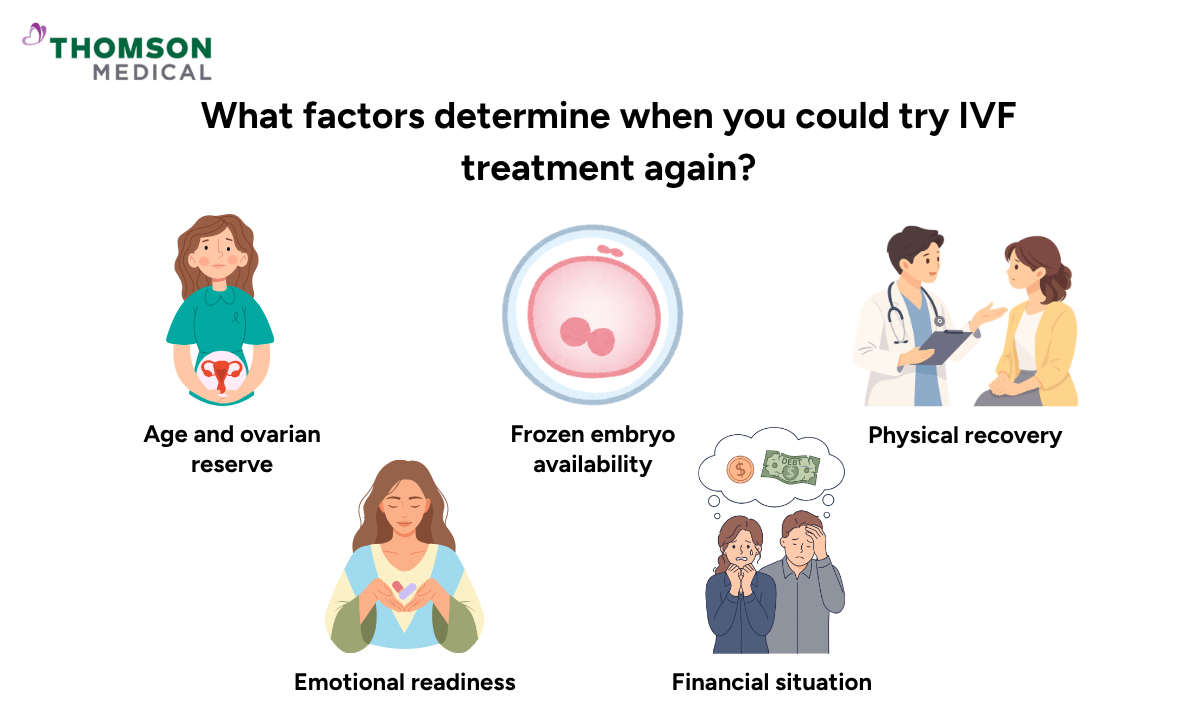
The decision about when to start another IVF cycle is based on various factors related to your health and medical history. Several factors may affect when you could start a new IVF treatment, these include:
Age and ovarian reserve:
Your age and ovarian reserve (the number of eggs remaining in your ovaries) may affect how soon your specialist recommends another cycle.
As egg quality and quantity decline with age, women with a lower ovarian reserve may be advised starting the next IVF cycle sooner.
Frozen embryo availability:
If you have frozen embryos available, you may be able to proceed with a frozen embryo transfer (FET) as soon as your next menstrual cycle.
However, if you do not have any frozen embryos, you may need to undergo another round of ovarian stimulation and egg retrieval before an embryo could be transferred, which may take longer.
Physical recovery:
Your specialist may check whether your body has recovered from the previous IVF cycle before starting another one.
This may include checking that your menstrual cycle and hormone levels have returned to their usual pattern and that your ovaries and uterus are ready for further treatment.
If you experienced complications such as ovarian hyperstimulation syndrome (OHSS), you may need to wait longer before trying again.
Emotional readiness:
After a failed IVF cycle, you may need time to process feelings of disappointment, grief, or anxiety before starting treatment again.
Taking a short break may give you time to recover emotionally and decide when you are ready to continue.
Financial situation:
The cost of another IVF cycle may also affect your decision to try again, because you may need time to plan for the costs of medication, monitoring, egg retrieval, laboratory procedures, and embryo transfer.
If you are unsure when you should try IVF treatment again, speak with an O&G doctorfor advice based on your individual circumstances. Schedule an appointmentwith Thomson Medical.
Our fertility doctors in Singapore
Loading...
What might your fertility specialist review after a failed IVF cycle?
After a failed IVF cycle, your fertility specialist may review your previous IVF treatment to understand what may have affected the outcome. These may include:
Reviewing your ovarian response:
Your doctor may review how your ovaries responded to stimulation, including the number of eggs collected, how many were fertilised, and how the embryos developed.
This may help identify whether changes to your stimulation treatment may be needed.
Evaluating the womb lining:
Your doctor may check the thickness and pattern of your womb lining and refine the timing, dose, or method of your progesterone support.
Treating structural issues:
If an ultrasound or hysteroscopy reveals polyps, fibroids, or scar tissue (adhesions) inside the womb, addressing these issues may help to create a healthier environment for implantation.
Balancing underlying health conditions:
Unmanaged thyroid disorders, high prolactin levels, or insulin resistance may disrupt hormonal stability. Therefore, treating these conditions may help optimise your body for the next implantation.
Assessing sperm health:
Because sperm quality directly may also affect embryo development, your doctor may recommend sperm testing, such as a DNA fragmentation test, for your partner.
What might change in your next IVF cycle?
The results of your previous cycle could help your fertility specialist decide whether adjustments are necessary when you try IVF again. If adjustments to your next cycle are appropriate, your specialist may discuss the following:
Changing your medication doses or ovarian stimulation plan
Adjusting how your womb lining is prepared and when embryo transfer takes place
Reviewing whether a fresh or FET is appropriate
Reviewing how long embryos develop in the laboratory before transfer
Additionally, if your earlier IVF cycle had low egg fertilisation rates, your specialist may recommend changing the fertilisation method, such as using intracytoplasmic sperm injection (ICSI) for your next cycle. Unlike conventional IVF, where sperm fertilise eggs “naturally” in a dish, an embryologist injects a single sperm straight into the egg during ICSI.
Spindle imaging at Thomson Fertilty
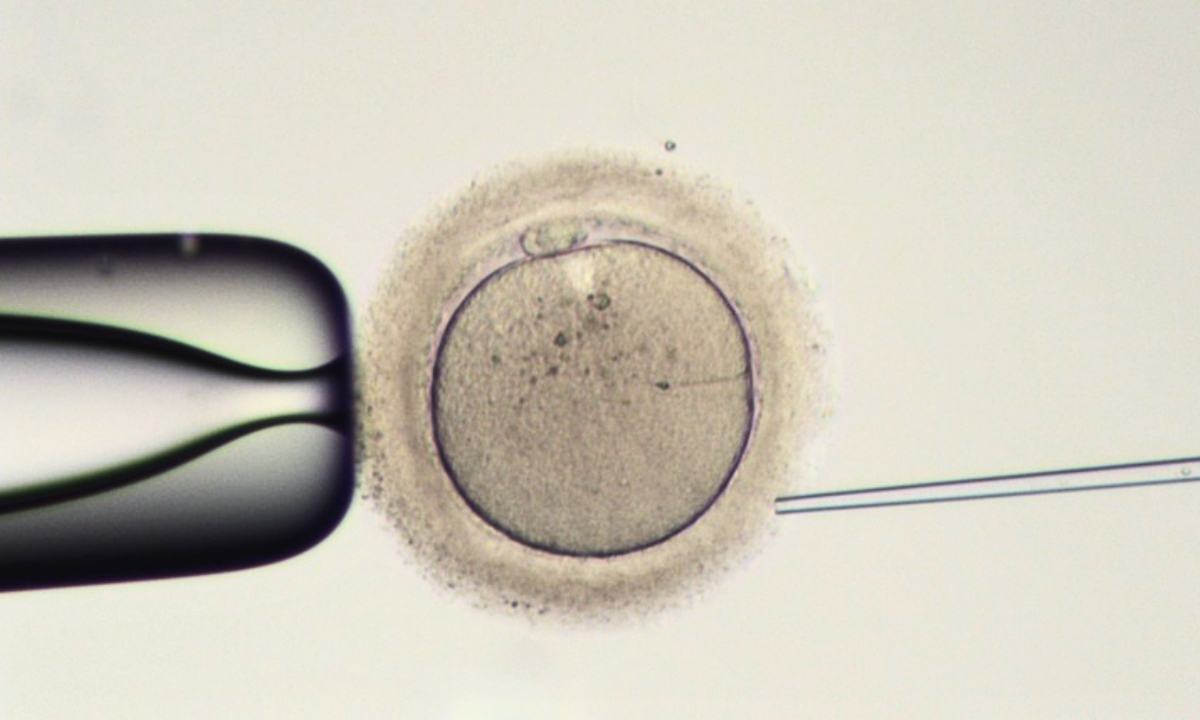
ICSI involves injecting a single sperms directly into an egg. Inside the egg is a structure called the spindle, which holds the egg's chromosomes in position so they separate correctly once the egg is fertilised.
The spindle can't be seen under a standard microscope. Embryologists normally use the polar body, a small cell on the egg's surface, as a rough guide to where it is likely to sit. In a proportion of eggs, though, the spindle is somwhere else, and the needle can pass close to it wihout the embryologist knowing.
Spindle imaging uses polarised light to make the spindle visible during the procedure. The embryologist can then see where is acutally is aposition the needle away from it. Thomson Fertility Singapore in Novena offers spindle imaging alongside astand ICSI, and your fertility specialsit can advise whether it is relevant in your case.
How to prepare for your next IVF cycle?
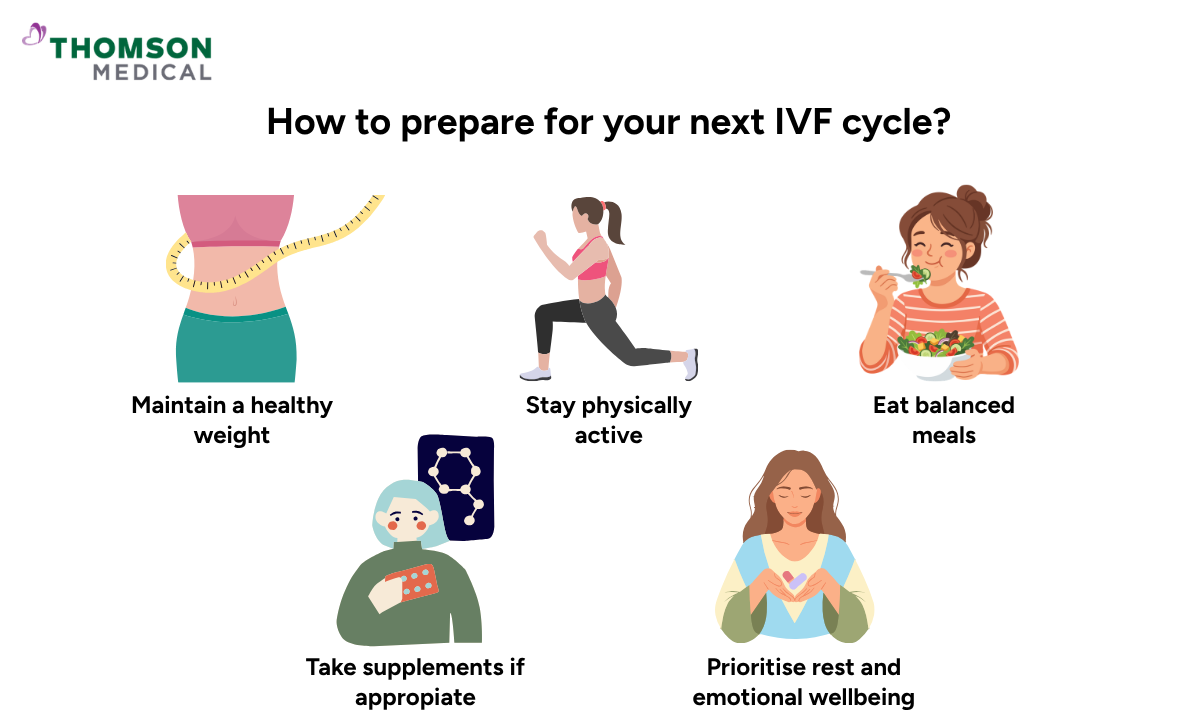
Although there are no guaranteed steps to improve your outcome for the next IVF cycle, having healthy daily habits may help prepare your body for the physical demands of treatment. You may also consider trying these following steps:
Maintain a healthy weight:
Having a body mass index (BMI) within a healthy range may help support hormone balance and ovarian function.
Stay physically active:
Staying physically active with low-impact activities, such as yoga, walking, or light stretching, while avoiding strenuous or high-impact exercise.
Eat balanced meals
Focus on whole foods that are rich in lean proteins, vitamins, and minerals from vegetables and fruits, as well as healthy unsaturated fats, such as olive oil and nuts.
Take supplements if appropriate:
Some supplements, such as folic acid, vitamin D, or coenzyme Q10, may be considered based on your doctor's recommendations to support your reproductive health function.
Prioritise rest and emotional wellbeing:
Chronic stress and poor sleep may have a negative impact on your fertility, so light exercise, mindfulness, and regular rest may help you feel supported throughout your cycle.
Emotional support from your partner or private counselling may help you to manage the emotional stress and feel more prepared for the next IVF treatment.
Stop smoking and minimise your alcohol intake:
Nicotine and excessive alcohol intake may affect egg and sperm quality.
FAQ
How many IVF cycles should you try?
There is no fixed number of IVF cycles that every couple should try; some couples may become pregnant after their first cycle, while others may need several attempts depending on factors such as age, ovarian reserve, and embryo quality.
However, your fertility specialists may assess your previous treatment and discuss whether it is appropriate to continue with another cycle, make changes to your treatment plan, or consider a different approach.
Does a failed IVF cycle affect your next outcome?
A failed IVF cycle does not necessarily mean that your outcome may be unfavourable in the next treatment. However, the unsuccessful cycle may provide useful information about how your body responded to the treatment and how the embryos developed.
Based on this information, your fertility specialist may adjust your medication doses, ovarian stimulation plan, or embryo transfer timing that may improve your chances in the next cycle.
When should you consider a different approach?
A different approach may be considered when several IVF cycles have not resulted in pregnancy, particularly when there is no clear reason why treatment has not worked. Your fertility specialist may review your previous cycles, including embryo development, the uterus, sperm health, and your response to hormone treatment.
Based on the findings, your doctor may recommend changes to your ovarian stimulation plan, embryo transfer approach, or other aspect of fertility treatments. Further tests or options such as embryo genetic testing or donor eggs or sperm may also be discussed where appropriate.
Can you get pregnant naturally after a failed IVF cycle?
It is possible to become pregnant naturally after a failed IVF cycle, particularly if you have unblocked fallopian tubes, regular ovulation, and normal sperm health. You may resume trying naturally once your menstrual cycle returns and your specialist confirms that your pelvic organs have recovered from stimulation.
However, your chances may depend on factors such as age, medical history, and any underlying medical conditions.
The information provided is intended for general guidance only and should not be considered medical advice. For personalised advice based on your conditions, schedule a consultation with Thomson Medical.
For more information, contact us:
Thomson Fertility Centre
- Paragon: 6252 7766
- Novena: 6399 3758, 8811 0358 (WA)