

Fibroids affect people differently. Many cause no symptoms at all and need nothing more than monitoring. For others, the effect shapes their entire week, with heavy periods that need planning around, bloating and pelvic pressure, and the persistent tiredness that often comes with iron deficiency from heavy bleeding.
If symptoms are affecting your daily life, there are several treatment options available in Singapore, from medication to minimally invasive procedures such as uterine fibroid embolisation and surgical options including myomectomy and hysterectomy. Which procedure is required depends on the size and location of the fibroids, your symptoms, your age, and whether you’re planning a pregnancy. Here’s what each option involves and how the decision is usually approached.
What are fibroids?
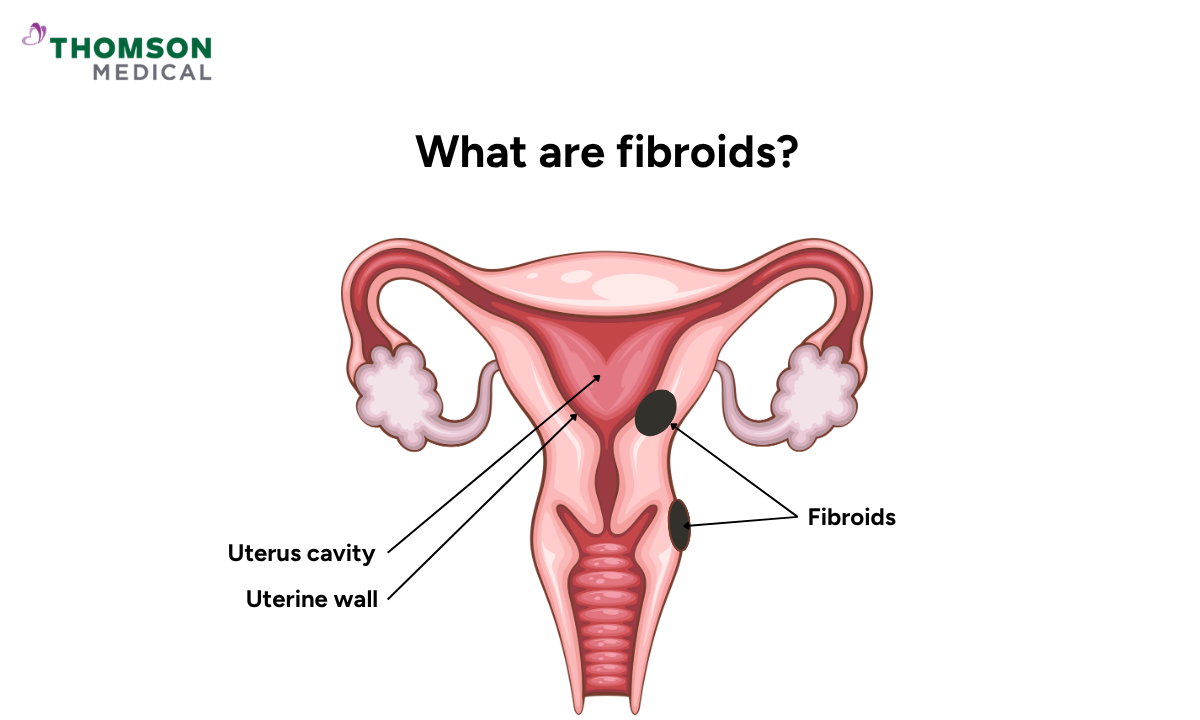
Fibroids are non-cancerous growths that develop around or within your uterine wall. They are made of muscle and fibrous tissue, and they may range from very small (about the size of a pea) to relatively large. You may also hear them called uterine myomas or leiomyomas.
Fibroids are a common condition among women, yet most cause no symptoms and go unnoticed until a routine scan picks them up.
How do fibroids form?
The exact cause of fibroids is not fully known, but doctors believe a combination of factors plays a role.
Oestrogen and progesterone, the hormones that regulate your menstrual cycle, appear to encourage fibroid growth. This is why fibroids tend to develop during your reproductive years and often shrink after your menopause, when your hormone levels drop naturally.
Other factors that may increase your risk include:
A family history of fibroids
Starting your period at a young age
Being overweight
A diet low in fruits and vegetables
When should you see a doctor?
Many women with fibroids experience no symptoms at all and do not need any treatment.
You should speak to a doctor if you notice:
Heavy menstrual bleeding that soaks through your pads or tampons quickly
Pelvic pain or pressure, especially a feeling of fullness or bloating in your lower abdomen
Frequent urination or difficulty fully emptying your bladder
Constipation or a feeling of pressure in your back passage
Pain during sexual intercourse
Lower back pain
Your periods lasting longer than a week
If you experience sudden heavy bleeding with dizziness or breathlessness, seek urgent medical attention or go to the nearest emergency department. For ongoing symptoms such as heavy periods and persistent tiredness, request an appointment with Thomson Medical for a diagnosis.
Our O&G specialists
Loading...
How are fibroids diagnosed?
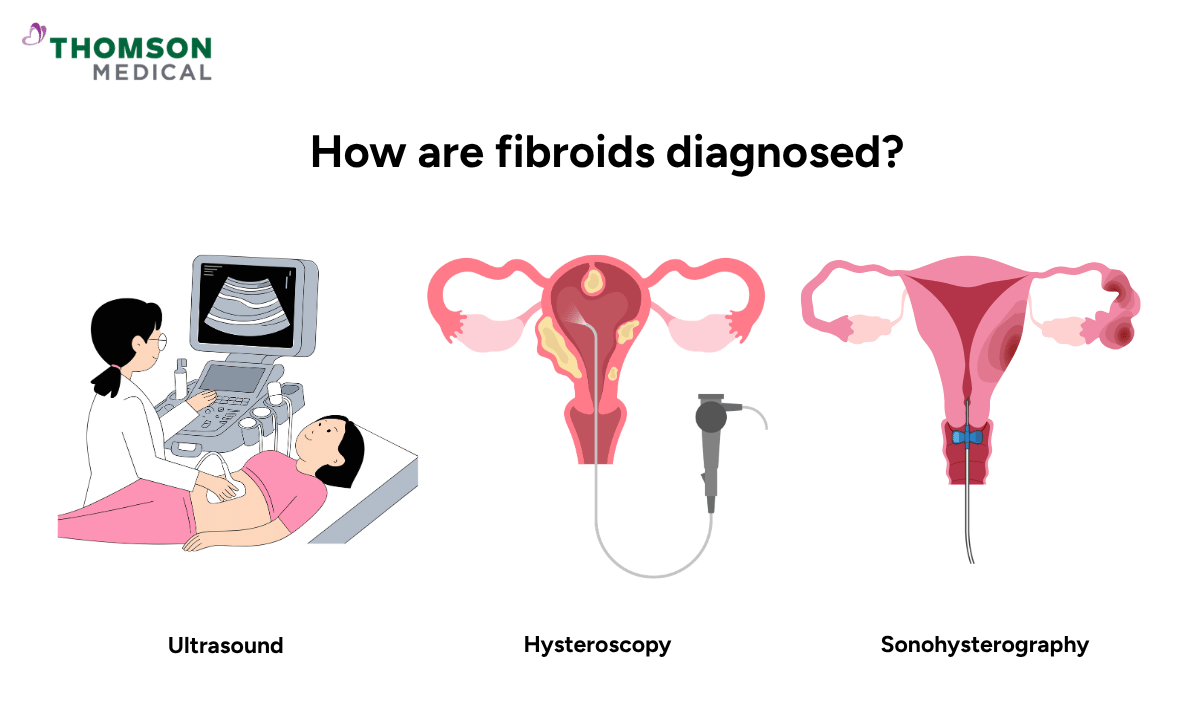
If your doctor suspects you have fibroids, they will usually begin by asking about your symptoms and carrying out a pelvic examination.
To confirm the diagnosis, they may recommend:
Ultrasound:
Uses sound waves to create images of your uterus, showing the size and location of your fibroids. It may be done on your abdomen or internally through a transvaginal ultrasound.
Magnetic resonance imaging (MRI):
An MRI scan may be recommended when your ultrasound results are unclear or to help distinguish your fibroids from other conditions.
Hysteroscopy:
During a hysteroscopy, your doctor passes a thin, flexible camera gently through the cervix. This is especially helpful for detecting fibroids that sit within your uterine cavity.
Sonohysterography:
A small amount of fluid is gently introduced into the uterus before an ultrasound scan, which makes it easier to spot fibroids inside your uterine cavity.
Knowing the size, number, and exact location of your fibroids helps your doctor recommend the most suitable treatment for you. For example, fibroids inside your uterine cavity are more likely to cause heavy bleeding and may be treated differently from those on the outer surface of your uterus.
What treatment options are available for fibroids in Singapore?
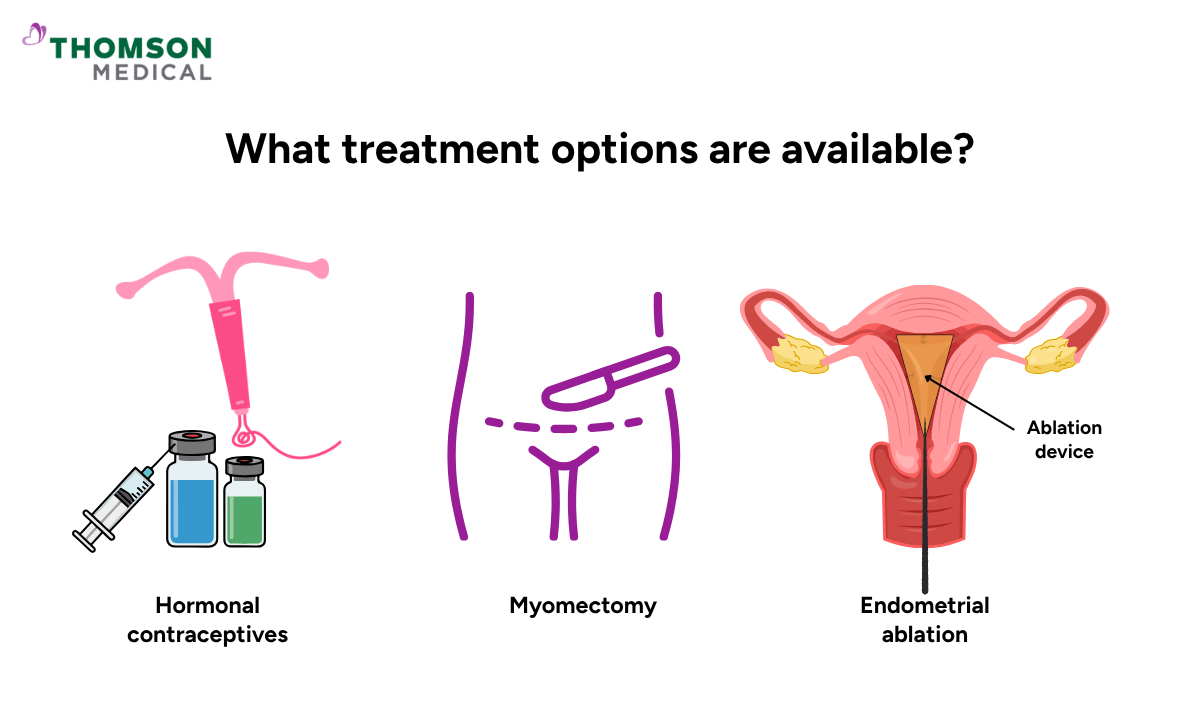
Not all fibroids require treatment. If yours are small and not causing you any problems, your doctor may recommend simply monitoring them over time.
When treatment is needed, your doctor will walk you through options ranging from medication to surgery, depending on the size and location of your fibroids, your symptoms, and your fertility goals.
Medication
Medication does not remove your fibroids permanently, but hormonal therapies and other options may help you manage your symptoms.
These may include:
Hormonal contraceptives:
The combined pill, hormonal coil, or injections may help reduce heavy bleeding and ease your period pain.
GnRH analogues:
These are injections or nasal sprays that temporarily reduce the hormones driving your fibroid growth.
They may shrink your fibroids and reduce your bleeding and are often used short-term before surgery to make your procedure safer and easier.
Tranexamic acid and anti-inflammatory pain relief:
These are taken during your period to help reduce your blood loss and ease your pain.
Progesterone receptor modulators:
These tablets work by blocking progesterone, which may reduce the size of your fibroids and help control your bleeding.
The right medication depends on how severe your symptoms are, whether you are planning a pregnancy, and how close you are to menopause. Some options are suitable for long-term use, while others are intended as a short-term measure before a procedure.
Surgical and procedural options
When medication does not provide enough relief, or when fibroids are causing more significant problems, your doctor may discuss surgical or procedural options with you.
Depending on your situation, your doctor may recommend:
Myomectomy:
A myomectomy surgery removes the fibroids while preserving the uterus.
Depending on the size and location of your fibroids, it may be performed as open surgery, laparoscopic myomectomy, or hysteroscopic myomectomy.
Hysterectomy:
A hysterectomy involves removing the uterus. Because your uterus is removed, your fibroids cannot return.
This is usually considered when other treatments have not worked for you and a future pregnancy is not part of your plans.
Uterine fibroid embolisation (UFE):
UFE is a non-surgical procedure carried out by an interventional radiologist.
Tiny particles are injected into the blood vessels that supply your fibroids, reducing their blood supply, which may cause them to shrink over time.
Endometrial ablation:
This procedure removes the lining of your uterus to reduce heavy bleeding.
It is not a fibroid treatment as such, but it may help manage your bleeding if you have smaller submucosal fibroids and do not plan to conceive in the future.
The right option depends on whether you want to preserve your fertility, how quickly you need relief, and how you feel about surgery.
Myomectomy and UFE preserve the uterus, while hysterectomy resolves fibroids permanently as the uterus is removed but ends your possibility of becoming pregnant. Your doctor may help you understand which approach suits your situation and what recovery would look like with each option.
From ultrasound scans to surgical treatments, fibroid care involves several steps. Request an appointment with Thomson Medical to understand your options and receive personalised recommendations.
What does fibroid treatment cost in Singapore?
The cost of your fibroid treatment in Singapore varies depending on the type of treatment, where it is performed, and whether you are seen in a public or private setting.
The table below gives a general overview of estimated costs:
| Treatment | Estimated cost range |
|---|---|
Ultrasound or consultation | SGD 100 to 300 |
Medication (per month) | SGD 50 to 300 |
Myomectomy (laparoscopic) | SGD 8,000 to 20,000 |
Hysterectomy | SGD 10,000 to 25,000 |
Uterine Fibroid Embolisation | SGD 10,000 to 20,000 |
These are approximate figures and can vary. If you are a Singaporean citizen or permanent resident, MediSave, MediShield Life, or Integrated Shield Plan may help cover some of the costs.
These figures are estimates based on Ministry of Health Singapore (MOH) guidelines, SI709U, SI713U, and SI815U. Your actual costs may vary depending on your circumstances, the hospital you attend, and any subsidies or insurance cover that apply to you.
FAQ
Do I need surgery if I have fibroids?
Not necessarily. If your fibroids are small and your symptoms are manageable, your doctor may suggest monitoring them over time rather than pursuing surgery straight away. Surgery is usually considered only when symptoms significantly affect your quality of life.
When should fibroids be treated?
Treatment is generally considered when fibroids are affecting your daily life, whether through heavy bleeding, pelvic pain, pressure, or difficulties with fertility. If symptoms are mild or manageable, a monitoring approach may be all that is needed for now.
Can medication shrink fibroids?
Some medications, such as hormonal treatments or GnRH analogues, may temporarily shrink fibroids or reduce symptoms, but the effects are usually not permanent once treatment stops.
Do fibroids recur after removal?
It is possible. After a myomectomy, new fibroids can develop over time, although this does not happen for every woman. However, in the case of a total hysterectomy, where the entire uterus is removed, fibroids cannot return.
Can fibroids turn into cancer?
Fibroids are benign growths and do not turn into cancer. In rare cases, a type of uterine cancer may be found alongside or mistaken for fibroids, but this is a separate condition, not a fibroid that has become cancerous.
Can fibroids increase in size over time?
They can. Fibroids tend to grow slowly during the reproductive years, often in response to hormonal changes. They often shrink after menopause due to reduced hormone levels.
The information provided is intended for general guidance only and should not be considered medical advice. For personalised recommendations and tailored advice based on your unique conditions, request a consultation with Thomson Medical.
For more information, contact us:
Thomson Specialists (Women's Health)
Thomson Women's Clinic (TWC)
- Novena:
6592 6686 (Call), 8611 8986 (WA) - Bukit Batok:
6569 0668 (Call), 8686 3525 (WA) - Choa Chu Kang:
6893 1227 (Call), 8282 1796 (WA) Jurong:
6262 8588 (Call), 6262 8588 (WA)- Katong (female doctor):
6970 2272 (Call), 8611 9020 (WA) - Punggol:
6243 6843 (Call), 8811 0328 (WA) - Sembawang: 6753 5228
- Sengkang: 6388 8125
- Serangoon (female doctor): 6382 3313
- Tampines: 6857 6266
- Tiong Bahru: 6276 1525