
.png%3Fbranch%3Dprod&w=3840&q=75)
Have you ever noticed your gums bleeding when you brush your teeth? Or perhaps they look redder and more swollen than usual? These could be signs of gingivitis, a common gum condition that affects many people.
While seeing blood on your toothbrush can be frightening, there's no need to panic. Gingivitis is treatable and often reversible with proper care. By understanding what's happening in your mouth, you're already taking the first step toward healthier gums.
What is gingivitis?
.png?branch=production)
Gingivitis is when your gums become inflamed because of bacteria and plaque building up along the gum line. It's the earliest stage of gum disease, which means it's also the easiest to treat.
The bacteria irritate your gum tissue, causing inflammation. Because of that, you might notice your gums feeling tender, looking redder than usual, or bleeding when you brush. At this point, the bone and tissue holding your teeth are still healthy and unaffected.
With good oral care and help from your dentist, gingivitis can be reversed. However, it may develop into periodontitis if left untreated, a more advanced condition that can affect the structures supporting your teeth.
How do you know if you have gingivitis?
Many people aren't aware they have gingivitis because it doesn't always cause obvious symptoms. However, paying attention to subtle changes in your gums can help you catch it early.
Your gums may be telling you they need a bit of extra care if you experience any of these changes:
Bleeding during brushing or flossing:
You find traces of blood when caring for your teeth
Changed appearance:
You have gums that look darker red or feel puffier than their usual firm, pink state
Tenderness:
Your gums feel sore or uncomfortable when you touch them
Persistent breath changes:
You notice bad breath that lingers even after your usual oral care routine
You might also experience an unusual taste in your mouth or notice your gums pulling away slightly from your teeth.
If any of these signs feel familiar or you're unsure whether what you're experiencing is gingivitis, schedule an appointment with Thomson Dental Centre. Our dentists can examine your gums and help you address it before it progresses further.
Why did you get gingivitis?
If you're wondering what led to this, you're not alone. Understanding the factors behind gingivitis can help you feel more in control and give you clear ways to protect your gum health going forward.
The role of plaque and bacteria
After eating, bacteria naturally present in your mouth feed on sugars and starches from your food. This process produces acids and toxins that can irritate your gum tissue. Over time, these bacteria form plaque, a sticky film that clings to your teeth and gum line.
When plaque isn't removed regularly, it hardens into tartar within one to three days. Once this happens, your toothbrush can no longer remove it, and you'll need a professional cleaning to clear it away.
Factors that may increase your risk
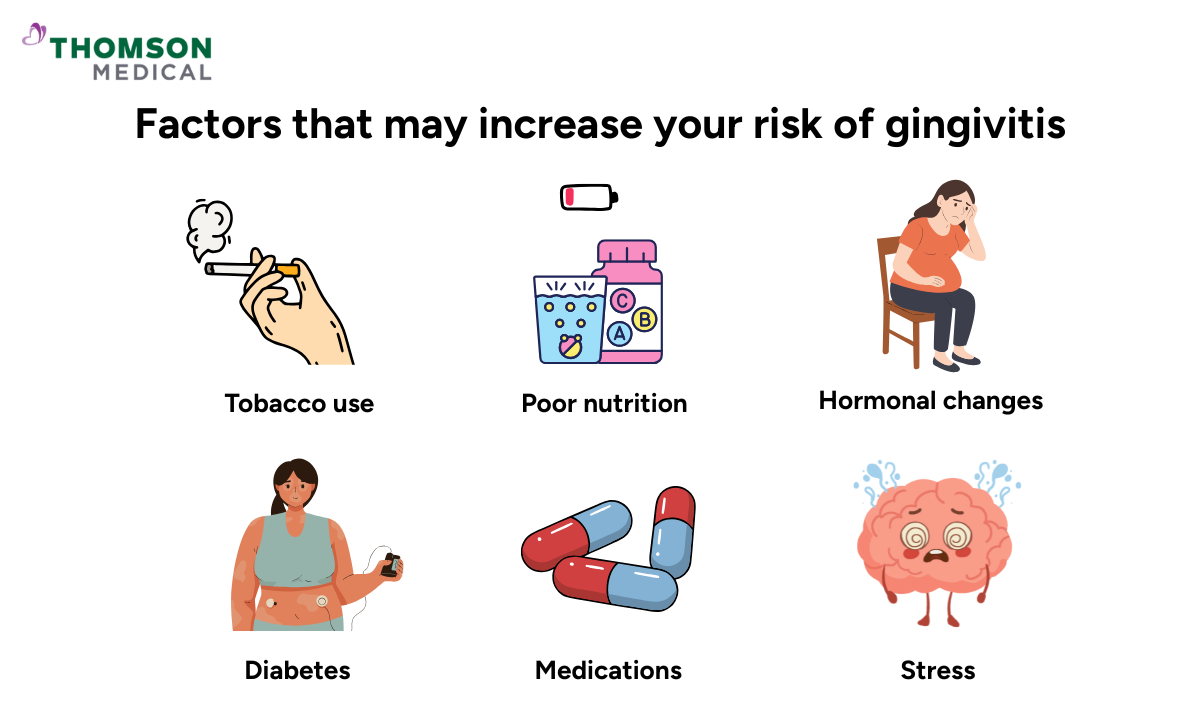
Oral hygiene plays a significant role, but other elements in your life can influence your gum health as well, namely:
Smoking or tobacco use:
Tobacco weakens your immune system and makes it harder for your gums to heal
Poor nutrition:
Insufficient vitamins, especially vitamin C, can impact gum resilience
Hormonal changes:
During pregnancy, menstruation, or menopause, gums may become more reactive to bacteria
Medications:
Certain prescriptions can lead to dry mouth or gum changes that make cleaning more challenging
High blood sugar levels can increase your risk of developing gum infections
Stress:
Chronic stress can weaken your immune system and make you more susceptible to infections
If any of these risk factors apply to you, it's especially important to maintain good oral hygiene and visit your dentist regularly.
Our dentists who can treat gingivitis
Loading...
How can you get rid of gingivitis?
Gingivitis is very treatable, and many people feel much better knowing there's a clear path forward. Gum treatment brings together professional dental care with your daily routine at home, and the process is straightforward.
What your dentist can do to help
If the thought of visiting the dentist feels daunting, it may help to know that treating gingivitis is one of the most routine procedures that dentists perform every day. The treatment itself is gentle and designed to help you feel comfortable.
Your dentist or hygienist will carefully clean your teeth, removing the plaque, tartar, and bacteria that have built up along and just below your gum line. This cleaning is the essential first step in getting your gums back to health.
Based on your individual situation, they may suggest:
Professional dental cleaning:
This procedure is a routine cleaning to remove plaque and tartar from above and below your gum line.
This is a deeper cleaning done under local anaesthetic, where plaque and tartar are scraped away and rough spots on your teeth are smoothed.
Dental restoration repair:
Many people begin to notice improvement within one to two weeks following their cleaning, with bleeding and tenderness gradually reducing. Your dentists will also guide you through effective brushing and flossing techniques to help keep gingivitis from developing again.
If the thought of treating gingivitis feels overwhelming or you're unsure what type of cleaning you need, schedule an appointment with Thomson Dental Centre. Our team can explain your options and guide you through the process in a way that feels comfortable.
Simple steps you can take to prevent gingivitis
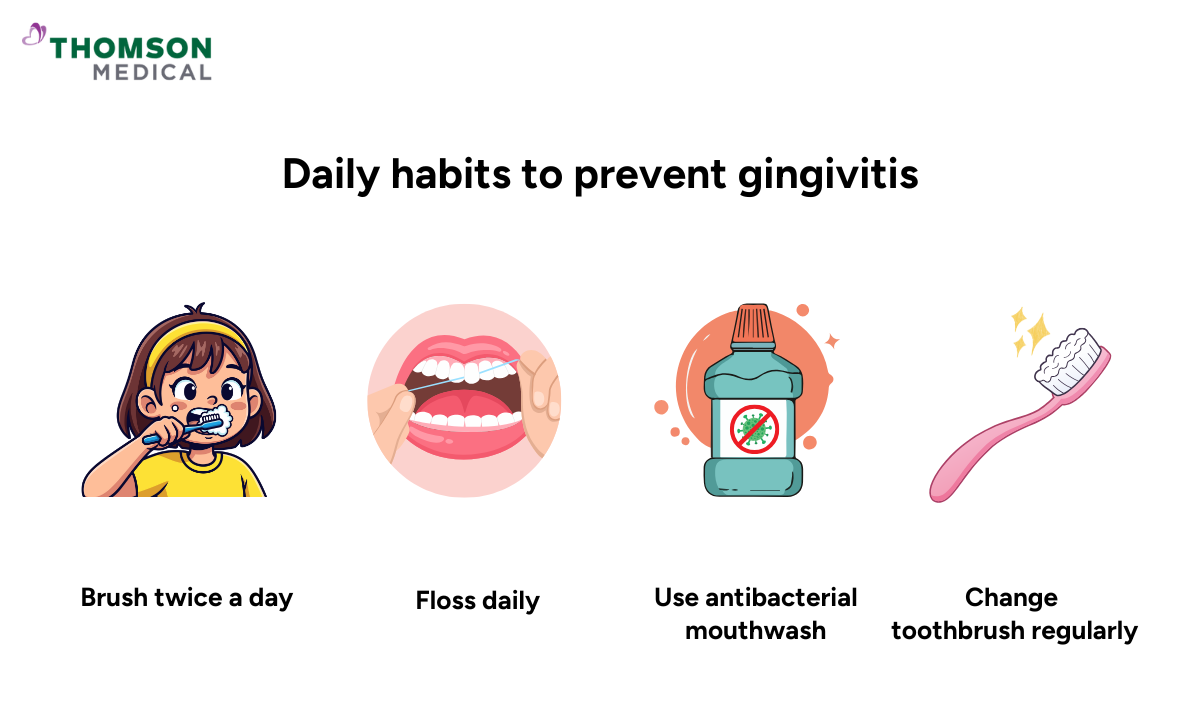
What happens at the dentist is just part of the picture. Your daily routine at home matters just as much in supporting your recovery and maintaining healthy gums.
Consider building these habits into your everyday routine:
Brush twice a day:
Use a soft-bristled toothbrush and fluoride toothpaste. Brush for at least two minutes each time
Floss daily:
Flossing removes plaque and food particles from between your teeth where your toothbrush can't reach
Use an antibacterial mouthwash:
Rinsing with an antiseptic mouthwash can help reduce bacteria in your mouth
Replace your toothbrush regularly:
Change your toothbrush every three to four months, or sooner if the bristles become frayed
Warm salt water rinses may help ease gum swelling, while over-the-counter anti-inflammatory medicines can provide comfort as your gums heal.
With your dentist's guidance and your commitment to daily care, you can expect to see real improvement within a few weeks. Your gums have a remarkable ability to heal when given the right support, and taking these steps now means you're actively protecting your oral health for the long term.
FAQ
Will my gingivitis go away without treatment?
While symptoms may temporarily improve, gingivitis requires professional cleaning and proper oral hygiene to fully resolve. Without treatment, it can develop into more serious gum disease.
How long will it take before my gums feel better?
Most people notice improvement within days of treatment. With consistent care, gingivitis can usually be reversed within 10 to 14 days.
Can I catch gingivitis from someone else?
No. Gingivitis develops from your own oral bacteria when plaque accumulates on your teeth. It's not contagious.
Is gingivitis causing my bad breath?
If you've noticed your breath doesn't feel as fresh as usual, even after brushing, this is a common sign of gingivitis. The bacteria in plaque produce odours that can affect your breath.
Will I lose my teeth if I have gingivitis?
Gingivitis itself doesn't cause tooth loss if it receives prompt treatment. However, if left unaddressed, it can progress to periodontitis, which can affect the bone supporting your teeth.
Why don't my gums hurt if I have gingivitis?
Gingivitis is often painless, making it easy to miss. Your gums may be inflamed without causing discomfort, which is why regular dental check-ups are valuable for early detection.
The information provided is intended for general guidance only and should not be considered medical advice. For personalised recommendations and tailored advice based on your unique situation, please consult a specialist at Thomson Dental Centre. Schedule an appointment with Thomson Dental Centre today.