
.png%3Fbranch%3Dprod&w=3840&q=75)
If you experience a cavity or chipped tooth, it doesn't mean the end of your healthy smile. There's a straightforward solution that's been helping millions of people all across the globe. Tooth fillings remain one of dentistry's most trusted treatments, restoring teeth and preventing further damage year after year. Whether you're facing your first filling or simply want to understand more about the process, knowing your options and what to expect empowers you to make confident decisions about your dental health.
What is a tooth filling?
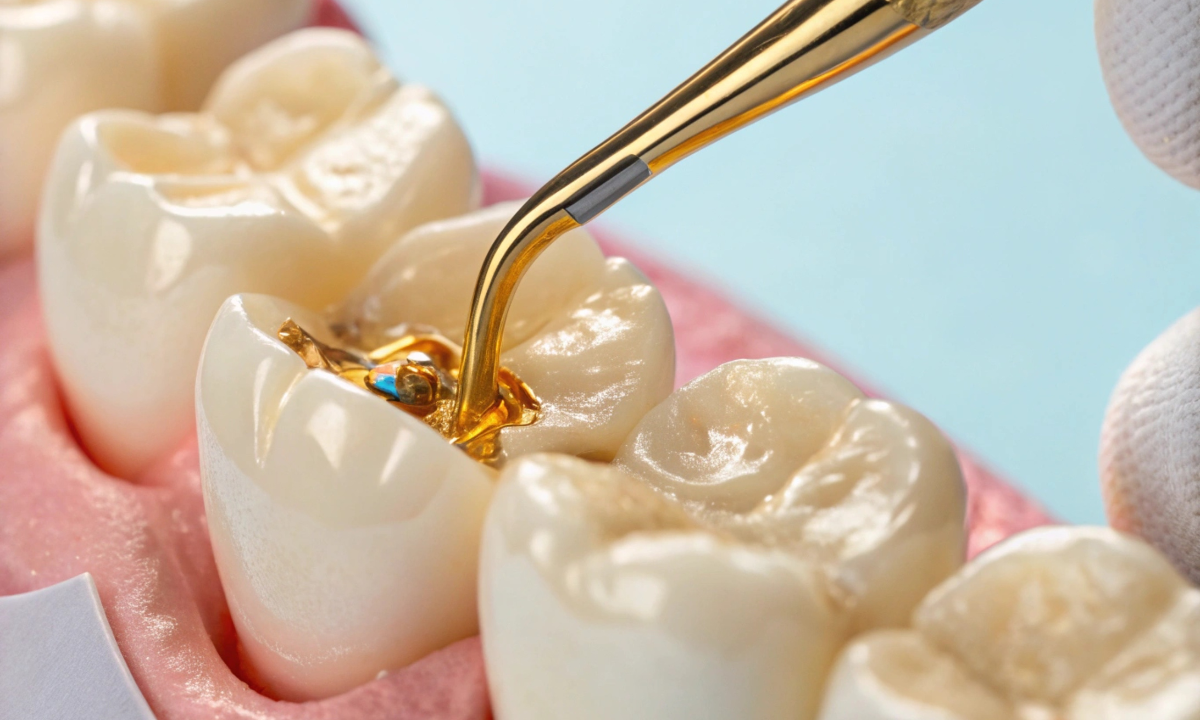
A tooth filling repairs teeth damaged by cavities or decay through a straightforward restorative procedure. When decay damages part of your tooth, a filling repairs it. Your dentist removes the damaged area and fills the space with a special material that restores your tooth's shape and function. It's that straightforward. You'll be able to chew comfortably again, and what's left of your natural tooth stays protected.
What are the different types of tooth fillings?
Tooth fillings come in two main types based on how they're applied:
Direct fillings happen in one visit. Your dentist prepares the cavity and applies the material right there in the chair, shaping it to match your tooth.
Indirect fillings need two appointments. A dental lab creates your filling first, then your dentist bonds it perfectly into place during your second visit.
What are the common filling materials?
Every filling material has its strengths. Your dentist will help match you with the right one based on where the cavity is, what you can afford, and how natural you want it to look.
Here's what you need to know about each type:
Amalgam (silver fillings):
These have that silver-grey look from mixed metals.
They're incredibly strong and can last 10-15 years or more.
As the most affordable option, they work best for back teeth.
Composite (tooth-coloured fillings):
Modern composite fillings blend right in with your natural teeth.
They last around 5-10 years and bond really well to your tooth.
Perfect for areas that show when you smile, though they can pick up slight staining from coffee or tea over time.
Glass ionomer fillings:
These are tooth-coloured but a bit cloudy in appearance.
They release fluoride continuously, giving you ongoing protection against decay.
They're less durable (lasting up to 5 years) but affordable and great for spots that don't take much pressure.
Gold fillings:
Lasting 15-30 years and highly resistant to wear.
They come at an expensive price and stand out quite a bit in your smile.
Ceramic fillings:
Made from natural-looking porcelain, ceramic fillings resist staining and last 10-15 years.
They cost more than composite but look better.
They can be slightly brittle under extreme pressure.
Porcelain fillings:
These combine a metal base with a porcelain coating, giving you both strength and a natural appearance.
They last 10-15 years and handle large restorations particularly well.
Your dentist will help you choose the right filling based on the cavity's location, your budget, and how natural you want it to look.
Dentists for tooth filling in Singapore
Loading...
How does the filling process work?
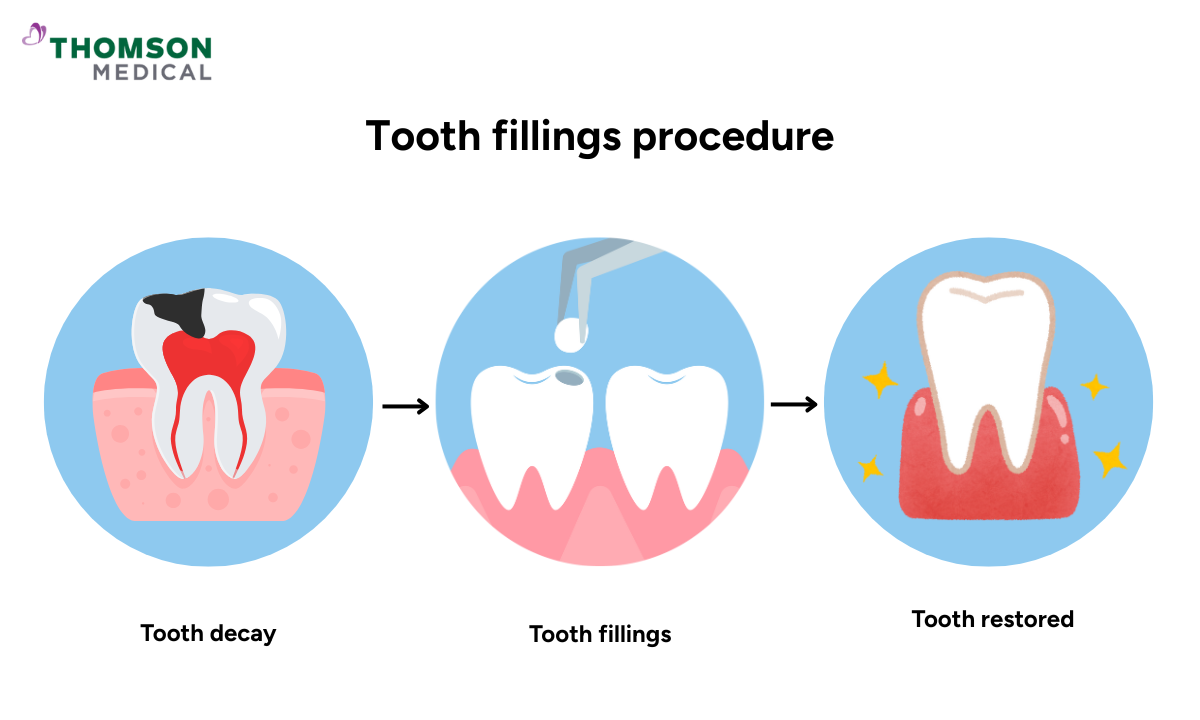
If you're nervous about getting a filling, that's completely understandable. The good news is getting a filling is simpler than you might think, and modern techniques make it comfortable. Here's what to expect:
Examination and diagnosis:
Your dentist examines your teeth and may take dental X-rays to see exactly what's happening beneath the surface.
Anaesthesia:
For deeper cavities, local anaesthetic numbs the area so you're completely comfortable. No pain, just some gentle pressure and vibrations.
Removing decay:
Your dentist uses a drill or laser to carefully remove the damaged part of your tooth and get rid of all the compromised material.
Cleaning the cavity:
Once the decay's gone, the area gets thoroughly cleaned to remove any bacteria or debris.
Cavity filling and curing:
For direct fillings, the material goes straight into your tooth. Your dentist moulds and shapes it to match your tooth's natural contours. Composite materials get hardened with a special light, whilst amalgam sets on its own.
For indirect fillings, your dentist positions the pre-made restoration and bonds it with resin or dental cement, then uses light to cure it permanently.
Finishing:
Your dentist polishes everything smooth and adjusts your bite so it feels completely natural when you chew.
If you think you may need a filling, request an appointment with Thomson Medical. Our dentists can assess your tooth, explain your treatment options, and restore your smile comfortably.
Why might you need a filling?
Getting a dental filling is one of the most commonly used treatment options in restorative dentistry. Your dentist might recommend a filling if you have:
Cavity:
This is the most common reason. When tooth decay creates a cavity, treating it early stops it from spreading deeper.
Cracked or chipped teeth:
Accidents happen. Fillings can restore teeth that have been cracked or chipped, preventing things from getting worse.
Tooth wear:
Grinding your teeth or other habits can wear down enamel over time.
Fillings repair this wear and protect what's underneath.
Preventive dental treatment:
Sometimes fillings can treat small areas of weakening before they become full-blown cavities – stopping problems in their tracks.
If your tooth is too badly damaged to be repaired by a filling, you would need alternate treatments such as dental crowns or complete tooth extraction.
What are the benefits of getting a filling?
Fillings offer several important advantages:
Restore function:
Your tooth gets its shape, strength, and function back. You can chew and bite normally again.
Prevent decay progression:
The filling seals everything off, keeping more decay from creeping in.
Relieve pain:
If your cavity was causing sensitivity or discomfort, sealing it brings relief.
Cosmetic improvement:
Tooth-coloured options like composite or ceramic look natural, which is especially important for teeth that show when you smile.
If you’re experiencing tooth sensitivity or suspect a cavity, request an appointment with Thomson Medical. Our specialists will diagnose the issue early and recommend the right treatment.
What should you expect after getting a filling?
It's normal to feel some sensitivity for a few days after your filling. You might notice discomfort with hot, cold, or sweet foods. This usually fades as your tooth adjusts.
However, if you experience sharp pain or ongoing discomfort, contact your dentist. It could mean the filling needs adjustment, or there's another issue to address.
How can you care for your fillings?
Taking care of your fillings doesn't require anything complicated. A few simple habits help your fillings last longer:
Brush twice daily with fluoride toothpaste using a soft-bristled brush
Floss daily to remove food and plaque between teeth
Use fluoride mouthwash to strengthen enamel
Visit your dentist regularly for check-ups
Avoid very hard or sticky foods that could damage the filling
With proper care, your fillings can last for years while keeping your smile healthy and strong.
Are there any risks or complications?
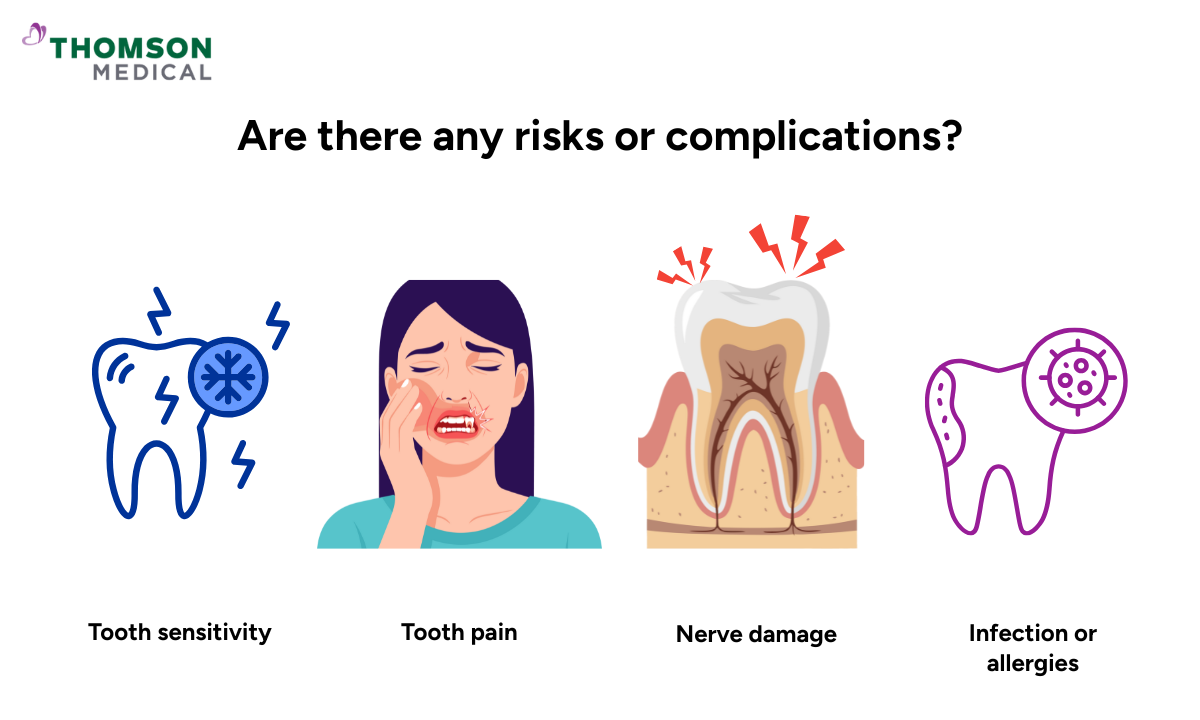
Fillings are generally very safe, but occasionally issues can occur:
Tooth sensitivity:
Temporary discomfort with hot, cold, or sweet foods is common after fillings. It typically fades within a few days. If it sticks around, there might be an issue worth checking.
Tooth pain:
Mild pain can happen from irritation during the procedure. If pain is persistent or severe, it could signal a poor fit or infection. Most discomfort clears up within a few days.
Nerve damage:
If decay was really deep or the filling puts pressure on nerves inside your tooth, nerve damage can occur. Root canal treatment might be needed in these cases.
Infection or allergies:
Infection can occur if decay isn’t completely removed before filling placement or if decay-causing bacteria enter, while some may experience allergic reactions to materials like amalgam or composite resins.
Filling falling out:
Improper placement, high pressure or defective filling material can cause the filling to loosen or fall out, requiring a replacement to prevent further tooth damage.
If sensitivity or discomfort continues, it's worth getting it checked out by your dentist.
When should you avoid getting a filling?
In most cases, fillings are safe and recommended. However, your dentist might delay treatment in certain situations:
During pregnancy especially in the first trimester, unless it's an emergency
Severe tooth damage as if decay is too extensive, extraction might be necessary instead
Your dentist will always recommend the safest and most suitable treatment for your individual needs.
If you’re unsure whether a filling is right for you, request an appointment with Thomson Medical. Our dentists will assess your tooth and guide you toward the safest option.
FAQ
Are tooth fillings painful to get?
No, fillings are generally not painful. Your dentist will numb the area around the tooth using a local anaesthetic, so you won’t feel any pain during the procedure. While you may feel some pressure or vibrations, these sensations are usually not painful.
What happens if you do not get a dental filling?
If you don't get a dental filling for an already decaying tooth, it will only worsen with time. Eventually your decay would reach the nerves of your tooth, which would lead to extreme sensitivity and pain.
Are tooth fillings permanent?
Although a filling can last for several years, they are not a permanent solution. They will eventually need to be replaced due to wear and tear, changes in your oral health, or damage to the filling.
Can fillings get stained?
Some fillings, such as those of composite, may stain over time, especially with food and drinks like coffee, tea, or red wine. If you want stain-resistant options, porcelain and gold fillings are choices of fillings.
What is the aftercare for dental fillings?
Avoid eating on the filled side for at least an hour after your appointment. Maintain good oral hygiene by brushing with fluoride toothpaste and flossing regularly. Attend regular dental check-ups to ensure your filling stays in good condition.
Is a filling better than a root canal?
A filling treats minor to moderate decay, whilst a root canal addresses deeper infection inside the tooth. If you have mild sensitivity or visible cavities, a filling is usually sufficient. Deep tooth pain, swelling, or prolonged temperature sensitivity often indicates the need for root canal treatment. Your dentist will recommend the appropriate option based on your specific situation.
The information provided is intended for general guidance only and should not be considered medical advice. For personalised recommendations and tailored advice, please consult a specialist by requesting an appointment with Thomson Medical today.