

A family history of breast or ovarian cancer can raise some difficult questions. For some women, this history may be linked to an inherited gene change that increases their risk of certain kinds of cancers.
However, having a higher risk doesn't mean cancer is inevitable. Understanding what that risk means and what options are available for monitoring and prevention puts you in a better position to protect your health while living your life fully.
What is hereditary breast and ovarian cancer (HBOC)?
Hereditary breast and ovarian cancer syndrome (HBOC) is an inherited condition that raises your risk of developing certain cancers. It most commonly affects the breast in both women and men and the ovaries in women. In some families, these cancers may develop at a younger age than expected.
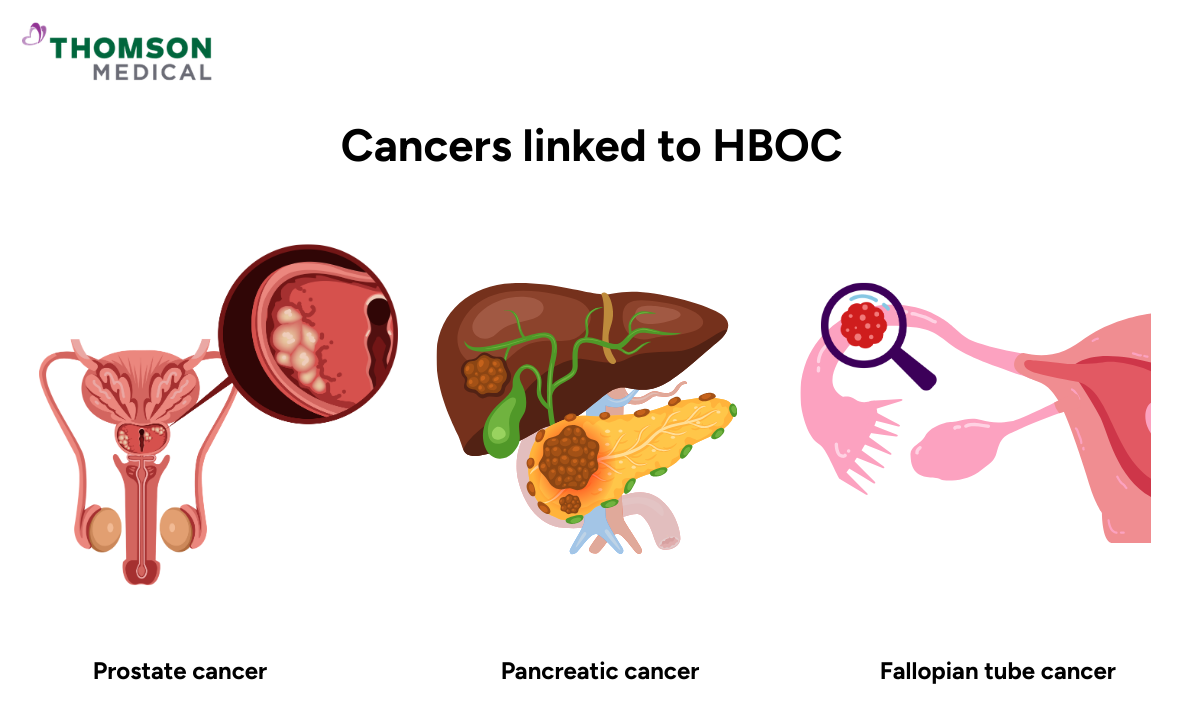
Other than breast and ovarian cancer, HBOC may also be linked to a higher risk of:
Prostate cancer
Pancreatic cancer
Melanoma (a type of skin cancer)
Fallopian tube cancer
Primary peritoneal cancer (a cancer affecting the lining of the abdomen, closely related to ovarian cancer)
These cancers are often linked to changes, sometimes called mutations, in the BRCA1 and BRCA2 genes. However, having a gene change does not mean you will definitely develop cancer. Your actual risk can vary depending on which gene is involved and your personal health history.
Who may be at risk?
Your doctor will often start by looking at patterns in your personal and family history to assess whether HBOC might be a possibility.
Some patterns that may suggest a higher risk include:
Breast cancer diagnosed before the age of 50
A family history of both breast and ovarian cancer
Cancer affecting both breasts or both ovaries
A male relative diagnosed with breast cancer
A family history of prostate or pancreatic cancer alongside breast or ovarian cancer
If you notice these patterns in your family, it does not mean anything is wrong. However, it is worth mentioning to your doctor so they can advise you on screening and managing your risk.
Our breast cancer specialists in Singapore
Loading...
How is HBOC diagnosed?
Diagnosis usually begins with a careful review of your personal and family health history. If your doctor notices patterns that suggest a hereditary cancer risk, they may recommend genetic testing and genetic counselling.
Genetic testing
Genetic testing is a blood or saliva test that looks for changes in certain genes, including BRCA1 and BRCA2.
Here is what your results mean:
A positive result:
It does not mean you will definitely develop cancer. It indicates your risk may be higher, and closer monitoring or preventive steps can be considered.
A negative result:
It does not always mean your risk is the same as the general population.
If you have a strong family history of cancer but test negative for BRCA mutations, your doctor may recommend continued screening.
Your results are always considered alongside your personal and family history, lifestyle, and other health factors. This helps your care team provide recommendations that reflect your individual risk, rather than relying on the test alone.
Genetic counselling
Genetic counselling is often done alongside genetic testing. It helps you understand your personal risk and plan the right steps for monitoring or preventive care. The counsellor will explain what your results mean, what screening or prevention options exist, and how to process the findings both emotionally and practically.
A diagnosis of HBOC can also provide useful information for your family. If a gene change is found or a positive result, your relatives may be offered testing. Early awareness can help them take timely steps for screening or risk reduction if needed.
If you’re concerned about hereditary cancer risk or have a strong family history, request an appointment with Thomson Breast Centre. Our specialists can guide you through genetic testing, provide personalised counselling, and help you understand the next steps for monitoring or preventive care.
How to manage HBOC?
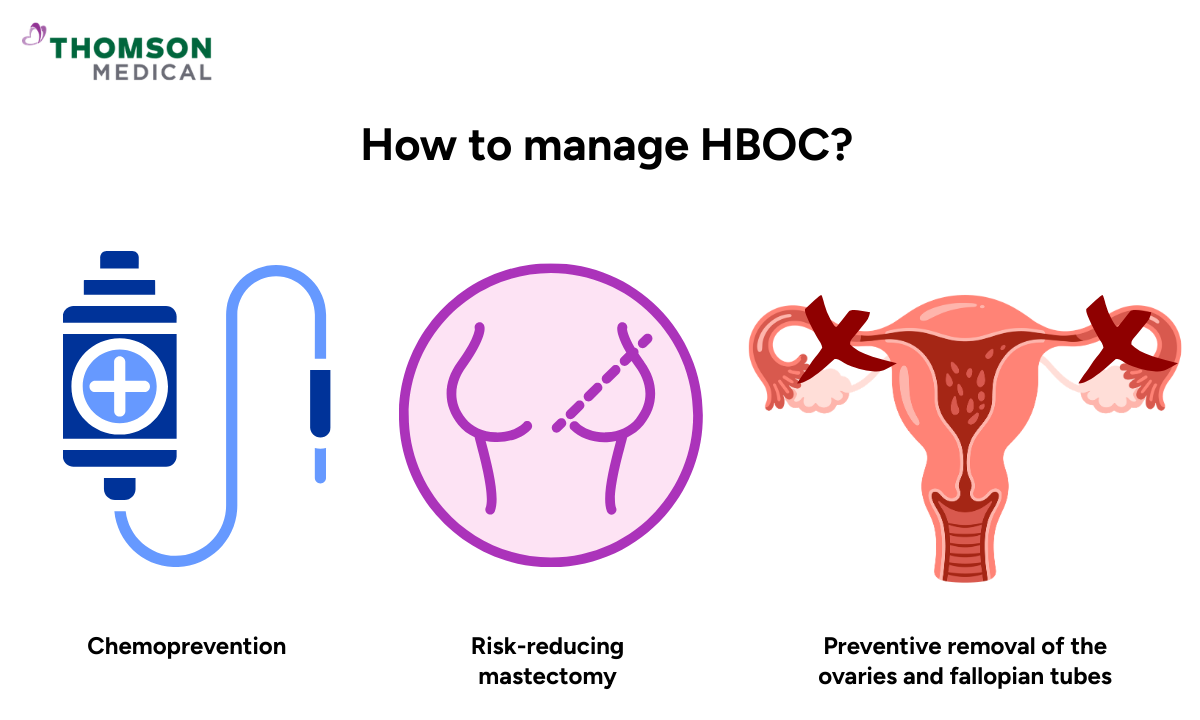
Although the gene change cannot be reversed, there are several options available to help reduce your risk or detect cancer early.
Screening and monitoring
If you have a known HBOC mutation, your doctor may recommend more intensive screening than what is usually advised for other people.
Your screening may include:
Monthly breast self-examinations
Clinical breast examinations twice a year by a healthcare professional
Yearly mammograms together with breast MRI scans
Pelvic examinations, transvaginal ultrasounds, and CA-125 blood tests every six months to monitor for ovarian cancer
The aim is to catch any changes early, when treatment tends to be most effective. While monitoring does not prevent cancer from developing, it does give you the best chance of catching any changes before they progress.
Preventive medication (Chemoprevention)
Certain medicines may help lower the risk of breast cancer in women at higher risk. Tamoxifen is one of the most commonly discussed options. It works by blocking the effect of oestrogen on breast tissue, which may help reduce the chance of certain breast cancers developing.
These medicines are not suitable for everyone and can have side effects. Your doctor can advise whether this is appropriate for you.
Risk-reducing mastectomy
Risk-reducing mastectomy involves removing one or both breasts to lower the chance of developing breast cancer. For women with a BRCA1 or BRCA2 change, this surgery can reduce the risk by around 90%.
Breast reconstruction is an option for many women and can be discussed with your surgeon as part of your planning. Your medical team can talk you through the benefits, risks, and practical implications before you decide.
Preventive removal of the ovaries and fallopian tubes
Known as risk-reducing salpingo-oophorectomy, this surgery removes the ovaries and fallopian tubes to reduce the risk of ovarian cancer. It is generally considered between the ages of 35 and 40 or after completing a family.
Because this surgery brings on an early menopause, you may experience symptoms such as hot flushes, mood changes, and vaginal dryness. These changes can affect your daily life and may come on more suddenly than natural menopause. Hormone replacement therapy (HRT) can help manage these symptoms and is suitable for many women.
Some women feel more comfortable with closer monitoring, while others prefer a surgical option. Neither is wrong. Your circumstances and priorities may also change over time, and your plan can be revisited with your doctor as needed.
Where can you find help in Singapore?
In Singapore, several hospitals and medical centres offer genetic counselling, genetic testing, and specialised cancer risk management programmes. These services are available across both public and private healthcare settings, so there is a pathway for everyone.
The first step is to speak with your doctor, who can refer you to a genetic counselling service or a hereditary cancer clinic for assessment and testing.
During genetic counselling, you can generally expect:
A clear explanation of the testing process
Help you interpret your results clearly
Guidance on your options for screening, risk reduction, or preventive measures
Help in creating a personalised plan that fits your circumstances and priorities
Other than medical care, some people also find it helpful to connect with others facing hereditary cancer risks. In Singapore, community support groups can provide a space to share experiences and learn how others have approached similar decisions.
Knowing about the BRCA mutation in your family can be worrying. Request an appointment with the Thomson Breast Centre to review your family history and receive guidance on the next screening or risk-reduction steps based on your test results.
FAQ
How is HBOC syndrome different from regular breast cancer?
Most breast cancers are not inherited. HBOC is caused by an inherited gene change that is present from birth and can be passed down through families. It also raises the risk of ovarian and several other cancers, not just breast cancer.
If I test positive for HBOC, does that mean I need surgery?
No. Surgery is one option, but not the only one. Many women manage their risk through regular monitoring or preventive medication. The right approach depends on your individual circumstances and what you are comfortable with.
Should my children, siblings, or parents be tested if I test positive?
Yes, it is worth considering. Because HBOC is inherited, close relatives such as parents, siblings, and children may carry the same gene change. Your genetic counsellor can guide you on how to approach this conversation with your family.
What genes are tested for HBOC?
BRCA1 and BRCA2 are the most well-known, but testing can include other genes that are also linked to hereditary breast and ovarian cancer risk. Your doctor will advise on which genes are relevant based on your personal and family history.
What does a positive BRCA result actually mean for my cancer risk?
It means your risk is higher than average, but it does not mean cancer is certain. Many women with a positive result never develop cancer. The result is one piece of information that helps your doctor plan the right level of monitoring and care for you.
How long does genetic testing take?
The blood or saliva sample itself takes only a few minutes to collect. Results usually take several weeks, depending on the laboratory and the type of panel tested. Your genetic counsellor will let you know what to expect at your appointment.
The information provided is intended for general guidance only and should not be considered medical advice. For personalised recommendations and tailored advice based on your unique situations, request an appointment with Thomson Breast Centre today.
References:
Cipolla, C., Scandurra, G., Sambataro, D., Mesi, C., Greco, M., D’Agati, E., Gebbia, V., & Valerio, M. R. (2025). Risk-reducing mastectomy in healthy women with BRCA mutation: a narrative review. Expert Review of Anticancer Therapy, 25(7), 797–807. https://doi.org/10.1080/14737140.2025.2513451