
.png%3Fbranch%3Dprod&w=3840&q=75)
If you've just had a hysterectomy or are preparing for one, it's natural to have questions about what recovery will actually feel like. The weeks that follow can bring a mix of physical discomfort, hormonal shifts, and emotional changes that take time to work through.
Whether you're managing pain, fatigue, or the early signs of surgical menopause, what you're experiencing is more common than you might think, and there are ways to manage it. Getting clear on the side effects and how to manage them can make the recovery process feel a little less overwhelming.
What is a hysterectomy?
A hysterectomy is a surgical procedure to remove the uterus. Depending on your condition, your surgeon may also remove the cervix, ovaries, or fallopian tubes.
Knowing which type you've had can help you better understand the side effects you may experience:
Total hysterectomy:
It involves removing the uterus and cervix.
Partial (subtotal) hysterectomy:
It involves removing the uterus, but the cervix is kept intact.
Radical hysterectomy:
It involves removing the uterus, cervix, upper vagina, and surrounding tissue. It is usually performed for cancer.
Hysterectomy with oophorectomy:
One or both ovaries are also removed, which affects your hormones and may trigger immediate menopause.
Beyond the type, your age and overall health also affect how your body responds after surgery.
Common side effects after a hysterectomy
Every woman's recovery looks a little different. But in the days and weeks following surgery, there are some side effects that many women notice. Most of these are your body's natural response to a major operation and they are temporary.
Pain, bleeding, and fatigue

Some degree of discomfort is expected after a hysterectomy, regardless of whether you had open surgery or a minimally invasive procedure (such as laparoscopic, robotic, or vaginal hysterectomy). You may feel soreness around your abdomen, pelvis, or incision site. This normally eases gradually as your body heals.
You may also notice:
Vaginal bleeding or discharge:
Light bleeding or a pinkish-brown discharge is normal for up to six weeks after surgery.
It is similar to a light period and usually settles on its own.
Abdominal cramping:
Mild cramping in the days following surgery is common as your body adjusts after the operation.
It should not be severe or worsening.
Deep fatigue:
Your body has been through significant surgery and needs time and rest to recover.
Feeling exhausted, even after light activity, is completely normal in the first few weeks.
Rest is essential at this stage, as it allows your body to recover.
Bowel and bladder changes
It is common to experience changes in your bowel and bladder function after a hysterectomy. This happens because your uterus sits close to your bladder and bowel, and surgery in this area can temporarily affect how these organs work.
Bladder changes you may notice:
A frequent or urgent need to urinate
Mild discomfort when passing urine
Temporary difficulty emptying your bladder fully
Bowel changes you may notice:
Constipation, which is very common in the first one to two weeks. It’s often related to anaesthesia, pain medication, and reduced movement.
Bloating or trapped wind, which can feel uncomfortable but usually resolves within a week or two.
Loose stools in some cases, as the bowel settles after surgery.
Staying hydrated, eating fibre-rich foods, and moving gently when you feel ready can all help your bowel return to its normal rhythm. If constipation persists or becomes painful, speak to your care team, as there are safe, gentle options to help you feel better.
If you're finding that bowel or bladder symptoms aren't improving after the first few weeks, schedule an appointment with Thomson Medical. Our doctors can assess your symptoms and guide you on the right steps to support your recovery.
Long-term side effects of a hysterectomy
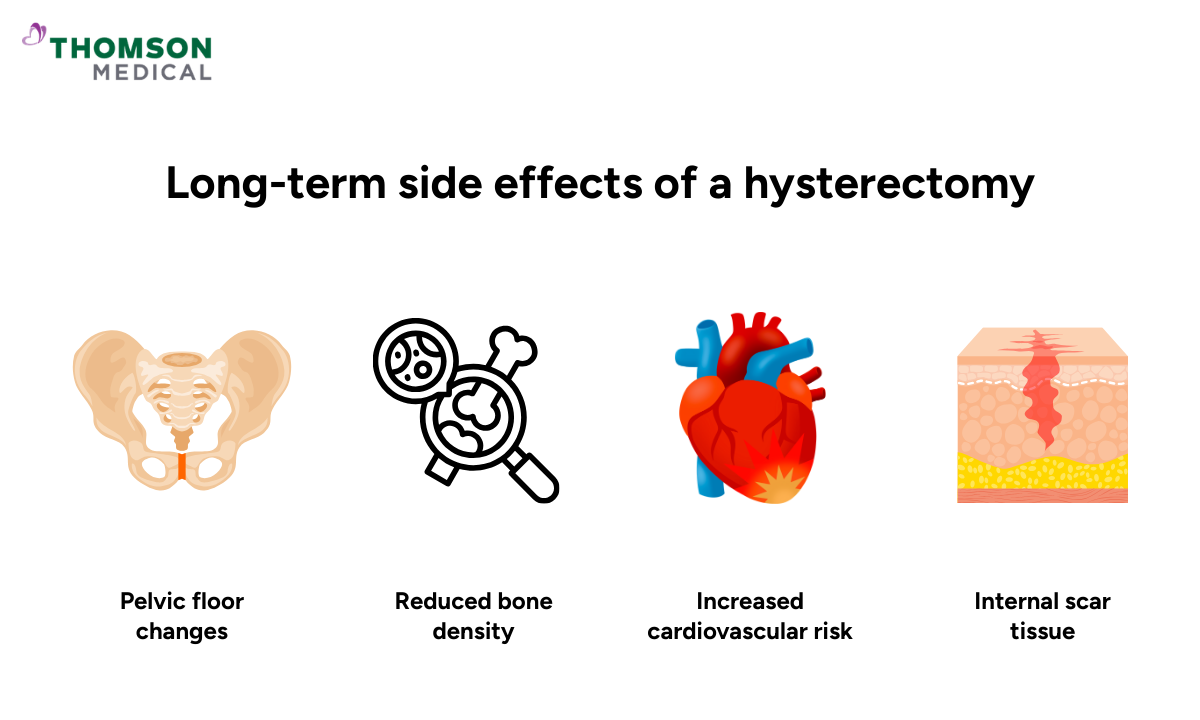
Some side effects only appear months or even years after surgery. Unlike the immediate effects of the operation itself, these reflect how your body adjusts over the longer term.
Pelvic floor changes
The pelvic floor supports your bladder, bowel, and vagina.
Surgery can weaken these muscles, leading to:
Urinary leakage, especially when coughing or sneezing
A feeling of heaviness or pressure in your pelvis
Increased risk of pelvic organ prolapse over time
Pelvic floor exercises can make a meaningful difference. A women's health physiotherapist can guide you through the right technique.
Bone density
If your ovaries were removed during surgery, your oestrogen levels drop significantly. Over time, lower oestrogen can lead to reduced bone density, which may increase the risk of osteoporosis. This is worth discussing with your doctor, particularly if you are under 45.
Cardiovascular health
Oestrogen plays a protective role in heart health. It helps keep blood vessels flexible and supports healthy cholesterol levels. Women who undergo early surgical menopause, particularly before the age of 45, may face a higher cardiovascular risk over time.
If this applies to you, it is worth bringing up at your next appointment.
Scar tissue
Internal scar tissue, known as adhesions, can develop after any abdominal surgery. In some women, this may cause ongoing pelvic discomfort or bowel changes in the months following a hysterectomy.
If you're noticing ongoing pelvic discomfort, changes in bladder control, or other symptoms that have developed months after your surgery, schedule an appointment with Thomson Medical. Our doctors can assess what you're experiencing and recommend an approach to help manage your long-term recovery.
How a hysterectomy affects your hormones and menopause
The hormonal impact of a hysterectomy depends largely on whether your ovaries were removed.
If your ovaries were kept intact, they will continue producing oestrogen. Your periods will stop, but you may not experience immediate menopause. However, some women find that menopause arrives a few years earlier than it might have otherwise.
If one or both ovaries were removed, your oestrogen levels will drop sharply after surgery. This triggers what is known as surgical menopause. Unlike natural menopause, which happens gradually, surgical menopause can begin suddenly.
Symptoms of surgical menopause may include:
Hot flushes and night sweats
Vaginal dryness or discomfort
Disrupted sleep
Low mood, anxiety, or irritability
Reduced libido
Difficulty concentrating
These symptoms can feel intense, particularly in the early weeks after surgery. This is because your body is adjusting to a significant and sudden shift in hormone levels.
If your ovaries were removed before the age of 45, speak with your doctor soon. Early surgical menopause can affect your bone and heart health over time, and there are steps you can take to protect both.
Gynaecologists at Thomson Medical
Loading...
How to manage side effects and support your recovery
Recovery looks different for every woman, but there are practical steps that can genuinely help, both in the early weeks and further down the line.
Medical options
Your care team can support you with:
Pain management:
Paracetamol or ibuprofen taken on a regular schedule is usually recommended in the first one to two weeks.
If pain is worsening after the first week, tell your doctor.
Hormone replacement therapy (HRT):
If your ovaries were removed, HRT can help ease surgical menopause symptoms.
If HRT is not suitable for you, non-hormonal options exist. Ask your doctor what is appropriate for your situation.
Bone health assessment:
If your ovaries were removed, particularly before age 50, ask about a DEXA scan.
Calcium and vitamin D supplements may also be recommended.
Not all of these will apply to you, but knowing what is available means you can have a more informed conversation with your care team at your follow-up.
Lifestyle adjustments

Small, consistent changes make a real difference to how you feel day to day:
Movement:
Start with short, gentle walks from around week two.
Avoid lifting anything heavier than a kettle for the first six weeks.
Return to structured exercise only after your doctor clears you at your six-week follow-up.
Nutrition:
Prioritise fibre like wholegrains, vegetables, legumes, to prevent constipation
Include protein-rich foods such as eggs, fish, and legumes to support tissue repair.
Stay well hydrated, especially if you are taking pain medication.
Sleep:
If night sweats are disrupting your sleep, try lightweight bedding, a cool room, and loose nightwear.
Persistent sleep disruption linked to hormonal changes is worth raising with your doctor.
Pelvic floor physiotherapy:
A women's health physiotherapist can help with urinary leakage, pelvic heaviness, or weakness.
Exercises are most effective when taught with proper technique.
Emotional wellbeing:
Feeling low, tearful, or emotionally flat after a hysterectomy is more common than many women expect.
If a low mood persists beyond two to four weeks or begins affecting daily life, speak to your GP.
None of these changes need to be perfect. Focus on what you can manage each day and adjust as you go.
When to see a doctor after a hysterectomy
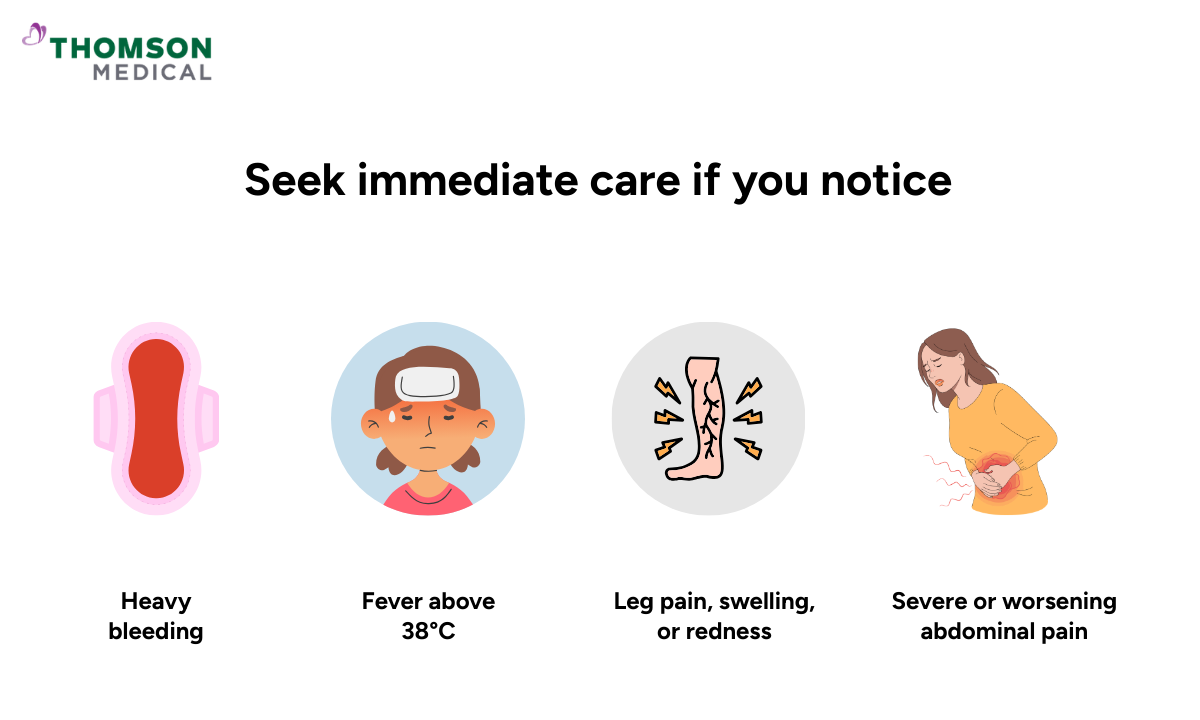
Most discomfort after a hysterectomy is a normal part of recovery. However, some symptoms can signal a complication and should not be ignored.
Seek immediate care if you notice:
Heavy bleeding, which means soaking more than one pad per hour
Fever above 38°C
Leg pain, swelling, or redness
Severe or worsening abdominal pain not relieved by medication
A wound that is red, swollen, or leaking
Book an appointment with your doctor if you have:
Bladder or bowel symptoms that are worsening rather than improving
Low mood or anxiety that is not lifting after two to four weeks
Any new or unexplained symptom you are unsure about
If something does not feel right, trust that instinct.
A hysterectomy is a significant procedure, and recovery takes time physically and emotionally. Many women find that symptoms ease with the right support and guidance. If you have concerns at any stage of your recovery, do not hesitate to speak with your care team.
If you're unsure whether what you're feeling is a normal part of recovery or something that needs attention, schedule an appointment with Thomson Medical. Our doctors can examine your symptoms and give you the clarity you need.
FAQ
How long do side effects after a hysterectomy usually last?
Most immediate side effects, such as pain, bleeding, and fatigue, improve within four to six weeks. Hormonal symptoms, if your ovaries were removed, may take longer to settle and can persist for months without treatment.
Will I go through menopause after a hysterectomy?
If your ovaries were kept, you will not enter menopause immediately, though it may arrive a few years earlier than expected. If your ovaries were removed, surgical menopause begins straight after surgery.
Is weight gain common after a hysterectomy?
Some women notice weight changes, particularly if their ovaries were removed and oestrogen levels drop. Reduced activity during recovery can also play a role. Maintaining a balanced diet and returning to gentle movement when cleared can help.
Do I need hormone replacement therapy (HRT) after surgery?
Not always. But if your ovaries were removed, particularly before age 45, HRT is worth discussing with your doctor. The risks and benefits vary depending on your individual health history.
Are mood changes and depression normal after a hysterectomy?
Yes. Hormonal shifts, physical recovery, and the emotional weight of the procedure can all affect your mood. Feeling low or tearful in the first few weeks is common. If it persists or worsens, speak to your doctor – there is support available.
Can side effects appear years after a hysterectomy?
Yes. Pelvic floor weakness, bone density loss, and cardiovascular changes can develop gradually over time, particularly if your ovaries were removed. Regular health check-ups after surgery are important for this reason.
The information provided is intended for general guidance only and should not be considered medical advice. For personalised recommendations and advice based on your unique situation, please consult a specialist at Thomson Medical. Request an appointment with Thomson Medical today.
For more information, contact us:
Thomson Specialists (Women's Health)
Thomson Women's Clinic (TWC)
- Novena:
6592 6686 (Call), 8611 8986 (WA) - Bukit Batok:
6569 0668 (Call), 8686 3525 (WA) - Choa Chu Kang:
6893 1227 (Call), 8282 1796 (WA) - Jurong:
6262 8588 (Call), 6262 8588 (WA) - Katong (female doctor):
6970 2272 (Call), 8611 9020 (WA) - Punggol:
6243 6843 (Call), 8811 0328 (WA) - Sembawang: 6753 5228
- Sengkang: 6388 8125
- Serangoon (female doctor): 6382 3313
- Tampines: 6857 6266
- Tiong Bahru: 6276 1525
Notice
The range of services may vary between TWC/TS locations. Please contact your preferred branch directly to enquire about the current availability.
Request an Appointment