

If your doctor has recommended a hysteroscopy, you likely have questions about what happens next. Will it hurt? How soon can you return to work? What symptoms are normal, and when should you contact your doctor?
Most women are back to their usual routine within a day or two, but knowing what to watch for can help you recover with confidence. Here's what to expect after a hysteroscopy, including common side effects, typical recovery timelines, and symptoms that need attention.
What is a hysteroscopy?

A hysteroscopy is a simple, minimally invasive approach that allows your doctor to look inside your uterus using a thin, lighted camera called a hysteroscope.
Your doctor may recommend it if:
You are experiencing heavy or unusual periods.
They need to check for conditions inside your uterus.
They need to remove small growths such as polyps or fibroids.
They need to check your uterus before fertility treatment.
The hysteroscope is gently inserted through your vagina and cervix, so there is no need for any cuts on your abdomen. This usually makes the procedure quicker, less invasive, and often easier to recover from than traditional surgery.
What happens during a hysteroscopy?
During a hysteroscopy, your doctor may introduce saline solution by placing a small amount of saline (salt water) into your uterus. This process, known as fluid distension, expands the uterine cavity so your doctor can clearly see your endometrial lining and the openings of your fallopian tubes.
Depending on your specific needs, the procedure may be classified in two ways:
Diagnostic hysteroscopy:
Primarily used to look inside your uterus to diagnose conditions or locate misplaced intrauterine devices (IUDs).
Operative hysteroscopy:
Used to treat conditions found during the diagnosis
This may include removing fibroid tumours or polyps or collecting a small sample of tissue from the uterine lining for further testing (endometrial biopsy).
Hysteroscopy is usually a safe and low-risk procedure, and many women return to their normal routine quite quickly. Still, it is normal for you to notice some temporary reactions while your body recovers. Knowing what you might feel after the procedure can help you feel more prepared and less worried about your recovery.
What side effects can you expect after a hysteroscopy?
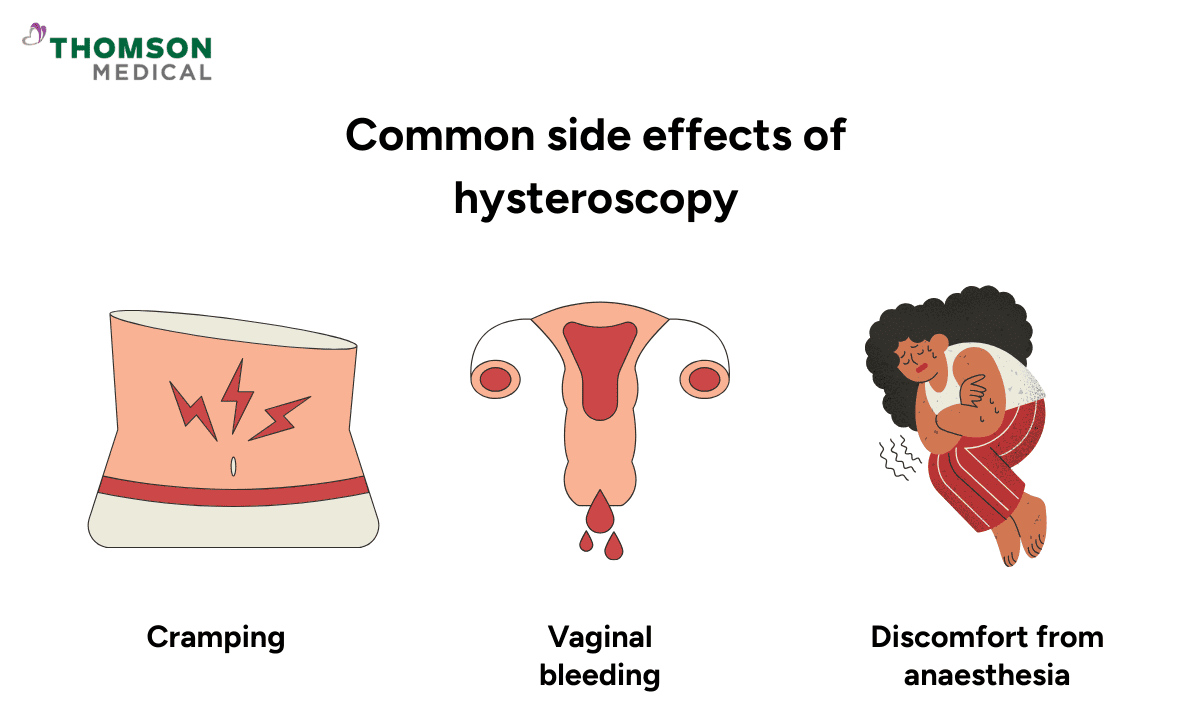
Most women go through a hysteroscopy without major problems. Because the procedure involves examining sensitive reproductive organs, it is normal for you to experience some mild side effects. These are usually temporary and improve within a day or two.
Common side effects include:
Cramping:
You may experience mild cramping similar to menstrual cramps.
This happens because your uterus may tighten after the procedure.
Vaginal bleeding:
You may have light vaginal bleeding or spotting for a few days.
This happens because your uterus lining may be slightly irritated.
Discomfort from anaesthesia:
You may feel a brief sting when local anaesthetic (medicine used to numb one area of the body) is given:
Conscious sedation (helps you relax while awake) may make you feel drowsy or light-headed.
Intravenous sedation (medicine given through a drip) may make you feel sleepy, dizzy, or slightly nauseous.
It is normal to notice mild cramping or light spotting after a hysteroscopy, although your experience may feel a little different from someone else’s. Giving yourself time to recover and following your doctor’s care instructions can help you feel more comfortable as you recover.
If you experience side effects that persist or feel concerning after a hysteroscopy, you may schedule an appointment with our doctors at Thomson Medical for further assessment.
What are some less common or rare side effects?
Although hysteroscopy is generally safe, every medical procedure carries a small level of risk. Being aware of less common complications can help you recognise when something does not feel right and seek care early.
Some rare side effects include:
Infections:
Bacteria can enter the uterus and cause an infection, such as pelvic inflammatory disease.
Uterine scarring:
Removing large fibroids or scar tissue can lead to uterine scarring, also known as Asherman’s syndrome.
This may affect menstrual patterns or fertility in some cases.
Injury to surrounding organs:
There is a small risk of injury to your uterus and nearby areas such as the cervix or bowel during the procedure.
Medical reactions:
Some patients may have unexpected reactions to anaesthesia.
Fluid overload:
Absorbing certain procedure fluids in large amounts can affect your body’s fluid and salt balance.
Most women recover without experiencing these complications. However, if your symptoms become more intense, last longer than expected, or feel unusual for you, it is important to speak to your doctor and get it checked.
What factors can affect hysteroscopy side effects?
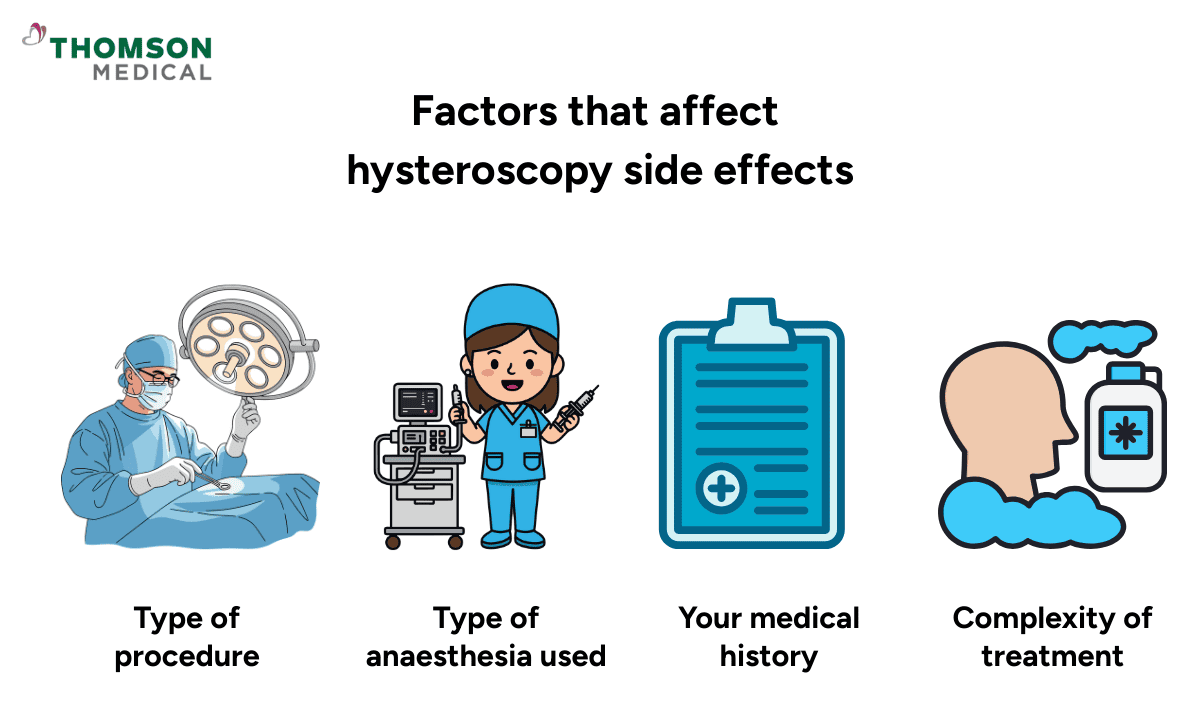
Not everyone experiences side effects in the same way after a hysteroscopy. Some factors can influence what you might feel and how long recovery may take. Your recovery may depend on several factors, including the type of procedure you had and your medical history.
Common factors can include:
Type of procedure:
A simple diagnostic hysteroscopy usually causes fewer side effects.
Operative procedures, such as removing fibroids or treating the uterine lining (endometrial resection), may lead to stronger or longer-lasting symptoms.
Anaesthesia used:
General anaesthesia may take longer to wear off and can make you feel tired or groggy.
Local anaesthesia or conscious sedation usually causes milder, shorter-lasting effects.
Your medical history:
If you have had previous uterine procedures or scarring, you may feel slightly more discomfort.
Your cervix or uterus may be less flexible, which can affect recovery.
Complexity of treatment:
Procedures using heat or freezing temperature (cryotherapy) to remove tissue may take longer to heal.
You may notice temporary changes in vaginal discharge during recovery.
Knowing what may influence side effects can help you stay prepared for what your body might feel during recovery and why your experience may be different from others.
If you feel uncertain about your recovery experience or risk factors, a consultation may be helpful. You may consider scheduling an appointment with our doctors at Thomson Medical.
When to seek medical attention
Most side effects after hysteroscopy are mild.
However, you should seek emergency care or contact your specialist immediately if you notice:
Pain that is severe or steadily getting worse
Heavy bleeding that soaks through multiple sanitary pads in an hour
Fever or chills
Foul-smelling vaginal discharge
Difficulty urinating
Noticeable bloating and tightness in your abdomen
Seeing a doctor early helps catch anything unusual before it turns into something more serious. It also means you can get proper help and reassurance, so you can focus on resting and getting back to feeling like yourself again.
Our O&G specialist
Loading...
How to support your recovery after hysteroscopy?
Knowing what to expect after your hysteroscopy can make the recovery period feel much less daunting. Many women find that their body bounces back quickly, and with a little care, you can feel more at ease as you heal.
What is recovery like after a hysteroscopy?
Recovery after a hysteroscopy is usually quick, and most women are able to return to their usual routine smoothly.
During recovery, you can usually expect:
A return to normal daily activities within one to two days for most women
Light spotting or bleeding that gradually improves
Mild lower abdominal discomfort similar to menstrual cramps
Follow-up guidance from your doctor, including when to expect results if an endometrial biopsy or hormonal tests were performed
Every woman heals differently, so it is natural to have questions as your body recovers. Checking in with your doctor can help you understand how your healing is progressing, and your care team can talk through any concerns you may have along the way.
What can you do to reduce side effects?
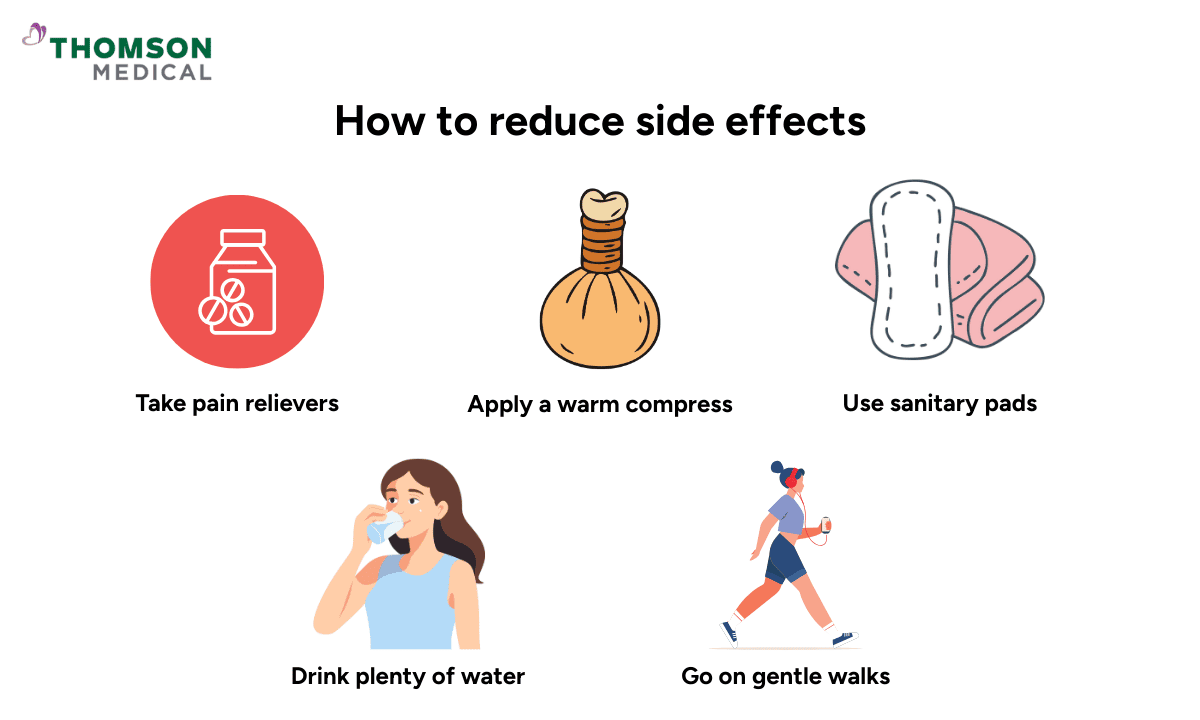
After a hysteroscopy, it is normal for your body to need some time to recover. While most side effects are mild and temporary, there are simple and practical steps you can take to help ease discomfort and support healing.
Here are simple ways to help with your recovery:
Take over-the-counter pain relievers as advised by your doctor to manage cramping
Apply a warm compress on your lower abdomen and rest for a few hours after the procedure
Use sanitary pads instead of tampons for vaginal bleeding to reduce the risk of infection
Drink plenty of water to help clear the anaesthetic from your system
Go on gentle walks to help support blood circulation and lower the risk of blood clots
By taking things gently and listening to your body, you can make your recovery more comfortable and reduce unnecessary discomfort. Most women feel back to normal quite quickly after a hysteroscopy. Allowing yourself time to rest, staying hydrated, and following your doctor’s advice can help your body heal smoothly.
FAQ
Is hysteroscopy painful?
You may feel mild cramping, similar to period pain. Diagnostic hysteroscopy is usually less uncomfortable, while procedures that remove polyps or fibroids may cause stronger cramps. Your doctor can help manage discomfort with anaesthesia, sedation, or pain relief medication.
How long do hysteroscopy side effects usually last?
Most symptoms, such as cramping, bloating, or light discomfort, settle within one to two days. Spotting or light bleeding may last a few days and usually stops within a week. Many women return to their usual routine quite quickly.
Can I experience bleeding or spotting after a hysteroscopy?
Yes, light bleeding or spotting is common for a few days because the uterus lining may be slightly irritated or treated during the procedure. Using sanitary pads instead of tampons helps lower infection risk. Let your doctor know if bleeding becomes heavy or worsens.
Are there any risks of infection after a hysteroscopy?
Infections are uncommon but can happen. Signs to watch for include fever, unusual discharge, or increasing pelvic pain. Following your aftercare instructions and maintaining good hygiene helps reduce this risk.
When should I contact my doctor after the hysteroscopy procedure?
Reach out if you notice heavy bleeding, severe or worsening pain, fever, unusual discharge, or trouble passing urine. Follow-up visits are usually arranged to check healing and discuss any test results.
How soon can I resume normal activities after a hysteroscopy?
Many women resume daily activities within a day or two, especially after diagnostic procedures. You may need to avoid heavy lifting or intense exercise for a short time after more complex treatment. Your doctor will guide you based on your recovery.
Will hysteroscopy affect future fertility?
Hysteroscopy is generally safe and may even improve fertility when it removes growths or scar tissue inside the uterus. Most women return to their normal menstrual cycle and can try to conceive after recovery.
The information provided is intended for general guidance only and should not be considered medical advice. For personalised recommendations and tailored advice based on your unique situations, please consult a specialist at Thomson Medical. Request an appointment with Thomson Medical today.
For more information, contact us:
Thomson Specialists (Women's Health)
Thomson Women's Clinic (TWC)
- Novena:
6592 6686 (Call), 8611 8986 (WA) - Bukit Batok:
6569 0668 (Call), 8686 3525 (WA) - Choa Chu Kang:
6893 1227 (Call), 8282 1796 (WA) - Jurong:
6262 8588 (Call), 6262 8588 (WA) - Katong (female doctor):
6970 2272 (Call), 8611 9020 (WA) - Punggol:
6243 6843 (Call), 8811 0328 (WA) - Sembawang: 6753 5228
- Sengkang: 6388 8125
- Serangoon (female doctor): 6382 3313
- Tampines: 6857 6266
- Tiong Bahru: 6276 1525
Notice
The range of services may vary between TWC/TS locations. Please contact your preferred branch directly to enquire about the current availability.
Request an Appointment