

It’s natural to worry about scarring after surgery, especially after something as significant as a hysterectomy. You may wonder how visible the scars will be and how they will change over time.
Keyhole hysterectomy scars are usually small and tend to heal well. While healing varies from person to person, knowing where the scars are, how they evolve, and how to care for them can make the recovery process feel more manageable.
Where are keyhole hysterectomy scars located?
If you've just been through a hysterectomy, it’s natural to wonder whether there will be scars and where they’ll be. In a keyhole hysterectomy (also known as laparoscopic hysterectomy), your surgeon works through a few small incisions rather than one large opening.
Here's where those incisions are typically placed:
Belly button incision
Your surgeon will usually begin with a small incision inside or around your belly button, about 1-2 cm. This is where the laparoscope, a thin camera that guides the procedure, is gently inserted.
Because this incision sits within the natural folds of the belly button, it often becomes difficult to notice once healed. In many cases, it can become nearly invisible after a year.
Lower-abdominal incisions
Your surgeon will also make a few small cuts on your lower abdomen, usually two to four. Each ranges from 0.5 to 1.5 cm and is used to insert the surgical instruments that carry out the procedure.
The exact number and placement will depend on your individual anatomy and the specifics of your surgery. That’s why your experience may look different from another woman’s.
These incisions sit in a more visible area than the belly button, but their small size means they’re easy to cover and may fade well with time.
What keyhole hysterectomy scars look like
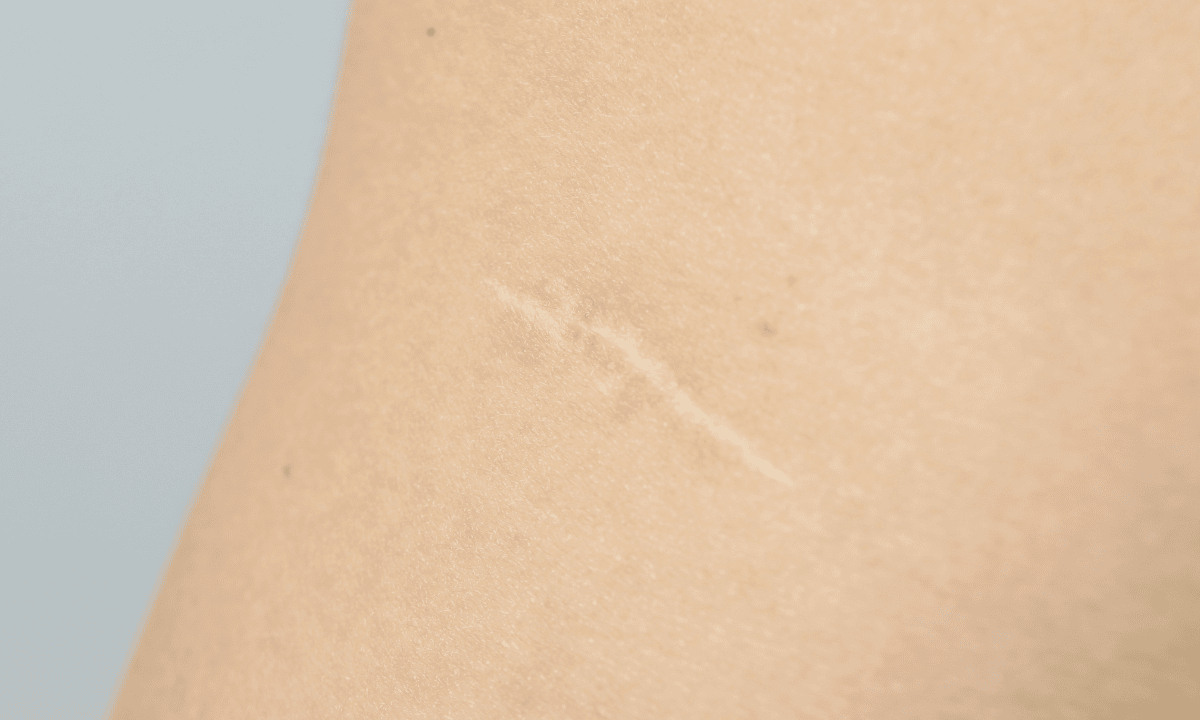
Scars from a laparoscopic surgery change over time as they heal, and knowing what to expect at each stage can make the journey feel less uncertain.
Immediately after surgery
In the first few days after surgery, your incision sites will usually be more noticeable. You may see:
Redness, pinkness, or slight raising around the wound edges
Tenderness or sensitivity to touch near the sites
Mild bruising or swelling, which is your body's natural response
A scab forming as the skin begins to close
While it may seem a bit alarming at first, this is actually a normal part of your body’s healing process.
After 1-3 months
During this stage, the scars begin to soften and flatten. Redness fades to a lighter pink, and they gradually become less noticeable.
Mild itching is common and usually reflects ongoing healing beneath the skin.
Long-term appearance
By 6 to 12 months, most scars settle into thin, pale lines. The belly button scar often becomes barely visible.
Healing varies depending on factors such as skin type, genetics, and aftercare. Some scars fade significantly, while others may remain slightly raised or darker.
If you have concerns about scarring or want to know what to expect from your recovery, schedule an appointment with Thomson Medical. Our specialists will walk you through the healing process and what your scars are likely to look like over time.
Gynaecologists at Thomson Medical
Loading...
Factors that affect keyhole hysterectomy scars’ healing
Several factors shape the way your skin recovers, and understanding them can help you set realistic expectations.
Skin type and genetics
Skin type and genetics influence how scars heal. Darker skin tones may be more prone to pigmentation, while lighter skin may take longer for redness to fade.
If you have a history of keloid or raised scars, it is helpful to discuss this with your surgeon before surgery so your aftercare can be adjusted accordingly.
Surgical techniques
Smaller and more precise incisions create less tissue trauma, which usually means smoother, less visible scars as healing progresses.
Gentle tissue handling during surgery also helps reduce inflammation and scarring. This is one reason keyhole hysterectomy often results in less noticeable scarring compared to open surgery.
Infection or complications
If a wound becomes infected or heals slowly, the scar may appear thicker, raised, or discoloured.
Signs such as spreading redness, unusual discharge, or worsening pain should be reviewed early, as prompt treatment can improve healing outcomes.
How to care for keyhole hysterectomy scars
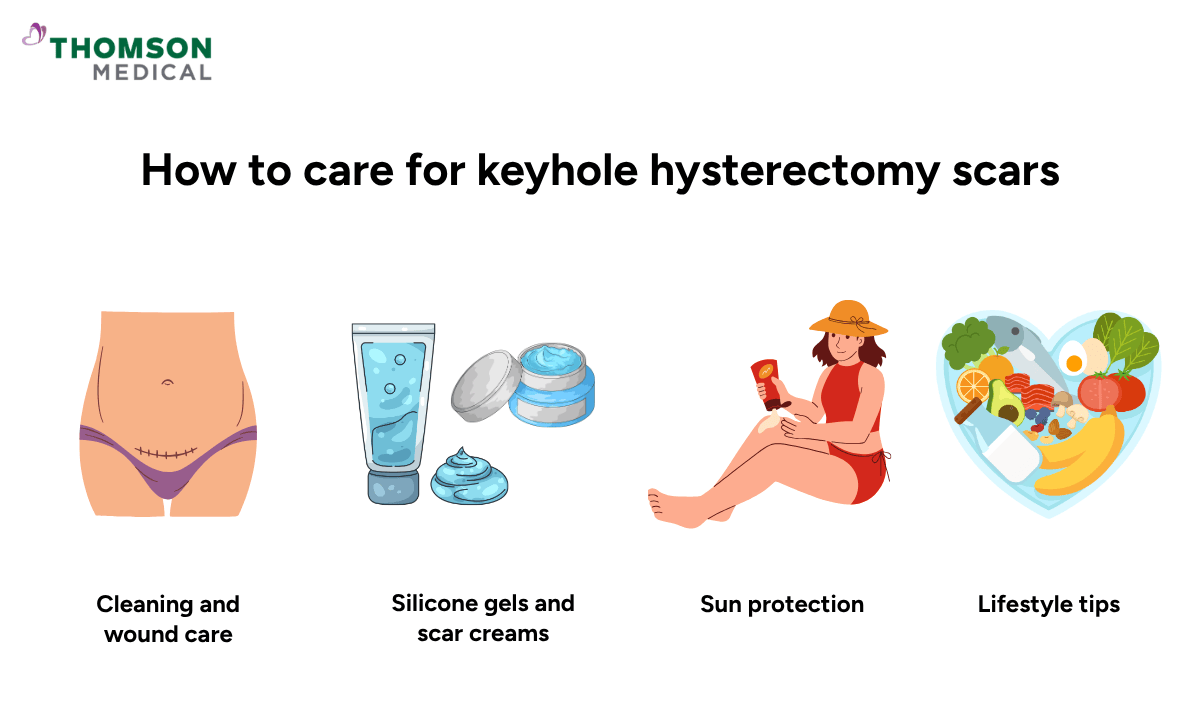
Taking care of your scars doesn’t need to be complicated. A few simple habits, done regularly, can help your skin recover well.
Here’s what you can try:
Cleaning and wound care:
Keep your incisions clean and dry
Follow your doctor’s instructions about dressing changes
Avoid soaking in hot tubs or swimming until your wounds are fully healed
Silicone gels and scar creams:
Apply silicone sheets or gels once the wound is fully closed
These products can help flatten, soften, and fade scars over time (but only if used consistently for months)
Sun protection:
Avoid direct sun exposure to scars
Keep scars covered or use sunscreen when you’re out to prevent darkening or hyperpigmentation
Lifestyle tips:
Avoid smoking, as it can slow the healing process
Eat a nutrient-rich diet to support skin repair
Gentle massage after healing may improve scar appearance
Your scars are a natural part of healing. With time and consistent care, most scars become much less noticeable.
When to contact your doctor
Most keyhole hysterectomy scars heal without issue. That said, it's worth knowing what to look out for so you can recognise when something needs attention.
Reach out to your care team if you experience:
Redness, swelling, or warmth spreading around the scar
Pus or unusual discharge from the wound
A scar that reopens or gaps
Pain that's getting worse, not better
A raised, itchy scar that seems to be growing or thickening rapidly
If you are unsure about any symptoms, it’s always better to check in than to wait and see. Catching any concerns early gives your care team the best chance to support you and address problems before they develop further.
If you notice any of these signs after your procedure, schedule an appointment with Thomson Medical. Our specialists will assess your recovery and help ensure your healing stays on track.
FAQ
How big are keyhole hysterectomy scars?
Most are between 0.5 and 2 cm per incision. Robotic hysterectomies sometimes result in smaller incisions.
Will my scars be noticeable?
For most women, no. The belly button scar becomes barely visible. Lower abdominal scars usually fade to thin, pale lines within a year.
How long until scars fade?
Usually 3–12 months for most people, depending on skin type and aftercare.
Can scars become raised or itchy?
Yes. Some people develop hypertrophic or keloid scars, particularly those with a genetic tendency toward them. If this happens, reach out to your doctor for treatment options.
Are scar creams effective?
Silicone gels and topical treatments can improve appearance, but only if used consistently over several months.
Can keyhole scars reopen?
It's rare but possible. This is usually the result of trauma or infection. Following your post-op care instructions carefully is the best way to prevent it.
Do scars look different after robotic vs. laparoscopic hysterectomy?
Robotic surgery typically involves finer instruments and more precise incisions, which can result in slightly smaller, neater scars. That said, the difference between the two is often subtle.
The information provided is intended for general guidance only and should not be considered medical advice. For personalised recommendations and tailored advice based on your unique situations, request an appointment with Thomson Medical today.
For more information, contact us:
Thomson Specialists (Women's Health)
Thomson Women's Clinic (TWC)
- Novena:
6592 6686 (Call), 8611 8986 (WA) - Bukit Batok:
6569 0668 (Call), 8686 3525 (WA) - Choa Chu Kang:
6893 1227 (Call), 8282 1796 (WA) - Jurong:
6262 8588 (Call), 6262 8588 (WA) - Katong (female doctor):
6970 2272 (Call), 8611 9020 (WA) - Punggol:
6243 6843 (Call), 8811 0328 (WA) - Sembawang: 6753 5228
- Sengkang: 6388 8125
- Serangoon (female doctor): 6382 3313
- Tampines: 6857 6266
- Tiong Bahru: 6276 1525
Notice
The range of services may vary between TWC/TS locations. Please contact your preferred branch directly to enquire about the current availability.
Request an Appointment