

Recovering from laparoscopic surgery can feel uncertain, especially if it’s your first operation. It is natural to have questions about how quickly you will regain strength and what to expect in the days and weeks ahead.
Everyone heals at their own pace, and your recovery can be influenced by factors such as the type of procedure, your overall health, and age. Understanding what to expect at each stage can help you feel more confident, recognise normal healing, and know when to seek medical advice.
What is laparoscopic surgery?
Laparoscopic surgery (also known as keyhole surgery) is a type of minimally invasive surgery that allows your surgeon to operate through a few small cuts instead of one large opening. Unlike normal surgery, your doctor only makes a small incision before inserting a thin camera and fine instruments, allowing them to perform the procedure with precision.
Because the cuts are smaller, you will usually experience less pain after surgery. Scarring is also smaller, and you can often return to your normal routine sooner compared to open surgery.
What is the laparoscopic surgery recovery time?
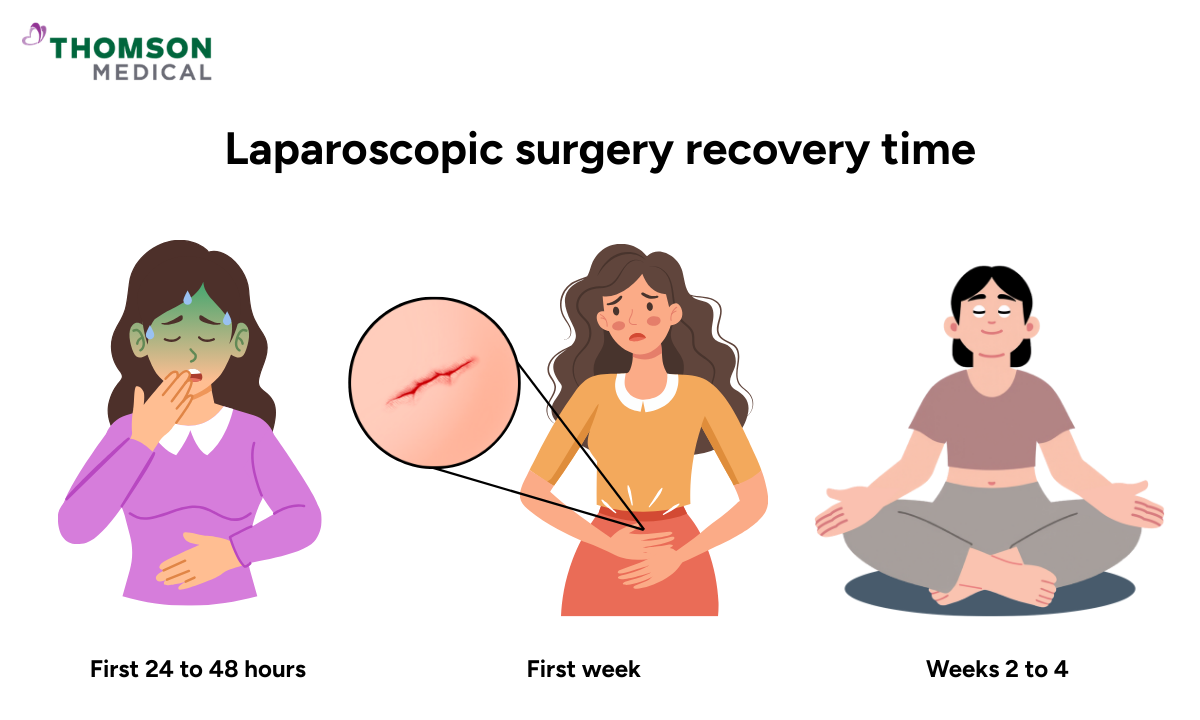
Recovery happens in stages, and knowing what to expect at each phase helps you plan safely. While your skin cuts may heal within days or weeks, the deeper tissues inside your abdomen continue repairing for several months.
First 24 to 48 hours
After your surgery, your hospital stay will usually last 2–3 days. During this early phase, your body begins its natural healing response, and some discomfort is expected.
Common symptoms include:
Feeling drowsy or tired
Shoulder or upper chest discomfort caused by the gas used during surgery, which usually settles within 1–2 days
Mild nausea or vomiting
Bloating and abdominal discomfort
Tenderness around the incision sites
Slower bowel movement, which may make it harder to pass wind or stool
Reduced appetite
A mild fever that is not linked to infection
These symptoms are part of your body adjusting after surgery. You may improve within 48 hours, and your care team will monitor you closely before discharge from the hospital.
First week
Within your first week, you will likely notice gradual improvement each day. You may still have mild fatigue, some soreness around your incisions, and light bloating, but these symptoms usually become less noticeable as you rest and move gently.
Your skin incisions may heal within 7–10 days, but internal tissues need more time. This is why you may be advised to avoid intense activity even if you feel well.
Weeks 2 to 4
By weeks 2–4, you will likely feel ready to ease back into light activity such as gentle walking and light yoga. However, if you have had a complex procedure such as a hysterectomy, hernia repair, gallbladder removal, fibroid removal, or appendectomy, your body may need a longer rest period before returning to normal activity.
Full recovery timeframe
Even when your energy improves, healing continues beneath the surface. Full internal recovery generally takes 6–12 weeks.
During this time, your body is restoring muscle layers, internal lining, organ surfaces, small blood vessels, and minor nerve irritation caused during surgery.
By around 4 months, you may feel ready to return to full activity. Your stamina returns, exercise feels easier, and scars continue to fade. Keeping within the recommended activity levels during this time helps protect healing tissues and lowers the risk of complications.
For further guidance on your laparoscopic surgery recovery timeline, request an appointment with Thomson Medical. Our specialists can review your healing progress, explain what to expect at each stage, and advise when it’s safe to return to normal activities.
What are the factors affecting recovery time?
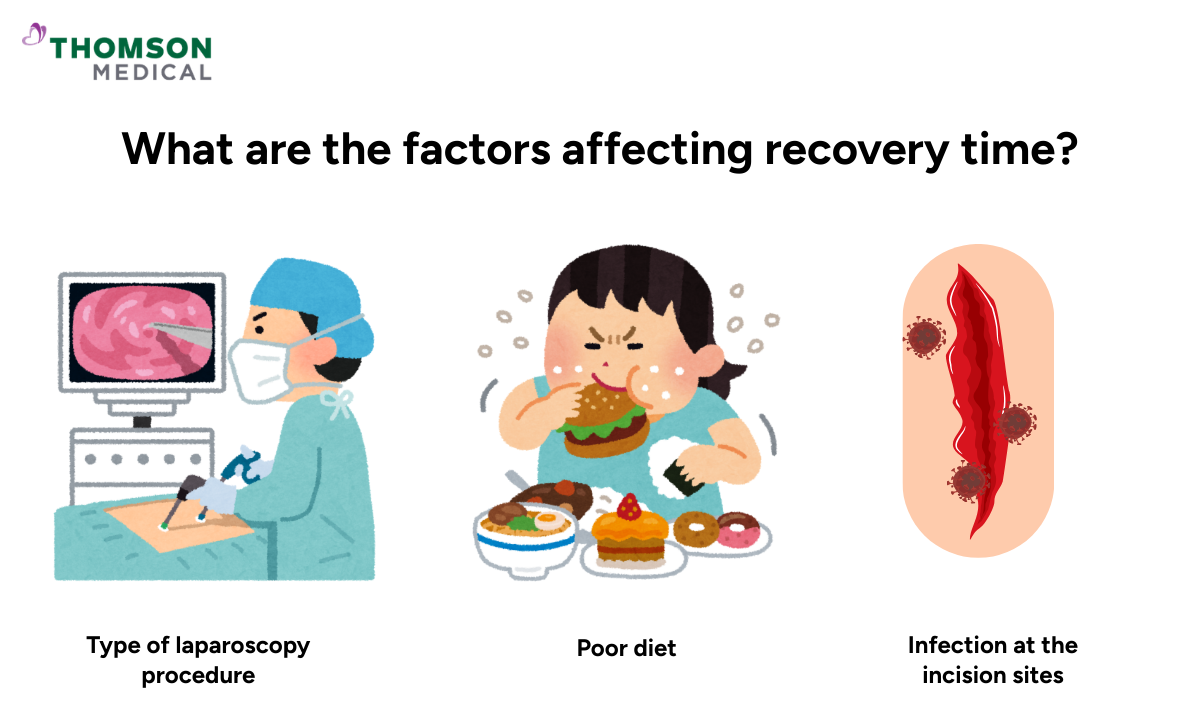
Recovery speed can vary from person to person. How quickly you heal depends on your body, your overall health, and the type of procedure you have had.
Type of laparoscopy procedure
The specific type of surgical procedure you undergo has a direct impact on how long healing takes. Procedures that involve larger organs, more tissue handling, or longer operating times usually require a longer recovery period.
Surgery type | Expected recovery times |
Diagnostic laparoscopy | 3 to 5 days |
Laparoscopic appendectomy (removal of appendix) | 5 to 7 days |
Laparoscopic cholecystectomy (removal of gallbladder) | 1 to 2 weeks |
Laparoscopic hernia repair | 2 to 4 weeks |
Laparoscopic ovarian cyst removal | 1 to 2 weeks |
Laparoscopic hysterectomy (removal of uterus) | 6 to 8 weeks |
Laparoscopic bowel surgery (such as colon resection) | 2 to 4 weeks |
These timeframes are estimates. Your surgeon can give you a more personalised recovery plan based on how your operation progressed and how you are healing.
Your overall health
Your general health also plays an important role in how smoothly you recover. If your body is slower to regain strength, you may need more time before resuming normal activities.
Recovery may take longer if you:
Are older in age
Have diabetes
Have heart disease
Are living with obesity
Smoke
Have had multiple surgeries before
Have a weakened immune system
Have a poor diet
If several of these risk factors apply to you, it is helpful to discuss them with your doctor before surgery. This allows you to prepare for a longer recovery and arrange suitable support at home.
Complications during surgery
Laparoscopic surgery is generally considered safe, and most people recover without major problems. However, as with any operation, there is still a small risk of complications.
Some possible complications include:
Bleeding from the surgical cuts that may require treatment
Injury to nearby organs or blood vessels
Reactions to the general anaesthetic, such as allergic reactions or breathing difficulties
Infection at the incision sites or inside the abdomen
Blood clots in the legs, pelvis, or lungs. In rare cases, a clot could travel to the heart or brain
Most complications are uncommon and can be treated effectively if they are detected early. If you have multiple health risks or experience a complication, your recovery may take longer than average. Your surgical team will take careful steps to reduce these risks and monitor you closely during and after the procedure.
Our gynaecologists
Loading...
What are the tips for a smoother recovery?
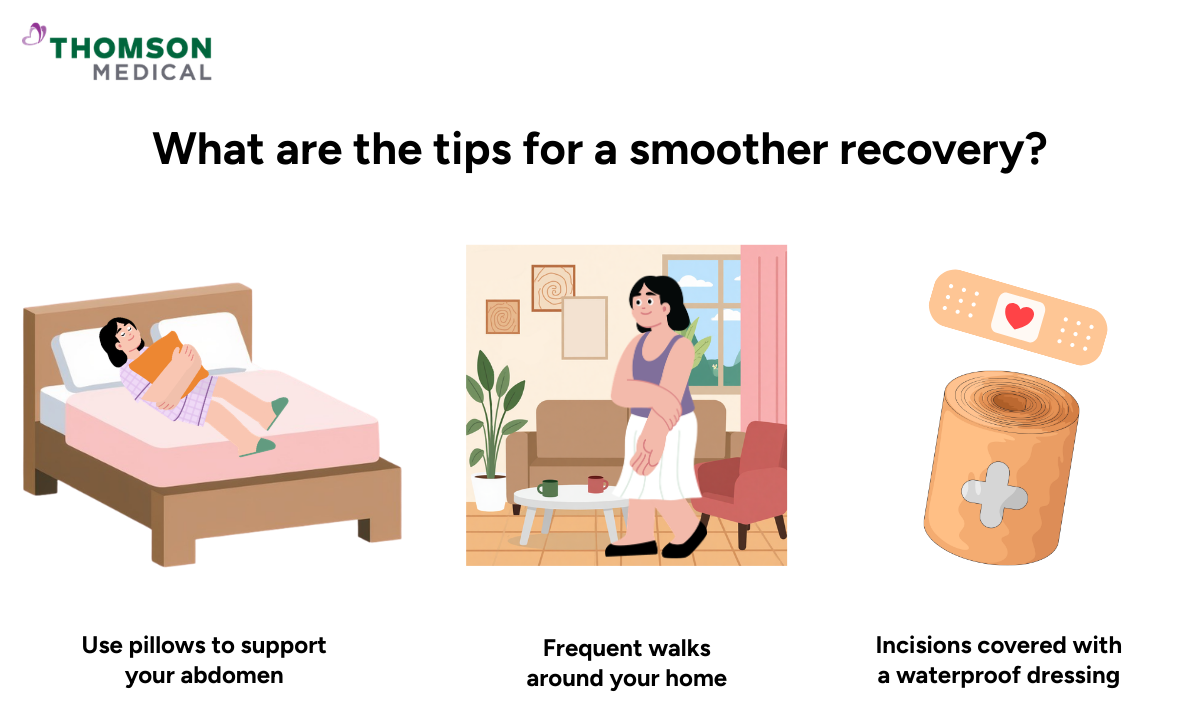
Pain after laparoscopic surgery can sometimes flare up at specific times, such as when moving, coughing, or using the bathroom. Paying attention to these areas during this time gives your body the support for recovery.
Managing pain
In the first few days after laparoscopic surgery, you may notice mild to moderate pain, which usually lessens as your body begins to heal.
Ways to manage pain:
Take regular pain relief such as paracetamol or ibuprofen as directed by your doctor
Use a heat pad on your lower abdomen or shoulder to ease gas-related discomfort
Wear loose, comfortable clothing
Use pillows to support your abdomen, especially when turning over or sitting up in bed
Practise slow, deep breathing exercises
Support your abdomen with your hands when coughing or sneezing
Avoid straining during bowel movements
If you notice any discomfort early, addressing it can help your recovery feel smoother and more comfortable.
Activity and exercise
Gradually returning to movement is key. Too much activity too soon can strain healing tissues, while too little can increase the risk of blood clots.
Stage | What you can do | What to avoid |
Week 1 |
|
|
Week 2 |
|
|
Week 4 onwards |
|
|
If you are ever unsure whether an activity is safe at your stage of recovery, please check with your doctor before pushing forward.
Healthy diet
After laparoscopic surgery, your digestive system can be sensitive, and your body needs protein, vitamins, and hydration to repair tissues and maintain energy. Adjusting what and how you eat can reduce bloating, constipation, and fatigue.
Tips for your meals:
Drink plenty of water to stay hydrated and prevent constipation
Include lean proteins like chicken, fish, eggs, tofu, or legumes to help tissue repair
Eat whole grains, fruits, and vegetables for fibre and nutrients
Have smaller, more frequent meals rather than large ones
Avoid spicy, fatty, or gas-producing foods in the first few weeks
Eating carefully in the early weeks can prevent common post-surgery digestive issues and give your body the nutrients it needs to heal efficiently.
Wound care
Incisions from laparoscopic surgery are small, but the underlying tissues continue to heal for weeks.
Simple ways to care for your incisions:
Gently clean the area with mild soap and water
Pat the skin dry. Do not rub
Keep the incisions covered with a waterproof dressing and avoid harsh products such as hydrogen peroxide
These practices are especially important if you have risk factors such as diabetes or obesity, which can slow healing and increase the risk of wound infection. Careful attention to your incisions can help prevent infection, support faster tissue repair, and minimise scarring.
For guidance on postoperative recovery after laparoscopic surgery, request an appointment with Thomson Medical. Our specialists can provide personalised advice on pain management, activity progression, diet, and wound care to support a smoother healing process.
When to contact your doctor
Most symptoms after laparoscopic surgery are part of normal healing, but some signs can indicate a complication and need prompt medical attention.
Contact your doctor promptly if you experience:
A fever of 38°C or above
Severe pain that is getting worse
Continuous vomiting
Redness, swelling, or unusual discharge from your incision site
Heavy or prolonged bleeding
Difficulty breathing
No urination for several hours
Fainting or extreme weakness
Getting checked early can prevent minor issues from becoming serious. Conditions like infections or blood clots are much easier to treat when identified promptly, so contact your doctor the same day rather than waiting for your scheduled follow-up.
Recovery from laparoscopic surgery is generally smooth, and most people progress steadily. While everyone heals at a different pace, the body gradually restores itself without major issues.
FAQ
How long before I can return to work?
If your job doesn’t involve heavy lifting, prolonged standing, or intense physical activity, you can usually return to desk or office work within 3–7 days.
Can I drive after a laparoscopic procedure?
Most patients can start driving 1–2 weeks after surgery, but this depends on the complexity of the procedure and your personal recovery. Always ensure you feel confident and pain-free before driving.
Will I have visible scars?
Yes, but laparoscopic scars are very small and usually fade significantly within 2–6 months.
When can I resume normal exercise?
You can gradually return to activity as your body heals:
- Light activity around 2 weeks
- Moderate activity around 4 weeks
- Full recovery approximately 3 months
Are there dietary restrictions during recovery?
Eating light, easily digestible foods helps your body heal and prevents issues like bloating or constipation.
Helpful tips:
- Stay hydrated with plenty of water.
- Include lean proteins (chicken, fish, eggs, tofu, and legumes) and nutrient-rich foods like whole grains, fruits, and vegetables.
- Eat small, frequent meals rather than large ones.
Foods to avoid early on:
- Spicy or acidic foods
- Fried or greasy foods
- Processed sugar
- Alcoholic and caffeinated drinks
- High-dairy foods
- Gas-producing vegetables like broccoli, cauliflower, and cabbage.
How do I know if my recovery is delayed?
Watch for these signs, which may indicate that your recovery is slower than expected:
- Persistent or increasing pain lasting more than a week
- Ongoing tiredness or weakness
- Persistent bloating for more than a week
- Continued loss of appetite
- Pain, redness, swelling, or pus from incision sites
Can complications affect recovery time?
Yes. Any complications can significantly prolong your recovery. It’s important to contact your doctor if you notice unusual symptoms.
The information is intended for general guidance only and should not be considered medical advice. For personalised recommendations and advice based on your unique situation, please consult a specialist at Thomson Medical. Request an appointment with Thomson Medical today.
For more information, contact us:
Thomson Specialists (Women's Health)
Thomson Women's Clinic (TWC)
- Novena:
6592 6686 (Call), 8611 8986 (WA) - Bukit Batok:
6569 0668 (Call), 8686 3525 (WA) - Choa Chu Kang:
6893 1227 (Call), 8282 1796 (WA) - Jurong:
6262 8588 (Call), 6262 8588 (WA) - Katong (female doctor):
6970 2272 (Call), 8611 9020 (WA) - Punggol:
6243 6843 (Call), 8811 0328 (WA) - Sembawang: 6753 5228
- Sengkang: 6388 8125
- Serangoon (female doctor): 6382 3313
- Tampines: 6857 6266
- Tiong Bahru: 6276 1525
Notice
The range of services may vary between TWC/TS locations. Please contact your preferred branch directly to enquire about the current availability.
Request an Appointment