

If you have recently undergone a myomectomy (fibroid removal surgery), navigating the days immediately following your procedure can feel unfamiliar. It is completely natural to feel a sense of relief that the surgery is over, while simultaneously wondering what to expect on your path to healing.
Because every woman’s body is unique, myomectomy recovery looks different for everyone. There is no single timeline you need to measure your progress against.
Whether your specialist performed an open, laparoscopic (keyhole), or hysteroscopic procedure, your recovery will depend on several factors:
- Managing temporary post-operative discomfort safely at home
- Prioritising adequate rest and gentle lifestyle adjustments
- Learning to recognise normal healing signs versus symptoms that require clinical attention
Understanding these foundational steps can remove the guesswork and make your transition back to daily wellness feel far less daunting.
What is a myomectomy?
Myomectomy is a surgical procedure that removes fibroids while keeping your womb intact, making it a meaningful option for women who want to preserve their fertility.
Fibroids are non-cancerous growths in or on the walls of your uterus. Many women live with them without any issues, but for others they can cause issues such as heavy periods, pelvic pain, frequent urination, or trouble conceiving.
Types of myomectomy
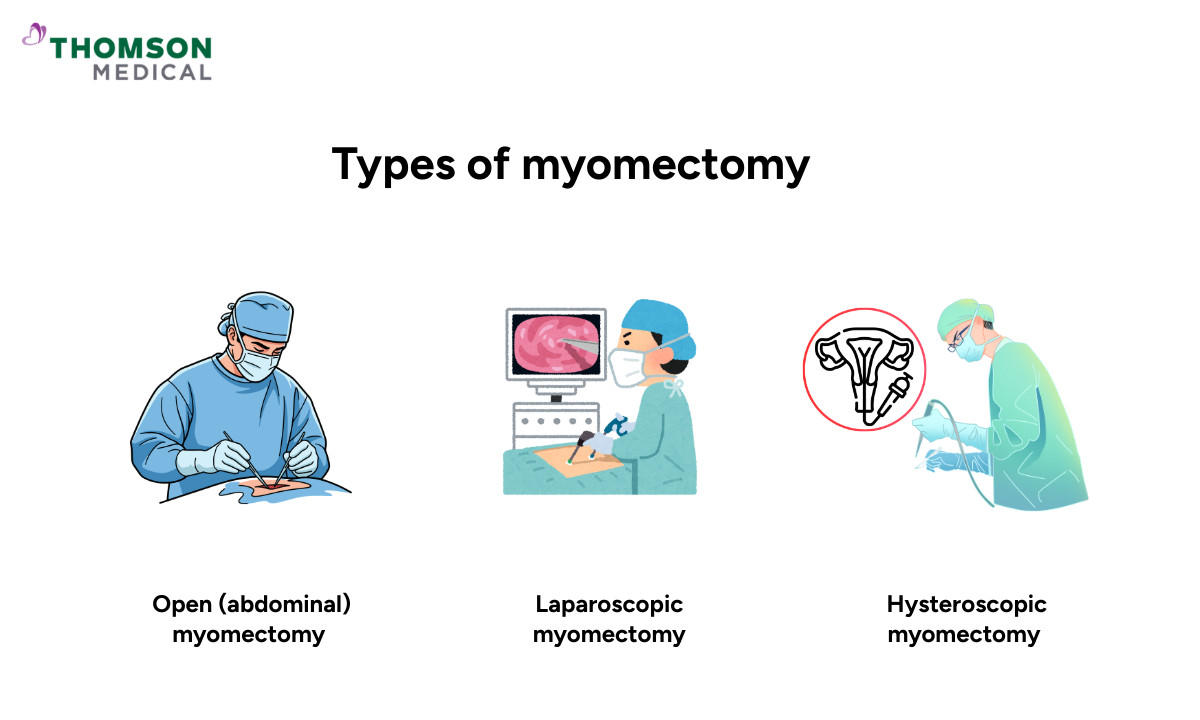
There are three ways the procedure can be performed, and knowing which one you've had will help you understand what recovery looks like for you:
Open (abdominal) myomectomy:
Often used for larger or more complex fibroids
Recovery is usually around 4-6 weeks
Laparoscopicmyomectomy:
A minimally invasive approach using small incisions
Most women recover within 2-4 weeks
Hysteroscopic myomectomy:
No external incisions at all
Often the quickest recovery, sometimes just days to a week
Each approach carries a different level of surgical impact, which is why recovery timelines vary so significantly between them.
What to expect after a myomectomy
The days after surgery bring physical changes that can feel unfamiliar. Some symptoms are a normal part of healing, while others need medical attention.
In the days following your procedure, you may notice:
Pelvic pain or cramping
Fatigue and a general feeling of heaviness
Abdominal bloating
Mild vaginal bleeding or spotting
Light brown vaginal discharge
Temporary changes in bowel habits, such as constipation
If you're unsure whether what you're experiencing after surgery, schedule an appointment with Thomson Medical. Our doctors can review your symptoms and give you the clarity and reassurance you need.
Myomectomy recovery tips
While recovery varies from person to person, there are practical steps you can take from day one to support your body and reduce discomfort.
Managing pain and discomfort
Some degree of pain after a myomectomy is normal, and how much you feel will depend on the type of procedure you had.
Open myomectomy tends to cause you more discomfort. With laparoscopic or hysteroscopic procedures, your pain is usually milder. You may notice a dull ache or cramping in your lower abdomen, similar to period pain. You may also notice a gas-like pain in the shoulder or back, which is common after laparoscopic surgery.
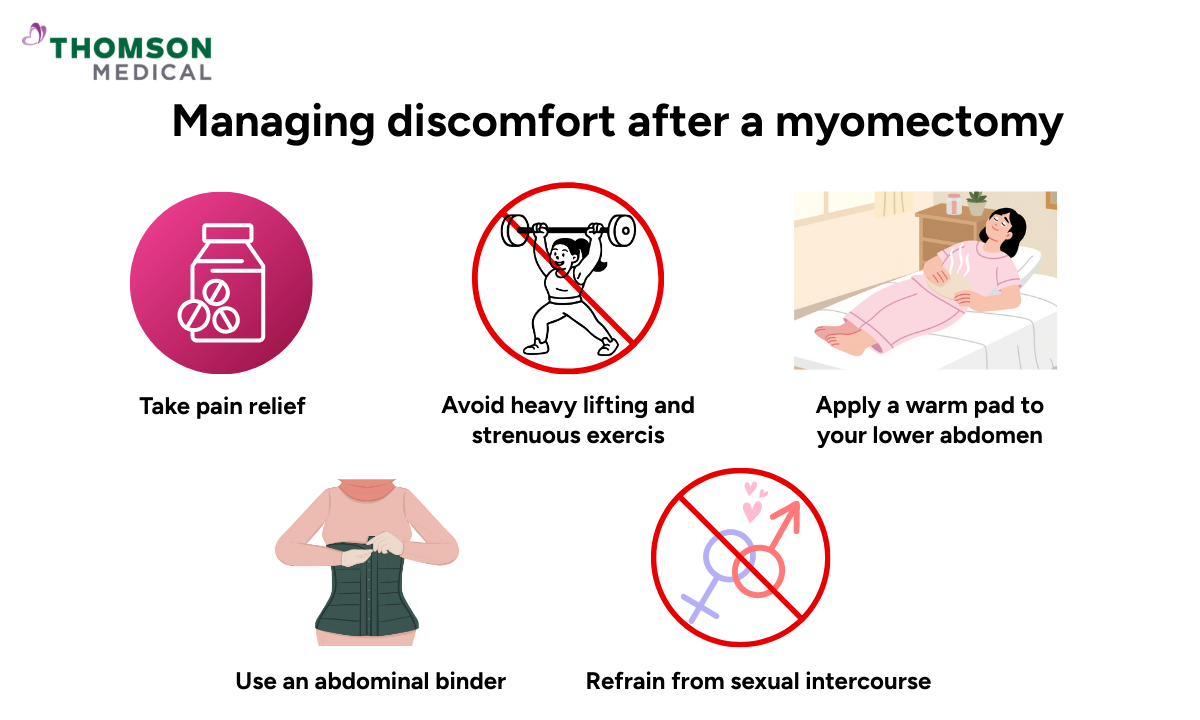
To help manage pain:
Take pain relief such as paracetamol or ibuprofen as directed by your doctor
Apply a warm pad or heat pack to your lower abdomen for comfort
Use an abdominal binder to support the area and reduce soreness
Avoid heavy lifting, especially in the first week
Wait at least six weeks before resuming sexual intercourse
Waiting six weeks for intimacy can feel like a long time. However, this waiting period is important, as it protects your healing uterus and reduces the risk of infection or complications.
If the pain feels unmanageable or isn't improving with medication, don't hesitate to contact your doctor.
Returning to physical activity
Rest is important, but gentle movement is equally valuable – it supports circulation and helps your body recover. The key is to build up gradually and listen to your body throughout.
Days 1-2:
Rest, but get up for short, slow walks around the house when you feel able
Weeks 1-6:
Focus on gentle daily walking, gradually increasing your distance.
Avoid heavy lifting, straining, sit-ups, or any exercise that puts pressure on your abdomen
Week 6 onwards:
Light exercise such as swimming or cycling is generally well-tolerated
Week 12 onwards:
Higher-impact activities like running or weight training may be reintroduced, but always check with your doctor first
Most women who had an open myomectomy are cleared for full activity by week 12, while those who had a laparoscopic or hysteroscopic procedure may reach that point earlier — always confirm with your doctor before progressing.
Diet, rest, and wound care at home
A few practical habits at home can significantly support your recovery. Eat a balanced, fibre-rich diet to help prevent constipation, and stay well hydrated throughout.
For daily care:
Sleep as much as your body asks for, especially in the first week
Showering is fine, but keep your incision site dry and clean
Avoid baths, douching, or inserting tampons until your doctor gives the go-ahead
If your incision shows any signs of redness, unusual discharge, or failure to close properly, please contact your doctor promptly rather than waiting for your next scheduled visit.
Looking after your emotional wellbeing
It's not uncommon to feel a mix of emotions after a myomectomy, like relief, fatigue, low mood, or unexpected anxiety. This is a completely normal response to surgery, and it deserves just as much attention as your physical recovery.
In the first week, emotional sensitivity is particularly common, often amplified by pain and disrupted sleep. As physical symptoms ease, most women find their mood also lifts naturally. By around six weeks, many report feeling significantly better in both body and spirit.
Your doctor can point you towards the right support, whether that's counselling, a referral, or simply a conversation about how you're feeling.
Gynaecologists at Thomson Medical
Loading...
Warning signs: When to contact your doctor
It can be difficult to tell the difference between expected post-surgical discomfort and a sign that something needs attention. As a general rule, if the symptoms are worsening, returning, or feeling different from before, that sign to call your doctor.
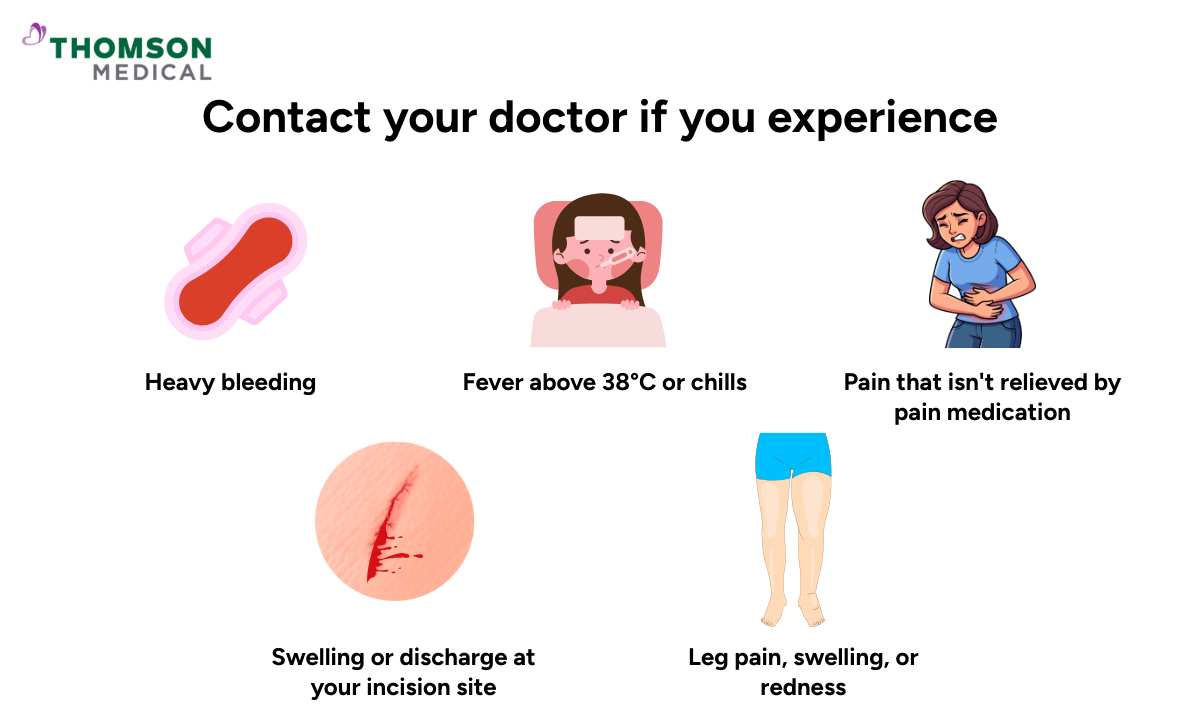
Contact your doctor if you experience any of the following:
Heavy vaginal bleeding that soaks through a pad within an hour
Fever above 38°C or chills
Pain that isn't relieved by your prescribed pain medication
Chest pain or difficulty breathing
Redness, swelling, or discharge at your incision site
Leg pain, swelling, or redness – particularly in one leg
These symptoms don't necessarily mean something is seriously wrong, but prompt contact with your doctor means any concerns can be assessed quickly and you won't be left wondering.
Recovery takes time, and some days will feel easier than others. Be patient with yourself, follow your care team's guidance, and do not hesitate to reach out if something does not feel right
If any of these signs sound familiar and you're not sure whether they warrant a visit, schedule an appointment with Thomson Medical. Our doctors can help you understand what you're experiencing and advise on whether further care is needed.
FAQ
Does your body change after a myomectomy?
Your uterus remains intact and continues to function normally. Many women actually notice an improvement – lighter, more regular periods and relief from the symptoms that fibroids were causing.
Will I have a scar from my myomectomy?
It depends on the approach. Open myomectomy leaves a scar similar to a C-section, while laparoscopic surgery leaves small puncture marks that fade over time. Hysteroscopic myomectomy leaves no external scar at all.
How long does full recovery from a myomectomy take?
Recovery time depends on the type of myomectomy you had:
Hysteroscopic myomectomy, usually days to a week
Laparoscopic myomectomy, around 2-4 weeks
Open (abdominal) myomectomy, typically 4-6 weeks
These are general guides. Your doctor will give you a more personalised timeline based on how you heal.
What is the fastest way to recover from fibroid surgery?
Rest adequately, stay hydrated, eat a fibre-rich diet, and take short, gentle walks from early on. Stick to your pain relief schedule, keep your incision clean, and avoid heavy lifting until your doctor clears you.
How should I sleep after my myomectomy?
Many women find it more comfortable to sleep on their back with pillows supporting their knees or on their side with a pillow between their knees to take pressure off the abdomen. Use a "log roll" technique (rolling your whole body to one side) to get in and out of bed without straining your incision.
How much should I walk after myomectomy?
Start with short, slow walks from the first day or two, and build up gradually over the following weeks. By week six, most women are comfortable walking for 30-45 minutes daily. Let how you feel guide your pace. Consistency matters more than distance.
The information provided is intended for general guidance only and should not be considered medical advice. For personalised recommendations based on your medical conditions, request an appointment with Thomson Medical.
For more information, contact us:
Thomson Specialists (Women's Health)
Thomson Women's Clinic (TWC)
- Novena:
6592 6686 (Call), 8611 8986 (WA) - Bukit Batok:
6569 0668 (Call), 8686 3525 (WA) - Choa Chu Kang:
6893 1227 (Call), 8282 1796 (WA) - Jurong:
6262 8588 (Call), 6262 8588 (WA) - Katong (female doctor):
6970 2272 (Call), 8611 9020 (WA) - Punggol:
6243 6843 (Call), 8811 0328 (WA) - Sembawang: 6753 5228
- Sengkang: 6388 8125
- Serangoon (female doctor): 6382 3313
- Tampines: 6857 6266
- Tiong Bahru: 6276 1525
Notice
The range of services may vary between TWC/TS locations. Please contact your preferred branch directly to enquire about the current availability.
Request an Appointment