

If you've been experiencing burning sensations, shooting pains, or persistent pins-and-needles feeling that won't go away, you may be dealing with nerve pain. If the usual painkillers aren't helping, you may require a doctor's opinion to understand your condition further to alleviate your pain.
Nerve pain, while frustrating, is far more common than you'd think. Once you understand what's causing it, you can work with your doctor to find an approach that actually helps.
What is nerve pain?
Your nerves normally act as reliable messengers between your brain and the rest of your body. When they work well, you barely notice it. However, when nerve pain develops, something shifts. Your nerves start sending the wrong signals – pain messages even when there’s no injury.
This is what your doctor calls "neuropathic pain". Everybody experiences it in many different ways.
You may notice:
A burning sensation that won’t quit
Sudden electric shocks
Pins and needles that linger
The combination of numbness and pain
What makes nerve pain especially frustrating is how unpredictable it can be. It may flare up without reason. Sometimes, just a light touch can trigger intense discomfort. Other times, you may experience nothing at all in an area that should hurt.
What causes nerve pain?
If you’re experiencing nerve pain, it’s natural to wonder: Why is it happening to me?
The answer can vary quite a bit from person to person, as nerve pain can stem from many different sources. Whatever’s causing yours, knowing the why helps you and your doctor make informed decisions about how to move forward.
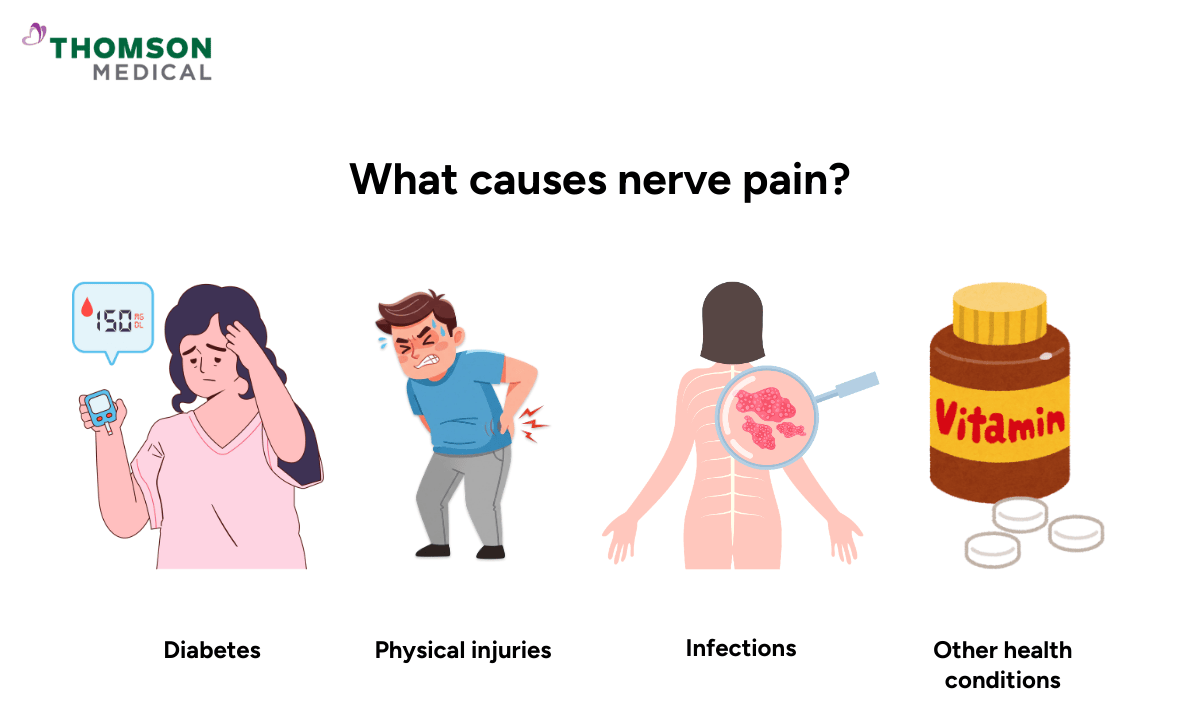
Common causes of nerve pain include:
Diabetes:
This is one of the most common causes. High blood sugar levels over time may damage the tiny blood vessels that feed your nerves.
Your feet and legs usually feel it first. You may notice tingling in your toes or a burning sensation in the soles of your feet. This is known as diabetic neuropathy.
Physical injuries:
A slipped disc or carpal tunnel syndrome can put pressure on your nerves.
These types of issues don't always come from sudden accidents. In many cases, they can build up slowly from repetitive movements or poor posture over the years.
Infections:
Shingles is a frequent cause. The pain can linger for months or even years after the rash clears.
Other infections like HIV, Lyme disease, and hepatitis C can affect your nerves too.
Other health conditions and factors:
A lack of vitamin B12 can be a reason behind your nerve pain.
Using alcohol too much or exposure to certain toxins can also cause nerve pain.
Sometimes, identifying the exact trigger takes time, and it’s okay if the answer isn’t clear right away. What’s most important is that your pain is real. It’s not something you’re imagining. Your doctor will work with you, step by step, to find an approach that brings you relief.
If you've been dealing with unexplained nerve pain and need answers, schedule an appointment with Thomson Medical. Our specialists will help you find out the cause and develop a treatment approach designed specifically for your situation.
Our specialist
Loading...
How do you know it’s nerve pain?
Nerve pain doesn’t always show up the same way for everyone. However, it does have signature signs. Knowing what to look for can help you describe what you’re experiencing to your doctor more clearly and get the right support sooner.
Common symptoms of nerve pain include:
Unusual sensations:
You may experience a burning feeling, like your skin is on fire from the inside out, or shooting pains that travel along nerve pathways.
Tingling or “pins and needles” that don’t go away. Your skin becomes so sensitive that even soft clothing feels uncomfortable.
The mix of sensations:
You may experience both numbness and pain at the same time.
For example, you can lose sensation in your fingertips but still feel sharp pain in nearby areas.
Where you feel it:
Nerve pain often follows predictable pathways along specific nerves.
It may appear symmetrically, affecting both feet or both hands, or concentrate in one specific area.
What triggers it:
Some situations or conditions can bring nerve pain on or make it worse, such as cold temperature, light touch or specific positions.
How it affects daily life:
You may find it hard to walk or maintain balance and have trouble with tasks like writing or typing.
If you’re experiencing several of these symptoms (especially if they’re affecting your daily activities or sleep), it’s time to see your doctor. Don't dismiss what you're feeling or wait for it to go away. Nerve pain isn't something that usually resolves on its own, but it does respond well to the right approach.
Your doctor can run different tests to confirm whether it's nerve pain and suggest treatments tailored to your situation. Seeking help early often means better outcomes.
How is nerve pain diagnosed?

There is no single test that confirms nerve pain, so your doctor will take a step-by-step approach. They’ll combine information from your symptoms, medical history, and different tests to figure out what’s happening.
Discussion
Your doctor may start with some questions to understand your situation.
They may want to know:
When did the pain start?
Where exactly do you feel it?
What does it feel like?
What makes it better or worse?
Your doctor will also ask about your medical history, medications, injuries, and lifestyle factors. This information will give them an overview of what’s going on.
Physical examination
Your doctor will test your reflexes, muscle strength, and sensitivity to touch, temperature, and vibration. These simple tests can reveal a lot about how your nerves are functioning.
Blood tests
While blood tests can’t measure your pain, they can uncover underlying causes. Your doctor may use them to detect diabetes – a common cause of nerve pain – check for vitamin deficiencies, and look for signs of infection.
Specialised nerve tests
Your doctor may suggest nerve conduction studies or electromyography (EMG) to check how well your nerves are working.
Imaging studies
Sometimes, MRI scans or CT scans may be recommended to identify issues like herniated discs, tumours, or areas where nerves are compressed.
The process takes time, and waiting for answers can feel frustrating, especially when you’re in pain. But a careful diagnosis will bring your doctor closer to the answer. Once they understand what’s causing your nerve pain, they can suggest treatments to address it.
In the meantime, it’s important to describe exactly what you’re experiencing to your doctor. The more they know, the better they can help you find relief.
How is nerve pain treated?
Once your doctor has a clearer picture of what’s behind your pain, they’ll work with you to create a care plan.
Your treatment depends on the causes of your nerve pain, how severe it is, and how it’s affecting your daily life. Many people benefit from a combination of treatments rather than a single solution.
Medical treatment
Your doctor may prescribe medication to reduce nerve pain signals.
These can include:
Antidepressants
Anticonvulsants
Topical treatments
Physical therapy
Your doctor can design exercises that strengthen muscles, improve balance, and maintain joint flexibility. All of which can reduce strain on compressed nerves. Acupuncture or massage therapy can also ease muscle tension and improve your pain.
Transcutaneous electrical nerve stimulation (TENS) can be recommended. It uses mild electrical currents applied through your skin to interrupt pain signals before they reach your brain.
Your doctor will explain the purpose of each approach beforehand, so you know what you’re taking and why.
It’s worth knowing that some treatments take weeks to show their effects. Your doctor will monitor how you're responding and adjust your plan along the way. Don't hesitate to contact your doctor if something isn't working or if side effects are bothering you.
When do you need urgent care?
While many cases can be managed effectively, some symptoms need urgent medical attention. Being aware of them helps you take action promptly.
You should see your doctor as soon as possible if you experience:
Sudden and severe nerve pain
Pain with weakness, loss of bowel or bladder control, or numbness
Persistent symptoms that disrupt your sleep or daily activities
Burning feet or tingling hands, especially when you have diabetes
New symptoms that appear after an injury or infection
It’s important to check with your doctor if something feels off. Your doctor will be there to guide you every step of the way. With proper care and the right treatment plan, you can find relief and get back to your normal life comfortably.
If nerve pain is disrupting your sleep, work, or daily activities, schedule an appointment with Thomson Medical. Our specialists will conduct a thorough evaluation and guide you toward effective relief tailored to your condition.
FAQ
Is nerve pain dangerous?
Nerve pain itself isn't life-threatening, but it signals that something's wrong with your nervous system.
The danger lies in the underlying cause and the complications that can develop if left untreated. In severe cases, nerve damage can lead to permanent loss of sensation or function.
Can I prevent neuropathic pain?
Some types, yes. Managing diabetes carefully reduces your risk of diabetic neuropathy. Maintaining good posture can also prevent nerve compression.
Avoiding alcohol and getting enough B vitamins helps protect nerve health. But some causes aren’t preventable.
What are the complications of nerve pain?
Without treatment, nerve pain can significantly impact your quality of life. It can lead to:
Sleep disturbance
Depression and anxiety
Increased injury risk
How common is neuropathic pain?
It’s more common than most people realise. Studies suggest 7-10% of the general population experience neuropathic pain at some point.
What topical pain relief is good for nerve pain?
Capsaicin cream and lidocaine patches are the most effective topical options. Capsaicin works by depleting substance P, which transmits pain signals, while lidocaine numbs the area.
Can stress cause nerve pain?
Stress doesn't directly damage nerves, but it can make existing nerve pain feel worse. When you’re stressed, your muscles tense up, which can compress nerves.
Stress also makes you more sensitive to pain and disrupts your sleep, both of which can intensify how much pain you feel.
The information provided is intended for general guidance only and should not be considered medical advice. For personalised recommendations and advice based on your unique situation, please consult a specialist at Thomson Medical. Request an appointment with Thomson Medical today.
Reference:
Colloca, L., Ludman, T., Bouhassira, D., Baron, R., Dickenson, A. H., Yarnitsky, D., Freeman, R., Truini, A., Attal, N., Finnerup, N. B., Eccleston, C., Kalso, E., Bennett, D. L., Dworkin, R. H., & Raja, S. N. (2017b). Neuropathic pain. Nature Reviews Disease Primers, 3(1), 17002. https://doi.org/10.1038/nrdp.2017.2
For more information, contact us:
Thomson Medical Concierge
- 8.30am - 5.30pm
- WhatsApp: 9147 2051
Need help finding the right specialist or booking for a group?
Our Medical Concierge is here to help you. Simply fill in our form, and we'll check and connect you with the right specialist promptly.
Notice:
The range of services may vary between Thomson clinic locations. Please contact your preferred branch directly to enquire about the current availability.
Get In Touch