

When your newborn refuses to follow any predictable pattern, you might start questioning yourself. Perhaps you've heard that other babies sleep through the night or that babies should be feeding on a schedule. When your little one won't follow these patterns, it's easy to assume you're missing something or that your baby is unusually difficult.
Those comparisons don't tell you the full story. There's no such thing as a "typical" newborn schedule. Some babies cluster feed for hours, while others space their meals further apart. Some sleep in long stretches, while others wake frequently to feel connected to you.
Your baby isn't being difficult – they're just being themselves. Crying doesn't always mean hunger, and waking at night isn't a problem to solve. It's how newborns stay safe, fed, and close to their carers. Understanding what's actually normal for newborns can help you feel more confident during these exhausting early weeks.
What defines the newborn period
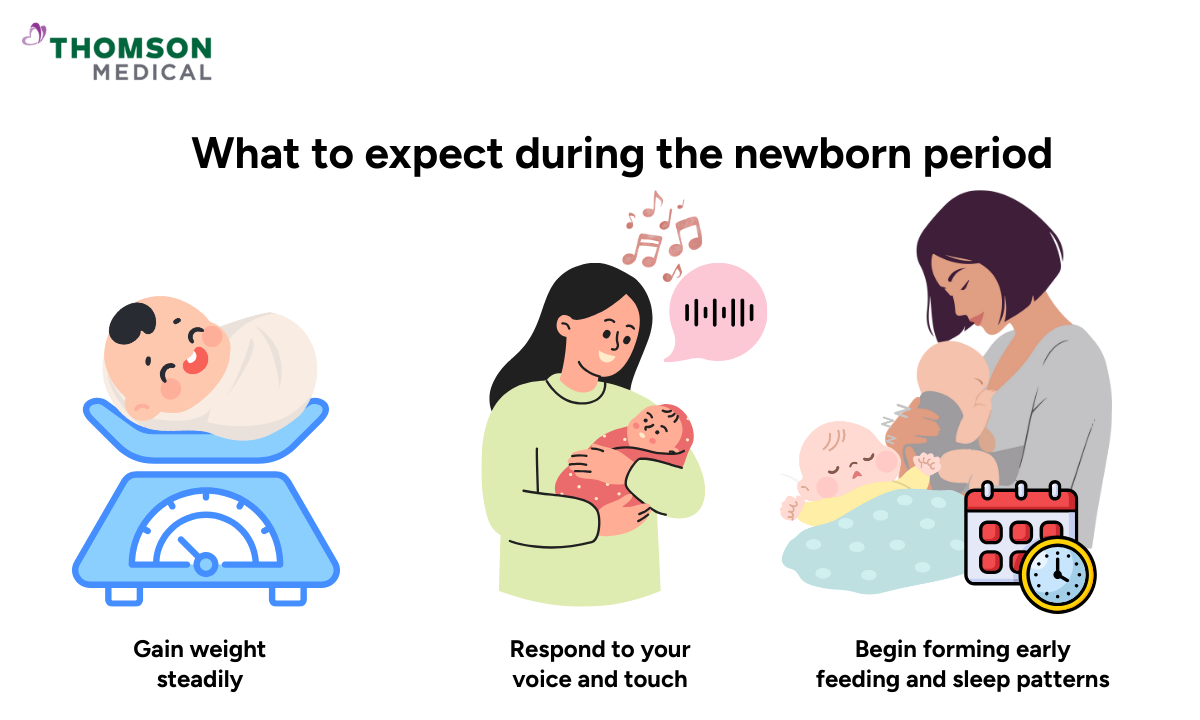
The newborn period covers your baby's first 28 days of life. During this time, your baby adjusts to life outside the womb while their body systems continue to develop. You'll notice changes that seem to happen almost daily.
During these first weeks, you can expect your baby to:
Gain weight steadily
Become more alert
Start responding to your voice and touch
Begin establishing feeding and sleep routines at their own pace
This period is also when you'll attend regular health checks. These appointments help track your baby's growth and give you a chance to ask any questions you might have.
Our paediatric specialists
Loading...
How newborns behave and communicate
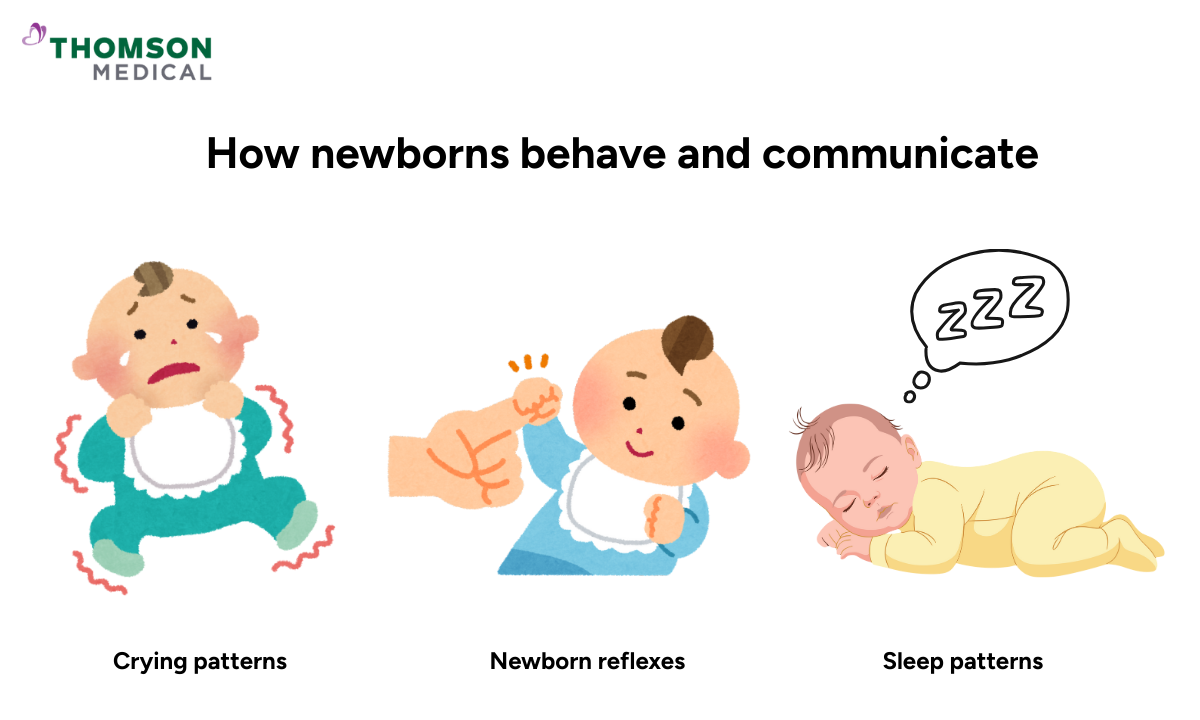
Your newborn communicates differently from older babies. At this age, they can't smile socially or coo yet. Instead, they use crying, body movements, and subtle cues to tell you what they need.
Crying patterns
Hearing your baby cry for hours can leave you feeling helpless and exhausted. Crying is your baby's main way of communicating. Newborns typically cry for two to three hours each day, often more in the evening.
Different cries can signal different needs:
A rhythmic, repetitive cry usually means hunger
A sudden, high-pitched cry might indicate pain or discomfort
An intermittent, whiny cry often signals tiredness
You'll gradually learn to recognise your baby's unique patterns, and responding to their cries helps build trust and security. Some babies cry more than others, and this doesn't reflect your parenting skills. If crying seems excessive or you feel concerned, please contact your doctor for guidance.
Newborn reflexes
Your baby is born with automatic reflexes that help them survive:
The rooting reflex helps them find the breast or bottle when you stroke their cheek
The sucking reflex allows them to feed
The grasp reflex makes them curl their tiny fingers around yours
These reflexes show that your baby's nervous system is developing as it should and help them grow in their first weeks. They'll fade naturally as your baby develops more controlled movements.
Sleep patterns
Newborns sleep around 16 to 17 hours per day, but rarely for more than two to four hours at a time. They don't yet understand day and night, so they wake frequently around the clock. While this can be exhausting for you, it is a natural part of your child's growth.
Your baby wakes regularly to feed because their small stomach can't hold enough milk for long. As they grow, their sleep periods will gradually lengthen.
Safe sleep is important. Always follow these guidelines:
Place your baby on their back to sleep
Use a firm, flat mattress in a cot or crib bassinet
Keep the sleep area free from loose bedding, pillows, or toys
Keep your baby's sleep space in your room for at least the first six months
Responding quickly to your baby won't spoil them. It helps them feel secure. As you get to know your baby, try different soothing methods to see what they prefer. Some babies calm down when you walk around. Others settle with gentle sounds or being held against your bare chest. What works one day might not work the next, so be patient as you learn together
Caring for a newborn can feel overwhelming, especially when you’re still learning their cues. Request an appointment at Thomson Medical to discuss your baby’s crying, sleep, or feeding patterns, and get personalised reassurance and guidance from our doctors as you settle into life with your newborn.
Newborn feeding: How often and how much
Feeding takes up much of your day during the newborn period. Whether you breastfeed or formula feed, your baby needs frequent feeds to support their rapid growth.
Both options can nourish your baby well. Breast milk also contains natural antibodies that help strengthen your baby's immune system and support healthy development.
How often your baby needs to feed
Newborns typically feed eight to twelve times per 24 hours. This might mean feeding every two to three hours, sometimes more frequently.
Cluster feeding, where your baby wants to feed very frequently for several hours, is also normal. It's helpful to watch for hunger cues rather than following a strict feeding schedule.
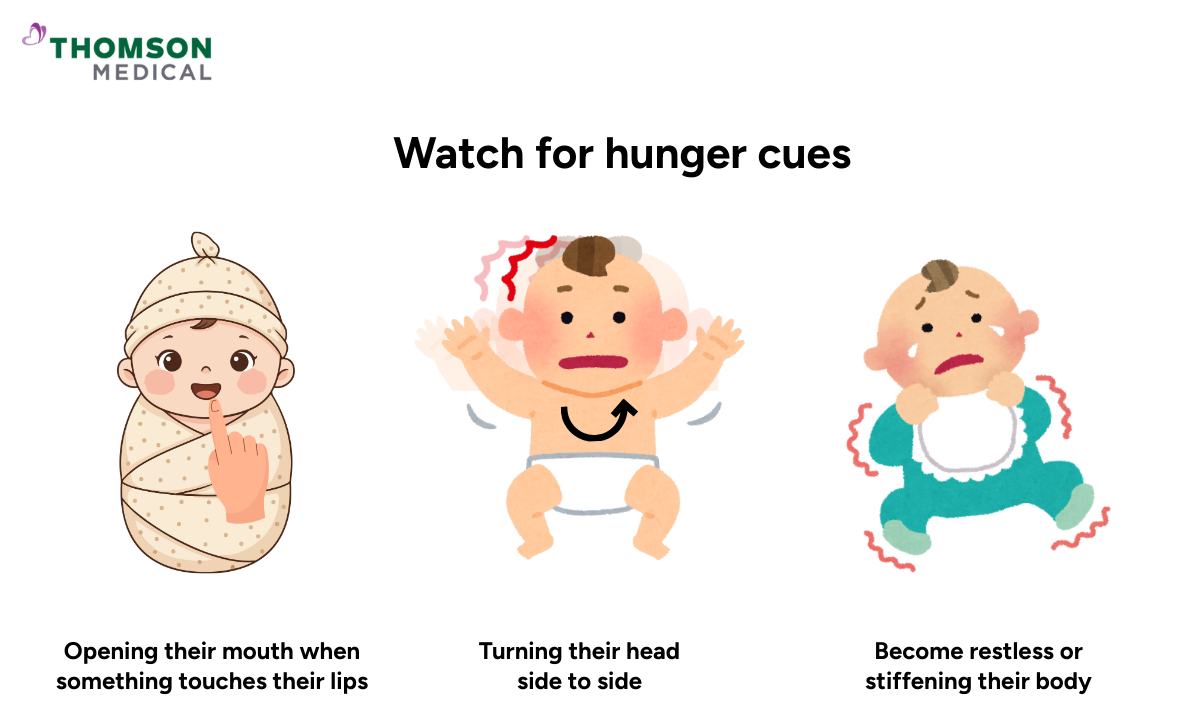
When your baby is hungry, they might:
Open their mouth when something touches their lips
Turn their head side to side (seeking the breast or bottle)
Make sucking motions
Become restless or stiffen their body
Crying is actually a late hunger cue. Feeding before your baby becomes distressed makes feeding easier for both of you and helps them settle more quickly.
If you're breastfeeding, expect feeds to take 20 to 45 minutes in the early weeks. Your baby should have a deep latch, with their mouth covering most of the areola (the darker area around your nipple). You'll hear swallowing sounds during active feeding. Breastfeeding shouldn't hurt – if you experience pain, speak with a lactation consultant or your doctor.
Daily care essentials
Caring for your newborn involves several daily tasks. It might feel overwhelming at first, but most new parents soon find the rhythm.
Your baby doesn't need a bath every day, because bathing too often can dry out their sensitive skin. Two to three times per week is enough, with gentle cleaning of their face, neck folds, and nappy area daily.
For bathing and cleaning:
Use cotton wool and plain water or mild, fragrance-free products designed for newborns
Keep your baby warm during nappy changes and baths, as they lose body temperature quickly
Consider using a baby bathtub which can make bathing safer and easier for you both
While bathing and cleaning, don’t forget the umbilical cord stump. It usually falls off within one to three weeks. Keep it clean and dry and fold nappies down to allow air circulation. Proper cord care helps prevent infection and supports faster healing.
Newborn health and medical care

Your baby will have several health checks during the newborn period. These appointments help ensure your baby is developing well and give you peace of mind.
Your baby should see a doctor within the first few days after birth, then again at two weeks and one month. These visits monitor weight gain, feeding, development, and general health. Don't hesitate to ask questions or share concerns.
You might notice some common newborn conditions during these early weeks:
Jaundice, which causes yellowing of the skin and eyes
Baby acne, which appears as small red bumps on the face
Cradle cap, which shows as scaly patches on the scalp
These conditions are usually harmless and resolve on their own. Your doctor can advise if treatment is needed and will monitor your baby closely.
Vaccinations for your baby
Your baby's first vaccinations typically begin at two months of age. These help to protect your baby from serious illnesses during their most vulnerable months. Your doctor will discuss the vaccination schedule and answer any questions you have about keeping your baby protected.
While you're focusing on your baby's health, remember to care for yourself too. The newborn period is temporary. You're learning to care for a baby while recovering from birth and managing significant sleep deprivation. Give yourself grace during this time. Being kind to yourself helps you recover and bond with your baby.
Regular newborn check-ups give you reassurance and support during these early weeks. Request an appointment at Thomson Medical to schedule your baby’s health reviews, discuss feeding or growth concerns, and plan vaccinations so your baby gets the best possible start.
FAQ
How often should I bathe my newborn baby?
Your newborn baby doesn't need a bath every day. Two to three times per week is enough. Use cotton wool and warm water to clean their face, neck folds, and nappy area daily. You can use a baby bathtub or clean sink for baths. Always keep your baby warm, as they lose body temperature quickly.
When does the umbilical cord stump fall off?
The umbilical cord stump typically falls off within one to three weeks after birth. Keep it clean and dry. Fold nappies down to allow air circulation. Proper cord care prevents infection and helps it heal faster. Contact your doctor if you notice redness, swelling, or discharge.
How can I prevent nappy rash?
Change wet or soiled nappies promptly and clean the area gently with warm water. Let your baby's skin air dry before putting on a fresh nappy. You can use barrier cream or diaper cream if diaper rash appears. If the rash doesn't improve or looks infected, speak with your doctor.
What is tummy time, and when should I start?
Tummy time helps your baby develop motor skills and strengthen their neck and shoulder muscles. Start with short sessions of two to three minutes, two to three times per day, from the first week. Always supervise tummy time and place your baby on a firm, flat surface. Gradually increase the duration as your baby gets stronger.
How do I know if my baby is getting enough breast milk?
Signs your baby is getting enough breast milk include six or more wet nappies per day after the first few days, regular bowel movements, steady weight gain, and periods of contentment between feeds. Your baby should regain their birth weight by around two weeks of age. If you're concerned, speak with your doctor or lactation consultant.
What is cluster feeding?
Cluster feeding occurs when your baby wants to feed very frequently for several hours, often in the evening. This is normal and doesn't mean your breast milk supply is low. Cluster feeding can help boost your milk production and comfort your baby. Accept this pattern as part of normal newborn behaviour.
When should I start baby-led weaning?
Baby-led weaning is not appropriate for newborns. Your newborn baby needs only breast milk or formula for the first six months of life.
Around six months, when your baby can sit up independently, hold their head steady, and show interest in food, you can begin introducing solid foods. Baby-led weaning involves offering soft finger foods rather than purees, allowing your baby to self-feed from the start.
The information provided is intended for general guidance only and should not be considered medical advice. For personalised recommendations and tailored advice based on your unique situations, please consult a specialist at Thomson Medical. Request an appointment with Thomson Medical today.
Reference:
Laguna, P., et al. (2023). How can cry acoustics associate newborns' distress levels with their physiological pain responses? Computers in Biology and Medicine. https://pmc.ncbi.nlm.nih.gov/articles/PMC10547902/