

Heavy periods are not usually the first symptom people associate with ovarian cancer.
Most women link ovarian cancer with signs like bloating, pelvic discomfort, or feeling full quickly, rather than changes in their menstrual cycle. That said, noticing heavier or different periods can still be unsettling and leave you wondering whether something more serious could be going on.
In most cases, heavy periods are caused by common and treatable conditions, not ovarian cancer. However, when they occur alongside other ongoing symptoms, they may be worth discussing with a doctor. Understanding how heavy periods fit into the bigger picture can help you decide when reassurance is enough and when it is time to seek medical advice.
Can ovarian cancer cause heavy periods?
The short answer is sometimes, but it's uncommon. Ovarian cancer does not usually start with period changes, especially heavy bleeding.
Most people with ovarian cancer experience normal periods, especially in the early stages. When bleeding changes do happen, they're more often due to hormonal changes or pressure from a tumour rather than the cancer itself.
Heavy periods alone are far more likely to be caused by other conditions that aren't cancer. By understanding the link between ovarian cancer and period bleeding, it can help educate you when your symptoms need attention and when you can feel reassured.
Ovarian cancer specialist
Loading...
What do ovarian cancer periods look like?
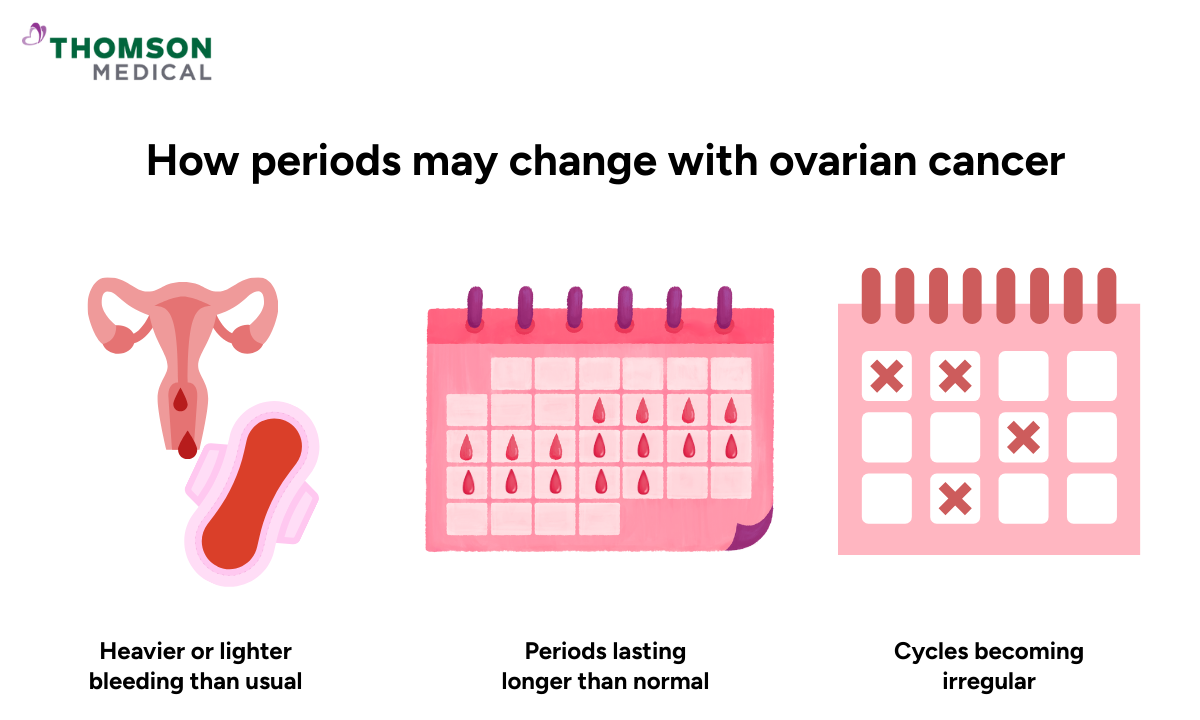
There is no specific "ovarian cancer period". If bleeding changes occur, they can look different from person to person.
Changes in flow and duration
If period changes do happen, you might notice patterns that feel different from your usual cycle.
Some people may notice:
Heavier or lighter bleeding than usual
Periods lasting longer than normal
Cycles becoming irregular
These changes are not specific to ovarian cancer. In fact, they're common with many other conditions that aren't serious. Hormone imbalances, stress, and problems with the womb cause these symptoms far more often than cancer does.
Bleeding between periods or after menopause
Bleeding between periods can happen for many reasons, and most of them don’t involve cancer. Common causes may include hormonal contraception, ovulation spotting, cervical polyps, or infections. While it may be worrisome, these symptom can be treated promptly.
Bleeding after menopause is different. This can be abnormal and should always be investigated by a doctor. It may be related to several conditions, such as endometrial atrophy (the uterine lining becomes thin), polyps, or hormone therapy.
While this could potentially be cancerous, getting these symptoms investigated by a specialists would offer a peace of mind. Upon investigation, your doctor can work out a treatment progress, whether it's a simple procedure or a case that requires more attention.
What are the symptoms of ovarian cancer?
Ovarian cancer rarely shows up through period changes. Instead, it's more often linked with ongoing symptoms that persist and worsen over time rather than common menstrual symptoms.
These symptoms can feel vague or easy to dismiss, which is why knowing what to watch for matters.
Look out for:
Persistent bloating or abdominal swelling
Lower belly or pelvic pain
Feeling full quickly when eating
Needing to pee urgently or more often
Unexplained fatigue
The keyword here is "persistent". These symptoms happening occasionally or around your period is normal. However, if these same symptoms are happening almost every day for more than two weeks, especially if they're new, you should consider talking to your doctor.
Most of the time, there'll be a simple explanation, but checking gives you answers and peace of mind.
Symptoms like bloating or pelvic discomfort are not the same as menstrual irregularities, and ongoing changes deserve a proper check. Request an appointment at Thomson Medical to discuss persistent symptoms, rule out causes beyond menstrual irregularities, and get clear guidance on whether further tests are needed.
Should I be worried about my heavy periods?
Most of the time, no.
Heavy periods are common and usually not a sign of anything serious, especially in these situations:
They've been heavy for a long time
They started around puberty
They run in your family
You should pay more attention if your heavy periods are:
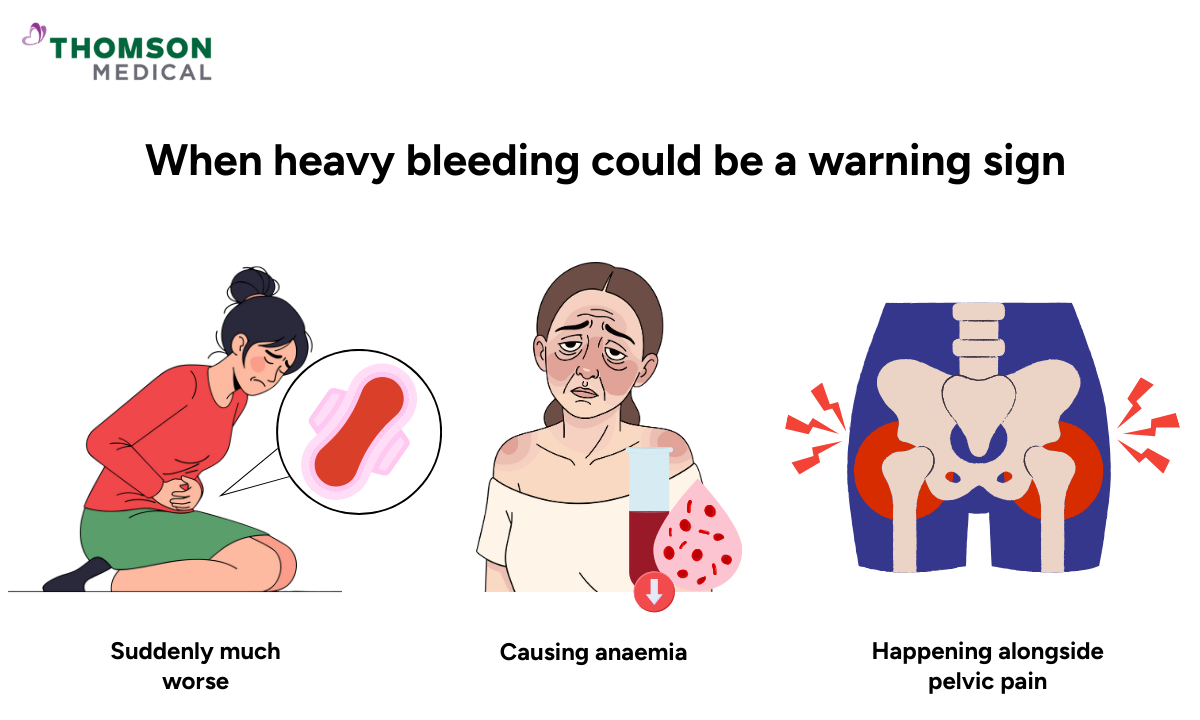
New or suddenly much worse
Causing dizziness, fatigue, or anaemia (lack of red blood cells)
Happening alongside pelvic pain, bloating, or unexplained weight changes
Even then cancer is rare, especially in teenagers and young adults. Your body is far more likely signalling a hormonal imbalance or a treatable condition. The goal of seeing a doctor isn't to confirm your worst fears but to find out what's actually going on and get you feeling better.
What causes heavy periods besides ovarian cancer?
Knowing the more common causes can help put your mind at ease while you seek proper medical evaluation.
Hormonal imbalances and fibroids
These cause most cases of heavy periods.
Common causes include:
Normal hormone changes during puberty
Uterine fibroids (non-cancerous growths in the uterus)
Thyroid conditions
PCOS alone affects about 1 in 10 women of reproductive age, while fibroids affect up to 70% of women by age 50. These conditions are treatable and manageable, even if they feel difficult to deal with right now.
Other gynaecological conditions
Several other conditions commonly cause heavy bleeding.
These include:
Adenomyosis (when uterine lining grows into the muscle wall)
Bleeding or clotting disorders
Infections or inflammation
These are much more common than ovarian cancer. Your doctor can help identify which condition is affecting you and recommend appropriate treatment, whether that's medication, hormonal therapy, or other options.
When should I see a doctor about my period?
You don't need to worry about cancer to justify seeing a doctor about your periods. If your bleeding is affecting your daily life, that alone is reason enough to get help.
It's natural to wonder whether your symptoms need medical attention or whether you're overreacting.
Consider seeing a doctor if:
You soak through pads or tampons every one to two hours
Your period lasts longer than seven to eight days
You pass large clots regularly
You feel faint, weak, or extremely tired
You bleed between periods or after menopause
Getting checked doesn't mean something serious is wrong. It's about understanding what's happening in your body and finding solutions that work for you.
Many effective treatments exist for heavy periods, from hormonal options to minimally invasive procedures, and you deserve to feel better.
Ongoing or heavy vaginal bleeding deserves proper assessment, even if you don’t believe that cancer is responsible. Request an appointment at Thomson Medical to find out what’s causing the bleeding, rule out serious conditions including a cancer diagnosis, and discuss treatment options that can help you feel well again.
FAQ
Do you get heavy menstruation with ovarian cancer?
Usually no. Heavy periods are not a typical sign of ovarian cancer. The condition more commonly causes persistent abdominal bloating, pelvic pain, and feeling full quickly rather than changes to your menstrual flow.
Can you have ovarian cancer with normal periods?
Yes. Many people with ovarian cancer have normal periods, especially early on. The condition typically shows up through other symptoms like abdominal pain or changes in urinary habits rather than menstrual changes.
Can ovarian cancer make your period stop?
It can in rare cases, usually due to hormonal changes or advanced disease. However, missed periods are far more often caused by stress, weight changes, or conditions like polycystic ovary syndrome.
Are heavy periods a warning sign of cancer?
On their own, no. Heavy periods are common and usually caused by conditions like fibroids, hormone imbalances, or endometriosis. If heavy bleeding happens alongside unusual symptoms like ongoing bloating or pain, get it checked.
How often do you bleed with ovarian cancer?
There's no set pattern. Many people don't have bleeding changes at all. When bleeding does occur, it's usually due to hormone effects or pressure on nearby organs rather than the cancer itself.
What tests diagnose ovarian cancer?
Doctors may use pelvic examinations, ultrasound scans (including transvaginal ultrasound), and blood tests such as the CA-125 test to measure blood tumour markers. A CT scan may be needed for further imaging. Diagnosing ovarian cancer requires a combination of tests.
Do irregular periods increase ovarian cancer risk?
Irregular periods alone don't increase your risk. Some underlying conditions may slightly affect risk factors, but ovarian cancer remains rare, especially in young people. If you have a family history of ovarian cancer or breast cancer, it’s important to discuss screening with your doctor. Conditions like inherited genes like BRCA1 increase the risk of ovarian cancer.
The information is intended for general guidance only and should not be considered medical advice. For personalised recommendations and advice based on your unique situation, please consult a specialist at Thomson Medical. Request an appointment with Thomson Medical today.
Reference:
World Health Organization. (2026, January 22). Polycystic ovary syndrome. https://www.who.int/news-room/fact-sheets/detail/polycystic-ovary-syndrome
For more information, contact us:
Thomson Specialists (Women's Health)
Thomson Women's Clinic (TWC)
- Novena:
6592 6686 (Call), 8611 8986 (WA) - Bukit Batok:
6569 0668 (Call), 8686 3525 (WA) - Choa Chu Kang:
6893 1227 (Call), 8282 1796 (WA) - Jurong:
6262 8588 (Call), 6262 8588 (WA) - Katong (female doctor):
6970 2272 (Call), 8611 9020 (WA) - Punggol:
6243 6843 (Call), 8811 0328 (WA) - Sembawang: 6753 5228
- Sengkang: 6388 8125
- Serangoon (female doctor): 6382 3313
- Tampines: 6857 6266
- Tiong Bahru: 6276 1525
Notice
The range of services may vary between TWC/TS locations. Please contact your preferred branch directly to enquire about the current availability.
Request an Appointment