

Pregnancy comes with no shortage of appointments, scans, and new information to take in. So if your doctor has recommended a Pap smear on top of it all, it's completely natural to feel a little unsure about what it means.
More often than not, it comes down to routine rather than anything concerning. Knowing what the procedure involves and what to expect along the way can make the whole experience feel less daunting.
Why you might need a Pap smear during pregnancy
If your doctor has recommended a Pap smear during pregnancy, you might be wondering, "Why now?"
For many women, pregnancy means seeing a healthcare provider more regularly than usual, making it a natural time to catch up on cervical health.
A Pap smear checks for abnormal changes in the cells of your cervix, which can sometimes be linked to certain strains of human papillomavirus (HPV).
You may be offered a Pap smear during pregnancy if:
You're due for your routine cervical screen (in Singapore, generally every 3 years for women aged 25-29 or every 5 years with an HPV test from age 30)
You haven't had a cervical screen in the last 3 to 5 years
You have a history of abnormal results that your doctor wants to keep an eye on
Being asked for a Pap smear during pregnancy isn't a cause for concern. It's simply a proactive step that fits naturally into your antenatal care.
If you're unsure whether you're due for a cervical screen or have questions about how it fits into your antenatal care, schedule an appointment with Thomson Medical. Our team can check your screening history and walk you through what to expect based on your situation.
Is a Pap smear safe during pregnancy?

A Pap smear is generally considered safe at any stage of pregnancy.
The swab only collects cells from the surface of your cervix. It doesn't reach your uterus or your baby, and a natural mucus plug (a thick, jelly-like collection of mucus) seals your cervix during pregnancy, offering an added layer of protection.
Some women may notice mild discomfort or light spotting afterwards. This is usually because of the cervix being more sensitive during pregnancy and is not a sign of harm to you and your baby.
If you have any concerns, it's always worth raising them with your care team before the test.
When is a Pap smear done during pregnancy?
A Pap smear is usually offered at your first antenatal visit, during the first trimester. Doing it earlier rather than later means any findings can be monitored throughout your pregnancy.
There are times when your doctor may suggest waiting – for example, if you are experiencing bleeding or other clinical factors that make it better to hold off. This will always be talked through with you beforehand
For many women, one Pap smear during pregnancy is all that's needed. If your results require any follow-up, your doctor will explain the next steps and what they mean for your situation.
If you're unsure whether you're due for a screen, your care team can help you check based on Singapore's national cervical screening guidelines.
Gynaecologists at Thomson Medical
Loading...
What to expect during a Pap smear when pregnant
Knowing what to expect can make the experience feel more manageable. The procedure itself is straightforward and usually over within a few minutes.
Your doctor will gently insert a small instrument called a speculum to open the vaginal walls, then use a soft brush to collect a sample of cells from the surface of your cervix. The sample is sent to a laboratory for analysis.
A few things that may help you feel more comfortable during a Pap test:
Take slow, deep breaths to help your body relax
Let your doctor know if you feel uncomfortable at any point – they can pause or adjust
Emptying your bladder beforehand can make the position more comfortable
Will it hurt more than usual?
It may feel slightly more uncomfortable than you remember. During pregnancy, your cervix has increased blood flow and tends to be more sensitive, which can make the pressure feel more noticeable.
Many women describe it as a brief crampy sensation or mild pressure that passes quickly. It's rarely painful, but if anything feels too uncomfortable, don't hesitate to let your doctor know.
Is some light spotting normal afterwards?
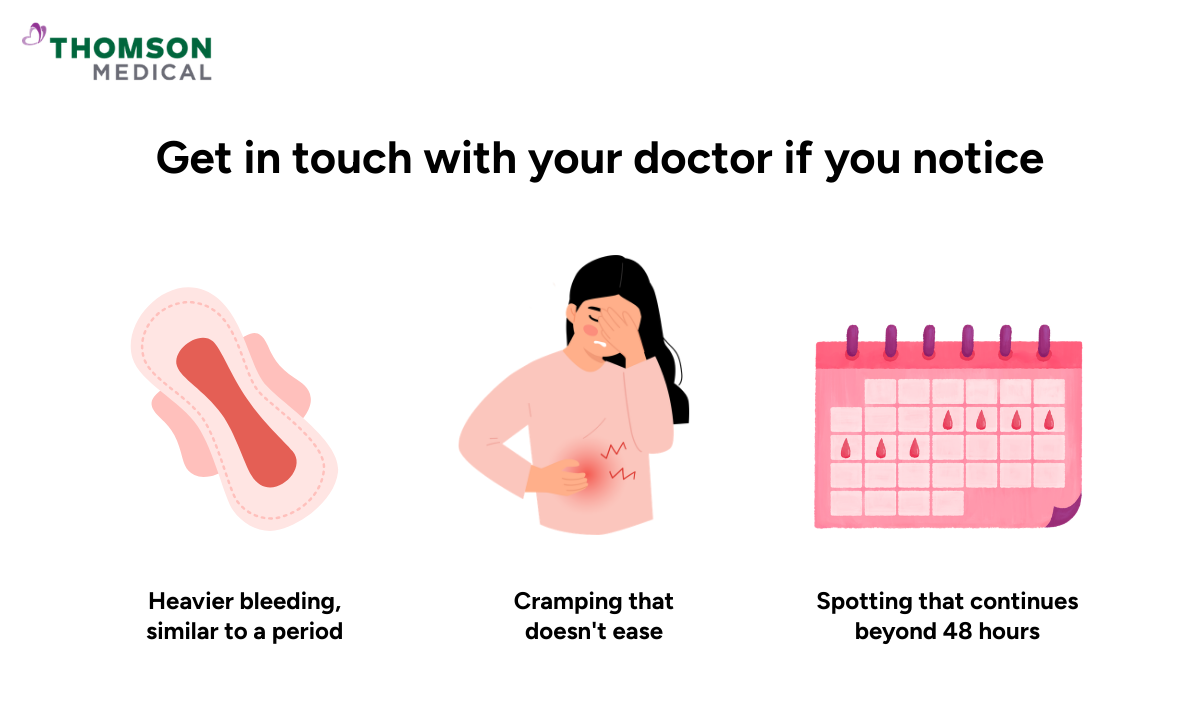
A small amount of light spotting after a Pap smear during pregnancy is fairly common.
Because your cervix is more vascular during pregnancy, the swab may cause a small amount of spotting. This is usually light pink or brown in colour and resolves within 24 to 48 hours.
It's important to keep an eye on how you feel afterwards. Get in touch with your doctor if you notice:
Heavier bleeding, similar to a period
Cramping that doesn't ease
Spotting that continues beyond 48 hours
In many cases, spotting after a Pap smear during pregnancy is mild and short-lived. Heavier bleeding or persistent cramping is uncommon, but if it does occur, it's worth mentioning at your next appointment.
What your Pap smear results mean during pregnancy
Results will generally come back as either normal or abnormal. A normal result means no concerning cell changes were detected, and you're unlikely to need another screen until your next scheduled interval.
An abnormal result means some changes have been found in the cervical cells. This doesn't necessarily mean cancer. Results are usually categorised as either low-grade or high-grade changes, and your doctor will explain what your findings mean for you.
What if your results come back abnormal?
An abnormal result during pregnancy can feel unsettling, but most cervical changes tend to progress very slowly. The approach is generally careful monitoring rather than immediate treatment.
Low-grade changes are often monitored and may resolve on their own. High-grade changes may need closer attention, and a colposcopy (a closer examination of the cervix) may be recommended.
If further treatment is needed, this would usually wait until after your delivery. If you're feeling anxious, speaking openly with your care team can help bring some clarity and reassurance.
Will an abnormal result affect your baby?
For many women, abnormal cervical cell changes do not affect the baby, the pregnancy, or delivery. These changes are generally confined to the surface of the cervix and don't reach your uterus or your baby.
In rare cases involving high-grade changes, your doctor may want to discuss your delivery method as part of your birth plan – not because of an immediate risk, but to ensure the right care is in place. Any decisions would always be made together with you.
A Pap smear during pregnancy is a small but meaningful part of looking after yourself and your baby. Knowing what to expect – and why it matters – is often all it takes to feel a little more at ease.
If your results have come back abnormal and you're unsure what the next steps look like for your pregnancy, schedule an appointment with Thomson Medical. Our doctors can explain what they mean for you and your baby and recommend a suitable care plan going forward.
FAQ
Can I get a Pap smear at 5 weeks pregnant?
In most cases, yes. A Pap smear can generally be performed in early pregnancy, including at 5 weeks. Your doctor may first confirm the pregnancy and check that everything looks good before proceeding, but it is not usually necessary to wait.
Is spotting or bleeding after a Pap smear during pregnancy normal?
A small amount of light spotting is fairly common and usually settles within 24 to 48 hours. If you experience heavier bleeding, persistent cramping, or spotting that doesn't ease, it's worth reaching out to your care team.
How often do you need a Pap smear when pregnant?
Many women will need only one Pap smear during their pregnancy. If your results require follow-up, your doctor will advise on next steps based on your individual situation.
Can a Pap smear detect an STI during pregnancy?
A Pap smear is not designed to detect sexually transmitted infections (STIs). It specifically looks for abnormal changes in cervical cells and certain strains of HPV. If you have concerns about STIs during pregnancy, separate swabs or tests would be needed. Your doctor can advise on what's appropriate for you.
What can be done instead of a Pap smear during pregnancy?
In some cases, an HPV test or liquid-based cytology (a method that collects cervical cells in liquid form for clearer analysis) may be offered as an alternative or alongside a Pap smear.
The suitable option will depend on your screening history and your doctor's assessment. If you have concerns about having a Pap smear during pregnancy, it's worth discussing your options at your next appointment.
Will my baby be affected if my Pap smear results are abnormal?
Abnormal cervical cell changes are generally confined to the surface of the cervix and may not directly affect your baby or your pregnancy. If findings are more significant, your doctor will talk through what this means for your care. Nothing would be decided without a clear conversation with you first.
The information provided is intended for general guidance only and should not be considered medical advice. For personalised recommendations and advice based on your unique situation, please consult a specialist at Thomson Medical. Request an appointment with Thomson Medical today.
For more information, contact us:
Thomson Specialists (Women's Health)
Thomson Women's Clinic (TWC)
- Novena:
6592 6686 (Call), 8611 8986 (WA) - Bukit Batok:
6569 0668 (Call), 8686 3525 (WA) - Choa Chu Kang:
6893 1227 (Call), 8282 1796 (WA) - Jurong:
6262 8588 (Call), 6262 8588 (WA) - Katong (female doctor):
6970 2272 (Call), 8611 9020 (WA) - Punggol:
6243 6843 (Call), 8811 0328 (WA) - Sembawang: 6753 5228
- Sengkang: 6388 8125
- Serangoon (female doctor): 6382 3313
- Tampines: 6857 6266
- Tiong Bahru: 6276 1525
Notice
The range of services may vary between TWC/TS locations. Please contact your preferred branch directly to enquire about the current availability.
Request an Appointment