

When it comes to cervical screening, you've probably heard of a Pap smear. But hearing about it and actually understanding it are two different things. If you're considering your first Pap smear, it's natural to wonder, "What does it involve? Do I really need it if I feel perfectly fine? What exactly happens during the procedure?”
A Pap smear is a quick, routine cervical screening test. Its purpose is simple: to catch early changes in your cervical cells, long before anything becomes a serious concern.
Understanding what happens, what to expect, and where to go in Singapore can give you the clarity and confidence to make the right decision for your cervical health.
What is a Pap smear test?
A Pap smear, also known as a Pap test, is a simple screening procedure that checks for abnormal cell changes in your cervix (the lower part of your uterus that connects to the vagina).
It’s worth knowing that a Pap smear is not a diagnosis. It doesn’t tell you whether you have cervical cancer. Instead, it gives you an early warning, so treatment can start before things progress.
Who needs a Pap smear test in Singapore?
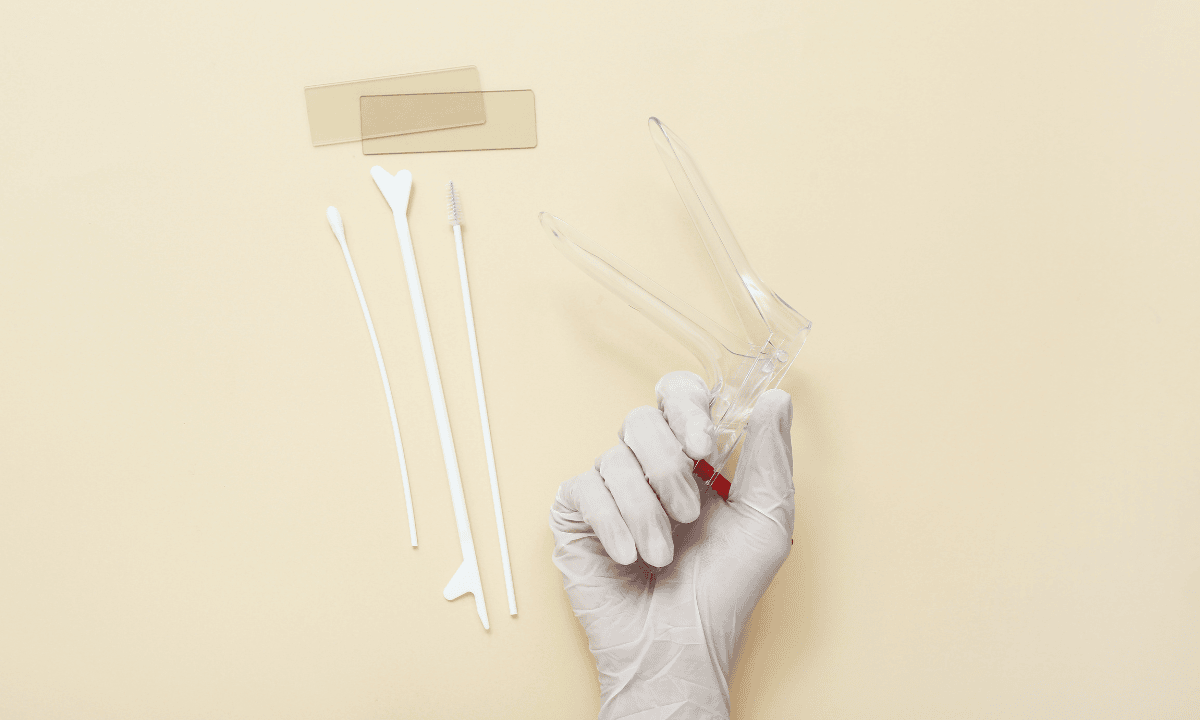
If you've never had a Pap smear before, you might be wondering whether you actually need one. The answer is, if you have a cervix and have been sexually active, this cervical screening is recommended, regardless of whether you’ve had children or you’re in a relationship.
Cervical cell changes rarely cause noticeable symptoms in the early stages. That’s why Pap tests matter even when you feel perfectly well.
In some cases, your doctor may recommend screening more frequently than usual, especially if you:
Have certain risk factors or a history of cervical abnormalities
Have had previous abnormal Pap smear results
Have a weakened immune system (for example, if you are living with HIV or taking immunosuppressive medication)
You may not need a Pap smear if you have had a total hysterectomy (including removal of the cervix) for non-cancerous reasons. Your doctor will advise you whether this applies to you.
Recommended age to start screening
In Singapore, cervical cancer screening is recommended starting at age 25. This is when routine screening becomes useful, because abnormal cell changes are more likely to be detected and managed early at this stage.
Starting before 25 is not generally advised. In younger women, cell changes are uncommon and often resolve on their own without any treatment.
How often should you get tested?
If this is your first Pap smear and your results come back normal, routine screening is typically recommended once every three years. If you have abnormal results or have other risk factors, more frequent screening may be advised. Your doctor will help work out the right schedule based on your individual needs.
If you're due for a cervical cancer screening, schedule an appointment with Thomson Medical. Our gynaecologists will guide you to the right screening option based on your age and health history.
How to prepare for your Pap smear appointment
Whether this is your first Pap smear or simply a routine check-up, a little preparation can make a difference in both your comfort and the reliability of your results.
A Pap smear is ideally done two weeks after the first day of your period, and avoid scheduling it while you are menstruating. Bleeding can interfere with the sample and affect the lab reading.
For at least 48 hours before your appointment, it helps to avoid:
Sexual intercourse
Vaginal douching or washing
Vaginal medications, lubricants, or spermicides
Tampons
Any of the above can disturb or wash away cervical cells, which may affect the reliability of your results.
On the day of your appointment, wearing a two-piece outfit can be a good idea, so you only need to undress from the waist down. Arriving with an empty bladder can also help with comfort during the procedure.
Following these steps helps ensure your sample is in the best condition for testing. If you have any questions about how to prepare, reach out to your doctor for further guidance.
Gynaecologists at Thomson Medical
Loading...
What to expect during the procedure
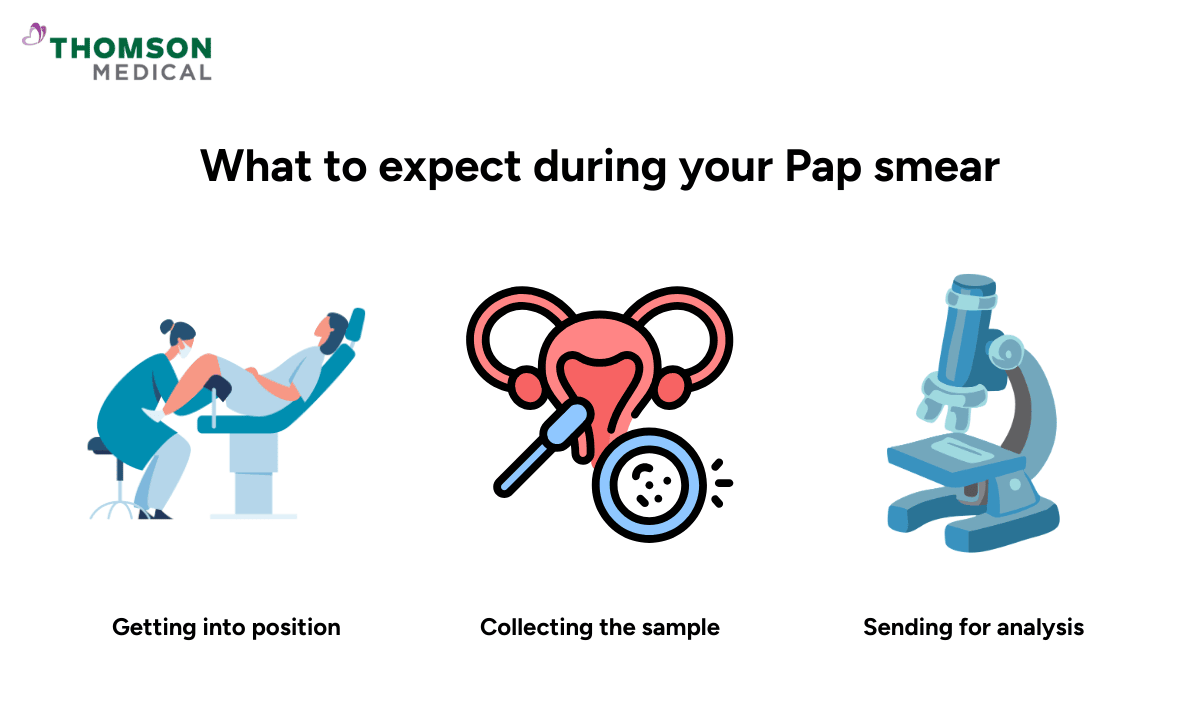
If this is your first Pap smear, it’s normal to feel a bit nervous. The procedure is usually straightforward and over in just a few minutes.
Here is what happens during the process:
Getting into position:
You’ll lie on an examination table with your feet resting in supports called stirrups.
Your doctor will ensure you are comfortable before proceeding.
Collecting the sample:
Your doctor will gently insert a speculum into the vagina to hold it open so they can see your cervix.
Using a small brush or spatula, they’ll collect cells from the cervical surface.
Sending for analysis:
The sample is sent to a laboratory for analysis.
Most women feel mild pressure or brief discomfort during the process, but it is generally not painful. You can resume your normal activities straight away.
If you feel significant pain at any point, let your doctor know. They can gently adjust their approach to make you more comfortable.
What do your Pap smear test results mean?
Results are usually available within one to two weeks. Your doctor will be in touch with you once they’re ready.
Your result will fall into one of the following categories:
Normal result:
It means no abnormal cell changes are detected.
Your doctor may advise you to continue with your regular screening schedule.
Abnormal result:
It means some cell changes are found that need further evaluation.
Your doctor may recommend a follow-up test, a colposcopy (a closer look at the cervix), or more frequent monitoring, depending on what they found.
Seeing "abnormal" on your results can feel alarming, but most abnormal Pap smear results do not mean cancer. Your doctor will take the time to explain what it means for you personally and walk you through the next steps.
Where to get a Pap smear test in Singapore?
Getting a Pap smear in Singapore is more accessible than you may think. There are several options available depending on your preferences and circumstances.
Public healthcare options
You can get a Pap smear at public polyclinics across Singapore. Many of these are part of the national Screen for Life programme, which offers subsidised cervical screening for eligible Singapore citizens and permanent residents.
The Singapore Cancer Society also runs programmes providing free Pap smear screening for eligible women.
Private clinics and medical centres
Pap smears are also available at private clinics and women’s health centres across Singapore. If you prefer shorter waiting times and scheduling flexibility, these options may be worth considering.
These settings also offer more time with a specialist gynaecologist, which is useful if you have questions about your results or want to discuss your screening options in more detail.
How much does a Pap smear test cost in Singapore?
The cost of a Pap smear in Singapore varies depending on where you get tested. Having a general overview beforehand can help you plan ahead and choose the option that works for you.
At public polyclinics under the Screen for Life (SFL) programme:
Singapore citizens:
Approximately SGD 15 to 50 at polyclinics.
CHAS / Pioneer Generation / Merdeka Generation cardholders:
As low as SGD 0 to 5 at participating GP clinics.
Permanent residents:
Subsidised rates apply, though they are slightly higher than for citizens.
If you choose a private clinic or specialist:
The price usually ranges from SGD 70 to 300.
The price varies depending on whether the visit includes a consultation, additional tests, or follow-up services.
It is completely understandable to ask about the cost, especially if it is your first time booking. Whatever option you choose, what matters most is that you are taking this important step to look after your cervical health.
Please note that these costs are based on 2026 rates and may vary over time.
If you would like to discuss your screening options, schedule an appointment with Thomson Medical. Our specialists will help you find the most suitable option based on your needs and budget.
FAQ
Do I need to take medical leave (MC) after a Pap smear?
In most cases, no. You can return to work and normal activities right after the procedure. Some women experience light spotting or mild cramping briefly afterwards, but it's generally not severe enough to warrant rest.
If you feel unwell or notice heavier bleeding than expected, you can discuss this with your doctor to determine whether an MC is appropriate.
Is a Pap smear covered by insurance or Medisave in Singapore?
Several options can help reduce the cost of a Pap smear in Singapore. Government subsidy programmes such as Screen for Life and CHAS can significantly lower out-of-pocket costs at participating clinics.
Private insurance and integrated shield plans may also cover part of the consultation or test – it is worth checking your policy details in advance.
Routine cervical screening is generally not Medisave-claimable unless it forms part of a broader covered procedure; your clinic can confirm what applies to your situation.
Can I get a free Pap smear test in Singapore?
Yes, in certain circumstances. The Singapore Cancer Society has offered free cervical screenings for eligible Singapore citizens and permanent residents aged 25 and above during public health initiatives.
Women with Pioneer or Merdeka Generation cards may also access free or near-free screening at participating CHAS GP clinics. It's worth checking current availability before booking.
How long does a Pap smear test take?
The cell collection itself takes only seconds. Your full appointment, including consultation, preparation, and the examination, usually runs between 5 and 30 minutes, depending on the clinic.
Is a Pap smear test painful?
Most women find it mildly uncomfortable rather than painful. You may feel pressure from the speculum and a brief brushing sensation when cells are collected.
Breathing slowly and relaxing your pelvic muscles can help reduce discomfort. If you experience significant pain, let your doctor know immediately.
How long do Pap smear results take in Singapore?
It varies by clinic and laboratory process. Most clinics return results within one to two weeks. Some public programmes may take up to four weeks. Your clinic will contact you when your results are ready.
The information provided is intended for general guidance only and should not be considered medical advice. For personalised recommendations and tailored advice based on your unique situations, request an appointment with Thomson Medical today.
For more information, contact us:
Thomson Specialists (Women's Health)
Thomson Women's Clinic (TWC)
- Novena:
6592 6686 (Call), 8611 8986 (WA) - Bukit Batok:
6569 0668 (Call), 8686 3525 (WA) - Choa Chu Kang:
6893 1227 (Call), 8282 1796 (WA) - Jurong:
6262 8588 (Call), 6262 8588 (WA) - Katong (female doctor):
6970 2272 (Call), 8611 9020 (WA) - Punggol:
6243 6843 (Call), 8811 0328 (WA) - Sembawang: 6753 5228
- Sengkang: 6388 8125
- Serangoon (female doctor): 6382 3313
- Tampines: 6857 6266
- Tiong Bahru: 6276 1525
Notice
The range of services may vary between TWC/TS locations. Please contact your preferred branch directly to enquire about the current availability.
Request an Appointment