

Living with Polycystic Ovary Syndrome (PCOS) can feel overwhelming, especially when you're dealing with irregular periods, unexpected weight gain, or difficulty getting pregnant. You've probably tried medications, followed your doctor's advice, and yet something still feels off – and that's completely understandable.
If you're wondering whether there's a more natural way to support your body, Traditional Chinese Medicine (TCM) might offer the support you're looking for. TCM doesn't just mask your symptoms; it addresses the root imbalances causing them.
What is PCOS?
PCOS, also known as Stein-Leventhal syndrome, is a health problem caused by a hormonal imbalance in your reproductive system. It’s more common than you might think, affecting one in ten women of reproductive age worldwide.
While genetics is a suspected cause, there is still an ongoing debate about the connections between insulin resistance, obesity, diabetes, and PCOS.
What are the symptoms of PCOS?
PCOS usually develops during your 20s and 30s, and its symptoms vary from woman to woman.
Common symptoms include:
Irregular or absent menstruation
Difficulty getting pregnant
Elevated LH hormones
Insulin resistance
Hirsutism – excessive body hair in a male-like pattern (upper lip and chin)
Hair loss
You don’t need to experience every symptom to receive a diagnosis. If you notice any of these, it’s best to consult your doctor or your TCM physician early to get the right care and make sure everything is under control.
How is PCOS diagnosed?
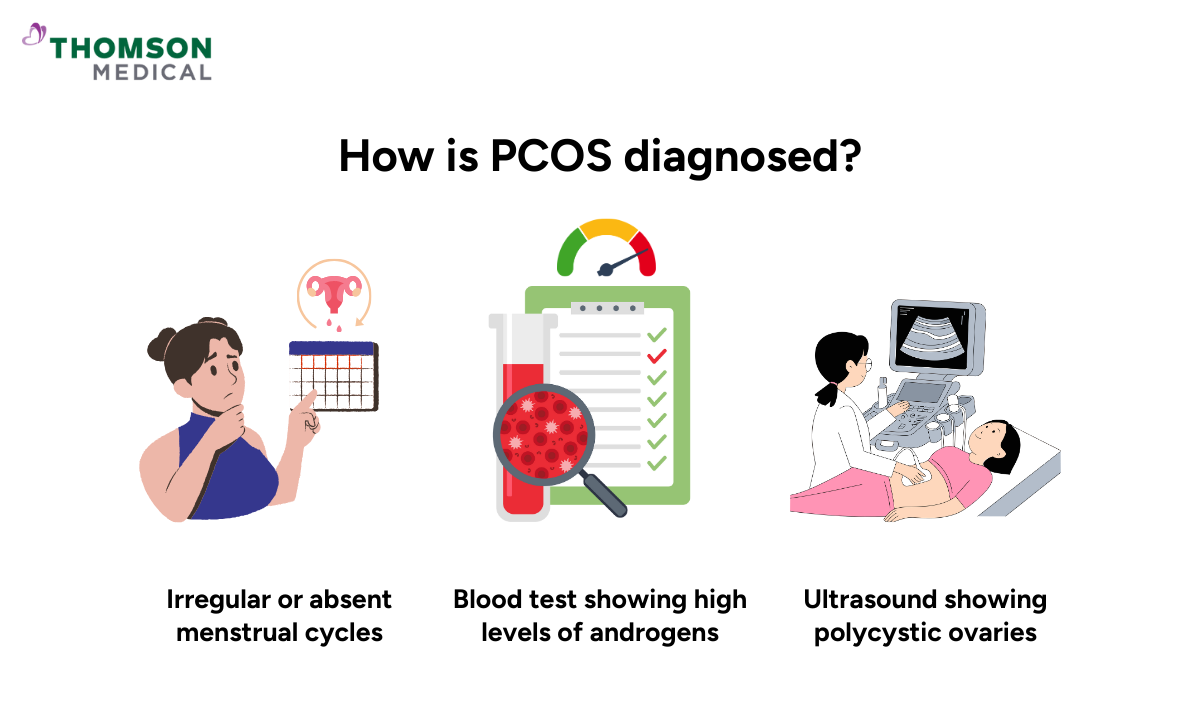
If you have PCOS, your ovaries develop many small, painless cysts. During an ultrasound for PCOS, these cysts appear as a string of pearls. However, having this string doesn’t mean you have PCOS.
To be diagnosed with PCOS, you need to fulfil two out of three criteria from the 2003 Rotterdam diagnosis, including
Irregular or absent menstrual cycles:
Cycles are longer than 35 days
Progesterone level in the late luteal phase is low
Blood test showing high levels of androgens:
Total or free testosterone level is elevated
Ultrasound showing polycystic ovaries:
12 or more follicles 2-9 mm in diameter and/or
Increased ovarian volume >10 ml
Your doctor usually recommends blood tests and ultrasounds to confirm the diagnosis. If you want to find out whether you have PCOS, schedule an appointment with Thomson Chinese Medicine for further evaluation.
Our women's health physicians
Loading...
How TCM supports women with PCOS
In TCM, PCOS is often caused by Kidney deficiency, excess phlegm, and blood stagnation.
Depending on your symptoms, your TCM physician will use tongue and pulse diagnosis to identify the main cause before personalising a treatment plan for your condition.
Approaches for your body type
For overweight-type PCOS, you tend to store more dampness. By boosting your Spleen Yang Qi and following a healthy diet and lifestyle, TCM can help optimise metabolism and support steady weight loss.
For thin-type PCOS, you tend to have more Blood or Yin deficiency, so the treatment will focus on nourishing your Blood and Yin. If stress contributes to your irregular periods, your TCM physician will add acupuncture and herbs that promote the smooth flow of Liver Qi.
Supporting your fertility
If you’re trying to get pregnant, TCM helps improve your ovarian activity and uterus blood flow and supports ovulation for fertilisation. This is done by:
Tonifying your Kidney organ:
This organ is responsible for reproductive health in TCM
Strengthening the Spleen:
It helps remove excess dampness in your body
Moving Blood and Qi:
It ensures optimal nutrients and oxygen are being transported to your eggs
Each woman experiences PCOS in different ways. That's why your TCM physician will assess your condition carefully and create a care plan that suits your body type, symptoms, and health goals.
TCM treatment methods for PCOS
There are two main methods to address PCOS: herbal remedies and acupuncture. They can work together to restore balance in your body.
Herbal remedies
Common herbal formulas that are prescribed in TCM are:
Jia Wei Xiao Yao San (加味逍遥散):
This formula relieves stress-induced menstrual problems and is also effective for breast cancer treatments.
Gui Zhi Fu Ling Wan (桂枝茯苓丸):
This herbal remedy removes blood stasis during menstruation.
Dang Gui Shao Yao San (当归芍药散):
This formula treats ovulatory disorders and supports reproductive health.
Your TCM physician may also recommend some single herbs, such as:
Xiang Fu (香附):
This herb is usually used for menstrual disorders caused by Liver Qi stagnation. It’s especially helpful for painful or irregular periods.
Yan Hu Suo (延胡索):
It helps regulate amenorrhoea (absent periods) and scanty periods.
Yi Mu Cao (益母草):
This herb promotes menstrual regularity and supports your uterine health.
Acupuncture
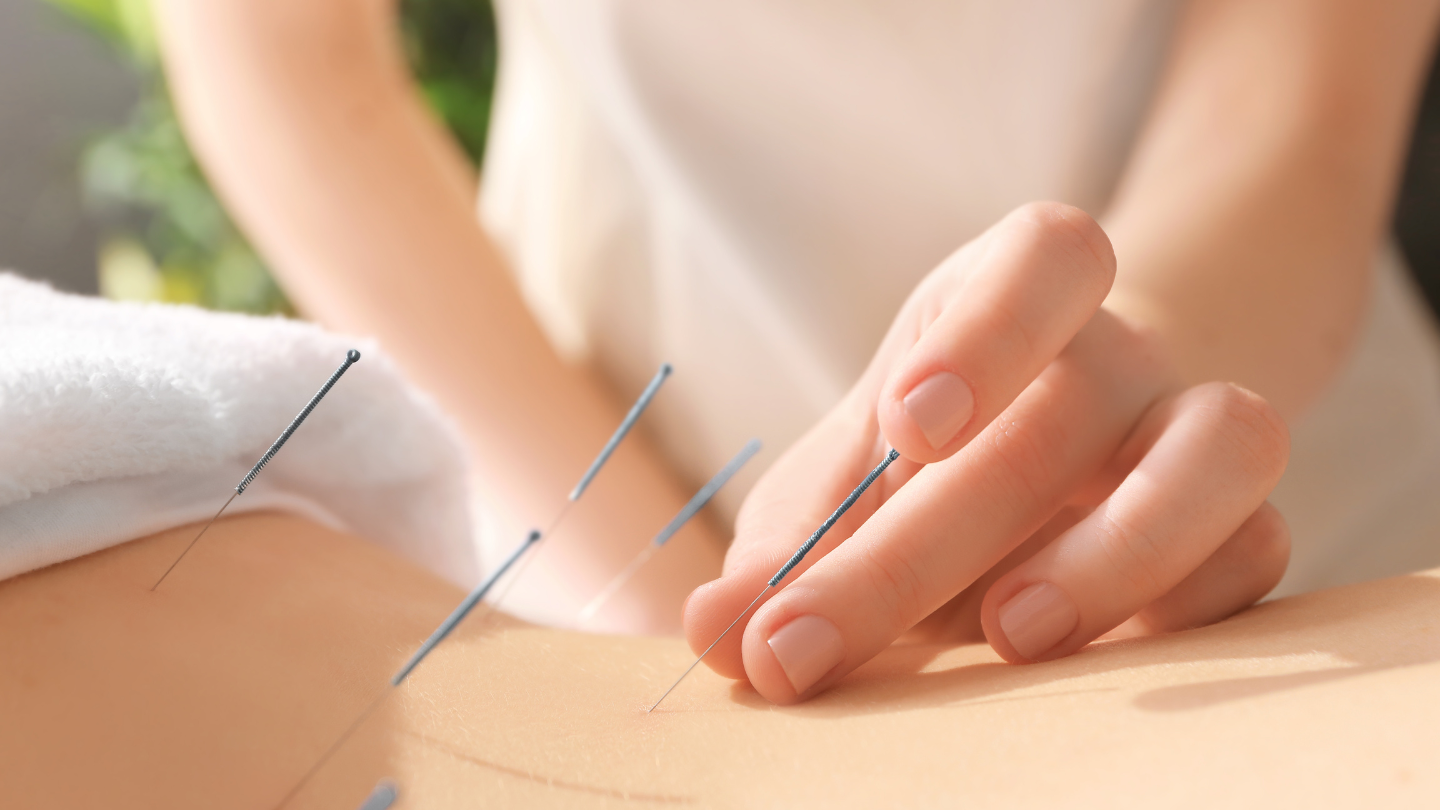
Acupuncture has been gaining recognition as an effective treatment for fertility. During treatment, your TCM physician will insert fine needles into specific points on your body (acupoints) to:
Help alleviate pain
Unblock energy
Increase blood flow to your reproductive organs
Restore balance to your body
Boost your natural fertility
If you have PCOS, weekly acupuncture sessions can bring significant benefits, including:
Improved ovulation
Better Body Mass Index (BMI)
Reduced levels of LH, estradiol, and testosterone
Increased ovulation reaction
More regular menstrual cycles
Acupuncture is generally comfortable and relaxing. Your TCM physician will work with you to determine the right frequency based on your needs.
Lifestyle changes to support PCOS management
Together with TCM treatments, having a healthy lifestyle helps you manage PCOS effectively. Here are some recommendations to support your treatment:
Dietary changes:
From a TCM perspective, certain foods can increase dampness in your body, which may worsen PCOS symptoms.
Choose warm, cooked foods and avoid greasy, processed, cold, and raw foods that weaken your digestive system.
Stay active:
Exercise regularly with activities that are suitable for your body type and energy level.
Stress management:
Practise stress-reduction techniques such as meditation, yoga, or tai chi.
Get enough sleep and rest to support your body’s natural healing process.
If you're experiencing PCOS symptoms or have been diagnosed with PCOS, schedule an appointment with Thomson Chinese Medicine. Our physicians can assess your individual condition and create a personalised treatment plan to help you manage PCOS effectively and support your fertility goals.
FAQ
Can you get pregnant with PCOS?
Yes, many women with PCOS can get pregnant with proper treatment.
Even though PCOS can make conception more challenging due to irregular ovulation, TCM acupuncture and herbal medicine can help improve your ovarian function, regulate your menstrual cycle, and support healthy ovulation, increasing your chances of getting pregnant.
What is the main root cause of PCOS?
The exact cause of PCOS remains unknown, but it usually involves a combination of genetic factors, insulin resistance, and hormonal imbalances.
From a TCM perspective, the root causes include:
Kidney deficiency affecting your reproductive system
Phlegm-Dampness accumulation
Blood stagnation
How long does TCM treatment take to show results for PCOS?
Results vary from person to person, but you may notice improvements in menstrual regularity and ovulation within 3-6 months, especially if you attend weekly acupuncture sessions and take herbal treatment consistently.
Your TCM physician will monitor your progress and adjust your treatment plan if needed.
Can TCM be combined with your current PCOS medication?
Yes, TCM can safely complement Western medicine for PCOS treatment.
However, it's important to inform both your doctor and TCM physician about all treatments and medications you're taking to ensure your safety and avoid any potential interactions.
What foods should you avoid with PCOS from a TCM perspective?
From a TCM perspective, you should avoid foods that create dampness in your body, including:
Fried and greasy foods
Excessive dairy products
Refined sugars and processed carbohydrates
Cold or raw foods
What happens if PCOS is left untreated?
Without treatment, PCOS can increase your risk of developing several health complications over time, including:
Insulin resistance and type 2 diabetes
High blood pressure and cholesterol levels
Endometrial cancer due to irregular periods
Ongoing fertility challenges
Early intervention with TCM and Western medicine can help you manage symptoms effectively and reduce these long-term health risks.
The information provided is intended for general guidance only and should not be considered medical advice. For personalised recommendations and tailored advice based on your unique situation, schedule an appointment with Thomson Chinese Medicine today.
Physician Jun Negoro
Traditional Chinese Medicine
Thomson Chinese Medicine (TCM Paragon Medical Centre) and 1 other
English, Mandarin
Alliance MediNet
