

A hysterectomy is one of the most common major surgeries for women. For many, it brings welcome relief from pain, heavy bleeding, or long-standing health concerns.
However, as you recover, you may start to notice changes in how your bladder feels or functions.
Needing to rush to the toilet more often, experiencing leakage, or feeling unable to empty your bladder fully can be unexpected. These symptoms can also feel difficult to talk about, even with your doctor.
However, you are not alone. Understanding why these changes happen and what can help may make your recovery feel more manageable.
How common are bladder problems after a hysterectomy?
Bladder changes can happen after a hysterectomy, but not everyone experiences them. Around 1 in 5 women notice some bladder problem afterwards, which is slightly more common than in women who haven't had the surgery.
Your individual risk depends on factors such as the type of hysterectomy and your overall health. While this may sound worrying, many symptoms are temporary and improve as your body heals.
Why does a hysterectomy affect the bladder?
Your bladder sits very close to your uterus. During a hysterectomy, the surrounding nerves, muscles, and supportive tissues can all be affected.
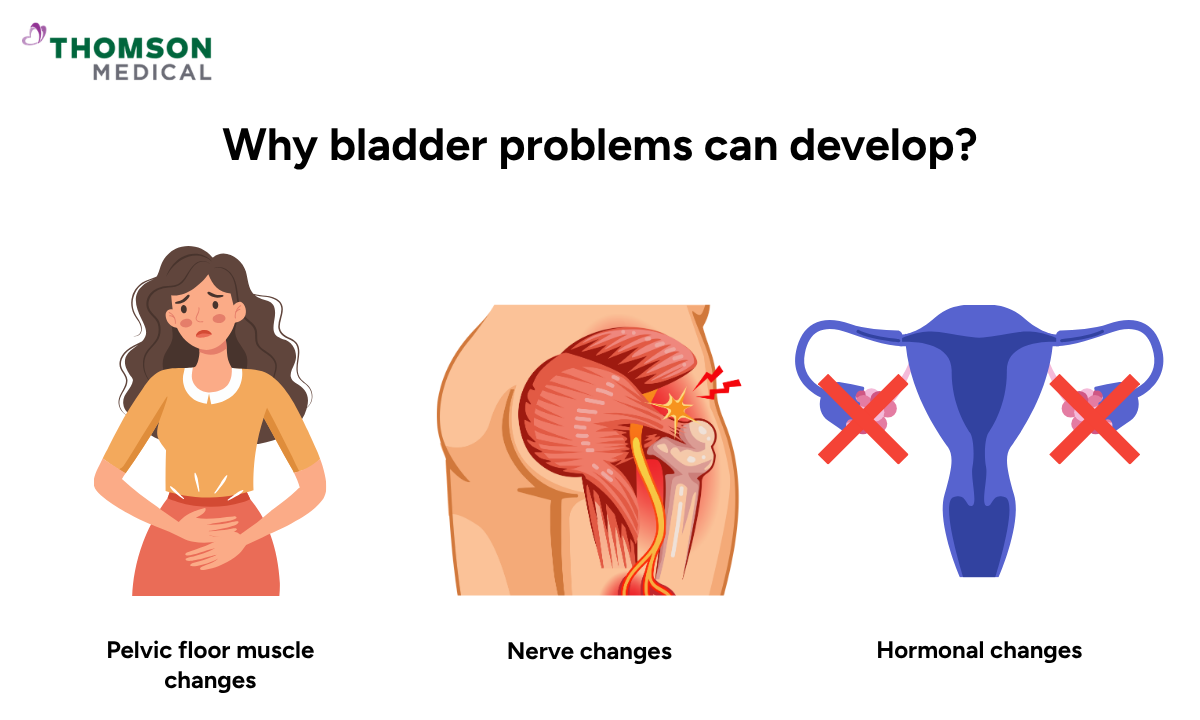
There are a few main reasons why bladder problems can develop:
Pelvic floor muscle changes:
Surgery can temporarily weaken the muscles that support your bladder, making it harder to control urination.
Nerve changes:
Small nerves that control bladder function run close to the uterus.
If these nerves are stretched or bruised during surgery, you may experience bladder spasms (bladder muscles tightening unexpectedly), a strong urge to urinate, or difficulty emptying your bladder.
Hormonal changes (if ovaries were removed):
If your ovaries were removed, your oestrogen levels would drop.
This can weaken the bladder lining and pelvic floor muscles, contributing to leakage and irritation.
It is also possible to experience more than one of these changes at the same time. Identifying which of these factors is affecting you helps your doctor recommend the right treatment for your specific situation.
Our gynaecologists in Singapore
Loading...
What bladder changes might you notice?
Bladder symptoms can show up in different ways after a hysterectomy. Some women notice changes straight away, while others only become aware of them weeks into recovery.
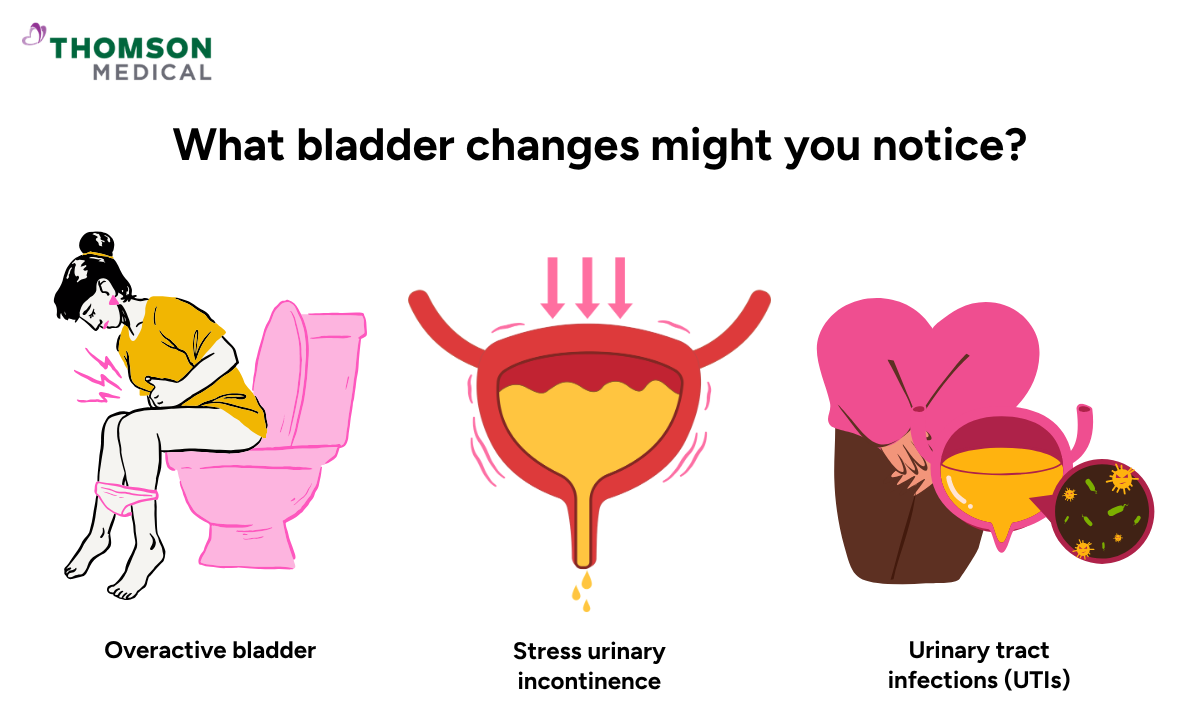
Overactive bladder (Urgency and frequency)
An overactive bladder means you feel a sudden urinary urgency, even when your bladder is not very full. You may need to rush to the toilet frequently, and some women experience leakage before they get there. This can also happen at night, disrupting your sleep.
This is usually linked to nerve changes or irritation of the bladder muscle after surgery.
Stress urinary incontinence (Leakage with movement)
This happens when urine leaks during activities that put pressure on the bladder, such as coughing, sneezing, laughing, or exercising. It happens because the muscles and tissues that support your bladder may be weakened after surgery.
Low oestrogen levels, particularly after removal of the ovaries, can make this more likely.
Difficulty fully emptying your bladder
Some women find it hard to fully empty their bladder after a hysterectomy. You may feel like you need to go again soon after urinating or feel that something's not quite right. This is often related to temporary nerve changes around the bladder during surgery.
Bladder injury and vesicovaginal fistula
Bladder injury is uncommon, but it can happen during surgery. If the bladder is cut, it's usually repaired at the time of the operation.
A vesicovaginal fistula is a small opening between the bladder and vagina that allows urine to leak continuously. This is uncommon but requires further treatment, usually with surgery.
Urinary tract infections (UTIs)
A urinary tract infection (UTI) is an infection of the bladder and urethra. It's one of the more common complications after a hysterectomy, often linked to the catheter used during or after the operation.
Symptoms include:
A burning or stinging feeling when you urinate
Urine that looks cloudy or darker than usual
Urine that smells unpleasant
A frequent urge to urinate, even when little comes out
It is not uncommon to experience more than one of these changes at the same time. If any of them are affecting your daily life or do not seem to be improving, it is worth raising it with your doctor.
If you’re noticing changes in your bladder after a hysterectomy, request an appointment with Thomson Medical. Our specialists can help identify the cause of your symptoms and guide you toward effective treatments to support your recovery and bladder health.
How are bladder problems after a hysterectomy diagnosed?
If you are experiencing bladder symptoms after your hysterectomy, your doctor will start by asking about your symptoms and medical history, followed by a physical examination.
Depending on what they find, they may recommend:
Urine test:
Checks for signs of infection or blood in your urine.
Urodynamic studies:
These tests measure how well your bladder stores and releases urine.
They can identify overactive bladder or poor emptying.
Cystoscopy:
A thin, flexible camera is passed gently into the bladder to look at the bladder wall and urethra (the tube that carries urine out of the body).
This is helpful if a bladder injury is suspected.
Imaging scan:
An ultrasound or MRI scan is used to get a clearer picture of the pelvic area and check for complications.
Not all of these tests will be needed for everyone. Your doctor will recommend only what's relevant to your symptoms. Once they understand what's causing your bladder problems, they can recommend the effective treatment for you.
What can help with bladder problems?
Finding out you need treatment for bladder problems on top of recovering from surgery can feel overwhelming. However, most symptoms can improve significantly or even resolve completely with the appropriate treatment.
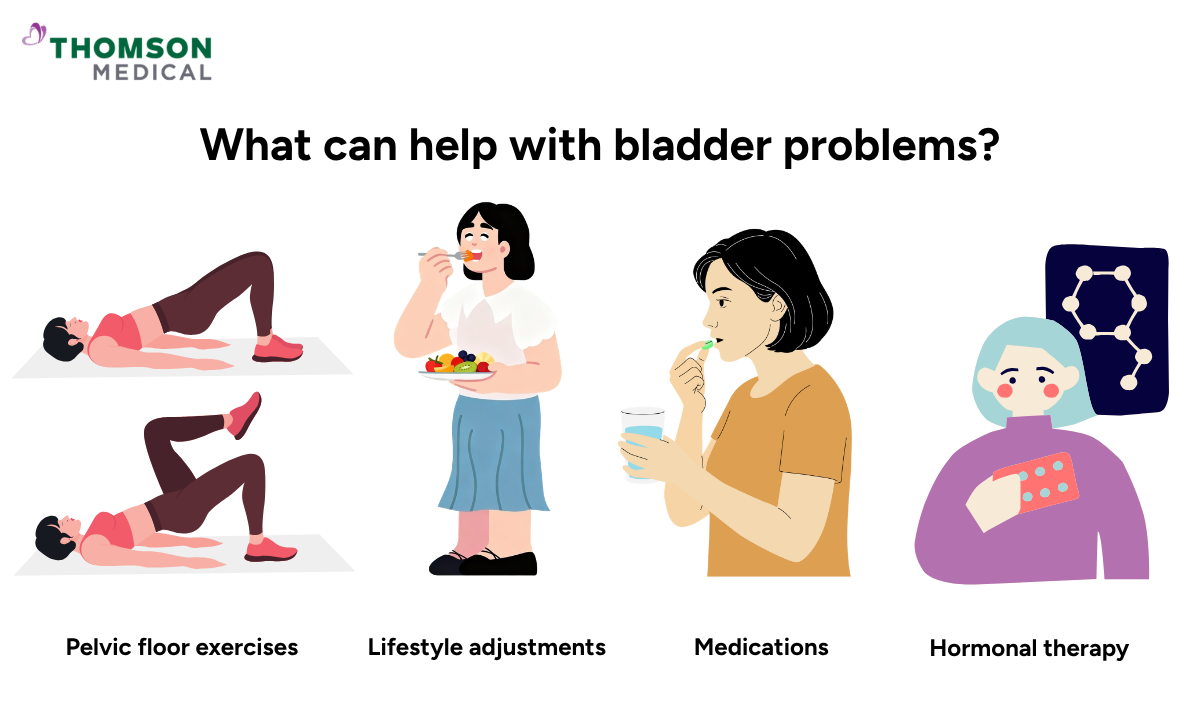
Pelvic floor exercises (Kegel exercises)
Pelvic floor exercises are one of the most effective ways to improve bladder control. They strengthen the muscles that support your bladder and help reduce leakage. You can start these soon after your hysterectomy, as long as you feel comfortable.
How to do them:
Tighten the muscles you would use to stop yourself urinating mid-flow
Hold for a few seconds, then relax
Repeat 10 to 15 times, three times a day
Most women notice improvement within 6 to 12 weeks of regular exercise. You should feel the contraction internally, without tightening your stomach, buttocks, or thighs.
Lifestyle adjustments
Alongside any treatment your doctor recommends, simple everyday habits can support your recovery. Making these adjustments can help you feel better during the first few weeks of recovery.
To support your recovery:
Begin gentle activity and avoid high-impact exercise for the first 6 to 8 weeks
Stay hydrated by drinking water steadily throughout the day, rather than in large amounts at once
Eat well-balanced meals to support tissue healing
Maintain a healthy weight to reduce pressure on the bladder and pelvic floor
These adjustments are often temporary. As your recovery progresses, you can gradually return to your usual activities.
Medications
Medication may be recommended depending on your symptoms.
Common options include:
Bladder-calming medication for overactive bladder, to reduce urgency and frequency
Antibiotics for bladder infections
Pain relief such as paracetamol or anti-inflammatory medications to manage discomfort during recovery
For UTIs specifically, a short course of antibiotics usually clears the infection within a few days. Drinking plenty of water can help prevent them from coming back.
Your doctor will review your symptoms regularly and adjust your medications as your recovery progresses. Don't stop or change any prescribed medication without speaking to them first.
Hormonal therapy
If your ovaries were removed during your hysterectomy, hormone replacement therapy (HRT) may be discussed with you. Restoring oestrogen levels can help improve bladder tissue health and reduce symptoms of leakage or irritation.
Emotional wellbeing during recovery
A hysterectomy can bring up a range of emotions, and your mental wellbeing is just as important as your physical recovery. If you are feeling low or anxious, speaking to a counsellor or therapist can be very helpful.
Bladder problems don’t have to slow your recovery. Request an appointment with Thomson Medical to learn how pelvic floor exercises, hydration habits, medications, and other treatments can help you feel better.
When should you see your doctor?
Not every bladder symptom needs urgent attention. Knowing what to watch for can help you act quickly when it matters.
Symptoms to mention at your next appointment
Some bladder changes after a hysterectomy are a normal part of recovery and do not need immediate attention.
You don’t need to rush, but mention them at your next visit if you experience:
Mild leaking when you cough, sneeze, or move
Needing to urinate more often than usual
A feeling of not fully emptying your bladder
Mild pelvic pressure or discomfort that is gradually getting better
Keeping a bladder diary of when these symptoms occur and whether they are improving can help your doctor assess what needs to be done.
Symptoms that need prompt attention
Other symptoms are less likely to resolve on their own and are worth addressing sooner rather than waiting for a scheduled visit.
You may contact your doctor if you notice:
Burning or stinging when you urinate
Urine that looks cloudy, smells unpleasant, or is darker than usual
Bladder symptoms that are getting worse instead of better after a few weeks
Catching these symptoms early usually means simpler, faster treatment, so do not hesitate to reach out to your doctor if something does not feel right.
Your body has been through a lot. The good news is that bladder changes after a hysterectomy are often temporary. With the right support, most women recover well and regain confidence in their bladder control.
FAQ
What are the symptoms of bladder problems after a hysterectomy?
The most common symptoms include the need to:
- Urinate more frequently
- Feeling a sudden urgent need to urinate
- Leaking urine when you cough, sneeze, or move
- Difficulty fully emptying your bladder
These symptoms are usually temporary. However, contact your doctor if they are getting worse rather than better or if you notice burning when you urinate or cloudy urine.
Can bladder problems after a hysterectomy be permanent?
In most cases, bladder problems are temporary and improve with time and treatment. However, longer-lasting changes are possible, particularly if:
- Nerves were affected during surgery
- The ovaries were removed, leading to lower oestrogen levels
- Stress urinary incontinence was already present before the operation
How long does it take for the bladder to heal after a hysterectomy?
Most women see improvement within a few weeks to three months after surgery. Symptoms related to nerve recovery may take up to six months to fully settle. Staying consistent with pelvic floor exercises and following your doctor's advice will support a smoother recovery.
How do I stop urine leakage after a hysterectomy?
There are several options that can help:
- Pelvic floor exercises with results visible within six to twelve weeks
- Bladder training by gradually extending the time between toilet visits to improve control
- Medication to reduce urgency and frequency if needed
- Pelvic floor physiotherapy for more targeted muscle strengthening
If leakage persists, further treatment options are available.
Can urinary retention happen after a hysterectomy?
Yes, it can. Urinary retention means your bladder cannot fully empty, leaving behind residual urine volume. A small residual volume is normal, but if significant, it can cause discomfort or increase the risk of infection. Your doctor can measure this with a simple ultrasound after you urinate. Most cases resolve on their own as the body heals.
What if pelvic floor exercises are not enough to manage leakage after a hysterectomy?
If exercises alone do not bring sufficient improvement, your doctor may recommend electrical stimulation. This uses gentle electrical pulses to strengthen the pelvic floor muscles and reduce urgency or leakage. It is non-invasive and generally well tolerated.
The information provided is intended for general guidance only and should not be considered medical advice. For personalised recommendations and advice based on your unique situation, please consult a specialist at Thomson Medical. Request an appointment with Thomson Medical today.
Reference:
Fritel X, Fauconnier A, Bader G, Cosson M, Debodinance P, Deffieux X, Denys P, Dompeyre P, Faltin D, Fatton B, Haab F, Hermieu JF, Kerdraon J, Mares P, Mellier G, Michel-Laaengh N, Nadeau C, Robain G, de Tayrac R, Reservé AP, Boileau L, Giraudet G, Lucot JP. Impact of Hysterectomy on Quality of Life, Urinary Incontinence, Sexual Functions and Urethral Length. J Clin Med. 2021;10(16):3608. https://doi.org/10.3390/jcm10163608
For more information, contact us:
Thomson Specialists (Women's Health)
Thomson Women's Clinic (TWC)
- Novena:
6592 6686 (Call), 8611 8986 (WA) - Bukit Batok:
6569 0668 (Call), 8686 3525 (WA) - Choa Chu Kang:
6893 1227 (Call), 8282 1796 (WA) Jurong:
6262 8588 (Call), 6262 8588 (WA)- Katong (female doctor):
6970 2272 (Call), 8611 9020 (WA) - Punggol:
6243 6843 (Call), 8811 0328 (WA) - Sembawang: 6753 5228
- Sengkang: 6388 8125
- Serangoon (female doctor): 6382 3313
- Tampines: 6857 6266
- Tiong Bahru: 6276 1525