

Being told you need a colposcopy can feel worrying, especially if it is your first time having the procedure or a follow-up after cervical screening.
While it is completely natural to feel uncertain, understanding what the examination involves and the possible side effects you may experience afterwards can help you feel more prepared and at ease.
What is a colposcopy?
A colposcopy is a close-up pelvic exam that involves checking your cervix, vagina, and vaginal walls. It is usually recommended if your recent cervical screening or Pap test showed some unusual changes. Your doctor may also suggest it if your human papillomavirus (HPV) test detected a high-risk strain of the virus.
During the appointment, your doctor uses a specialised magnifying device called a colposcope. The colposcope stays outside of your body and allows the doctor to see the tissues in detail.
To get a better view, your doctor may:
Apply a mild vinegar-like solution, known as acetic acid, with a soft cotton swab
Look for areas that briefly turn white, which can highlight abnormal cells
Take a very small tissue sample (biopsy) for further testing, if necessary
The examination itself usually takes 10–20 minutes. The word 'biopsy' can sound alarming (sandwich method). The sample is usually just a few millimetres, and most women describe it as a brief pinch rather than ongoing pain.
What might delay or postpone a colposcopy?
While this examination is usually safe and commonly performed, there are certain situations when it may be better to wait. Your healthcare provider will consider your individual circumstances and make sure the timing is safe for your body.
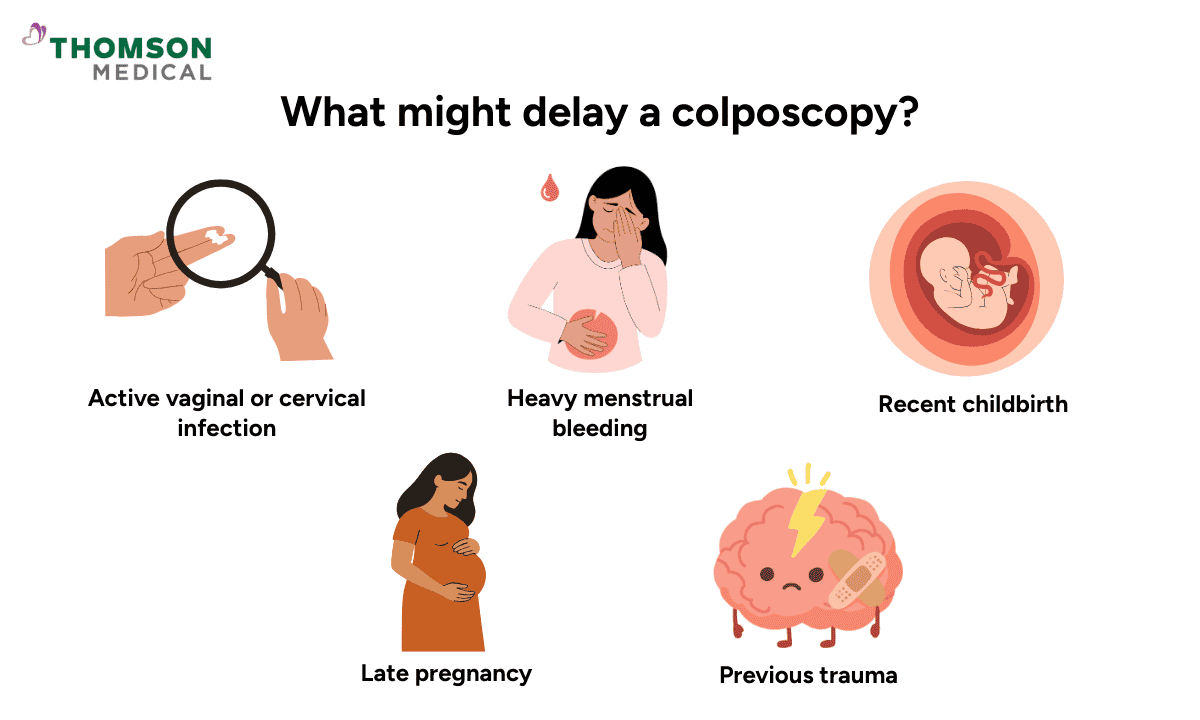
They might suggest postponing the appointment if:
You currently have an active vaginal or cervical infection that needs treating first
You are experiencing heavy menstrual bleeding, which makes checking your cervix more difficult
You have recently given birth, and your body is still healing
You are in late pregnancy, unless the examination is considered urgent
You have a history of trauma or severe pain that makes a pelvic exam too difficult to tolerate
Postponing the appointment helps your doctor to get a clearer view without putting your body under any unnecessary stress. Your doctor will discuss the timing with you and help determine when it is appropriate to proceed.
What side effects should you expect after a colposcopy?
Because the cervix contains delicate tissue, it is normal to notice temporary changes after the examination, particularly if a biopsy was taken. Knowing what these changes might look or feel like can help you stay calm during recovery.
Common side effects
When your doctor takes a small tissue sample, they usually use a local anaesthetic to keep you comfortable. Your body reacts to it much like it would to a tiny cut or scratch.
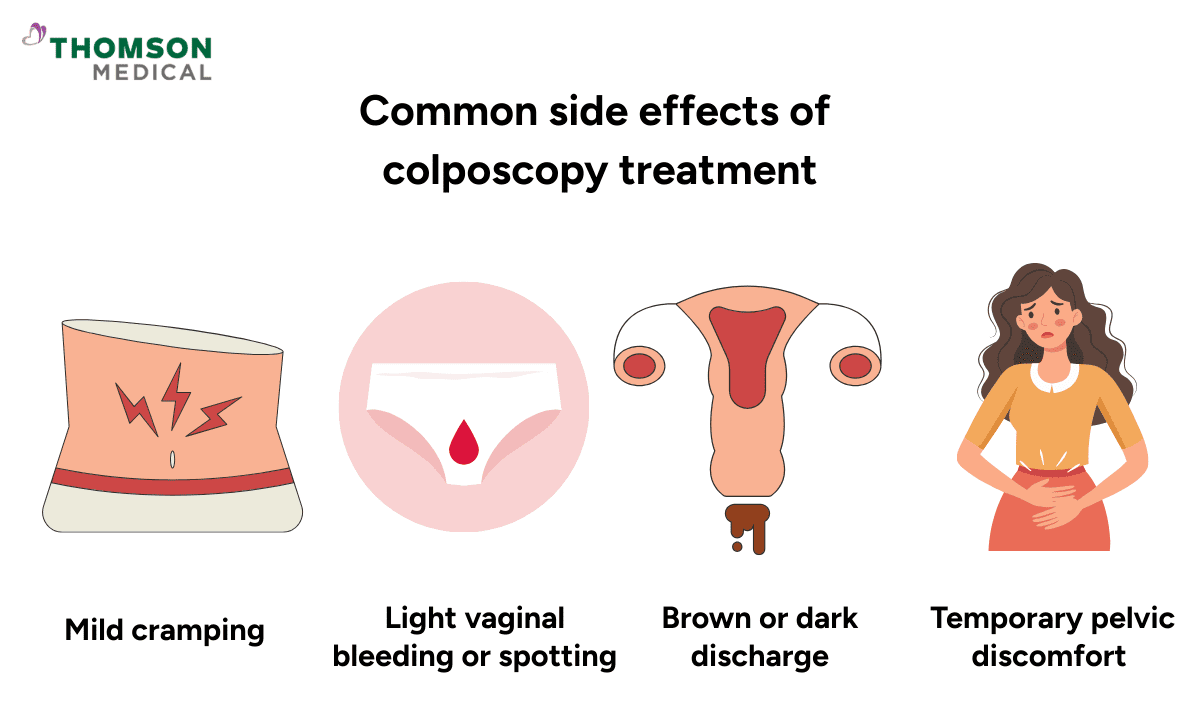
You might notice:
Mild cramping similar to your usual menstrual cramps
Light vaginal bleeding or spotting for a few days
Brown or dark vaginal discharge, caused by the solution used to stop bleeding after a biopsy
Temporary pelvic discomfort or a dull ache in your lower abdomen
These common reactions are simply signs that the tissues of your cervix are healing. Most symptoms ease within 2–3 days, though light spotting or discharge can last up to a week.
Less common side effects
While most people recover without any significant issues, some may notice more noticeable reactions to the procedure. These are less common, but worth being aware of during your recovery.
You could experience:
Bleeding that feels heavier than simple spotting or lasts up to 7 days
Vaginal irritation caused by the solutions used during the procedure
Feeling lightheaded or slightly faint, especially when you first stand up after the procedure
In most cases, these symptoms ease within a few days to a week with rest and gentle self-care.
If you experience heavier bleeding, prolonged discomfort, or feel unwell after your procedure, it is important to seek medical advice promptly. You may arrange a consultation with Thomson Medical for appropriate assessment and reassurance.
Rare but serious side effects
Serious complications after a colposcopy are uncommon. Even so, it is worth knowing which symptoms should prompt you to seek help rather than wait.
Seek medical advice right away if you experience:
Heavy bleeding that soaks through a thick sanitary pad within one hour
A high temperature or fever, or feeling suddenly shivery and unwell
Strong, foul-smelling discharge
Severe pelvic pain that does not improve with simple pain relief
These symptoms may indicate an infection or other complication that needs treatment. Most women recover without difficulty, but it is always appropriate to seek medical advice if anything feels concerning.
Our O&G Specialist
Loading...
How to care for yourself after a colposcopy
A few simple precautions after your appointment can help protect your health and support a comfortable recovery.
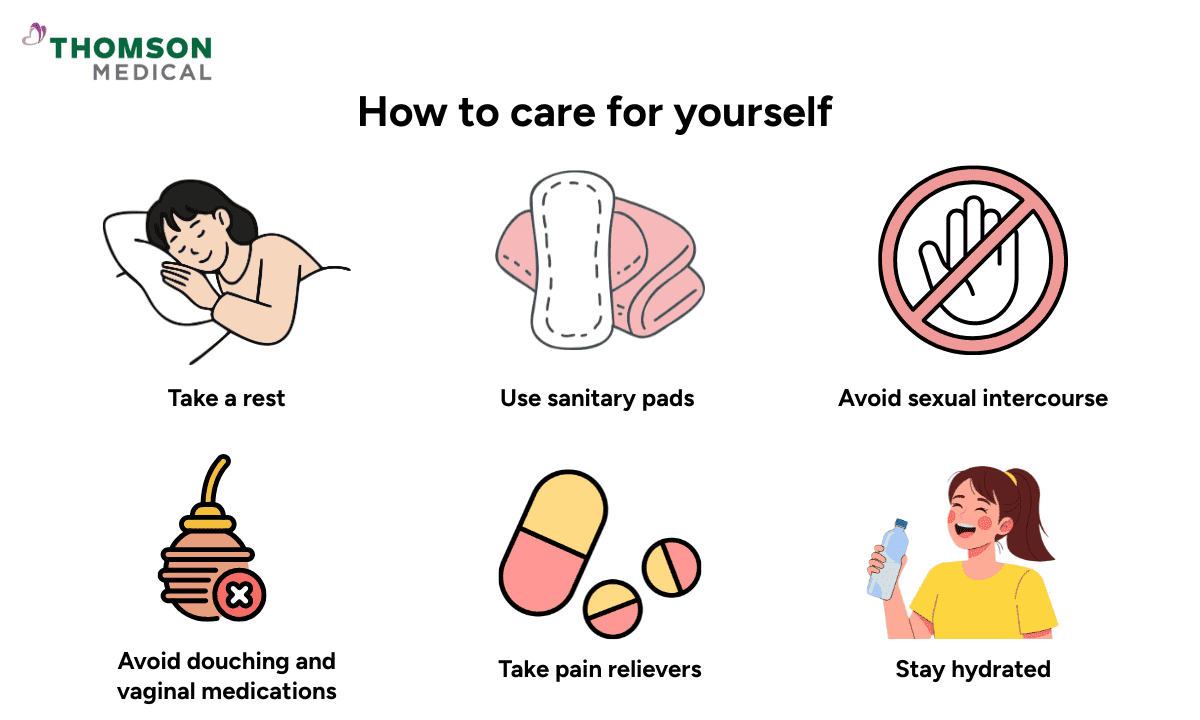
Simple steps you can take include:
Resting for the remainder of the day to give your pelvic muscles time to relax
Using sanitary pads instead of tampons to manage spotting safely
Avoiding sexual intercourse for 5–7 days (or as advised)
Avoiding douching and inserting any vaginal products, unless advised by your doctor
Taking over-the-counter pain relievers if needed
Staying hydrated and monitoring symptoms
These precautions help prevent unnecessary bleeding, irritation, or infection while the cervical tissue repairs itself. With the right care, you may recover smoothly within a few days.
If you have concerns during your recovery or notice symptoms that do not improve, it is important to seek medical advice for reassurance and guidance. You may schedule an appointment with Thomson Medical to ensure your healing is progressing well.
FAQ
How long does it take to recover?
You may feel like yourself again quite quickly, usually within a day or two. If your doctor took a sample, you might notice some light spotting or a dark discharge for up to a week while that small biopsy site fully heals.
Is it worse than a Pap smear?
The exam is slightly more uncomfortable than routine Pap smears, mainly because it takes a little longer and there is a chance they will take a biopsy. That being said, many patients handle the appointment well and say it was far easier than they worried it would be.
How painful is the procedure?
Everyone experiences pain differently. If no sample is taken, you will likely just feel some mild discomfort. If they do take a biopsy, you might feel a brief, sharp pinch followed by an ache.
Will it affect fertility?
For most people, a diagnostic colposcopy does not affect fertility. If larger treatment is needed, your doctor can explain any relevant considerations for your situation.
Will a colposcopy affect my menstrual cycle?
The procedure rarely interferes with the natural rhythm of your menstrual cycle. Your cycle typically returns to its usual pattern, though some light spotting in the days following the procedure is normal.
What should I avoid afterwards?
For at least 5 to 7 days, it is advisable to avoid sexual intercourse, tampons, douching, and using any vaginal creams. It is also a very good idea to skip heavy lifting and intense gym workouts to stop yourself from straining your pelvic floor.
Does an abnormal result mean I have cancer?
Not necessarily. Finding unusual cells or HPV through HPV testing does not mean you have cervical cancer. The whole point of this test is to catch and treat early changes long before a cervical cancer diagnosis is ever a possibility.
The information provided is intended for general guidance only and should not be considered medical advice. For personalised recommendations and tailored advice based on your unique situations, please consult a specialist at Thomson Medical. Request an appointment with Thomson Medical today.
For more information, contact us:
Thomson Specialists (Women's Health)
Thomson Women's Clinic (TWC)
- Novena:
6592 6686 (Call), 8611 8986 (WA) - Bukit Batok:
6569 0668 (Call), 8686 3525 (WA) - Choa Chu Kang:
6893 1227 (Call), 8282 1796 (WA) Jurong:
6262 8588 (Call), 6262 8588 (WA)- Katong (female doctor):
6970 2272 (Call), 8611 9020 (WA) - Punggol:
6243 6843 (Call), 8811 0328 (WA) - Sembawang: 6753 5228
- Sengkang: 6388 8125
- Serangoon (female doctor): 6382 3313
- Tampines: 6857 6266
- Tiong Bahru: 6276 1525