

The days and weeks after a hysterectomy can feel uncertain, especially when you're not sure which symptoms are a natural part of healing and which are warning signs.
Maybe it's a fever that crept up overnight, a discharge that smells different, or pain that's getting worse instead of better. If any of this sounds familiar, your concern is completely understandable.
Most women recover without complications. However, infections after a hysterectomy do happen, and catching them early makes all the difference. Knowing what to look out for and when to act can help you feel less anxious and more in control of your recovery.
How common are infections after a hysterectomy?
Infections after a hysterectomy are not common. The overall risk is between 1-5%, which means most women recover without any infectious complications at all.
That said, certain factors can raise your risk, including:
Type of surgery:
Abdominal hysterectomy has a larger incision, so it carries a higher infection risk than laparoscopic or vaginal approaches.
Health conditions:
Diabetes, obesity, smoking, or a weakened immune system can slow your body's ability to fight off bacteria.
Most infections develop within the first two weeks after surgery. However, some can show up later. That’s why it’s important to pay attention to changes in how you’re feeling during your recovery. If something feels off or you notice new symptoms, it’s worth checking in with your doctor.
Common signs of infection after a hysterectomy
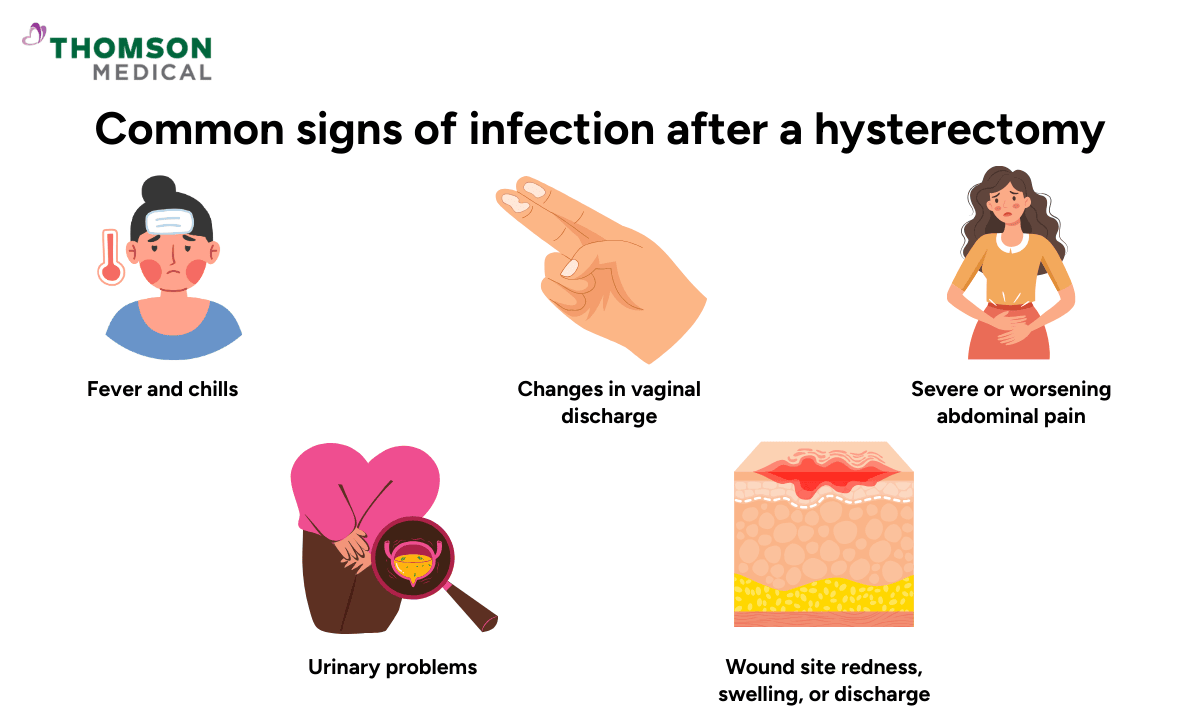
After a hysterectomy, some discomfort in the first few days is expected. Your body has just been through surgery, and it needs time to heal.
That said, an infection can develop during recovery, and it helps to know what signs to look out for so you can get the right care promptly.
Fever and chills
A low-grade fever in the first 24-48 hours after surgery is common. It’s your body responding to the physical stress of the procedure. However, if your temperature rises above 38°C (100.4°F), it may be a good idea to visit your doctor.
A fever rarely comes alone, though. Watch for chills, night sweats, or a heavy, flu-like feeling that makes you want to stay in bed. These are signs that your immune system is working hard to fight something off.
Changes in vaginal discharge (colour, smell, volume)
Some vaginal discharge after a hysterectomy is normal, especially in the first few weeks. What’s not normal is if your discharge:
Turns yellow, green, or grey
Has a strong, unpleasant odour
Gets heavier over time
These changes are usually not part of how your body heals. They may point to a vaginal cuff infection – an infection at the top of the vagina, where the cervix used to be.
Severe or worsening abdominal pain
Pain after a hysterectomy should gradually get better each day, not worse. If you’re several days or weeks out from surgery and the pain is increasing, or if it stops responding to pain relief that used to work before, that’s worth discussing with your doctor.
Also look out for:
Tenderness in one specific spot
New swelling around your abdomen
Pain that feels different from what you’ve been experiencing
It’s your body letting you know it needs extra support.
Urinary problems
The bladder and urinary tract sit very close to your uterus. This means they can sometimes be affected after a hysterectomy. A urinary tract infection (UTI) is one of the more common post-surgical infections, and the signs are usually hard to ignore.
You may have a UTI if you experience:
A burning or stinging sensation when you urinate
A sudden urgency to go
Urine that looks cloudy or has blood in it
Difficulty fully emptying your bladder
UTIs are generally manageable with the right treatment, especially when caught early.
Wound site redness, swelling, or discharge
If you had an abdominal hysterectomy, it’s important to check your incision regularly. Some redness right along the wound edges can be normal in the first few days. But spreading redness, increasing swelling, warmth around the site, or any fluid or pus draining from the incision are signs of a wound infection.
If your hysterectomy was done vaginally, the surgical area is inside your body. For that reason, wound-related infection may show up more as unusual vaginal discharge or pelvic pain rather than anything visible on your skin.
When to consult your doctor
It can be hard to know when something warrants a visit and when it’s safe to wait and see. If something doesn’t feel right, it’s always better to reach out.
Contact your doctor as soon as possible if you notice:
A fever above 38°C (100.4°F) that doesn't settle
Pain that is getting worse rather than better, or that isn't responding to your usual pain relief
Vaginal discharge that has changed in colour, smell, or amount
Redness, swelling, or fluid around your incision site
Burning or pain when you urinate, or blood in your urine
Any symptom that feels new, unusual, or simply not right
These signs may indicate that your body needs more attention. Catching them early can help prevent minor issues from becoming more serious complications.
Go to the emergency department immediately if you experience:
Sudden, severe abdominal or pelvic pain
Heavy or uncontrolled bleeding
A high fever with chills, confusion, or difficulty breathing
A sensation of pressure or bulging in the vaginal area
These could be signs of a more serious complication that needs urgent care. Your doctor can help you figure out what's behind them and guide you towards the treatment without delay.
If you're not sure whether what you are experiencing is normal, schedule an appointment with Thomson Medical. Our specialists will assess your symptoms and give you the clarity and care you need.
Gynaecologists at Thomson Medical
Loading...
How are infections after a hysterectomy treated?
Finding out you might have an infection after surgery can feel worrying. The good news is that most infections are straightforward to treat, especially with early attention.
The treatment you receive will depend on how severe the infection is. Here’s what you can expect:
Mild infections:
UTIs, minor wound infections, or early vaginal cuff infections are usually treated with a short course of oral antibiotics.
Your doctor may take a swab or a urine sample first to identify the bacteria involved. This helps ensure you get the right treatment.
Abscess:
If a small pocket of infection has collected inside your pelvis, your doctor may need to drain it.
Severe infections:
You may need a short hospital stay and antibiotics given through an intravenous (IV) drip ( – IV).
This allows your body to get the treatment it needs as quickly as possible.
With the right care and timely treatment, most women recover well and are able to return to their everyday lives sooner than they may expect.
Preventing infection after a hysterectomy

Your surgical team will already take careful steps to reduce the risk of infection before and during your procedure. That said, there are also steps you can take at home during recovery to support your healing and lower your chances of complications.
Here’s what you can do:
Complete your prescribed antibiotics:
Keep taking antibiotics even if you feel better after a few days. Stopping early can allow bacteria to return.
Keep incisions clean and dry:
Follow your doctor's instructions carefully, as these are tailored to your specific procedure.
Wash your hands:
Always wash your hands before touching any wound or surgical site.
Avoid tampons, douching, and vaginal intercourse:
These can introduce bacteria into an area that is still healing. Your doctor will confirm when it's safe to resume, usually at your post-operative check-up.
Walk daily:
Even a short walk can improve circulation and reduce the risk of complications, including blood clots.
Control blood sugar:
If you have diabetes, keeping your blood sugar well-controlled during recovery is especially important. High blood sugar can make it harder for your body to fight off infection.
Avoid smoking during recovery:
Because smoking restricts blood flow to healing tissue, slowing the entire process.
A hysterectomy is a big procedure, and your body deserves time and care to heal properly. Listen to your body, follow your care plan, and reach out to your doctor whenever something doesn't feel right. The right support at the right time can make all the difference to your recovery.
Every recovery is different, and it's okay to have questions along the way. Schedule an appointment with Thomson Medical, and our specialists will help guide you through what to expect.
FAQ
How do I know if something is wrong after a hysterectomy?
If a symptom is worsening instead of improving, if something feels different from how it did a few days ago, or if you have a fever, increasing pain, or unusual discharge, get checked by your doctor as soon as possible.
How do I know if my internal stitches have ripped after a hysterectomy?
If you notice:
A sudden, sharp pelvic pain
Heavy bleeding
A sensation of pressure or bulging in the vaginal area.
This is rare, but it's urgent. Call your doctor immediately or go to the emergency department; don't wait to see if it resolves on its own.
Can you still get a yeast infection after a hysterectomy?
Yes. Even if your uterus has been removed, your vagina is still present, and yeast and bacterial infections can still occur there.
Antibiotic use during and after surgery actually increases the risk temporarily, as antibiotics disrupt the natural balance of vaginal flora. If you notice itching, unusual discharge, or irritation, let your doctor know.
Which diagnostic tests are used to confirm infection after a hysterectomy?
Your doctor will usually start with a physical examination, followed by:
Blood tests, including a white blood cell count and CRP (C-reactive protein)
A urine culture
Vaginal or wound swabs
An ultrasound or CT scan (if an abscess is suspected)
What are the treatment options if an infection develops?
Most infections are treated with antibiotics: oral for milder cases and intravenous for more serious ones.
If an abscess has formed, drainage may be needed. Severe or spreading infections may require hospitalisation. Pain and fever management are part of treatment, too.
How is infection risk minimised during and after surgery?
During surgery, your surgical team takes several steps to reduce the risk from the start:
Administering IV antibiotics before the incision
Maintaining strict sterile technique and aiming to minimise operative time
After surgery, your habits also matter:
Caring for your wound as instructed
Completing your full course of antibiotics
Avoiding tampons and intercourse until cleared
Moving gently each day to support circulation
Managing underlying conditions like diabetes
The information provided is intended for general guidance only and should not be considered medical advice. For personalised recommendations and tailored advice based on your unique situations, request an appointment with Thomson Medical today.
Reference:
Morgan, D. M., Swenson, C. W., Streifel, K. M., Kamdar, N. S., Uppal, S., Burgunder-Zdravkovski, L., Pearlman, M. D., Fenner, D. E., & Campbell, D. A. (2015). Surgical site infection following hysterectomy: adjusted rankings in a regional collaborative. American Journal of Obstetrics and Gynecology, 214(2), 259.e1-259.e8. https://doi.org/10.1016/j.ajog.2015.10.002
Patel, U. J., Al-Niaimi, A. A., Parrette, K. M., Zerbel, S. A., Barman, S. M., Gill, T., & Heisler, C. A. (2024). Aiming for zero: Success of the hysterectomy surgical site infection prevention bundle. Journal of Infection Prevention, 26(1), 4–10. https://doi.org/10.1177/17571774241266448
For more information, contact us:
Thomson Specialists (Women's Health)
Thomson Women's Clinic (TWC)
- Novena:
6592 6686 (Call), 8611 8986 (WA) - Bukit Batok:
6569 0668 (Call), 8686 3525 (WA) - Choa Chu Kang:
6893 1227 (Call), 8282 1796 (WA) - Jurong:
6262 8588 (Call), 6262 8588 (WA) - Katong (female doctor):
6970 2272 (Call), 8611 9020 (WA) - Punggol:
6243 6843 (Call), 8811 0328 (WA) - Sembawang: 6753 5228
- Sengkang: 6388 8125
- Serangoon (female doctor): 6382 3313
- Tampines: 6857 6266
- Tiong Bahru: 6276 1525
Notice
The range of services may vary between TWC/TS locations. Please contact your preferred branch directly to enquire about the current availability.
Request an Appointment