

Many women associate fibroids with heavy periods or painful menstrual cycles. However, you might have subserosal fibroids for years without feeling a single symptom. In fact, many women experience no clear symptoms as these fibroids grow on the outer surface of the uterus.
Understanding this difference can help you make sense of changes you may have been linking to something else. What matters more than the diagnosis is knowing what to watch for and when, if ever, to take action.
What is a subserosal uterine fibroid?
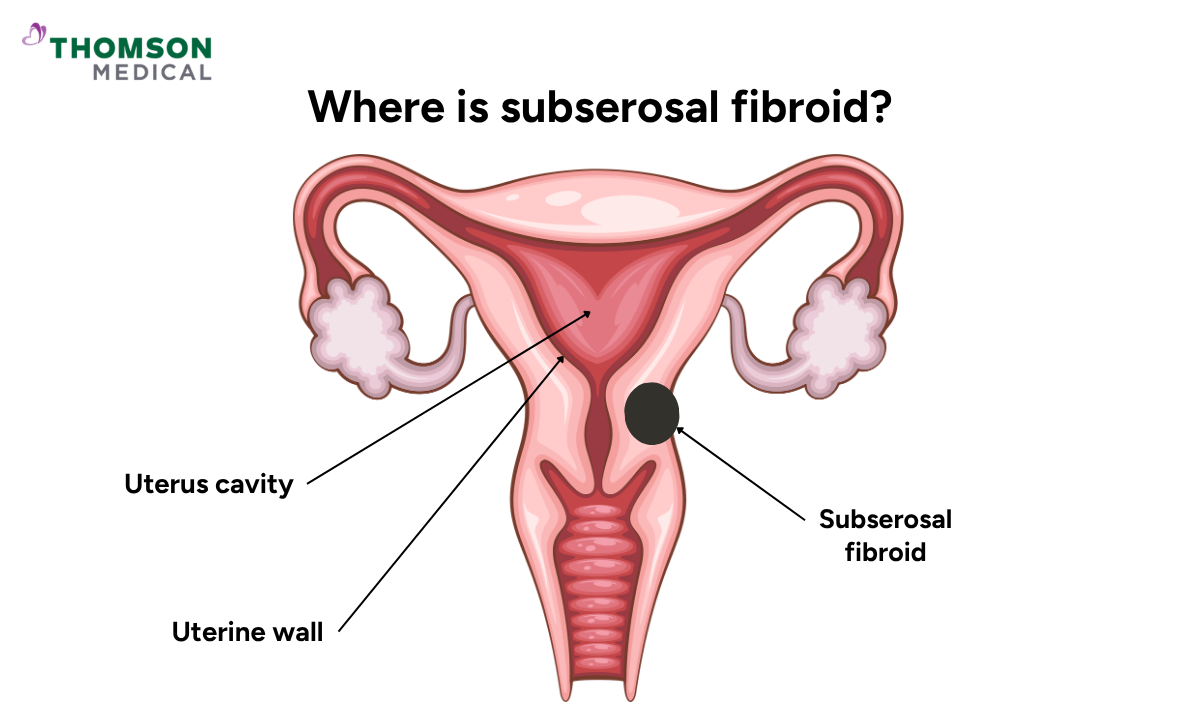
A subserosal fibroid is a benign growth, meaning it is not cancerous. It develops from the muscular wall of the uterus and grows outwards into the surrounding pelvic space.
Unlike fibroids that form inside the uterine cavity, subserosal fibroids tend to affect the external shape of the uterus rather than its inner lining.
What causes subserosal fibroids?
The exact cause is not fully understood. However, hormones, particularly oestrogen and progesterone, are thought to play a key role in how these fibroids develop and grow.
This is one reason fibroids are most common during the reproductive years, 30s to 40s, and often shrink after menopause, when hormone levels naturally decline.
Some factors may make fibroids more likely to develop, including:
A family history of fibroids
Starting your periods at an early age
Carrying excess weight
These factors may raise your likelihood, but they do not guarantee that fibroids will develop. Many women with fibroids have no clear risk factors at all. If you notice any new or unusual symptoms, it is always worth speaking to your doctor for personalised guidance.
What subserosal fibroid symptoms might you notice?
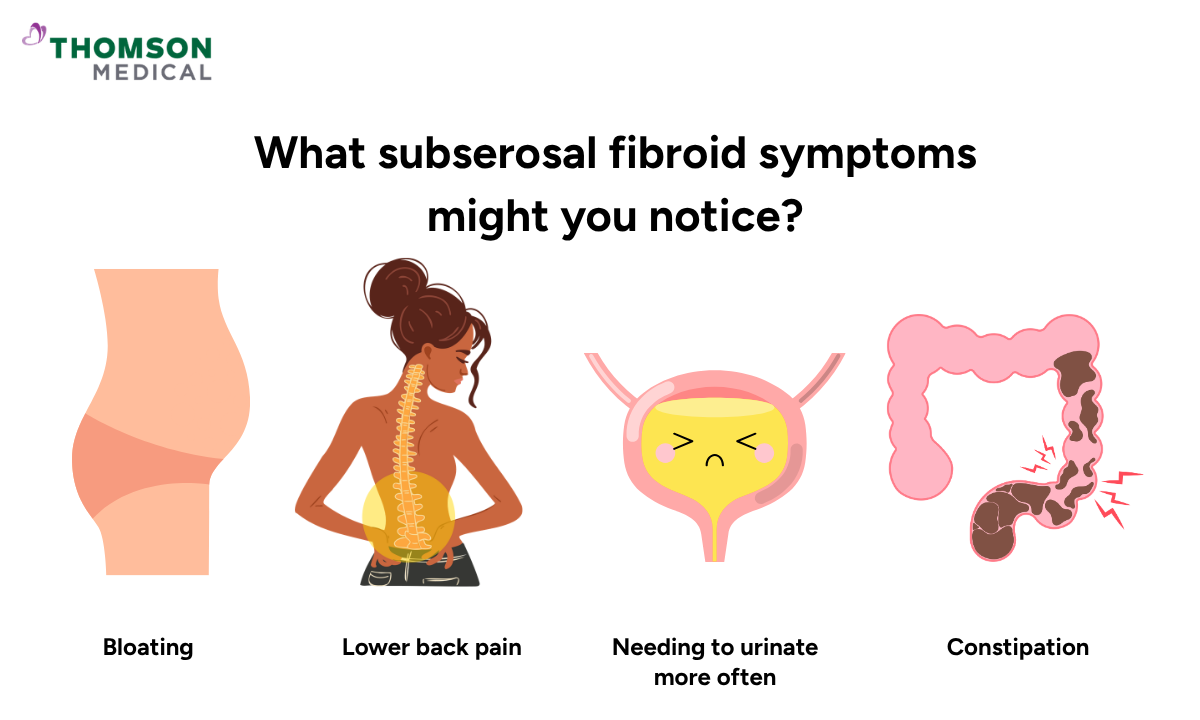
Some subserosal fibroids stay small and cause no noticeable problems at all. Others can grow larger and may change the shape of the uterus or press on nearby organs such as the bladder or bowel. Because of this, symptoms can vary quite a bit from woman to woman.
You might notice:
Pelvic pressure or a feeling of heaviness in the lower abdomen
Bloating or abdominal swelling
Lower back pain
Needing to urinate more often
Constipation
Discomfort during sexual intercourse
Because subserosal fibroids grow outwards rather than into the uterine cavity, heavy menstrual bleeding is usually less common with this type. Instead, symptoms linked to pressure tend to be more noticeable.
If you are experiencing any of these symptoms and are unsure of the cause, it is worth discussing them with your doctor.
Our gynaecologists
Loading...
How are subserosal fibroids diagnosed?
If you visit your doctor with concerns about fibroids, they will usually begin with a pelvic examination to check for any changes in the size or shape of your uterus.
If fibroids are suspected, the next step is often an ultrasound scan. This is a commonly used scan that uses sound waves to check whether fibroids are present and where they are located. While it is generally painless, some women may feel mild discomfort during a transvaginal ultrasound.
In some cases, your doctor may also recommend an MRI scan to provide a more detailed view of the size, number, and position of the fibroids, which can help with planning the most suitable next steps.
A clear diagnosis helps your doctor understand the size and position of your fibroids before discussing the next steps with you.
If you would like a better understanding of what you are experiencing, request an appointment at Thomson Medical. Our specialists are here to listen, carry out a thorough assessment, and walk you through your options with care.
Do subserosal fibroids need treatment?
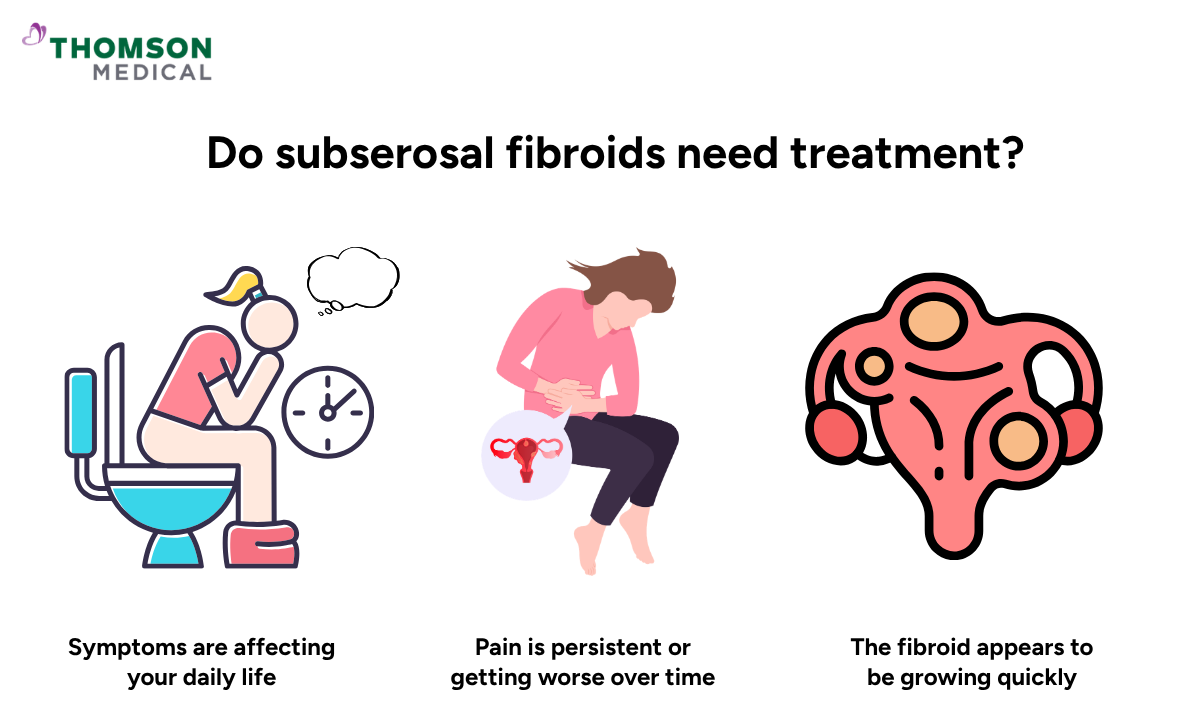
Not every subserosal fibroid requires treatment. Many women are relieved to find that careful monitoring is often enough on its own.
Your doctor may recommend treatment if:
Symptoms are affecting your daily life
Pain is persistent or getting worse over time
The fibroid appears to be growing quickly
There is significant pressure on the bladder or bowel
You are planning a pregnancy and the fibroid may interfere with it
If the fibroid is small and not causing symptoms, your doctor will usually suggest keeping an eye on it through routine reviews. You can then reassess together if your symptoms change or the fibroid grows.
What treatment options are available?
If symptoms start to affect your daily life, several treatment options are available depending on the size and location of your fibroids, your overall health, and your fertility plans.
Medicines
Medicines cannot remove fibroids, but they can help ease symptoms while you consider further treatment or prepare for a procedure.
These may include:
Pain relief:
Common pain medicines such as ibuprofen can help ease pelvic discomfort or lower back pain.
Hormonal therapy:
The contraceptive pill, hormonal injections, or a hormonal coil that releases progestogen can help regulate your hormones and reduce symptoms over time.
Hormonal treatments may help manage period-related symptoms, but they may not relieve pressure symptoms caused by a large subserosal fibroid.
GnRH medicines:
These temporarily lower oestrogen and progesterone levels and may help shrink fibroids, often before surgery. They are used under close medical supervision and are not suitable for prolonged use.
Once treatment stops, symptoms can return, so medicines are often used briefly alongside other treatments.
Minimally invasive procedures
If medicines alone are not enough, minimally invasive procedures may help manage fibroids without major surgery.
These include:
Uterine artery embolisation (UAE):
Tiny particles are injected into the blood vessels that supply your fibroids, reducing their blood supply and causing them to shrink over time.
If you are planning a future pregnancy, your doctor will discuss whether UAE or a uterus-preserving surgery, such as a myomectomy, is more suitable for your situation.
Laparoscopic myomectomy:
Fibroids are removed through small incisions in the abdomen using a camera and fine surgical instruments.
This minimally invasive approach usually results in less pain and a shorter recovery time compared with open surgery.
These options can ease symptoms and may shorten recovery time compared with traditional surgery. However, not every option suits every type of fibroid, so your doctor can help you find the approach that best matches your situation.
Surgical options
Surgery may be considered when other treatments have not provided enough relief or are not suitable for your situation.
These include:
Myomectomy:
This procedure removes the fibroids while keeping your uterus intact. Many women who wish to preserve their fertility choose this option.
Hysterectomy:
This involves removing the uterus entirely. It is usually considered when other treatments have not provided enough relief and a future pregnancy is not planned.
Hysterectomy is the only treatment that completely removes the possibility of fibroids returning. With all other treatments, whether surgical or otherwise, there remains a chance that new fibroids may develop over time.
When should you see a doctor?
Many subserosal fibroids do not require immediate treatment. However, because these fibroids grow outwards from the uterus, they can sometimes press on nearby organs or cause symptoms worth checking with your doctor.
Speak with your doctor if you notice:
Ongoing pelvic pressure, heaviness, or discomfort that is affecting daily activities
Bloating or a visible increase in abdominal size
Frequent urination or difficulty fully emptying your bladder
Constipation or a persistent feeling of bowel pressure
Pain during sexual intercourse caused by pelvic pressure
Sudden, severe pelvic pain
New pelvic symptoms or bleeding after menopause
Early assessment can help your doctor understand whether the fibroid is growing, pressing on surrounding structures, or starting to cause other concerns.
Managing fibroids is usually an ongoing process rather than a single procedure. With the right monitoring, support, and treatment when needed, many women are able to ease their symptoms and carry on with daily life much as usual.
Sudden severe pelvic pain, worsening pressure symptoms, or new bleeding after menopause should not be ignored. Request an appointment with Thomson Medical for timely evaluation and guidance on the most appropriate treatment approach for your situation.
FAQ
How serious is a subserosal fibroid?
Most subserosal fibroids are benign and not considered serious. Many women have them without any symptoms, and monitoring alone is often enough. How serious it becomes depends on the size of the fibroid, how quickly it is growing, and whether it is pressing on nearby organs such as the bladder or bowel.
How are subserosal fibroids treated?
Treatment depends on the size and location of the fibroid, the severity of symptoms, and whether preserving your fertility matters to you. Options may include monitoring, medication, minimally invasive procedures, or surgery if symptoms become more significant.
Do subserosal fibroids cause heavy periods?
Usually not. Heavy menstrual bleeding is more commonly linked to fibroids that grow within or close to the uterine cavity rather than on the outer surface of the uterus. Subserosal fibroids are more likely to cause symptoms linked to pressure instead.
Can subserosal fibroids be cancerous?
Subserosal fibroids are benign growths and almost never become cancerous. Rarely, a cancerous tumour such as ‘leiomyosarcoma’ can develop in the uterine muscle and be mistaken for a fibroid. This is one reason new, fast-growing, or postmenopausal symptoms should be assessed by a doctor.
How do subserosal fibroids affect fertility?
Subserosal fibroids usually have little effect on fertility. However, very large fibroids may affect fertility if they distort pelvic anatomy or press on nearby reproductive organs, such as the fallopian tubes.
Is it necessary to remove subserosal fibroids?
Not always. Removal is usually only considered if the fibroid is causing significant symptoms, growing rapidly, or affecting your fertility or daily life. Many subserosal fibroids can be safely monitored over time without treatment.
The information provided is intended for general guidance only and should not be considered medical advice. For personalised recommendations and tailored advice based on your unique situations, please consult a specialist at Thomson Medical. Request an appointment with Thomson Medical today.
For more information, contact us:
Thomson Specialists (Women's Health)
Thomson Women's Clinic (TWC)
- Novena:
6592 6686 (Call), 8611 8986 (WA) - Bukit Batok:
6569 0668 (Call), 8686 3525 (WA) - Choa Chu Kang:
6893 1227 (Call), 8282 1796 (WA) Jurong:
6262 8588 (Call), 6262 8588 (WA)- Katong (female doctor):
6970 2272 (Call), 8611 9020 (WA) - Punggol:
6243 6843 (Call), 8811 0328 (WA) - Sembawang: 6753 5228
- Sengkang: 6388 8125
- Serangoon (female doctor): 6382 3313
- Tampines: 6857 6266
- Tiong Bahru: 6276 1525