

Completing cervical cancer treatment is a huge milestone, and it is natural to hope that recovery will feel easier from here. However, many women in this situation experience tailbone pain that makes sitting uncomfortable or affects their daily routine – a situation that can feel frustrating and worrying, especially after you have already been through so much.
The good news is that tailbone pain after cervical cancer can often be treated, and many people do find relief with the right care. Understanding why this pain happens and what options are available can help you feel more reassured and supported as you continue your recovery.
What is the tailbone?
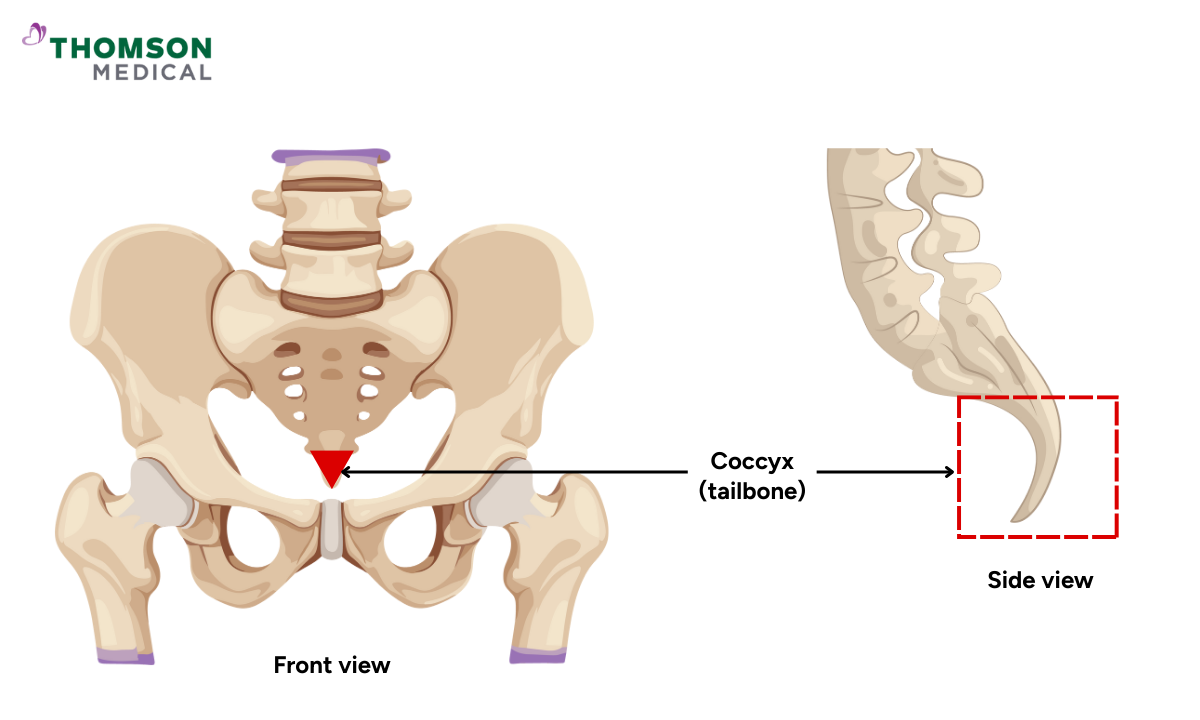
Your tailbone, or coccyx, is a small triangular bone at the very bottom of your spine. It connects to muscles, ligaments, and tendons in your lower back and pelvis. Even though it’s small, it plays an important role in supporting your body when you sit and helping you stay balanced and comfortable in everyday movements.
What does tailbone pain feel like?
Tailbone pain, also called coccyx pain, usually feels like an aching or sharp sensation above your buttocks. You'll probably notice it when you're:
Sitting down, especially on hard surfaces
Leaning back in your seat
Standing up after sitting
Having a bowel movement
Doing physical activities that put pressure on your lower back
For some people, the pain may be mild but irritating. For others, it can be severe enough to interfere with daily activities. If the discomfort persists or becomes difficult to manage, it is important to see your doctor for an assessment.
Our healthcare specialists
Loading...
What causes tailbone pain after cervical cancer?
There are several reasons you might have tailbone pain after treatment. Your cervical cancer treatment may affect your tailbone in these ways:
Radiation therapy can irritate tissues in your pelvic area
Scar tissue might develop near your tailbone
Your pelvic floor muscles (the muscles that support your bladder, bowel, and reproductive organs) may become tense or work differently after treatment
If you have a history of cervical cancer and notice ongoing pelvic or tailbone pain, don’t ignore it. Request an appointment at Thomson Medical to find out what’s causing your symptoms.
When should you see a doctor?
It is a good idea to have tailbone pain checked, especially if you have had cervical cancer in the past. You should see your doctor if you notice:
Your tailbone pain lasts more than a few weeks and interferes with your daily activities
You have unexplained weight loss
You experience numbness
You develop a fever
You have trouble controlling your bowel or bladder
You’re getting persistent pelvic pain
Tailbone pain doesn't guarantee your cancer has come back. Many conditions unrelated to cancer can cause similar signs.
How is tailbone pain diagnosed?
Your doctor will start by asking about your symptoms, when the pain occurs, and your previous cancer treatments. The next steps usually involve:
Physical examination:
Your doctor will gently check the area for tenderness.
They'll also see how your spine and pelvic muscles are working.
Imaging tests:
Based on these findings, your doctor may also assess whether the pain is related to previous treatment or other pelvic concerns.
How can you manage tailbone pain?
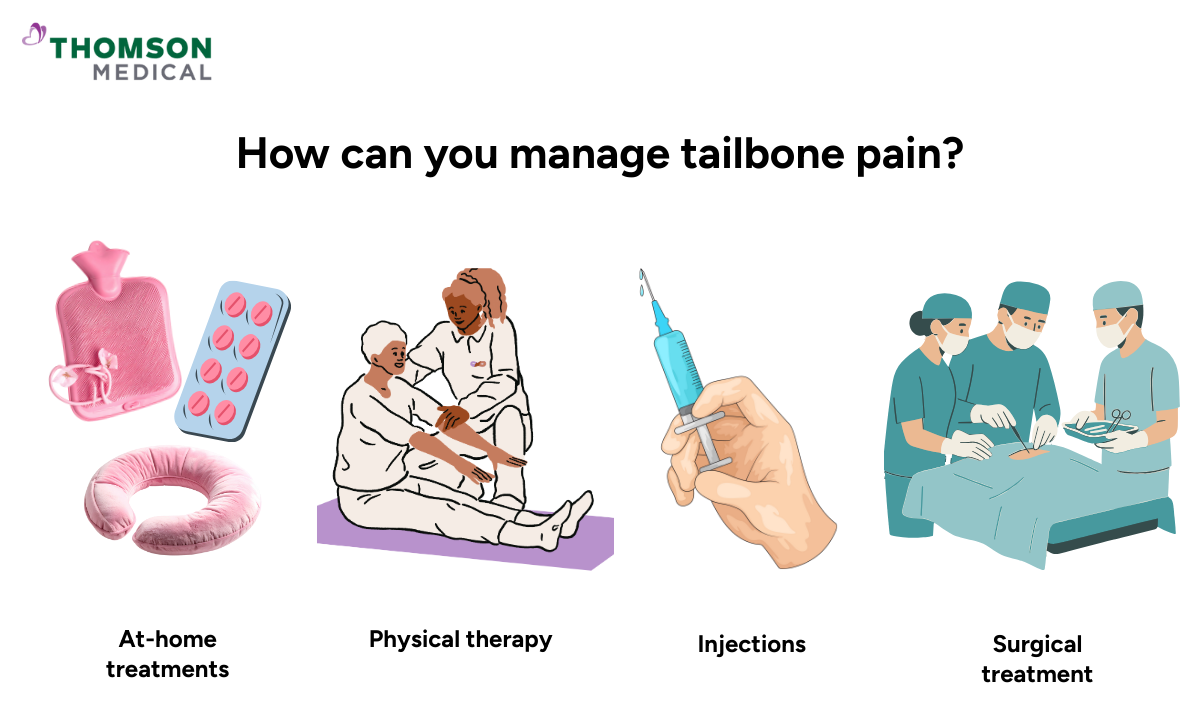
Managing tailbone pain often starts with simple steps you can try at home. If these do not provide enough relief, your doctor may suggest other treatments.
At-home treatments
You can try these approaches at home:
Use a coccyx wedge cushion or sit on soft surfaces
Practice proper sitting techniques by keeping your weight evenly distributed and avoiding pressure on your tailbone
Apply warmth using a heating pad or hot water bottle, whichever feels more soothing
Take over-the-counter pain relief if your doctor approves
Find comfortable positions that reduce pressure on your tailbone
If your pain does not improve or becomes worse after at-home treatments, it’s important to see your doctor for further examination and treatment.
Physical therapy
Physical therapy can help you manage tailbone pain. As part of treatment, your physiotherapist may use hands-on manual therapy techniques to release tension in your pelvic muscles and surrounding tissues.
You may also benefit from pelvic physiotherapy. It focuses on your pelvic floor muscles and can help reduce muscle tightness that contributes to your discomfort.
Injections
If simpler treatments like cushions, pain relief, or physical therapy have not improved your pain, your doctor may suggest injections.
The type of injection used depends on what's causing your pain:
Corticosteroid injections:
A steroid medicine is injected near your tailbone to help reduce inflammation and swelling, which can ease your pain.
Nerve blocks:
If your pain is more persistent, your doctor may recommend nerve block injections to temporarily interrupt pain signals from the nerves around your tailbone.
Spinal decompression therapy
This treatment gently stretches your spine using a motorised table. Your physiotherapist or doctor will slowly adjust the table to help reduce pressure on your lower back and tailbone.
It’s not usually the first treatment recommended for tailbone pain. Some people find it helpful, especially if their pain is linked to lower back pain or tight muscles.
Surgical treatment
Surgery is rarely needed for tailbone pain because most people improve with non-surgical treatments.
In severe cases, where there is a clear cause of the pain, your doctor may refer you to an orthopaedic surgeon to discuss removing part or all of the tailbone. This surgery, called a coccygectomy, is only considered when other treatments have not provided relief.
How can you prevent tailbone problems in the future?
If you’ve had tailbone discomfort before, these habits can help prevent problems:
Adjust how you sit, using sitting aids or ergonomic chairs
Keep good posture to spread weight evenly across your pelvis
Stay active and work on strengthening your core and pelvic floor muscles
Take breaks and move around if you sit for long periods
Be cautious with falls or high-impact activities that could strain your tailbone
If you’d like personalised advice on posture or exercises to protect your tailbone, request an appointment. Our team can assess your symptoms, guide you on preventive strategies, and help reduce the risk of future discomfort.
FAQ
Can cervical cancer treatment cause tailbone pain?
Yes. Radiation therapy can irritate tissues in your pelvic region. It can also cause scar tissue or make nerves more sensitive after treatment. However, tailbone pain has many causes unrelated to cervical cancer, so any persistent discomfort should be checked by your doctor.
How long does tailbone pain last after cancer treatment?
It varies from person to person. Some people feel pain for only a few weeks. Others may have discomfort that lasts several months, especially if radiation or surgery affected the pelvic area. Persistent pain doesn't mean cancer has returned, but you should discuss ongoing symptoms with your doctor.
Are there safe exercises you can do to relieve tailbone pain?
Yes. Gentle exercises improve posture, strengthen your core and pelvic floor muscles, and increase flexibility. Avoid exercises that increase pain or put direct pressure on your tailbone. A physiotherapist can suggest safe exercises tailored to your situation.
Can tailbone pain return after treatment?
Yes. Tailbone pain can return, especially if habits like poor posture or prolonged sitting continue. If you’ve had pelvic radiation, the area may be more sensitive to discomfort.
When should you consider treatment without surgery for tailbone pain?
Non-surgical treatments are usually recommended first for tailbone pain. They may also be considered if your pain is linked to lower back problems, such as disc issues, or if common treatments haven’t given enough relief.
Is surgical spinal decompression risky for cancer survivors?
Like any surgery, spinal decompression carries some risks. Cancer survivors may have extra considerations depending on past treatments. Your specialist will carefully evaluate each person to choose the safest approach. For many people, non-surgical treatments are effective and preferred whenever possible.
The information is intended for general guidance only and should not be considered medical advice. For personalised recommendations and advice based on your unique situation, please consult a specialist at Thomson Medical. Request an appointment with Thomson Medical today.
For more information, contact us:
Thomson Specialists (Women's Health)
Thomson Women's Clinic (TWC)
- Novena:
6592 6686 (Call), 8611 8986 (WA) - Bukit Batok:
6569 0668 (Call), 8686 3525 (WA) - Choa Chu Kang:
6893 1227 (Call), 8282 1796 (WA) Jurong:
6262 8588 (Call), 6262 8588 (WA)- Katong (female doctor):
6970 2272 (Call), 8611 9020 (WA) - Punggol:
6243 6843 (Call), 8811 0328 (WA) - Sembawang: 6753 5228
- Sengkang: 6388 8125
- Serangoon (female doctor): 6382 3313
- Tampines: 6857 6266
- Tiong Bahru: 6276 1525