

Have you noticed cold hands and feet even in warm weather or dark circles under your eyes that won't fade no matter how much sleep you get? In Traditional Chinese Medicine (TCM), these seemingly unrelated symptoms could point to the same root cause, which is poor blood circulation.
But TCM views circulation differently than Western medicine does. While your blood tests might come back normal, TCM recognises patterns of stagnation, deficiency, and coldness that standard tests don't measure—and that's often why your symptoms persist.
What does blood mean in TCM?
In TCM, blood is more than just the red fluid flowing through your veins. It nourishes your entire body, supports your organs, and influences how you feel emotionally. When your blood is balanced and flowing well, you'll likely feel more energised and steady.
Blood works closely with Qi (your body's energy). Qi helps blood move through your body, while blood creates the nourishment that makes more Qi. Together, Qi and blood maintain your body’s balance and vitality.
What factors affect blood circulation?
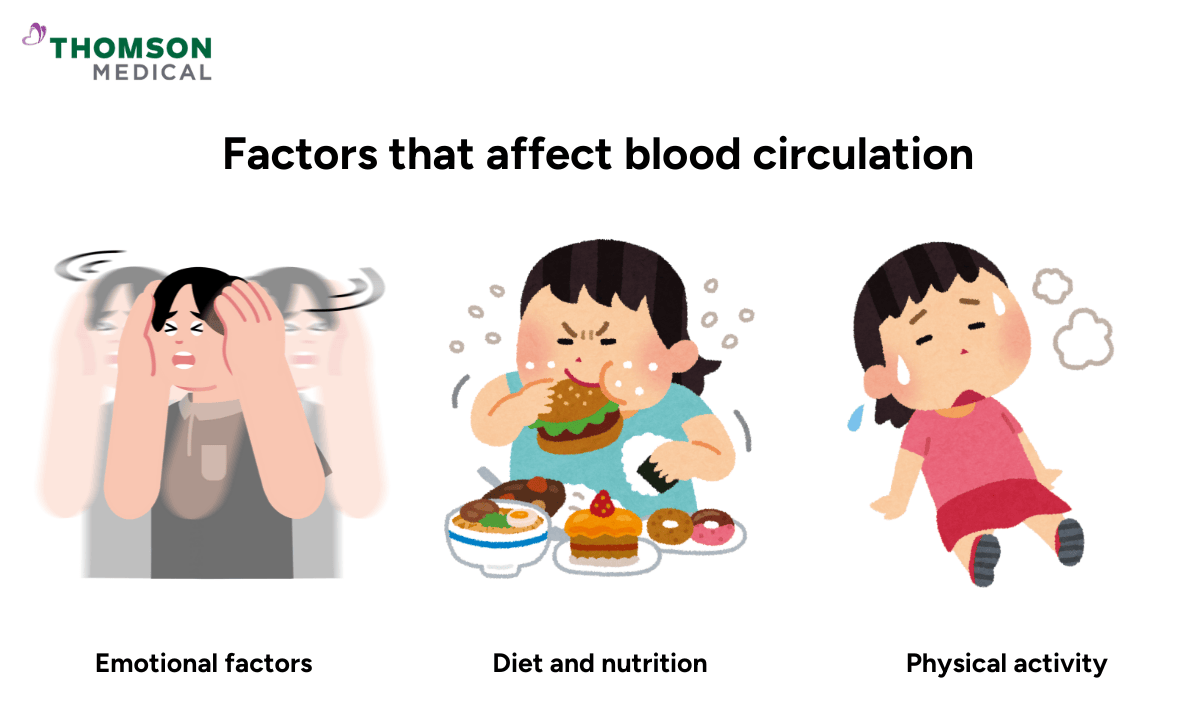
Your daily habits and lifestyle play a big role in how well your blood circulates. Here are the main factors:
Emotional wellbeing:
In TCM, ongoing worry weakens the Spleen (which makes blood), while anger affects the Liver (which stores blood).
Your emotions and physical health are closely connected.
Diet and nutrition:
Nourishing meals support healthy circulation, while skipping meals or eating mainly processed foods means your body lacks what it needs to build blood.
Physical activity:
Both too much and too little exercise can affect circulation.
Gentle, regular movement helps blood flow without depleting your reserves.
TCM recognises three main blood patterns, which are Blood Deficiency (血虚), Blood Stasis (血瘀), and Blood Heat (血热). Each pattern has different causes and symptoms.
What is Blood Deficiency?
Blood Deficiency means your body doesn't have enough blood to nourish itself the way it should. This is really common, especially for women. Knowing what causes it and what to look for can help you figure out if this might be what's going on with you.
What causes Blood Deficiency?
From a TCM perspective, Blood Deficiency tends to build up over time due to factors such as overwork, inadequate nourishment, or recovery demands. It describes a functional imbalance in the body and does not directly correspond to a Western diagnosis like anaemia.
Here are some things that can contribute:
Heavy or long periods that drain Blood every month without giving your body enough time or nutrition to rebuild it
Poor nutrition from skipping meals, not eating enough, or eating mostly processed foods
Weak digestion that can't transform food into Blood properly
Intense exercise that uses Blood faster than your body replaces it
Blood loss from childbirth, injury, or surgery
What are the symptoms of Blood Deficiency?
In TCM, blood deficiency affects different organs in your body. Your symptom depends on which organ needs the most support.
If your Liver is affected, you might notice:
Muscle cramps
Dry hair and nails
Blurred vision or floaters (little spots in your vision)
Restless sleep
If your Heart is affected, you might have:
Palpitations (when you can feel your heartbeat)
Trouble falling or staying asleep
Mild anxiety or feeling unsettled
Memory not being as sharp
Occasional dizziness
If your Spleen is affected, you may experience:
Constant tiredness with little appetite
Weakness in your arms and legs
Loose stools or digestive upset
Pale lips and tongue
What is Blood Stasis?
Blood Stasis happens when blood gets stuck or can't move freely through your body. Think of it like a traffic jam where everything slows down and backs up.
What causes Blood Stasis?
Blood Stasis usually happens when daily habits slow down or block your blood flow. Here are some situations that can lead to this:
Sitting too long or not moving much, which makes your Blood circulation slow down
Emotional stress that throws off how blood moves through your body
Being in the cold, which slows your circulation
Weak Qi that doesn't have enough strength to push Blood along
Getting injured because when you hurt yourself, the damaged tissue disrupts Blood flow in that spot
What are the symptoms of Blood Stasis?
You can often recognise Blood Stasis by looking for these physical signs:
Aches and pains that stay in one spot
Sharp or stabbing pain (not dull aching)
Pain that gets worse when you press on it
Dark or purplish color to your skin in some areas
Rough or scaly skin patches
Dark lips or tongue
Varicose veins or spider veins
Numbness or tingling in your arms or legs
If you're a woman, Blood Stasis can also show up in your period:
Clots in your menstrual flow
Painful cramps during your period
Dark menstrual blood (sometimes almost black)
Irregular cycles
Blood Heat
In TCM, Blood Heat refers to an internal heat pattern affecting the Blood, causing it to circulate too quickly or irregularly. This may create a sensation of internal warmth and influence the skin, emotions, and overall balance. It is a TCM diagnostic term and does not mean you have a fever or an infection.
What causes Blood Heat?
Blood heat usually develops from:
Eating too much spicy, fried, or hot food
Long-term emotional stress, especially frustration or anger
Living somewhere hot and humid
Hormonal changes at different life stages
Not eating enough cooling or nourishing foods
What are the symptoms of Blood Heat?
If you're a woman, Blood Heat might show up as:
Feeling hot or overheated easily
Getting sore throats often
Feeling irritable or moody
Acne or breakouts on your skin
A bright red tongue
Heavy periods that come early, with bright red blood
Feeling restless or emotionally 'heated'
If you're experiencing persistent fatigue, pain, or menstrual changes, a TCM assessment can help identify whether Blood Deficiency, Stasis, or Heat is affecting you. Request an appointment withThomson Chinese Medicine for a personalised evaluation and treatment plan.
Our physician
Loading...
How are Blood patterns diagnosed?
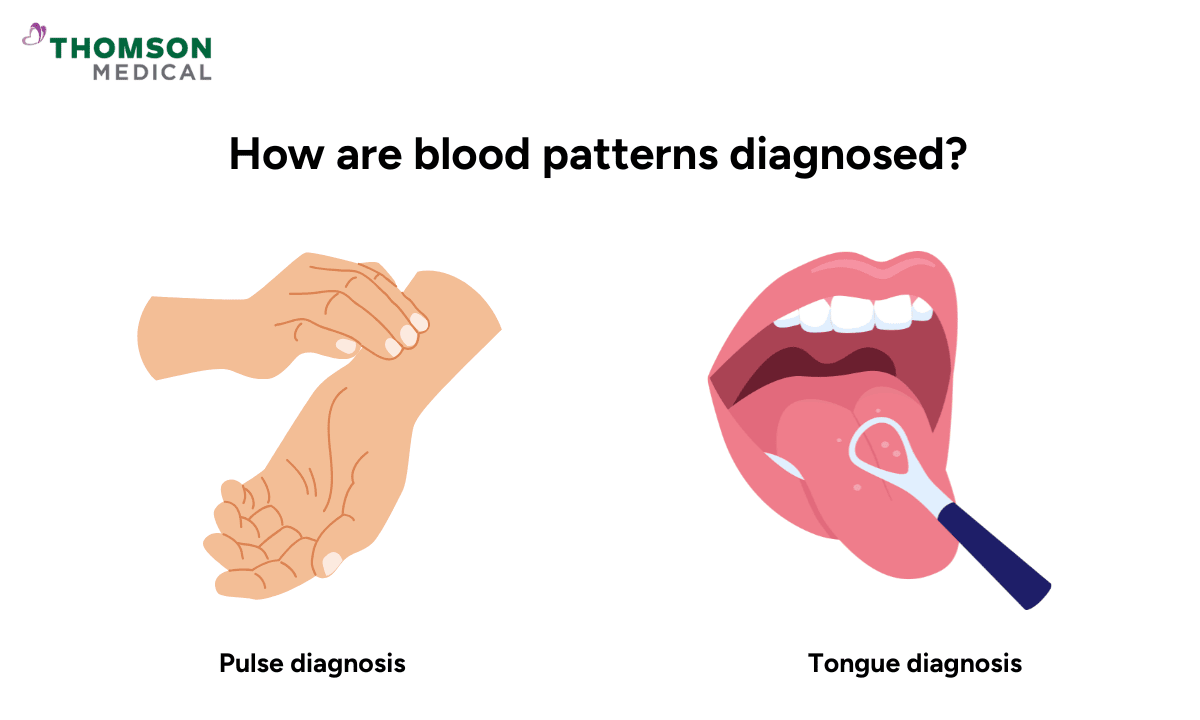
TCM physicians use two main methods to diagnose Blood patterns.
Pulse diagnosis
Checking your pulse can reveal patterns in your Blood, showing whether it's deficient, stagnant, or heated. Here's what your TCM physician feels for:
With Blood Deficiency, your pulse feels thin or choppy instead of full and smooth
With Blood Stasis, your pulse feels choppy or wiry, like a guitar string. This shows blood isn't flowing well
With Blood Heat, your pulse becomes rapid and forceful
Tongue diagnosis
Your tongue reveals important clues about your Blood patterns. Here's what your TCM physician looks for:
Blood Deficiency appears as a pale, slightly dry tongue. Sometimes just the sides look pale, which points to Liver Blood Deficiency
Blood Stasis appears as a dark purple tongue or purple spots with visible veins underneath
Blood Heat appears as a bright red tongue, usually with a yellow coating
These diagnostic signs help you understand your pattern, but a qualified TCM physician can provide a complete assessment tailored to your needs.
How can you improve your Blood circulation through diet?
What you eat plays a big role in building and nourishing your blood. Try to include these foods in your regular meals:
Red meat such as beef, lamb, and pork
Organ meats, bone broth, eggs, and fish like tuna, sardines, and oysters
Dark leafy greens such as spinach, kale, and watercress
Beans and lentils
Fruits such as dates, goji berries, longan, and blackberries
Vegetables such as beetroot, mushrooms, and cabbage
Nuts and seeds such as almonds and black sesame seeds
Whole grains such as oats, barley, and rice
It's equally important to eat regular meals and avoid cutting calories too much. Your body needs good food to build Blood, so skipping meals works against your healing.
How TCM can promote healthy Blood flow
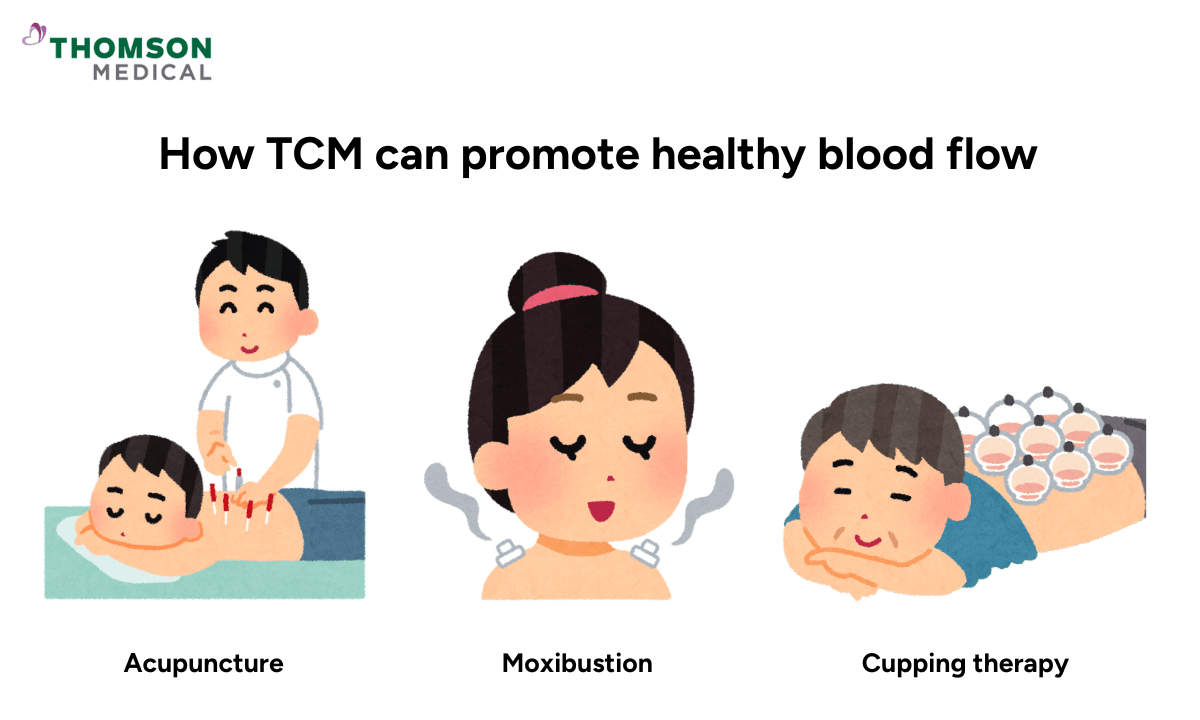
TCM has different ways to help Blood circulation. When you see a TCM doctor, you might get:
Acupuncture uses fine needles placed at certain points to get circulation moving and break up areas where Blood has got stuck
Chinese herbal medicine includes formulas with herbs like Dang Gui, Shu Di Huang, and Bai Shao to nourish Blood, or Dan Shen and Hong Hua to get circulation moving
Moxibustion creates gentle heat that goes deep and helps circulation
Cupping therapy helps move stuck blood and improve Blood flow in that area
A TCM physician can recommend which treatments suit your needs.
What lifestyle changes support healthy Blood circulation?
Other than diet and treatment, simple lifestyle changes can make a real difference.
Get regular gentle exercise like walking, yoga, Tai Chi, or Qigong
Manage stress through meditation or relaxation practices
Get enough sleep to let your body rebuild and make blood
Avoid pushing yourself too hard physically or mentally
Stay warm, especially during your period
Take time to rest and digest your meals instead of rushing through them
When should you see a TCM physician?
If you're experiencing symptoms of Blood Deficiency, Stasis, or heat that persist, seeing a qualified TCM physician is worthwhile. They can assess your specific pattern, identify what's contributing to your symptoms, and create a treatment plan for your individual needs. Getting help early can prevent minor issues from becoming more persistent concerns.
Since symptoms of Blood Deficiency, Stasis, or heat can vary from person to person, a consultation with a TCM physician can provide personalised care and guidance. Request an appointment with Thomson Medical to assess your condition.
FAQ
Can Blood circulation improve without taking herbs?
It depends on the severity and underlying cause. Mild circulation imbalances may improve with diet and lifestyle changes alone.
However, in more pronounced or long-standing cases, lifestyle measures may not be sufficient on their own. Herbal therapy may be recommended to more effectively nourish Blood, move stagnation, and restore balance.
How long does it take to improve Blood Deficiency?
The timeline varies based on severity and what's causing it. You might start noticing improvements within a few weeks of consistent treatment and dietary changes, but fully rebuilding blood can take several months. Building blood is a gradual process that requires patience and consistency.
Are there foods I should avoid if I have blood deficiency or Blood Heat?
If you have a blood deficiency, avoid skipping meals or cutting calories too much. For Blood Heat, limit very spicy, greasy, and processed foods. Cold and raw foods can slow digestion and weaken your body's ability to turn food into blood. Focus on warm, cooked meals instead.
Is Blood Stasis serious?
Blood Stasis can contribute to persistent pain and health concerns if not addressed. It's not an emergency, but getting support early helps prevent more serious issues from developing. In TCM, many persistent conditions are linked to Blood Stasis that hasn't been addressed, which is why early treatment matters.
Can men have blood deficiency too?
Yes, though it's less common in men than women. Men don't experience monthly blood loss through periods, so they're at lower risk. However, blood deficiency can still develop in men due to poor eating habits, persistent illness, overwork, or injury. The symptoms and treatment approaches are similar for everyone.
Is blood deficiency the same as anaemia?
Not exactly. Anaemia in Western medicine refers to low iron or red blood cell counts. TCM blood deficiency looks more broadly at how well your blood nourishes your whole body. You can have a blood deficiency without being anaemic, though the two can overlap, and both are worth addressing.
The information provided is intended for general guidance only and should not be considered medical advice. For personalised recommendations and advice based on your conditions, request an appointment with Thomson Chinese Medicine today.
Physician Seah Ai Wei
Traditional Chinese Medicine
Thomson Chinese Medicine (TCM United Square) and 1 other
English, Mandarin
Alliance MediNet
