

Deciding whether to have your tubes tied or undergo a hysterectomy isn't a decision that comes with an obvious answer. Both procedures are permanent and can feel overwhelming, especially when you're already dealing with an underlying health issue or when you simply want a definitive solution to pregnancy prevention.
These two procedures are often mentioned together, but they serve very different purposes. Understanding the distinction and knowing which one fits your situation can help you feel more confident going into this decision.
What is tubal ligation?
Tubal ligation, often called “getting your tubes tied”, is a surgical procedure that permanently prevents pregnancy by blocking or sealing your fallopian tubes. This prevents eggs and sperm from meeting, making fertilisation impossible.
Tubal ligation is a highly effective form of permanent contraception, with a very low chance of pregnancy after the procedure. Many women choose tubal ligation when they feel confident that their family is complete and they no longer wish to become pregnant.
What is a hysterectomy?
A hysterectomy is a surgical procedure to remove the uterus. Depending on your reason for surgery, your doctor may also remove the cervix, the fallopian tubes, and the ovaries.
Unlike tubal ligation, a hysterectomy is not performed for contraception. Instead, it’s usually used to treat medical conditions, such as:
Severe bleeding
Uterine prolapse
Gynaecological cancers
There are several surgical approaches, including laparoscopic, vaginal, or open abdominal. Your doctor will generally discuss the best type of surgery based on your specific condition.
If your ovaries are removed during the procedure, you may experience surgical menopause immediately after the operation, regardless of your age. Your doctor will go through this with you before surgery, including options to help manage menopausal symptoms.
If you have been recommended a hysterectomy and would like to better understand what it involves, schedule an appointment with Thomson Medical. Our specialists will take the time to answer your questions and guide you through every step of the process.
An overview of tubal ligation vs hysterectomy

Both tubal ligation and hysterectomy are considered permanent procedures that end the ability to conceive. But they are quite different in purpose and how they affect your body.
Here’s a comparison to help you see the differences clearly:
Feature | Tubal Ligation | Hysterectomy |
Purpose | Permanent contraception | Treat medical conditions – permanent infertility as a result |
Organs affected | Fallopian tubes only | Uterus (may include cervix, tubes, ovaries) |
Hormonal effect | None | May trigger menopause if the ovaries are removed |
Periods | Continue as normal | Stop permanently |
Surgical approach | Usually laparoscopic (minimally invasive) | Laparoscopic, vaginal, or open (abdominal) |
Reversibility | Considered permanent | Irreversible |
This comparison is just a starting point. Your doctor will be able to give you a much clearer picture of your options and what to expect based on your health history and what you’re hoping to achieve.
Gynaecologists at Thomson Medical
Loading...
Key differences between a tubal ligation and a hysterectomy
Understanding the key differences in more detail can help you feel more prepared and confident when making a decision. Here is a closer look at what each procedure actually involves, what your recovery might look like, and the risks and complications to be aware of.
What the procedure involves
Tubal ligation and hysterectomy differ quite significantly, especially in the scope of surgery and what your body goes through.
Tubal ligation
The procedure is a short and targeted procedure. Here is what you can expect during the process:
It’s performed under general or local anaesthesia, taking around 30 minutes
Your doctor accesses your fallopian tubes through tiny laparoscopic incisions
The tubes are then blocked or sealed to prevent eggs from passing through
Women are usually discharged on the same day, within a few hours
Your uterus, ovaries, and other reproductive organs remain untouched
Because the procedure is so targeted, your hormones and menstrual cycle continue as before.
Hysterectomy
A hysterectomy is a more extensive procedure. The surgical time, approach, and hospital stay all depend on your condition and which organs are being removed.
Here is a general overview of a hysterectomy:
It’s performed under general anaesthesia, with operating time varying by approach and complexity
A laparoscopic or vaginal hysterectomy involves smaller incisions and a shorter recovery
An open abdominal approach is usually used for more complex cases
A hospital stay of one to three days may be required, depending on the approach
Your uterus is permanently removed, and depending on your condition, the cervix, fallopian tubes, or ovaries may also be removed
All types of hysterectomy are generally more complex than tubal ligation. Your doctor will always guide you through the full scope of each procedure before you make any decisions.
Recovery and what to expect
Every woman's recovery is different. That said, the more complex the procedure, the more time and care your body will need to recover.
Tubal ligation
After tubal ligation, most women can return to their daily lives within one to two weeks. You may experience some mild bloating, cramping, or shoulder discomfort (from the gas used during laparoscopy) during your recovery. This is completely normal and usually settles within a few days.
Complications after this procedure are uncommon, and many women find the recovery relatively straightforward. Still, how you feel day to day can vary, so it's worth listening to your body and giving yourself the time you need.
Hysterectomy
Hysterectomy recovery is a gradual process. Many women recover within four to eight weeks, though this can vary depending on the type of surgery and your overall health.
During this time, your doctor may advise you to avoid driving, lifting heavy objects, and sexual activity for several weeks.
Recovery after a hysterectomy isn’t just physical. For some women, facing the permanence of a hysterectomy can bring up a range of emotions. Be gentle with yourself during this time and don’t hesitate to speak to your doctor if you’re feeling overwhelmed.
If your ovaries are removed, you may find that menopausal symptoms arrive quite suddenly. Your doctor may suggest hormone replacement therapy (HRT) to help you manage this transition.
Risks and complications
Every surgical procedure carries risk, and it's worth knowing what those are. Being informed helps you feel more prepared going into surgery.
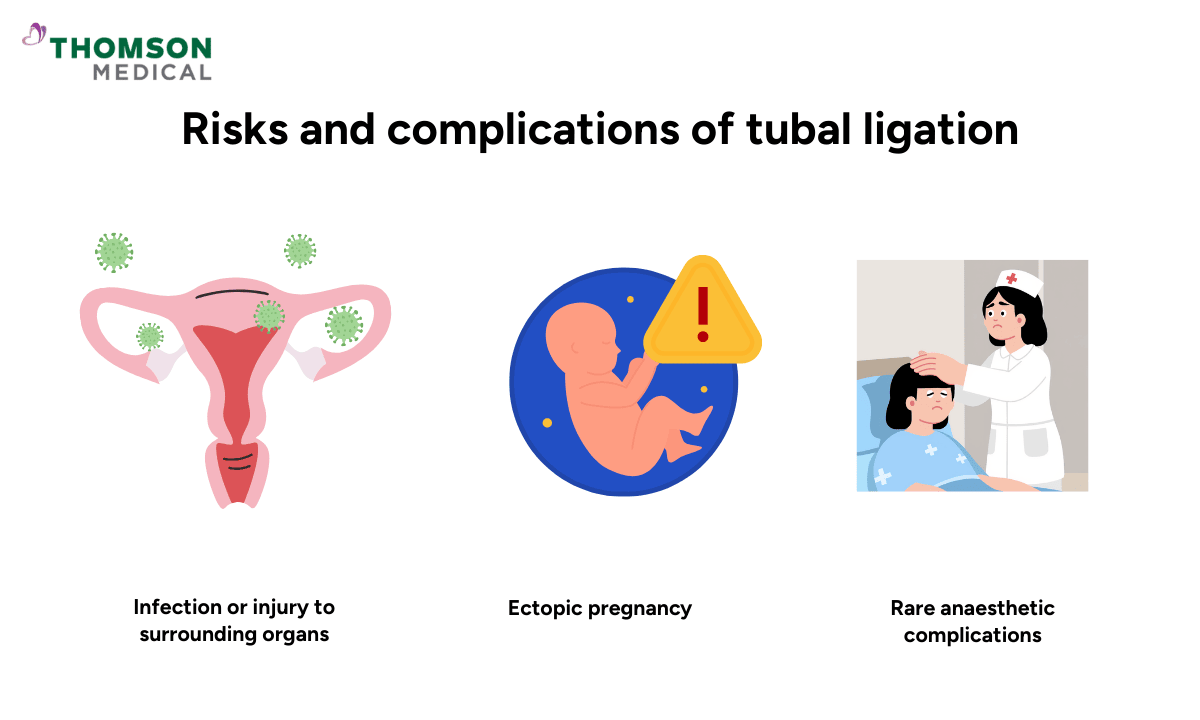
Tubal ligation risks include:
Infection, bleeding, or injury to surrounding organs
In rare cases, if the procedure doesn’t work as intended, there is a small risk of ectopic pregnancy (this is when a fertilised egg implants in the fallopian tube rather than the uterus)
Rare anaesthetic complications
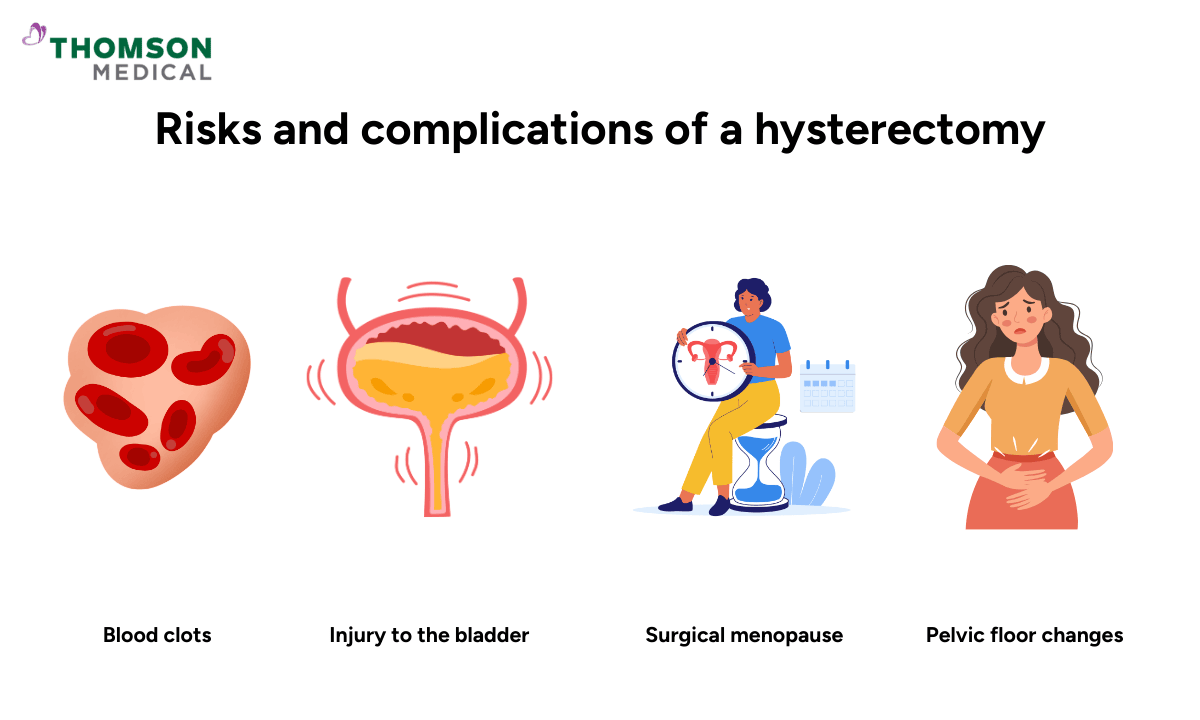
Hysterectomy risks include:
Infection, bleeding, and blood clots
Injury to the bladder, bowel, or ureters
Pelvic floor changes, including urinary symptoms or bowel-related side effects
A longer and more involved recovery
The risks for hysterectomy are higher, not because it's dangerous, but because it's a more extensive operation. Before your surgery, your doctor will take the time to walk you through the specific risks relevant to your individual case. They will also monitor you closely throughout the process and help you manage any concerns that may come up.
Which procedure is right for you?
It's completely natural to feel uncertain about which path is right for you. There's no single right answer that applies to everyone. Your doctor will take the time to understand your medical history, your symptoms, and your personal goals, and from there, work with you to find the right option for your life.
Tubal ligation may be the right fit if:
You are healthy and want permanent contraception without removing any organs
You want to keep your hormonal balance and menstrual cycle intact
You have no underlying gynaecological condition requiring surgical treatment
A minimally invasive procedure with a shorter recovery period is appropriate for your situation
For women who are certain they do not wish to become pregnant in the future, tubal ligation offers a focused solution that leaves the rest of your reproductive system untouched.
A hysterectomy may be recommended if:
You have a condition, such as fibroids, endometriosis, severe bleeding, or cancer, that hasn't responded to other treatments
You want to address a gynaecological problem and achieve permanent pregnancy prevention at the same time
You are experiencing uterine prolapse that affects your quality of life
Your doctor has recommended it based on your diagnosis
A hysterectomy is rarely a first step. It is usually considered when other treatments have not provided enough relief. Your doctor will make sure you understand why it is being recommended.
Making this decision is never easy, especially when it comes to removing your uterus. Take the time you need to feel ready before moving forward. If you have any concerns, your doctor is there to support you every step of the way.
If you're still weighing your options, schedule an appointment with Thomson Medical. Our specialists will take into account your medical history, goals, and concerns and help you find a path forward that's right for you.
FAQ
In what situations is hysterectomy preferred over tubal ligation for sterilisation or treatment?
A hysterectomy is usually preferred when there's an underlying condition to treat, such as fibroids, endometriosis, abnormal bleeding, uterine prolapse, or cancer.
In these cases, treating the underlying condition is the priority. Permanent infertility is a result of the procedure, rather than its goal.
How do recovery times compare between tubal ligation and hysterectomy?
For tubal ligation, you can typically expect to recover within one to two weeks. For hysterectomy, recovery often takes four to eight weeks, though this can vary depending on your surgery and overall health.
When is tubal ligation not recommended?
Your doctor may advise against it if you have:
Active pelvic infection
Unexplained pelvic pain or masses
A desire to remain fertile in the future
Certain health conditions that your doctor will assess beforehand
It’s important to share your full medical history with your doctor before proceeding.
Is being sterilised the same as having a hysterectomy?
No. Sterilisation prevents pregnancy but leaves your reproductive organs in place. A hysterectomy removes the uterus and, depending on your condition, may also involve the cervix, fallopian tubes, or ovaries. Both result in permanent infertility, but through very different means.
Do you still get your period if your tubes are tied?
Yes. Tubal ligation only affects the fallopian tubes. Your ovaries and uterus remain untouched, so your menstrual cycle continues as normal.
What is the best age to get your tubes tied?
There's no single right age, but the decision is best made after you've completed your family or when you're certain you don't want children. Your doctor can help you think through whether the timing is right for you.
The information provided is intended for general guidance only and should not be considered medical advice. For personalised recommendations and tailored advice based on your unique situations, request an appointment with Thomson Medical today.
For more information, contact us:
Thomson Specialists (Women's Health)
Thomson Women's Clinic (TWC)
- Novena:
6592 6686 (Call), 8611 8986 (WA) - Bukit Batok:
6569 0668 (Call), 8686 3525 (WA) - Choa Chu Kang:
6893 1227 (Call), 8282 1796 (WA) - Jurong:
6262 8588 (Call), 6262 8588 (WA) - Katong (female doctor):
6970 2272 (Call), 8611 9020 (WA) - Punggol:
6243 6843 (Call), 8811 0328 (WA) - Sembawang: 6753 5228
- Sengkang: 6388 8125
- Serangoon (female doctor): 6382 3313
- Tampines: 6857 6266
- Tiong Bahru: 6276 1525
Notice
The range of services may vary between TWC/TS locations. Please contact your preferred branch directly to enquire about the current availability.
Request an Appointment