

Starting your in vitro fertilisation (IVF) journey can bring a mix of hope and uncertainty. One of the first questions you may have is, “Which type of IVF is right for me?”. With different approaches available, it may not always be clear which one is suitable for your circumstances or why choosing the right one is important.
Knowing the various types of IVF, the differences, and which option is right based on your conditions can help you feel more informed and prepared as you begin the treatment.
What is IVF?
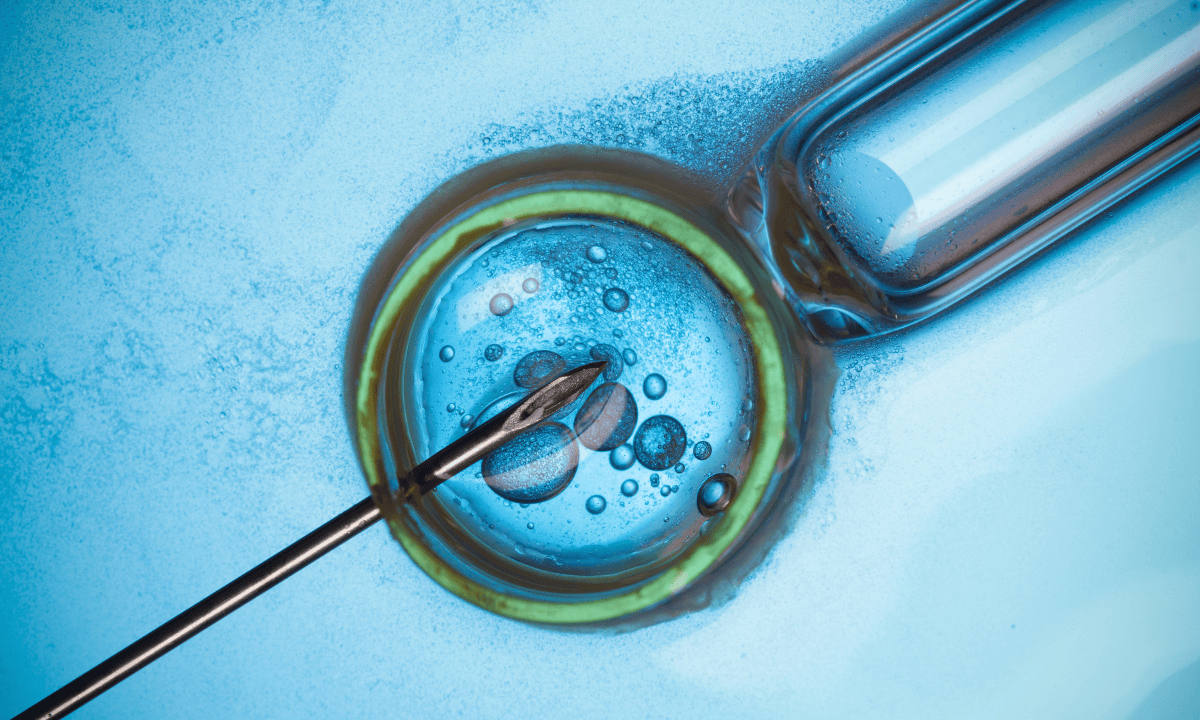
IVF is an assisted reproductive technology (ART) method that helps couples achieve pregnancy when conception has not occurred naturally or when other fertility treatments have been deemed unsuitable by your doctor.
During the process, eggs are collected from the ovaries and fertilised with sperm in a laboratory to form embryos (early stages of development after an egg has been fertilised). A suitable embryo is then transferred into the uterus (womb), where it may implant and develop into a pregnancy.
Common types of IVF treatment
There are several types of IVF treatment, which mainly differ in how fertility medicines are used to stimulate the ovaries and how many eggs are collected. The common types include:
Conventional IVF
This is the standard approach to IVF treatment and the first method that may come to mind when you think of fertility treatment. It starts with the administration of fertility medicines to stimulate the ovaries to produce several mature eggs. These eggs are then collected, fertilised, and transferred to the uterus.
Conventional IVF may be considered for couples experiencing recurrent pregnancy loss, male factor infertility related to sperm quality, or blocked fallopian tubes that prevent eggs from reaching the uterus. It may also be an option for couples with unexplained infertility, where the cause of difficulty conceiving cannot be identified.
Mini IVF
Mini IVF, also known as mild or minimal stimulation IVF, is a fertility treatment that uses lower doses of fertility medicines to stimulate the ovaries compared with conventional IVF.
The aim is to produce a smaller number of eggs while reducing the amount of medication used during treatment. However, mini IVF does not necessarily produce “high-quality” eggs, as egg quality is influenced by factors such as age and ovarian health.
Using less fertility medicine can also reduce the duration of ovarian stimulation and may result in fewer side effects, such as bloating and pelvic pain. However, because fewer eggs are usually produced, there may be fewer embryos available for assessment or transfer. A fertility specialist may consider mild stimulation IVF if you:
Are aged 35 and above with a low ovarian reserve (fewer eggs remaining in the ovaries).
Prefer an IVF approach that uses lower doses of fertility medicines.
Have previously experienced difficulty tolerating conventional ovarian stimulation.
Natural IVF
Natural cycle IVF involves no fertility medicines to stimulate the ovaries. Instead, the single egg that naturally develops and is released during your menstrual cycle is collected and fertilised with sperm in a laboratory, following the same general IVF process.
As the ovaries are not stimulated with fertility medicines, natural IVF will have fewer medication-related side effects. It also reduces the likelihood of a multiple pregnancy compared with transferring multiple embryos during conventional IVF. However, because only one egg is usually collected, there may be fewer opportunities to obtain an embryo for transfer, and not every cycle will result in an embryo suitable for transfer.
If you are unsure which IVF treatment is right for you, a fertility specialist can help assess your options based on your individual needs. Schedule an appointment with Thomson Fertility Singapore.
Our fertility doctors in Singapore
Loading...
Other approaches used in IVF treatment
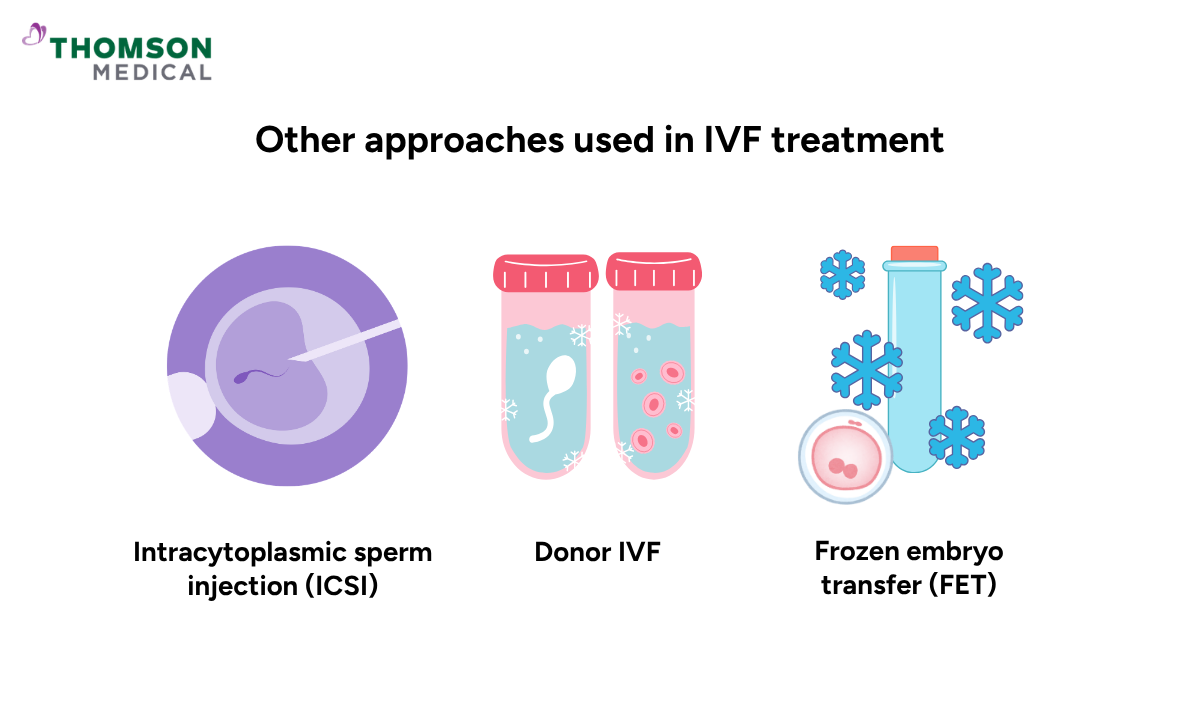
Your fertility specialist may recommend additional approaches or techniques as part of an IVF treatment plan, including:
Intracytoplasmic sperm injection
Intracytoplasmic sperm injection (ICSI) is a laboratory technique used as part of IVF to help fertilise an egg, particularly when sperm-related factors make fertilisation difficult.
Instead of allowing sperm to penetrate the egg naturally, an embryologist (a specialist who works with eggs and embryos in a fertility laboratory) carefully injects a single sperm directly into the egg using a fine needle.
ICSI may be considered when there is a low sperm count, poor sperm movement, or abnormal sperm shape, or when previous IVF has resulted in poor or failed fertilisation. The process includes the following steps:
Eggs are collected from the ovaries, while sperm is obtained from a sperm sample or, when needed, through a sperm retrieval procedure.
An embryologist selects a suitable sperm and injects it directly into a mature egg under a microscope.
The injected eggs are monitored in the laboratory to see whether fertilisation occurs, which are typically cultured for several days.
A suitable embryo is then transferred into the uterus, where it can implant and potentially develop into a pregnancy.
Donor IVF
Donor IVF is a fertility treatment that uses donated eggs or sperm to create embryos. Donated reproductive cells are subject to screening requirements before they are used in assisted reproduction. In Singapore, the use of donor reproductive cells and assisted reproduction is regulated, so eligibility and availability may depend on the applicable requirements and your individual circumstances.
Altruistic egg donation is allowed in Singapore, but the number of available egg donors is limited because ovarian stimulation and egg retrieval are invasive procedures. Donor eggs may come from relatives or close friends or from unrelated donors, including women who are undergoing their own assisted reproduction treatment.
Donor sperm may be considered when there is no usable sperm, severe male factor infertility, or a significant risk of passing on a genetic condition. On the other hand, donor eggs may be considered when a woman has a low ovarian reserve, reduced egg quality, or premature ovarian insufficiency (when the ovaries stop functioning earlier than expected).
Frozen embryo transfer
Frozen embryo transfer (FET) uses an embryo that was developed during an earlier IVF cycle, which is thawed and transferred into the uterus during a later cycle. This allows the womb to be prepared for embryo transfer in a separate cycle without repeating ovarian stimulation and egg retrieval. It also can reduce the physical demands of treatment and offer greater flexibility in planning the timing of embryo transfer.
FET may be considered when a fresh embryo transfer is not suitable, such as in the following situations:
Hormone levels or the uterine lining are not ideal for embryo transfer.
Genetic testing of embryos is planned before transfer.
Pregnancy needs to be delayed due to personal reasons.
There is a risk of OHSS, where the ovaries respond too strongly to fertility medicines and may cause complications.
Which type of IVF treatment is right for you?
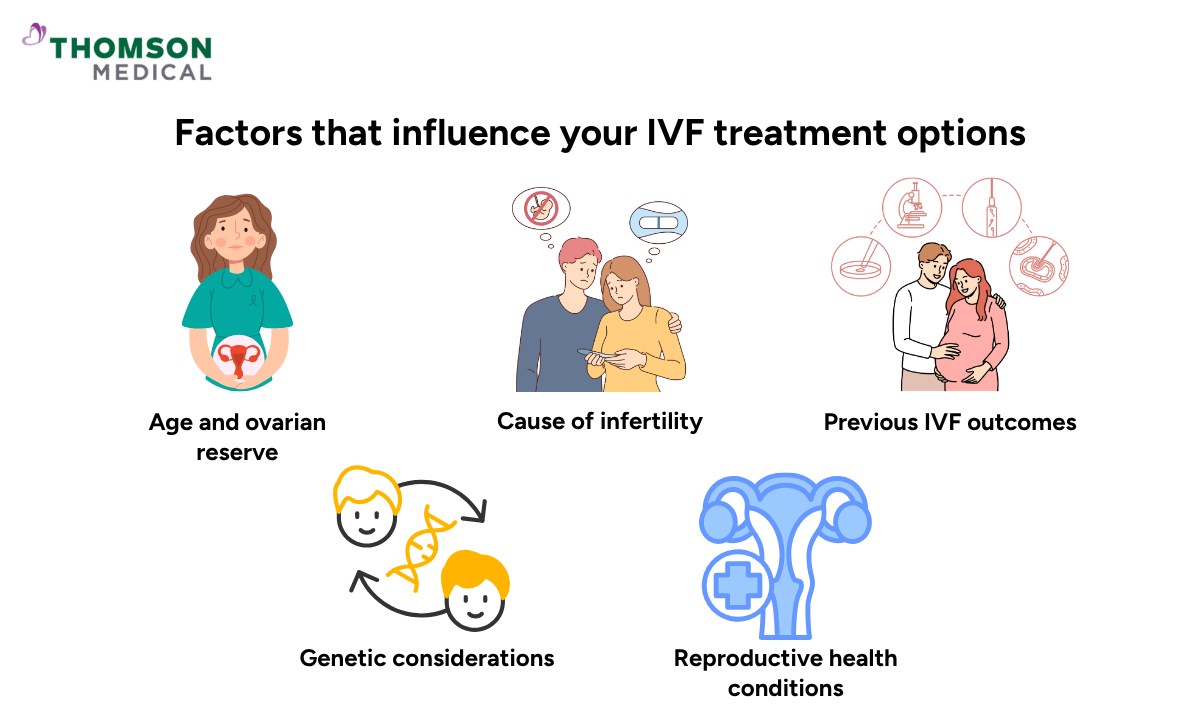
Your fertility specialist will consider several factors when choosing the most suitable IVF treatment, including:
Age and ovarian reserve:
Age is closely linked to fertility and ovarian reserve, as both the number and quality of an egg generally decline with age.
Ovarian reserve refers to the number of eggs remaining in the ovaries. Tests such as antral follicle count (AFC) can help assess egg quantity and predict how the ovaries may respond to fertility medicines.
Cause of infertility:
The underlying cause of infertility can influence the type of IVF approach recommended.
If infertility is related to female reproductive factors, such as blocked or damaged fallopian tubes, ovulation difficulties, or certain conditions affecting the uterus, your fertility specialist may consider natural, mini, or conventional IVF.
If infertility is related to male factors, such as a low sperm count, poor sperm movement, or abnormal sperm shape, ICSI may be considered to help fertilise the egg by injecting a single sperm directly into it.
Previous IVF outcomes:
Your response to earlier treatment can help your fertility specialist decide whether your stimulation plan should be adjusted.
For example, a low response to ovarian stimulation may prompt a review of the medication dose or treatment approach.
Genetic considerations:
If there is a known risk of passing on a specific inherited genetic condition, preimplantation genetic testing (PGT) may be discussed as part of an IVF cycle.
PGT involves testing cells from an embryo before transfer to identify certain genetic or chromosomal conditions.
Reproductive health conditions:
Your overall reproductive health can also influence which IVF approach may be most suitable for you.
Your specialist will also assess the condition of your uterus and your risk of OHSS and may adjust your treatment plan to improve safety.
If you are concerned about any of the factors mentioned above, speaking with a fertility specialist can help assess which treatment may be suitable for you. Schedule an appointment with Thomson Fertility Singapore.
Factors that may affect conception during IVF
Several factors can affect how IVF treatment progresses and the likelihood of conception. These may include:
Age:
As age increases, the number and quality of eggs generally decline. Sperm health, including sperm count, movement, and quality, may also change with age.
These age-related changes can affect fertilisation, embryo development and implantation.
Ovarian reserve:
Ovarian reserve refers to the estimated number of eggs remaining in the ovaries. A lower ovarian reserve often means fewer eggs collected per cycle, which affects how many embryos are available for transfer or freezing.
Cause of infertility:
Conditions such as blocked or damaged fallopian tubes and severe male factor infertility can make it more difficult for the egg and sperm to meet and fertilise.
Uterine health:
The condition of the uterus and its lining can be important for embryo implantation and pregnancy.
Conditions such as uterine fibroids, polyps, scar tissue or certain abnormalities may affect the uterine environment.
Lifestyle and general health:
Factors such as body weight, smoking, alcohol intake, sleep, and overall health may affect fertility and pregnancy health.
Healthy lifestyle changes can support your general wellbeing but cannot guarantee a particular IVF outcome.
Previous IVF treatment:
Your fertility specialist will review how your ovaries responded to stimulation, the number of eggs collected, fertilisation results, embryo development, and outcomes from previous embryo transfers.
If embryos are available for freezing, your specialist may also discuss the cumulative chance of a live birth across multiple embryo transfers.
Your fertility specialist will choose an appropriate treatment approach based on your diagnosis and individual factors to support your chances of conception. However, no single approach is suitable for everyone, and IVF cannot guarantee pregnancy or a successful birth.
FAQ
What is the difference between mild IVF and full stimulation IVF?
Compared with mild IVF, full stimulation IVF uses higher doses of fertility medicines to encourage the development of more eggs (around 10-15 eggs) in a single cycle. This approach can provide more eggs and potentially more embryos for transfer or freezing.
To decide which treatment is suitable for you, your fertility specialist will assess factors such as your age, ovarian reserve, previous response to treatment, and your risk of ovarian hyperstimulation syndrome (OHSS).
Does age affect IVF treatment outcomes?
Age is one of the factors that can influence IVF outcomes, particularly because egg quantity and quality tend to decline with age. IVF generally has higher pregnancy rates in younger women, while outcomes tend to decrease as age increases, particularly after 35 and more noticeably after 40. But other factors such as ovarian reserve, overall health, and the cause of infertility also influence the outcome.
Is IVF painful?
Most women tolerate IVF treatment well, although some parts of the process may cause mild discomfort. Fertility injections can cause temporary soreness or bruising, while egg retrieval may result in mild cramping or bloating for a short period afterwards. The emotional aspects of the IVF journey can also be challenging for individuals and couples.
What is the hardest part of IVF?
The IVF experience can be physically and emotionally demanding, and what feels most difficult differs between women. Some may find the waiting period after embryo transfer particularly challenging because of the uncertainty while waiting for pregnancy test results. Others may find the repeated appointments or hormonal injection procedures more difficult to manage.
The information provided is intended for general guidance only and should not be considered medical advice. For personalised advice based on your unique conditions, schedule an appointment with Thomson Medical.
For more information, contact us:
Thomson Fertility Centre
- Paragon: 6252 7766
- Novena: 6399 3758, 8811 0358 (WA)