

Cervical cancer is one of the most preventable cancers today, yet many women still worry about what they can do to protect their health. In recent years, researchers have been exploring whether vitamin D levels may play a role in cervical health, alongside more well-established preventative options such as screening and HPV vaccination.
Even in Singapore, where sunlight is available all year round, about 40% of adults don’t have enough vitamin D. Learning how this “sunshine vitamin” may be linked to cervical health can help you make informed and balanced decisions about your care.
What is vitamin D?
Before exploring its link to cervical health, it helps to understand what vitamin D does in your body.
Vitamin D is a fat-soluble vitamin that supports calcium and phosphorus absorption, helping maintain healthy bones and muscles. Beyond bone health, it also plays an important role in your immune function and cell growth regulation.
Unlike most vitamins, your body produces vitamin D naturally when your skin is exposed to sunlight, which is why many doctors suggest spending at least a little time outside every day. You can also obtain vitamin D from foods such as fatty fish, egg yolks, cheese, and cow's milk.
How vitamin D may influence cervical health
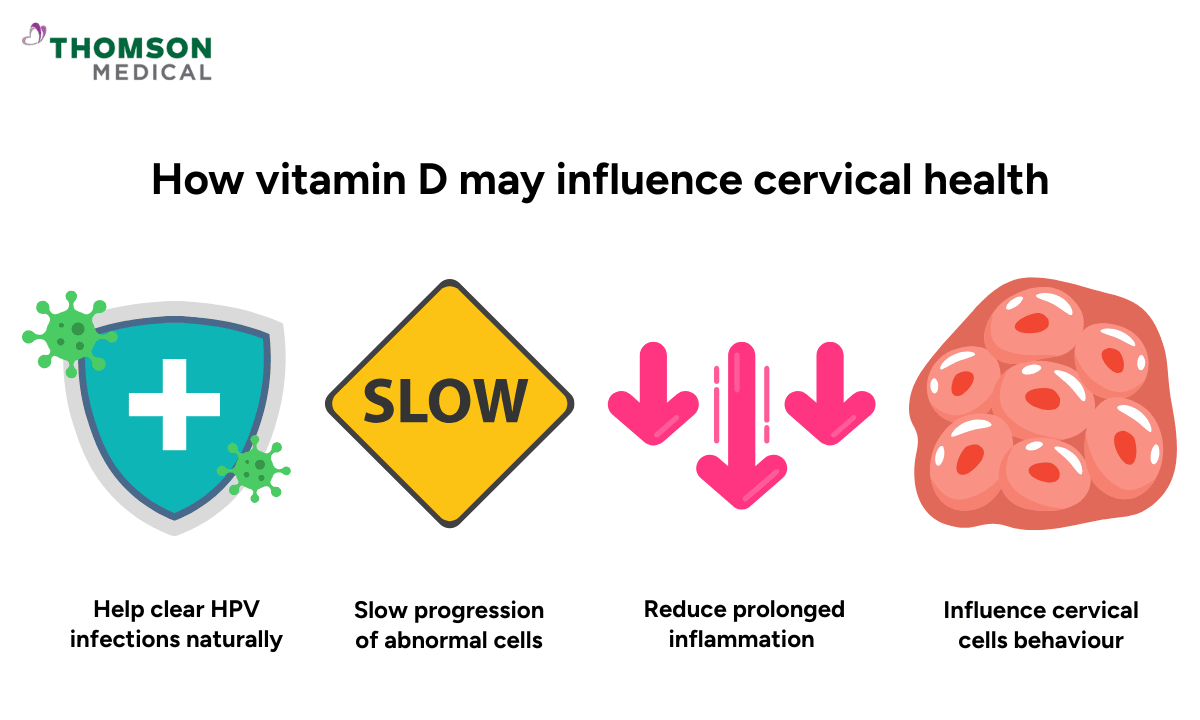
Most cervical cancers are caused by persistent human papillomavirus (HPV) infection. Vitamin D plays a role in many biological processes that affect how your body responds to HPV and abnormal cervical cell changes.
Here's how it helps:
Immune system regulation:
Vitamin D helps strengthen immune defences, which may support your body’s ability to clear HPV infections naturally.
Control of cell growth and differentiation:
Vitamin D is thought to help regulate how cells grow and mature, potentially slowing the progression of abnormal cervical cells.
Anti-inflammatory effects:
Vitamin D plays a role in reducing prolonged inflammatory responses, which may lead to cancer development.
Hormone-like action in cervical tissue:
The active form of vitamin D (calcitriol) binds to vitamin D receptors found in cervical tissue, influencing how cells behave.
Simply put, vitamin D supports your body’s natural defences and helps maintain balance in key processes that protect healthy cervical cells.
Connection between vitamin D deficiency and cervical cancer
Research on vitamin D and cervical cancer is still developing, so here's what we know right now.
Studies show that women with low vitamin D levels are more likely to have persistent HPV infections or cervical precancerous changes (CIN). But vitamin D deficiency is only considered a possible risk factor, not a proven cause of cervical cancer.
What this means for you: vitamin D matters for your overall health, but it doesn't replace regular Pap smears, HPV vaccination, or medical care.
Concerned about your vitamin D levels or how they may relate to your cervical health? A consultation with an O&G specialist can help you better understand your individual risk and next steps. Schedule an appointment with Thomson Medical today.
Our O&G specialist
Loading...
Who is most at risk for vitamin D deficiency?
Even with plenty of sunshine in Singapore, many people still have low vitamin D levels.
You're more likely to be deficient if you:
Spend most of your time indoors (office jobs, high-rise living, or covering up when you're outside)
Have darker skin
Are over 50
Are overweight or obese
Have digestive conditions that affect nutrient absorption, like coeliac disease or Crohn's disease
Are pregnant or breastfeeding
If you find that you fall into a higher-risk group for vitamin D deficiency, it’s okay to bring this up with your doctor. Together, you can look at your individual risk factors and explore simple, manageable ways to prevent deficiency.
Symptoms of vitamin D deficiency
Most people with low vitamin D don't notice any obvious symptoms, especially if the deficiency is mild. When symptoms do show up, you might experience:
Fatigue or low energy
Muscle weakness or bone discomfort
Frequent infections
Mood changes or low mood
If you're deficient for a long time, it can weaken your bones and lead to conditions like osteomalacia (soft bones) or osteoporosis.
Since the symptoms are usually subtle, most people aren't aware that they have low vitamin D until they take a blood test.
If your doctor thinks you might be deficient, they'll recommend a simple blood test to check your 25(OH)D level. They'll look at the results along with your age, overall health, and any risk factors you have.
Preventing vitamin D deficiency

It’s completely understandable to be concerned when you hear about vitamin D deficiency, but there’s no need to feel overwhelmed. In most cases, preventing it is well within reach and often comes down to developing a few simple, consistent habits that fit naturally into daily life.
Using sunlight safely
Your body can make vitamin D when your skin is exposed to ultraviolet B (UVB) rays. About 5–30 minutes of midday sunlight on the arms and legs at least twice a week may help maintain adequate vitamin D levels.
However, it is also important to avoid prolonged sun exposure, as it may increase your risk of issues such as sunburn or skin cancer.
Building vitamin D through food
Diet is one of the simplest ways you can adjust to support vitamin D intake, especially if you have limited sun exposure.
Vitamin D-rich food sources include:
Fatty fish such as salmon, sardines, mackerel, and tuna
Egg yolks
Cheese, and fortified milk, yoghurt, or cereals
Mushrooms
Food alone usually won't give you everything you need, but it's a good starting point.
When supplements may be helpful
For some people, getting enough vitamin D from sunlight and food isn't realistic. The good news is that if you're struggling to get enough vitamin D, supplements are a simple and straightforward solution.
The standard recommendation is 600–800 IU daily for most adults. If you're at higher risk of deficiency, your doctor might recommend 1,000–2,000 IU per day. Remember not to take more than that without talking to your doctor first, as too much vitamin D can cause problems such as hypercalcemia (a buildup of calcium in the blood), bone pain, and kidney stones.
For many women, understanding your vitamin D status is a simple but empowering step in caring for your overall health alongside other proven measures like screening and vaccination.
If you would like personalised advice on vitamin D testing, supplementation, or cervical health care, request an appointment with Thomson Medical. Our O&G specialists are here to support you with clear guidance and compassionate care.
FAQ
Does vitamin D help fight HPV?
Vitamin D supports your immune system, which helps the body recognise and clear HPV infections. Some studies suggest that women with healthier vitamin D levels are less likely to have persistent HPV infections.
Can vitamin D deficiency cause cervical cancer?
Vitamin D deficiency doesn’t cause cervical cancer on its own, but it may increase the risk of persistent HPV infection and reduce your body’s ability to control abnormal cervical cell growth.
What cancer is linked to vitamin D deficiency?
Low vitamin D levels have been linked to higher risks of colon, breast, ovarian, and prostate cancers. However, scientists are still studying these links to better understand how strong and direct they are.
Is vitamin D supplementation effective in preventing or treating cervical cancer?
There’s no proven evidence that vitamin D supplements alone prevent or cure cervical cancer. But maintaining healthy vitamin D levels supports your immune function and overall health, which may aid in HPV clearance and reduce risk.
What is the recommended vitamin D intake for women at risk of cervical cancer?
Most adult women need about 600–800 IU per day for general health. Women with limited sun exposure or known deficiency may require 1,000–2,000 IU daily, based on medical advice. Always check with your doctor before starting supplements.
How long does it take to correct vitamin D deficiency?
Many people see improvement within 2–3 months of regular supplementation. More severe deficiency may take up to 6 months, and follow-up blood tests help ensure levels return to a healthy range safely.
The information provided is intended for general guidance only and should not be considered medical advice. For personalised recommendations and advice based on your unique situation, please consult a specialist at Thomson Medical. Request an appointment with Thomson Medical today.
For more information, contact us:
Thomson Specialists (Women's Health)
Thomson Women's Clinic (TWC)
- Novena:
6592 6686 (Call), 8611 8986 (WA) - Bukit Batok:
6569 0668 (Call), 8686 3525 (WA) - Choa Chu Kang:
6893 1227 (Call), 8282 1796 (WA) Jurong:
6262 8588 (Call), 6262 8588 (WA)- Katong (female doctor):
6970 2272 (Call), 8611 9020 (WA) - Punggol:
6243 6843 (Call), 8811 0328 (WA) - Sembawang: 6753 5228
- Sengkang: 6388 8125
- Serangoon (female doctor): 6382 3313
- Tampines: 6857 6266
- Tiong Bahru: 6276 1525