

When you're already dealing with the emotional ups and downs of trying to conceive, confusing medical procedures can feel intimidating. If your doctor has mentioned IUI or HSG, it’s natural to wonder what they are or worry about how painful they might be.
IUI and HSG serve different purposes. Learning what they do, how they feel, and how to manage any discomfort can help you feel more prepared for your fertility journey.
What is IUI?
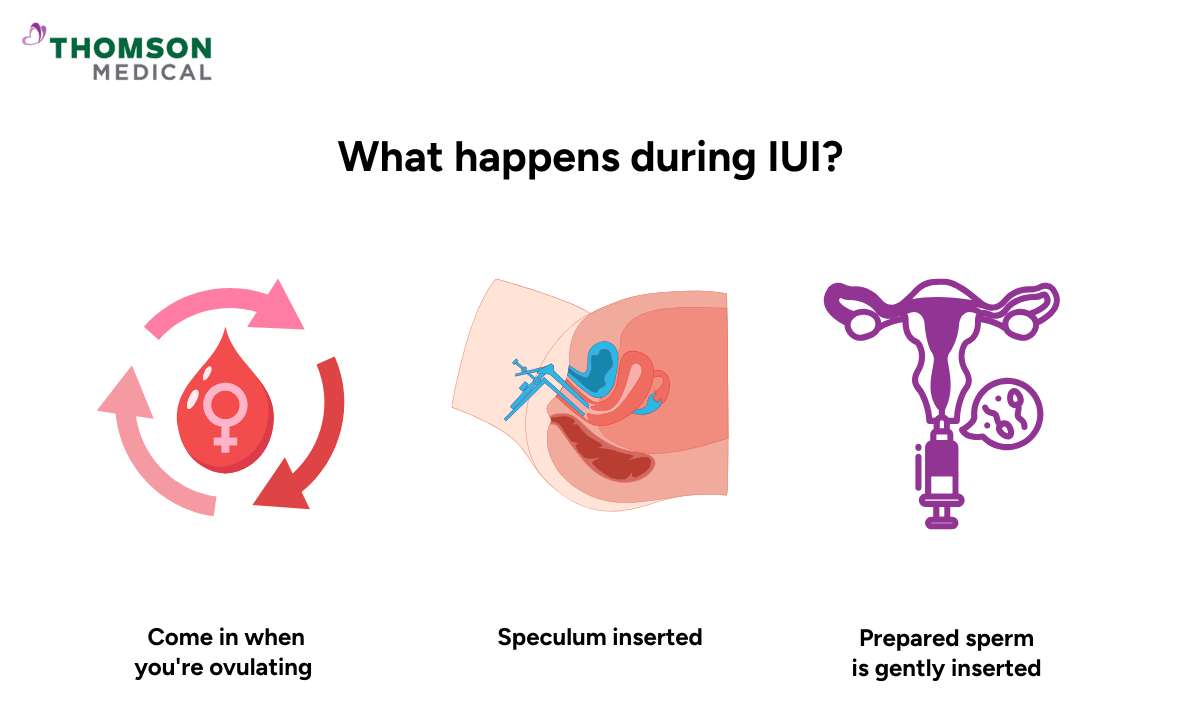
Intrauterine insemination (IUI) is a fertility treatment that helps you get pregnant. Your doctor might suggest it if you've been experiencing issues such as unexplained infertility, mild male factor infertility, cervical mucus problems, or ovulation issues.
Here's what happens:
You'll come in when you're ovulating (your doctor will help you work out when)
A speculum is gently inserted, similar to a pelvic exam
Then a thin, soft tube is guided through your cervix into your womb
A sperm sample that's been specially prepared is injected directly into your womb
Your doctor might give you fertility medications like Clomiphene Citrate (Clomid), Letrozole, or hormone injections. These help your ovaries release eggs, which gives you a better chance of getting pregnant.
What is HSG?
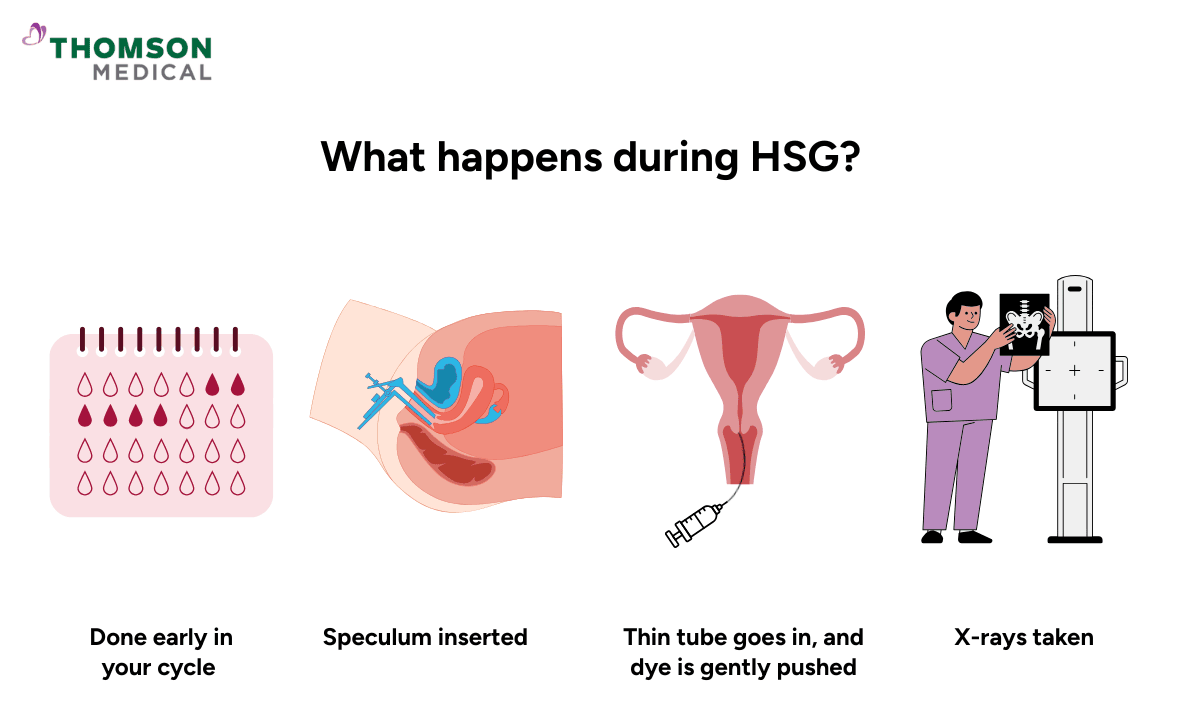
Hysterosalpingogram (HSG) is a test, not a treatment. It checks two things: whether your fallopian tubes are blocked and whether there is anything unusual inside your womb, like fibroids or scar tissue.
Here's what happens:
It's done in the first half of your menstrual cycle, usually between day 6 and day 11
A speculum is gently inserted into your cervix
A thin tube is passed through the cervix, and contrast dye is gently pushed in
X-rays are taken to see where the dye goes through your womb and out through your tubes
Your doctor will usually share the results with you right away. If the dye flows easily through both fallopian tubes, it’s a good sign that they’re open. If it doesn’t get through, it could mean that one or both tubes are blocked.
Our IUI specialists in Singapore
Loading...
Is IUI painful?
Most women say IUI treatment doesn't really hurt. Some people notice a bit of pressure when the speculum is inserted, mild cramps, or a small pinch as the tube passes through the cervix. You may also experience light bleeding afterward, though not everyone does.
The pain is similar to a routine pelvic exam. If you've had one before, you'll likely find this very manageable. If you haven't, or if your pelvic exams have been uncomfortable in the past, let your care team know – they can take extra steps to help you relax and minimise discomfort.
Is HSG painful?
This is the question most women want answered, and it's worth being honest with you: the HSG test can be more uncomfortable than IUI for some people, especially during the moment when dye is pushed through the tubes.
You might feel cramps like period pain, discomfort when the speculum or tube goes in, or a sharper sensation if your fallopian tubes are blocked.
The good news is that the discomfort is usually temporary, and your doctor can pause or adjust the procedure if needed.
IUI vs HSG: Quick comparison
Here’s a simple way to see the difference between the two procedures so you know what to expect and feel more prepared:
IUI treatment | HSG test | |
What it does | Helps you get pregnant | Checks for blockages |
How long is the procedure | 5–10 minutes | 10–30 minutes |
What you feel | Cramping or pressure | Cramping when the dye goes in |
Pain level | Mild or not at all | Mild to moderate, may feel sharper if tubes are blocked |
If you’re worried about pain during IUI or HSG, request an appointment with Thomson Medical. Our fertility specialist can explain what to expect based on your medical history and recommend steps to help make the procedure as comfortable as possible.
Why does the HSG hurt more?
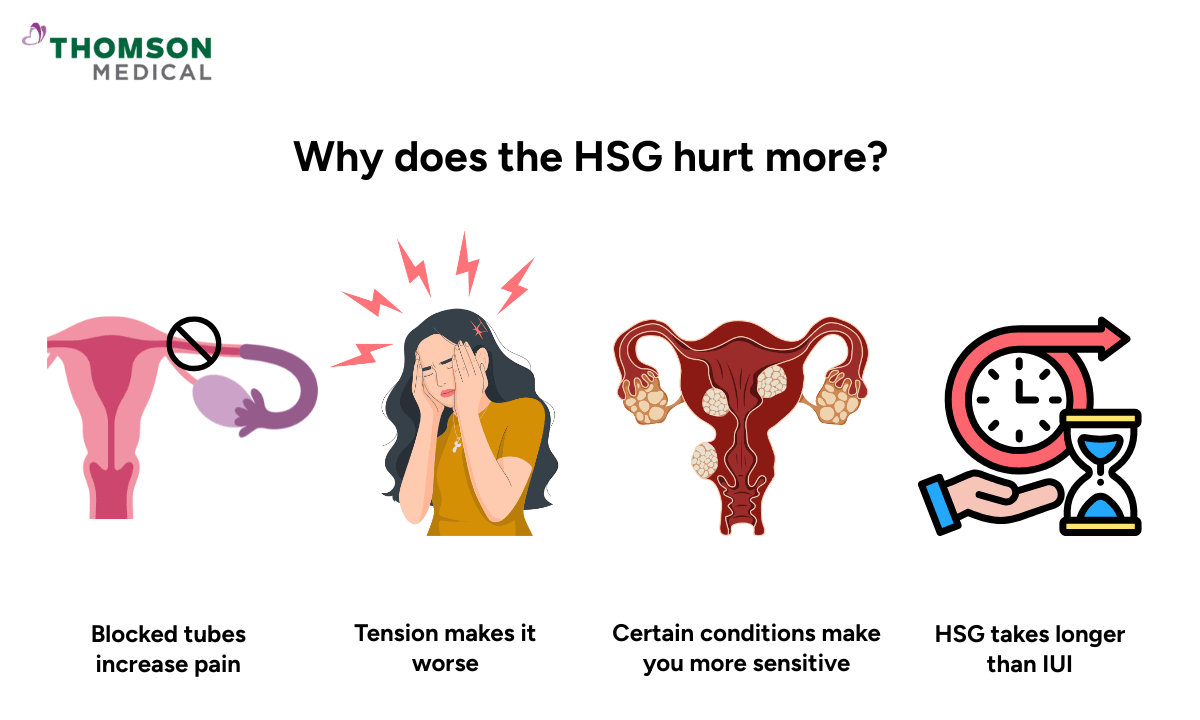
There are a few reasons why the HSG test tends to be more uncomfortable than IUI. However, it’s important to remember that pain levels can vary a lot from person to person – some feel only mild cramping, while others experience more intense sensations, especially if there are existing conditions:
The dye insertion and stretches:
When the dye goes into your womb and tubes, it stretches them, which causes cramping.
Blocked fallopian tubes may cause more intense cramping:
If the dye can't flow through, pressure builds up. That's when you get sharp pains.
Being tense makes it hurt more:
If you're anxious or holding your body tight, your cervix and womb react more to what's happening.
Some conditions make you more sensitive:
If you have endometriosis, pelvic infections, or fibroids, you may be more sensitive to discomfort.
It takes longer:
HSG tests aren't quick like IUI treatment. The X-rays and watching the dye move around take time, which means more discomfort.
Pain management during IUI and HSG
There are things you can do to make both procedures easier. Here's what helps:
Before you go:
Take ibuprofen (400–600 mg) about 30–60 minutes before HSG or IUI
Avoid large meals or caffeine beforehand, as these can increase discomfort for some people
Tell your doctor if you're really worried or if you've had trauma, anxiety, or painful pelvic exams
During the procedure:
Breathe slowly and deeply
Listen to music or calming apps to distract yourself
Tell the doctor or nurse to use a gentler approach if it's hurting
Some clinics can give you anti-anxiety medication or local anesthesia to calm your nerves or numb the area for HSG test
After the procedure:
Apply a warm compress or heat pack to your lower abdomen if you experience cramps
Avoid sexual intercourse for 24–48 hours after your HSG or as advised
Take it easy for the rest of the day and avoid extreme exercise or heavy lifting
If you’re unsure which pain-management steps are appropriate for you, or if you’ve had significant discomfort during past procedures, you can request an appointment with Thomson Medical. Our fertility specialist can review your medical history and guide you towards personalised options to help make your IUI or HSG experience more comfortable.
FAQ
Which should I do first, IUI or HSG?
Your doctor will usually recommend the HSG test first. This test shows whether your fallopian tubes are open, which is important because sperm can’t reach the egg if there’s a blockage. Knowing this information will help your doctor decide whether IUI is a good option or whether another fertility treatment, like in vitro fertilisation (IVF), might be better.
What is the most painful fertility test?
HSG is usually the one people complain about most, especially if your tubes are blocked, you've had surgery on your womb before, or you've had pelvic infections. In fact, it’s reported that 72% to 80% of people experience mild to moderate pain during the procedure.
Other tests that can also cause pain include a saline sonogram, which works similarly to an HSG but is generally less intense, and laparoscopy, which is done under anaesthesia but still requires recovery time afterward.
Is HSG more painful if tubes are blocked?
Yes, you’re more likely to feel discomfort in such cases. When your tubes are blocked, the dye can't flow through properly. The pressure builds up and causes sharper, more intense cramping. If your tubes are open, the dye just flows through, and it's usually much less painful.
How long does pain from HSG last?
Most women find HSG tests uncomfortable but manageable. The pain feels like menstrual cramps and usually stops within a few hours. You might have light bleeding for a day or two and that's normal. However, if you get bad pain, a fever, discharge that smells bad, or heavy bleeding, call your doctor right away. These could mean an infection or a reaction to the dye.
Can HSG damage your eggs?
No, HSG does not damage your eggs. The procedure only examines your uterus and fallopian tubes using a small amount of dye. Your eggs and other reproductive organs remain safely protected inside your ovaries.
What discomfort might I feel after IUI or HSG?
Most women experience only mild discomfort. After IUI treatment, you might notice slight cramps, light spotting, or breast tenderness. After the HSG test, cramps, bloating, or light bleeding are more common, especially when the contrast dye is pushed through your fallopian tubes.
Are there any other reactions I should expect after HSG?
Some women experience temporary mood changes or mild cramping after ovulation induction or fertility medications. In rare cases, there may be mild allergic reactions to the contrast dye used in an HSG test.
The information provided is intended for general guidance only and should not be considered medical advice. For personalised recommendations and advice based on your unique situation, please consult a specialist at Thomson Medical. Request an appointment with Thomson Medical today.
References:
Cue, L., Mayer, C., & Martingano, D. J. (2024, May 6). Hysterosalpingogram. StatPearls - NCBI Bookshelf. https://www.ncbi.nlm.nih.gov/books/NBK572146/
Unlu, B. S., Yilmazer, M., Koken, G., Arioz, D. T., Unlu, E., Baki, E. D., Kurttay, C., & Karacin, O. (2015). Comparison of Four Different Pain Relief Methods during Hysterosalpingography: A Randomized Controlled Study. Pain Research and Management, 20(2), 107–111. https://doi.org/10.1155/2015/306248
For more information, contact us:
Thomson Fertility
- Paragon: 6252 7766
- Novena: 6399 3758, 8811 0358 (WA)
Thomson Specialists (Women's Health)
Request an Appointment