

Being diagnosed with cervical cancer during pregnancy can be an overwhelming experience. It may raise many questions about your own health as well as your baby’s safety. Questions like "Can cervical cancer cause miscarriage?" or "What will happen to my baby?" may naturally come to mind.
Seeking clarity is the first step to feeling more in control during this uncertain time. Let’s take a closer look at the connection between cervical cancer and pregnancy, the risks, treatment options, and what you can expect as you move forward.
What is cervical cancer?
Cervical cancer is one of the most common cancers in women. It starts in your cervix, which is the lower part of your uterus (womb) that links to your vagina.
Persistent infection with high-risk strains of the human papillomavirus (HPV) is the main cause of cervical cancer. It usually starts with precancerous changes in cervical cells, which may progress to invasive cancer if not properly monitored and managed.
The good news is that early detection through regular Pap smears and HPV testing can significantly improve your treatment options and outcomes.
How common is cervical cancer during pregnancy?
Cervical cancer during pregnancy is rare. It happens in about 1 to 3 out of every 10,000 pregnancies.
However, it is the most common gynaecological cancer diagnosed in pregnant women. Many cases are detected incidentally during routine prenatal Pap testing, as the early stage of cervical cancer often has no symptoms.
Because the cervix supports your pregnancy, a diagnosis at this time understandably comes with extra considerations. Knowing what can happen next can help you feel more prepared, and your doctor will also be by your side to guide you through each step.
Can cervical cancer cause miscarriage?
While cervical cancer can increase your risk of miscarriage, in most cases it is not a direct cause. There are a number of things that affect the risk, such as:
The stage and size of the tumour
How the cancer affects your cervix
The type of treatment required during pregnancy
Some procedures may slightly increase the risk of miscarriage or early labour, but your medical team will take every precaution to keep both you and your baby safe.
What are pregnancy complications linked to cervical cancer?

Cervical cancer during your pregnancy can create challenges for both you and your baby. It’s natural to feel anxious and a bit overwhelmed when you hear about these potential complications, but understanding more about them can help you know what to watch for and when to reach out to your doctor.
Some of the complications you may encounter include:
Preterm labour:
The growth of your tumour, or an unstable cervix, may trigger labour before your due date.
Heavy vaginal bleeding:
This can happen during pregnancy or when you give birth. This may require close monitoring from your medical team.
Infection:
In rare cases, the tumour may break down (tumour necrosis) or cause cervical ulceration, leading to infection.
Emotional distress and anxiety:
Dealing with a cancer diagnosis and treatment decisions while having a baby is difficult. If you feel overwhelmed, anxious, or have any concerns about the decisions ahead, don’t hesitate to share them with your doctor.
Surgery-related complications:
Any surgical procedures or anaesthesia during pregnancy can carry risks.
Cervical cancer and its treatment may also have an impact on your baby:
Preterm birth:
Cervical cancer can weaken your cervix, making it harder for it to stay closed and support your growing baby throughout pregnancy. That's why, in some cases, your doctor might suggest delivering your baby a bit earlier – before 37 weeks – to keep you both safe.
Low birth weight:
Babies born to mothers with cervical cancer may be smaller than expected.
Foetal distress:
Your illness or reduced blood flow to the womb can sometimes cause stress to your baby.
Pregnancy loss:
In some severe cases or when urgent treatment is necessary, the risk of pregnancy complications can rise significantly. However, these situations are not common, and your doctor will ensure every decision is made with your safety and your baby’s wellbeing in mind.
Treatment side effects:
If chemotherapy or radiation is required, there may be effects on your baby, depending on treatment timing.
It’s understandable if you feel nervous, but you don’t have to go through this alone. Your doctor will be closely monitoring you and your baby to catch and address any complications as early as possible. Remember, these complications are not inevitable. Many women with cervical cancer go on to have healthy pregnancies with close monitoring.
If you’re unsure or concerned about how cervical cancer may affect your pregnancy, schedule an appointment with Thomson Medical today. Our specialists are here to guide you through your options and provide expert care tailored to your unique situation.
Our women's cancer specialist
Loading...
Cervical cancer treatments and miscarriage risk
Treatment during pregnancy is never an easy decision. Your doctor will need to carefully balance between protecting your health and keeping your baby safe.
The treatment approach will depend on how advanced the cancer is and how far along you are in your pregnancy.
Surgical interventions and their risks
Your doctor may suggest one of these procedures based on your specific situation:
Cone biopsy (conisation):
This procedure removes a cone-shaped portion of cervical tissue for diagnosis or treatment.
It’s usually safe in early pregnancy, but it carries a risk of bleeding, miscarriage, or premature rupture of membranes (when your water breaks too early).
Trachelectomy:
Your doctor may recommend this option for early-stage cancer.
This involves removing part of your cervix, and because of that, it increases the risk of preterm labour or second-trimester miscarriage.
Hysterectomy:
In advanced cancer cases, removing your womb and cervix may be recommended if it is the safest option for your health.
If this procedure is needed during pregnancy, it may unfortunately result in pregnancy loss. As this is a difficult situation, your doctor will be there to provide support and counselling to help you navigate this decision.
Radiation and chemotherapy during pregnancy
These treatments are handled very carefully during pregnancy, and your doctor will only recommend them when the benefits clearly outweigh the risks to you and your baby.
In some cases, your doctor may suggest chemotherapy in the second or third trimester under very close medical supervision.
While it may help control your tumour's growth and protect your health, chemotherapy carries risks of preterm birth, growth restriction, or complications for your newborn. Your doctor will carefully weigh these risks against the benefits and discuss them with you in detail.
Fertility preservation options
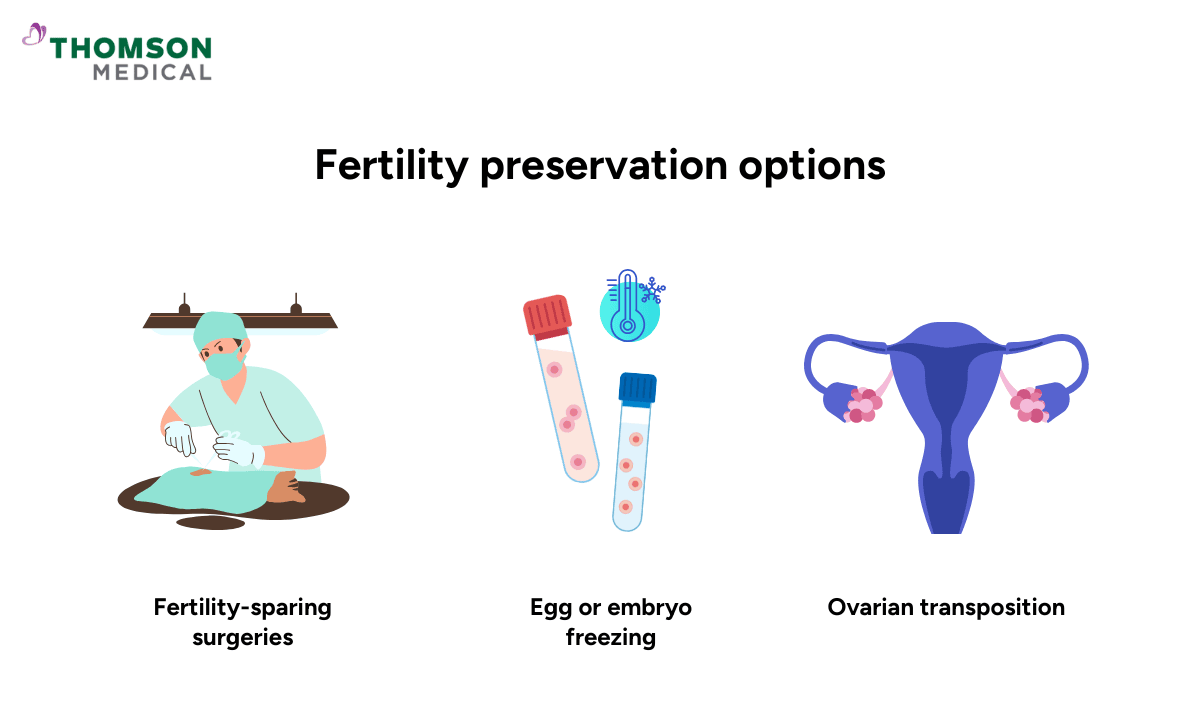
If you receive a cervical cancer diagnosis and want to have children in the future, there are options you can consider before starting treatment:
Fertility-sparing surgeries:
For example, radical trachelectomy may preserve your ability to get pregnant.
Egg or embryo freezing:
This can be done before you begin radiation or chemotherapy.
Ovarian transposition:
This means moving your ovaries away from the area that will receive radiation, which may protect your fertility.
You should discuss these options with your doctor before your treatment planning, and don’t be afraid to share your concerns. They understand how important this is to you and will walk you through the option that suits your situation.
Managing pregnancy with cervical cancer
How your pregnancy is managed depends on several factors, including your cancer stage, which trimester you’re in, and what you want for your care. Your doctor will talk through each step with you so you can make decisions that feel right for your situation:
Early-stage cancer:
Your doctor may suggest close monitoring throughout your pregnancy if they detect your cancer early and it doesn't appear aggressive.
You will have frequent check-ups and imaging to make sure the cancer isn’t progressing.
Advanced-stage cancer:
If you have more advanced cancer, you may need to start treatment immediately to protect your life.
Sometimes this means difficult decisions about whether continuing the pregnancy is safe for you. You won't have to face this alone – your care team will be with you every step of the way.
Delivery planning:
Many women with cervical cancer deliver by caesarean section, especially if the tumour is blocking the birth canal.
Your obstetrician will work with your oncologist to determine the safest delivery method for your specific situation, and your neonatologist will ensure your baby receives any needed care right after birth.
Your health and your baby’s health are top priorities. If there is anything that still concerns you, don’t be shy to reach out to your doctor for reassurance instead of waiting and worrying.
Whether you’re navigating cervical cancer during pregnancy or planning for the future after treatment, schedule an appointment with Thomson Medical. Our specialists will create a personalised care plan that prioritises your health and your baby's well-being.
FAQ
Can someone diagnosed with cervical cancer get pregnant?
Yes. Many women successfully conceive after cervical cancer treatment, especially if the cancer was caught early and treated conservatively.
Fertility-sparing procedures make pregnancy possible in certain situations. If you wish to have children, discuss your fertility options with your doctor before starting treatment.
Can HPV cause miscarriage?
HPV itself usually does not cause miscarriage directly. However, if the infection is severe or causes changes in your cervix, it can create complications that may increase your risk of miscarriage.
That’s why it’s important to have regular screening. It helps detect and treat cervical problems before they become serious.
Can you give birth naturally with cervical cancer?
It depends on your situation, especially the tumour’s size and location. If the tumour blocks your cervix or there is a risk of heavy bleeding during delivery, your doctor will suggest a caesarean delivery for your safety and your baby’s.
Can you get pregnant after cervical cancer treatment?
Yes, but it may depend on the extent of your treatment.
After trachelectomy:
You can still get pregnant, but you will be at risk for preterm birth. Your doctor will monitor you closely throughout pregnancy.
After a hysterectomy or radiation therapy:
You will not be able to carry a pregnancy, but you may be able to have a biological child through surrogacy if you preserved eggs or embryos before treatment.
Your fertility options depend on many factors, so it's important to discuss with your doctor what's possible in your situation.
How can women reduce the risk of cervical cancer during pregnancy?
It’s important to start prevention before you get pregnant. Here's what you can do to protect yourself:
Get regular Pap tests and HPV tests before trying to conceive.
Receive the HPV vaccine if you’re eligible.
Avoid smoking and practise safe sex.
Attend all prenatal visits, where cervical health is routinely monitored.
Even though cervical cancer during pregnancy is rare, taking these actions to prevent it can give you peace of mind and the best possible start to a healthy pregnancy.
What are the symptoms of cervical cancer during pregnancy?
Cervical cancer symptoms during pregnancy can be easy to miss because some of them might seem like normal pregnancy changes. However, you should pay attention to these signs:
Abnormal vaginal bleeding (especially after intercourse)
Unusual discharge (Watery or foul-smelling)
Pelvic pain or pressure
Bleeding after a pelvic exam
Many early-stage cervical cancers don't cause any symptoms at all, which is why routine prenatal Pap testing is so important. If you experience any of these warning signs, consult your doctor as soon as possible.
The information provided is intended for general guidance only and should not be considered medical advice. For personalised recommendations and tailored advice based on your unique situation, please consult a specialist at Thomson Medical. Schedule an appointment with Thomson Medical today.
For more information, contact us:
Thomson Specialists (Women's Health)
Thomson Women's Clinic (TWC)
- Novena:
6592 6686 (Call), 8611 8986 (WA) - Bukit Batok:
6569 0668 (Call), 8686 3525 (WA) - Choa Chu Kang:
6893 1227 (Call), 8282 1796 (WA) Jurong:
6262 8588 (Call), 6262 8588 (WA)- Katong (female doctor):
6970 2272 (Call), 8611 9020 (WA) - Punggol:
6243 6843 (Call), 8811 0328 (WA) - Sembawang: 6753 5228
- Sengkang: 6388 8125
- Serangoon (female doctor): 6382 3313
- Tampines: 6857 6266
- Tiong Bahru: 6276 1525