

Noticing unusual bleeding or discharge can naturally cause concern, especially when it is hard to tell the difference between a normal experience and something that actually needs medical attention. Searching for answers online may bring up phrases like "cervical cancer" and "cervical ectropion" – but what exactly do these terms mean?
Although these two conditions can share similar symptoms, they are very different in terms of what causes them, how serious they are, and how they are managed. Understanding these differences can help you feel more reassured and better prepared to speak with your doctor about your next steps.
What are cervical cancer and cervical ectropion?
Cervical cancer is a type of cancer that develops in the cells of your cervix, the lower part of your uterus (womb) that connects to your vagina. It usually starts when persistent human papillomavirus (HPV) infection causes abnormal changes in your cervical cells over time.
Cervical ectropion (also called cervical erosion or cervical ectopy) happens when soft glandular cells from inside your cervical canal move to the outer surface of your cervix. It may sound concerning, but it's actually a natural change.
Who usually gets cervical cancer and cervical ectropion?
Both cervical cancer and cervical ectropion affect the cervix, but they usually happen in different groups of women.
Cervical cancer usually develops between ages 30 and 50, especially if you have a persistent HPV infection. Thanks to routine Pap smears and HPV screening, cervical cancer is often detected early, which makes treatment more effective and improves your outcomes.
Cervical ectropion, on the other hand, is much more common. It usually affects women of reproductive age, especially between 15 and 45 years old. However, this condition is usually benign and doesn’t increase your risk of cancer.
Why can cervical cancer and cervical ectropion be mistaken?

Cervical cancer and cervical ectropion can be mistaken for one another because they often cause similar symptoms, such as:
Vaginal bleeding after intercourse
Vaginal discharge
Pain or discomfort during intercourse
During a pelvic exam, both conditions can cause your cervix to appear red and inflamed, making it difficult to distinguish them.
In this case, your doctor may use further testing, like a Pap screening or biopsy, to find out what’s causing these symptoms and give you the most accurate results.
Key differences between cervical cancer and cervical ectropion
These two conditions may sound similar, but they’re actually quite different once you learn more about them.
The symptoms
Both cervical cancer and cervical ectropion can cause bleeding and discharge, but the way the symptoms appear is very different.
Cervical cancer:
With cervical cancer, symptoms are usually noticeable, including:
Persistent or heavy bleeding after sex, between periods, or after menopause
Foul-smelling or blood-stained discharge
Pelvic pain, pain during sex, or back pain
Fatigue, weight loss, or leg swelling, especially in advanced stages
Cervical ectropion:
If you have cervical ectropion, you may notice milder symptoms, such as:
Light spotting after intercourse or between periods
Clear or slightly mucous discharge
Mild discomfort
In some cases, you may experience no symptoms at all, which is why you may not even realise you have it. This may sound worrying, but fortunately, routine check-ups with your doctor can help you stay on track with your cervical health and catch any changes early.
If something doesn’t feel right or you’re unsure about your symptoms, schedule an appointment with Thomson Medical. Our specialist will evaluate your condition and create a personalised treatment plan for you.
Our cervical cancer specialist
Loading...
The causes
So what actually causes cervical ectropion and cervical cancer? Knowing the reason behind them can help you better understand what’s happening in your body.
Cervical cancer:
Cervical cancer is caused by persistent infection with high-risk HPV types. Your risk may be higher if you:
Have an HPV infection
Started having intercourse at an early age
Have multiple sexual partners
Smoke
Have a weakened immune system
It’s important to note that having HPV doesn’t mean you will develop cancer. Most HPV infections can clear on their own naturally.
To catch concerning problems early, it’s always important to regularly schedule cervical screening sessions. It allows your doctor to check for cell changes before they can develop into something more serious, giving you peace of mind about your cervical health.
Cervical ectropion:
Cervical ectropion happens because of hormonal changes, especially high oestrogen levels.
You’re more likely to experience ectropion if you:
Are pregnant
Take contraceptive pills (birth control pills)
Are going through puberty
If you’re diagnosed with cervical ectropion, there’s no need to worry. This is a natural hormonal response and usually doesn’t pose any risk to your health.
Diagnosis methods
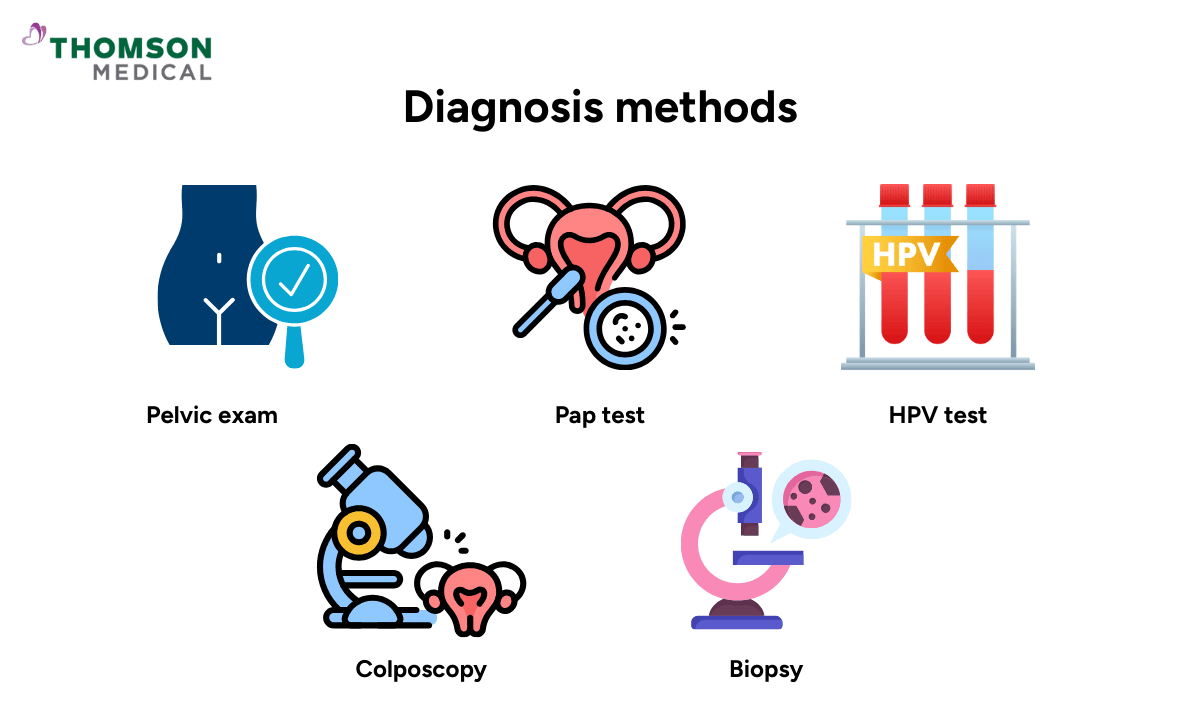
When you're experiencing symptoms, checking with your doctor will give you clear answers. They will use different methods to figure out what's happening, so you and your doctor can decide on the best next steps together. Here are common tests and what they mean:
Test | Cervical ectropion | Cervical cancer |
Pelvic exam | Your cervix appears red, velvety, or raw, but this is normal for this condition. | Your cervix may look ulcerated and irregular |
Pap test | Usually shows normal results | May show precancerous or cancerous cells |
HPV test | Negative for high-risk HPV | Positive for high-risk HPV strains |
Shows smooth glandular tissue | Shows abnormal vascular patterns or irregular lesions | |
Biopsy | Confirms benign glandular cells | Confirms malignancy or dysplasia |
Each test gives your doctor valuable information that helps them design the most effective treatment plan for you. Based on your symptoms, your doctor will suggest the methods that are suitable for your specific condition.
If you have any questions about how these methods work or have concerns before going through these tests, don’t hesitate to share them with your doctor.
Treatment options
Both conditions can be managed effectively, but the approaches are very different.
Cervical cancer:
For cervical cancer, your treatment plan depends on the stage of cancer when it’s detected:
Mild or precancerous changes:
Your doctor will monitor you closely with regular screening.
More advanced changes:
Your treatment may include surgery, radiation therapy, chemotherapy, or a combination. Based on your specific condition, your doctor will suggest the right approach for you.
When it comes to cervical cancer, early detection can make a big difference. If it’s caught in its early stages, the survival rate is very high (over 90%). For this reason, keeping up with regular screening becomes even more important. It gives you the best chance for a positive outcome.
Cervical ectropion:
For cervical ectropion, most of the time, you don’t need any treatment. If it’s not causing symptoms, your doctor will only suggest regular Pap smears to monitor it.
However, if you’re experiencing bleeding or discharge, your doctor may suggest a quick procedure called cauterisation, which uses cryotherapy, silver nitrate, laser therapy, or diathermy to remove the affected tissue.
This is a simple process with only a little discomfort. Your doctor will gently guide you through each step and make sure you feel as comfortable as possible.
The outlook for ectropion is usually positive. In most cases, this condition is harmless and won’t affect your long-term health.
If you’re unsure whether your symptoms need attention, schedule an appointment with Thomson Medical. Our specialists will help you understand what's happening and recommend a personalised plan for your health.
FAQ
Is ectropion related to HPV?
No. Cervical ectropion is not caused by the HPV virus. It’s linked to hormonal changes, not infection. If you have ectropion, it doesn’t mean you have HPV or that you’re at higher risk for cervical cancer.
What is the biggest indicator of cervical cancer?
The most concerning sign is abnormal vaginal bleeding, especially after intercourse, between periods, or after menopause. This is usually accompanied by persistent discharge or pelvic pain.
If you’re experiencing these symptoms, it’s best to consult your doctor right away.
What happens to your body when you have cervical cancer?
Cervical cancer can affect your body in different ways, such as:
Damaging cervical tissue
Spreading to nearby organs, such as your uterus, vagina, or bladder
Causing fatigue, unexplained weight loss, and persistent pain
Affecting your fertility if advanced treatment (like a hysterectomy) is needed
What happens if cervical ectropion is left untreated?
Cervical ectropion is a benign condition. Without treatment, it causes no serious problems.
It may continue to cause minor bleeding or discharge, but it doesn’t progress to cancer or harm your health in the long term.
Does cervical ectropion affect getting pregnant?
No. Cervical ectropion does not affect your fertility or your ability to have a healthy pregnancy.
What STD causes cervical ectropion?
None. Cervical ectropion is not a sexually transmitted disease (STD). However, sexually transmitted infections like chlamydia or HPV can coexist and cause similar symptoms.
The information provided is intended for general guidance only and should not be considered medical advice. For personalised recommendations and advice based on your unique situation, please consult a specialist at Thomson Medical. Request an appointment with Thomson Medical today.
For more information, contact us:
Thomson Specialists (Women's Health)
Thomson Women's Clinic (TWC)
- Novena:
6592 6686 (Call), 8611 8986 (WA) - Bukit Batok:
6569 0668 (Call), 8686 3525 (WA) - Choa Chu Kang:
6893 1227 (Call), 8282 1796 (WA) Jurong:
6262 8588 (Call), 6262 8588 (WA)- Katong (female doctor):
6970 2272 (Call), 8611 9020 (WA) - Punggol:
6243 6843 (Call), 8811 0328 (WA) - Sembawang: 6753 5228
- Sengkang: 6388 8125
- Serangoon (female doctor): 6382 3313
- Tampines: 6857 6266
- Tiong Bahru: 6276 1525