

If your stomach has grown larger over the past few months, you might assume it's down to weight gain or bloating. But sometimes a persistent abdominal bulge has nothing to do with what you eat and everything to do with fibroids growing in your uterus.
Understanding how a fibroid stomach bulge differs from weight gain or bloating can help you feel more prepared. Knowing the other symptoms to watch for, along with the treatment options available, makes it easier to have a clear conversation with your doctor.
What are fibroids?
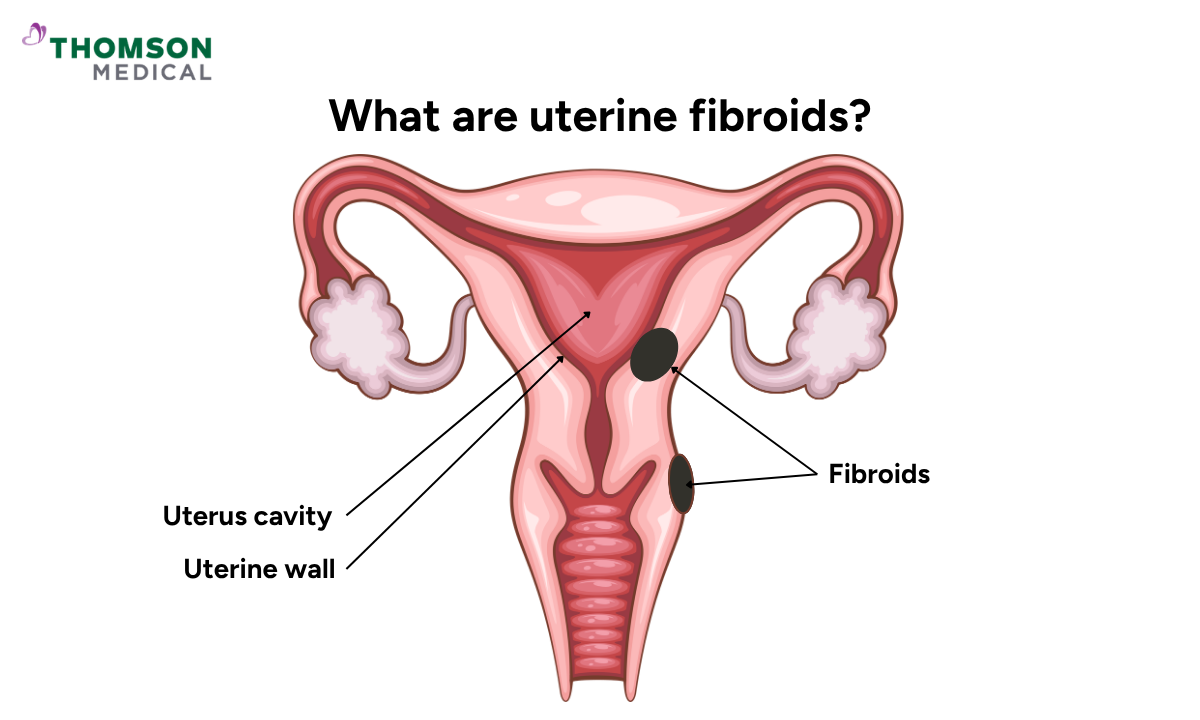
Uterine fibroids are non-cancerous growths made of muscle and fibrous tissue that develop in or on the uterus. Many women have fibroids without realising it, as they often cause no symptoms.
Can fibroids cause a stomach bulge?
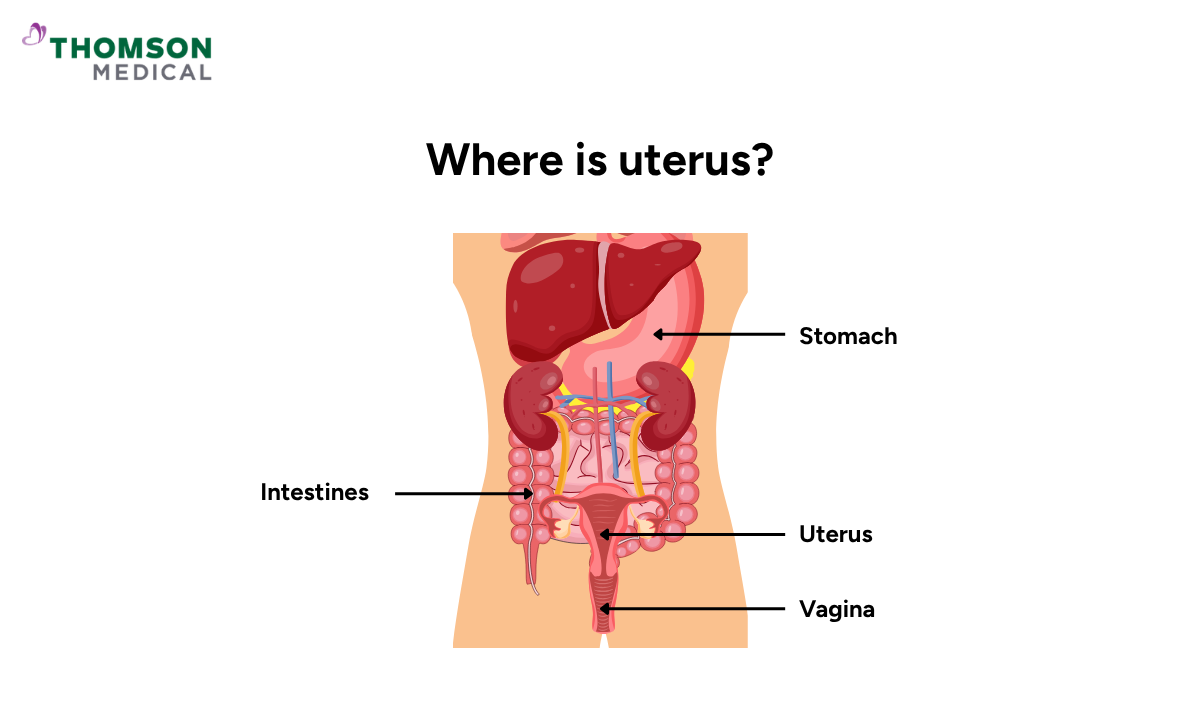
Yes, fibroids can cause a visible bulge in the lower abdomen and create what is sometimes called a "fibroid belly".
For some women, this is the first sign that something may need attention. The change can be gradual, which makes it easy to dismiss as weight gain or bloating.
What causes a fibroid belly?
A fibroid belly develops when fibroids grow large enough to stretch the uterus beyond its usual size. Your uterus sits in the lower abdomen, so as it expands, the change becomes visible from the outside.
As fibroids grow in size or number, they can:
Stretch the uterus outward
Press against the wall of your abdomen
Create a firm, rounded swelling in your lower belly
Unlike bloating, which is caused by gas or fluid, a fibroid belly happens because the uterus itself has grown larger. That is why it stays constant, rather than easing throughout the day the way ordinary bloating does.
What does it feel like?
How a fibroid-belly feels is often the first sign that something is different. It does not feel the same as weight gain or digestive bloating.
You might notice:
A firm, solid mass in the lower abdomen
A feeling of pressure or fullness in your pelvis
Pressure that stays even after using the toilet
A shape that resembles early pregnancy, if the uterus has grown significantly
That firmness and steady pressure are important signs to take note of. If your abdomen feels solid to the touch and the sensation does not shift, it is worth a conversation with your doctor.
How do you know if it’s fibroids?
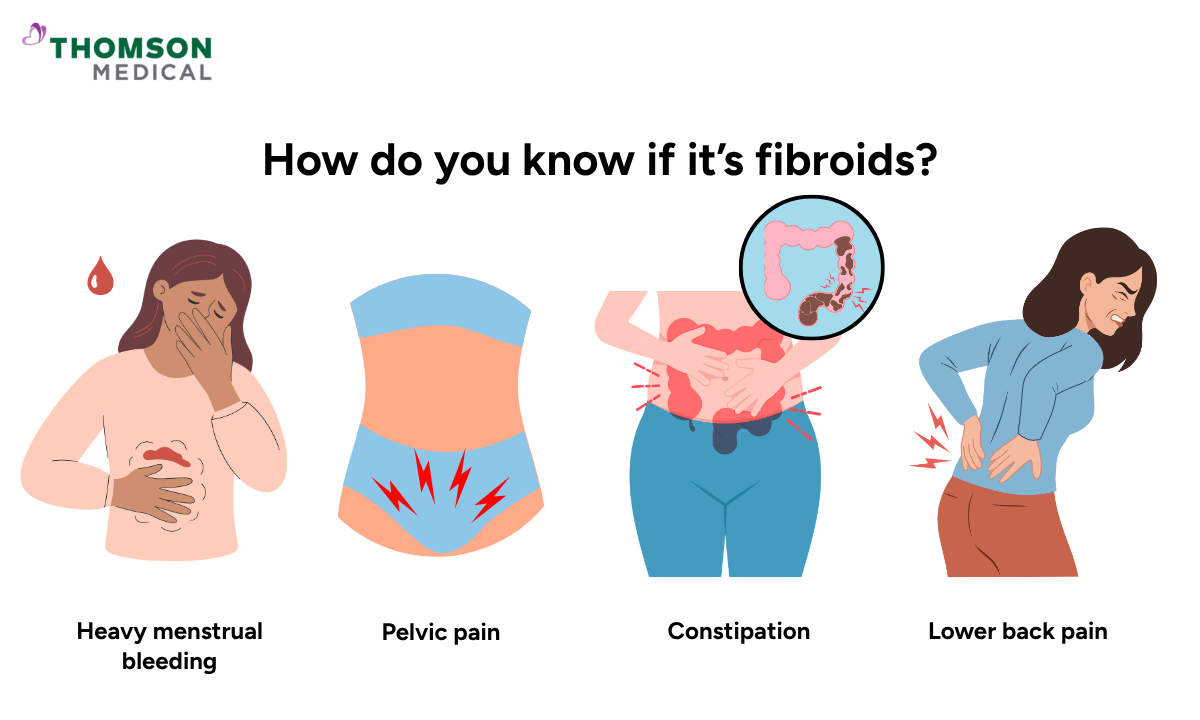
A lower abdominal bulge can have several causes, so it helps to look at your symptoms as a whole.
A bulge caused by fibroids is more likely if you also experience:
Pressure on your bladder that makes you need to urinate more often
Pelvic pain or a sensation of fullness
Constipation
Painful periods
Pain during sexual intercourse
These symptoms on their own do not confirm fibroids. But if several of them sound familiar, it is worth speaking to your doctor to understand what may be causing them.
Our gynaecologists
Loading...
How it differs from weight gain or bloating
Because a fibroid bulge can look similar to weight gain or bloating from the outside, it helps to know what sets them apart. The table below outlines the key differences:
Fibroid bulge | Weight gain | Bloating | |
Feel | Firm, localised in lower abdomen | Soft, distributed across the body | Tight, gassy sensation |
Pattern | Gradual increase over months | Gradual overall body change | Fluctuates during the day |
Periods | Often with heavy periods | No link to periods | No link to periods |
Overnight | Does not improve by morning | Does not change overnight | Often better by morning |
One useful clue is what happens overnight. Bloating tends to ease by morning or after passing wind. If your lower belly still feels full and firm when you wake up, it may be worth speaking to your doctor about fibroids.
A bloated feeling that does not improve overnight or changes in your lower abdomen may be worth discussing with a doctor. Request an appointment with Thomson Medical to evaluate whether fibroids could be contributing to your symptoms.
At what size do fibroids cause a visible bulge?
There is no single size that will always cause a visible bulge, because every woman's body is different.
That said, visible abdominal enlargement is more likely when:
A single fibroid is 5 to 10 cm or larger
Multiple fibroids together enlarge the uterus considerably
The uterus has grown to the size it would be at 12 weeks of pregnancy or more
The location of the fibroids also matters. Subserosal fibroids grow on the outer wall of the uterus. Intramural fibroids grow within the uterine wall itself. Both types are most likely to cause the uterus to expand outwards. Even fibroids that are not especially large can contribute to a bulge if there are several of them.
How are fibroids diagnosed?
If your doctor suspects fibroids, they will usually begin with a straightforward assessment to confirm whether fibroids are present and understand their size and location.
This may include:
Pelvic examination to assess the size and shape of the uterus
Ultrasound scan to confirm whether fibroids are present and identify their size and location
MRI scan in some cases, to provide a more detailed view of the number, size, and position of the fibroids
Because symptoms such as pelvic pressure, bloating, or a lower abdominal bulge can have several possible causes, it is important not to self-diagnose based on symptoms alone.
How can a fibroid belly be treated?
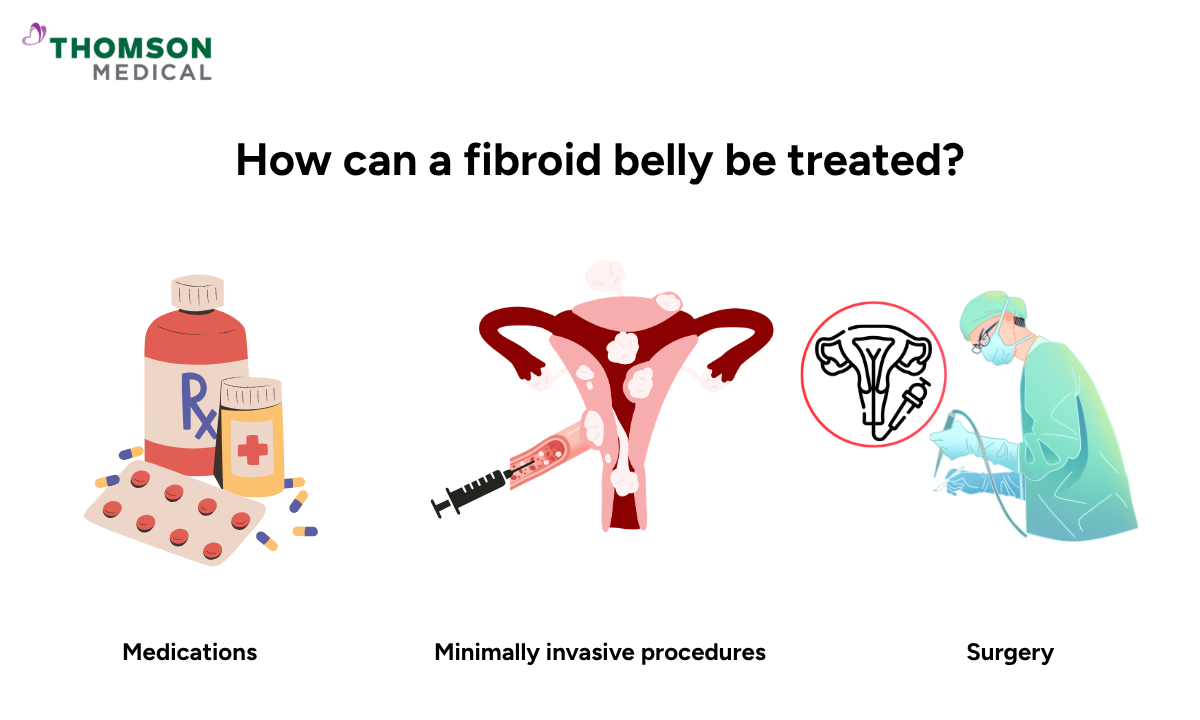
To reduce a fibroid belly, the underlying fibroids usually need to be treated. Treatment is not the same for every woman, and the right option for you will depend on the size and number of your fibroids, your symptoms, and whether you would like to have children in the future.
Medications
Medications are often a starting point. They will not permanently remove fibroids, but they may help manage your symptoms or reduce the size of fibroids temporarily.
These include:
Hormonal birth control may help regulate menstrual bleeding and ease pelvic pain
GnRH agonists and antagonists can shrink fibroids by lowering oestrogen levels, which fibroids rely on to grow, though the effects are often temporary and fibroids may return after stopping treatment
Tranexamic acid may help reduce heavy bleeding
Because medications do not address the fibroids permanently, they are often used alongside other treatments or for a limited period of time.
Minimally invasive procedures
If medications do not provide enough relief, there are procedures that can shrink fibroids without the need for major surgery.
These may include:
Uterine artery embolisation (UAE) works by blocking the blood supply to the fibroids, which causes them to shrink gradually over time
MRI-guided focused ultrasound uses targeted sound waves to reduce fibroid tissue without any incisions
These procedures may be suitable for some women who want to avoid major surgery, but they are not appropriate for everyone. Your doctor will consider the size, number and location of your fibroids, your symptoms and whether you plan to become pregnant in the future.
Surgery
For women with significant symptoms or very large fibroids, surgery may provide a more direct reduction in fibroid bulk, as the fibroids or uterus are removed.
These include:
Myomectomy removes the fibroids while leaving the uterus intact, which makes it a suitable option if you are hoping to conceive
Hysterectomy removes the uterus entirely, which means fibroids cannot return. It is usually considered when other treatments have not provided enough relief and a future pregnancy is not planned
Your doctor will talk through the benefits and considerations of each option with you, taking your personal circumstances into account.
Can lifestyle changes help?
Lifestyle changes alone will not remove fibroids or noticeably reduce a fibroid belly. However, certain habits may help ease inflammation and reduce discomfort in the meantime.
Habits that may help ease your symptoms alongside medical treatment include:
Regular exercise
Eating more fibre
Reducing your intake of processed foods
Managing stress
Getting enough sleep, as poor sleep can affect your hormone levels and worsen discomfort
These are supportive habits rather than treatments. They may ease discomfort and support your general health, but they work best alongside medical care rather than as a substitute for it.
Lifestyle changes can support your overall health, but persistent fibroid symptoms are worth discussing with a doctor. Request an appointment with Thomson Medical for a personalised assessment and advice on next steps for care.
When to see a doctor
Fibroid symptoms can develop gradually, which makes them easy to overlook or adapt to over time. However, certain symptoms should not be ignored, particularly if they are becoming more severe or affecting your daily life.
Seek medical attention promptly if you experience:
Very heavy menstrual bleeding
Dizziness or fainting
Severe pelvic or abdominal pain
Sudden abdominal swelling or rapid enlargement
Bleeding after menopause
Symptoms of anaemia, such as breathlessness, fatigue, or a fast heartbeat
Early assessment can help identify whether fibroids are the cause of your symptoms and whether treatment is needed.
Many women live with fibroids for years without realising it. Speaking to your doctor is the first step towards understanding what is causing your symptoms and what can be done about them.
FAQ
Why does my lower abdomen stick out with fibroids?
As fibroids grow, they can enlarge the uterus and push outward against your abdominal wall. This is what creates the rounded shape in your lower belly. Larger fibroids are more likely to cause visible abdominal swelling.
Will the bulge go away after fibroid treatment?
The abdominal bulge may improve after fibroids shrink or are removed, especially if the bulge was mainly caused by an enlarged uterus. How quickly and how much it improves depends on the type of treatment, the size of your fibroids, and how your body responds.
Do fibroids make your stomach feel hard or soft?
Large fibroids often make the lower abdomen feel firm or hard, especially when compared to the softer feel of normal body fat or bloating.
Can exercise reduce a fibroid belly?
Exercise can help reduce bloating, improve your posture, and strengthen your abdominal muscles, which may make your stomach appear flatter. However, exercise on its own will not shrink fibroids.
How quickly will my stomach flatten after fibroid removal?
After procedures such as myomectomy or hysterectomy, abdominal swelling often improves within a few weeks. Some swelling can still persist for 4 to 8 weeks during recovery. After uterine fibroid embolisation, the fibroids shrink more gradually over several months.
Do fibroids cause bloating and gas?
Fibroids themselves do not produce gas. However, larger fibroids can press against nearby organs such as your bowel. This pressure may contribute to bloating, constipation, and a sensation of trapped gas or abdominal fullness.
Who is most likely to develop a fibroid belly bulge?
A fibroid belly bulge is most common in women of reproductive age, particularly between their 30s and early 50s.
Several hormonal factors can contribute, including:
- Higher levels of oestrogen and progesterone, which encourage fibroids to grow
- A peak in hormone activity during the 30s and 40s, which is when fibroids are most likely to enlarge
- A natural reduction in symptoms after menopause, when hormone levels decline
Fibroids often shrink after menopause as hormone levels fall, but symptoms do not always disappear. Any new bleeding, worsening pelvic pain or new abdominal swelling after menopause should be assessed by a doctor.
The information provided is intended for general guidance only and should not be considered medical advice. For personalised recommendations and tailored advice based on your unique situations, please consult a specialist at Thomson Medical. Request an appointment with Thomson Medical today.
For more information, contact us:
Thomson Specialists (Women's Health)
Thomson Women's Clinic (TWC)
- Novena:
6592 6686 (Call), 8611 8986 (WA) - Bukit Batok:
6569 0668 (Call), 8686 3525 (WA) - Choa Chu Kang:
6893 1227 (Call), 8282 1796 (WA) Jurong:
6262 8588 (Call), 6262 8588 (WA)- Katong (female doctor):
6970 2272 (Call), 8611 9020 (WA) - Punggol:
6243 6843 (Call), 8811 0328 (WA) - Sembawang: 6753 5228
- Sengkang: 6388 8125
- Serangoon (female doctor): 6382 3313
- Tampines: 6857 6266
- Tiong Bahru: 6276 1525