

If you are planning to undergo a myomectomy (fibroid removal surgery), it is completely natural to want to know what your healing journey will look like before your procedure. Understanding the recovery process can give you peace of mind and help you prepare for the weeks ahead.
Whether your specialist has recommended an open, laparoscopic (keyhole), or hysteroscopic approach to treat your uterine fibroids, the foundational elements of myomectomy recovery remain the same: prioritising rest, incorporating gentle movement when comfortable, and practicing patience with your body.
During the initial days following surgery, experiencing mild abdominal cramping, light spotting, and temporary fatigue is a normal part of the body's natural healing response. These symptoms typically ease gradually as you recover. Learning to recognise standard post-operative signs versus symptoms that warrant a clinical review with your doctor can make your overall recovery period feel far more manageable and secure.
What is a myomectomy?
A myomectomy is a surgical procedure to remove fibroids from your uterus.
Fibroids are non-cancerous growths that can develop in or around your uterine wall, and they can cause symptoms such as heavy periods, pelvic pain, or difficulty conceiving.
Unlike a hysterectomy, which removes the uterus entirely, a myomectomy removes only the fibroids, leaving the uterus intact. This makes it a common choice for women who want to relieve symptoms while preserving their fertility.
Every recovery is different, and the type of myomectomy you have will shape your journey.
Types of myomectomy and how they affect recovery
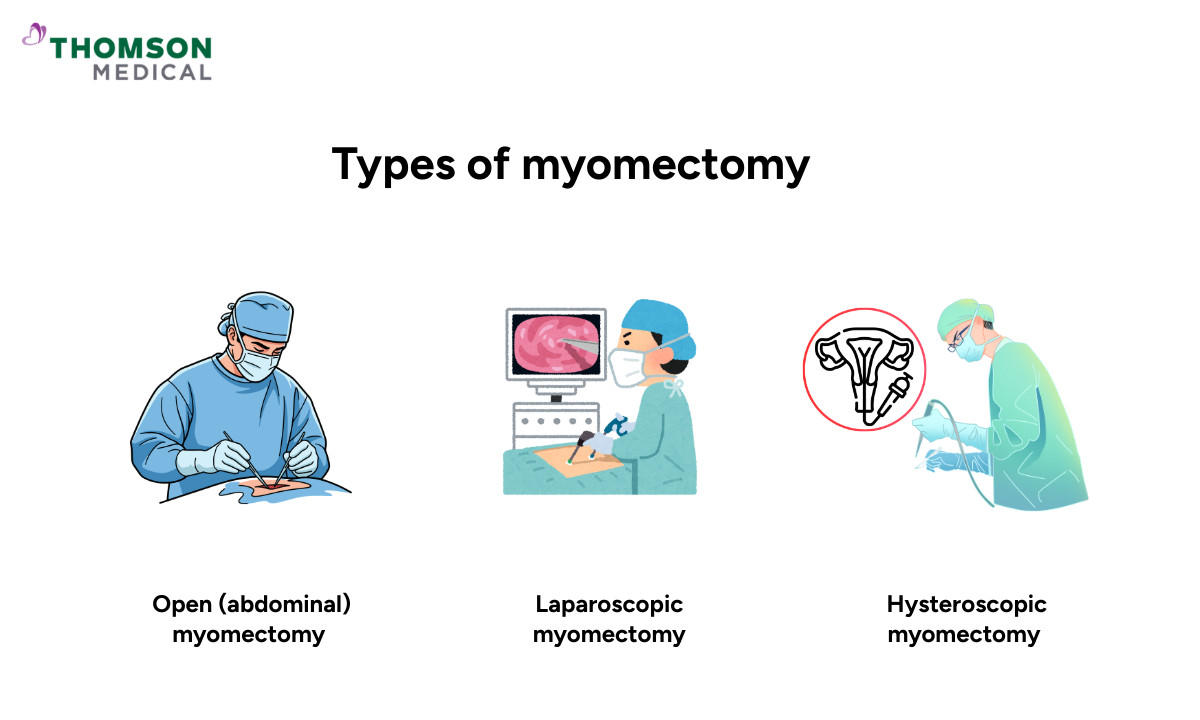
There are three main types of myomectomy. The approach your surgeon recommends depends on where your fibroids are, how many there are, and how large they are. Each type involves a different level of surgery, and that directly affects how long your recovery takes.
Open (abdominal) myomectomy
This involves a single incision across your lower abdomen to access your uterus. It is often used for larger or more numerous fibroids. Recovery is the longest of the three approaches, usually taking four to six weeks before you can return to normal daily activities.
Laparoscopic myomectomy
This is a minimally invasive procedure performed through several small cuts in your abdomen using a thin camera and surgical instruments. Most women recover within two to four weeks and experience less post-operative pain compared to open surgery.
Hysteroscopic myomectomy
This approach requires no external incisions. Your surgeon will pass a thin instrument through your vagina and cervix to remove fibroids growing inside the uterine cavity. It is the least invasive option, and most women recover within one to two weeks.
Your surgeon will recommend the appropriate approach based on your individual circumstances.
Gynaecologists at Thomson Medical
Loading...
What to expect after a myomectomy
After a myomectomy, most women notice some symptoms in the days and weeks that follow. Knowing what to expect can help you feel more at ease.
Common symptoms during recovery
Some discomfort after a myomectomy is completely normal. Your body has been through surgery, and it needs time to heal. Most symptoms are temporary and gradually ease over the first few weeks.
You may experience:
Abdominal pain or cramping, which is usually most noticeable in the first few days and manageable with pain relief prescribed by your doctor
Vaginal spotting or light bleeding, which is common for a short period after surgery
Fatigue, as your body directs energy towards healing
Bloating or pressure in the lower abdomen, particularly in the first week
Temporary changes in bowel habits, such as constipation, which usually settles on its own
Contact your doctor if you develop a fever, heavy bleeding, foul-smelling discharge, or worsening pain. These may be signs that something needs attention.
If you are unsure whether what you're experiencing after surgery is a normal part of recovery or something that needs attention, schedule an appointment with Thomson Medical. Our doctors can assess your symptoms and advise on the right next steps for your recovery.
How to support your recovery
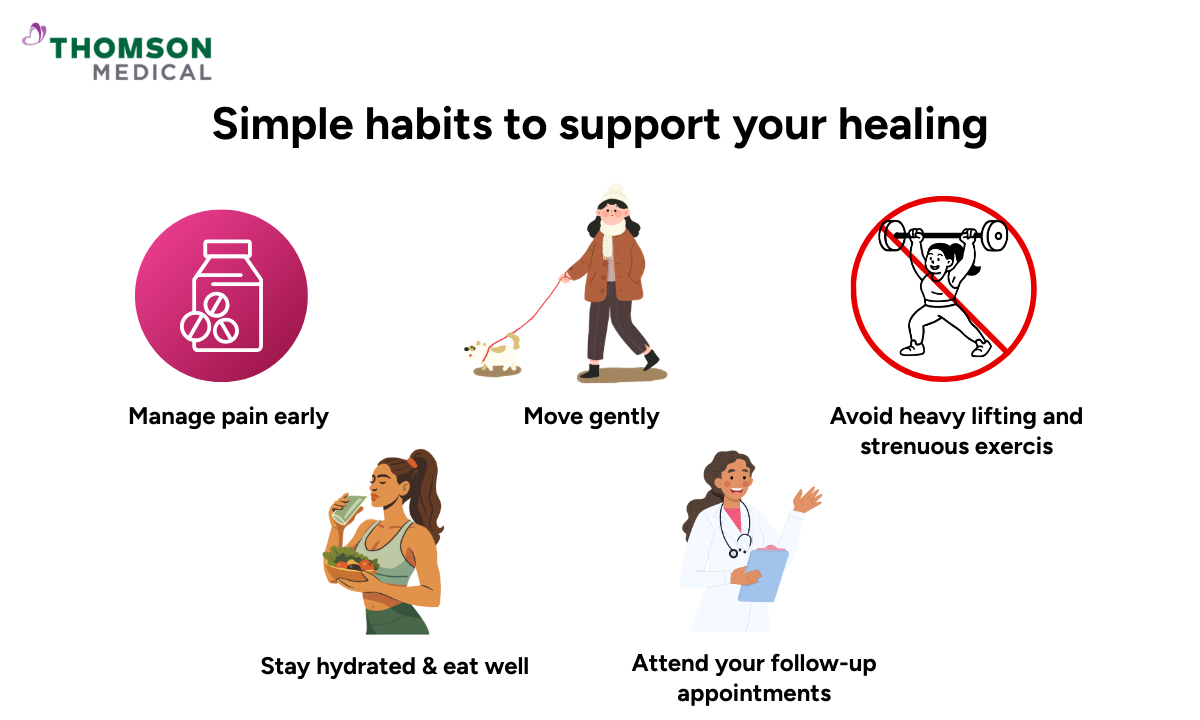
Rest is one of the most important parts of your recovery, and following your surgeon's instructions closely will help you heal safely.
Beyond that, a few simple habits can support your healing:
Manage pain early:
Take prescribed pain relief regularly in the first few days rather than waiting until discomfort becomes difficult.
Move gently:
Short, light walks help circulation and reduce the risk of blood clots, even if you feel tired.
Avoid heavy lifting and strenuous exercise:
Resume only when your surgeon confirms it is safe.
Stay hydrated and eat well:
Drink plenty of water and eat protein-rich and iron-rich foods to support healing.
Choose high-fibre options to keep your bowels regular.
Care for your wound:
Keep the area clean and dry as instructed by your care team.
Attend your follow-up appointments:
These allow your doctor to check your healing and address any concerns.
Recovery looks different for every woman depending on the type of myomectomy performed. Be patient with yourself, and do not hesitate to reach out to your care team if something does not feel right.
Risks and side effects
Myomectomy is generally a safe procedure, and most women go through it without serious complications. That said, every surgery carries some risks and it helps to know what side effects exist so you can feel prepared and informed.
Common side effects include:
Bleeding:
Some blood loss during surgery is normal.
A transfusion (a procedure to replenish blood lost during surgery) is rarely needed.
Infection:
Infection is usually treatable with antibiotics if it occurs
Scar tissue (adhesions):
Internal scarring can develop as your uterus heals, which sometimes affects surrounding structures.
Temporary bladder or bowel changes:
You may notice increased urgency to urinate, difficulty emptying your bladder fully, constipation, or bloating.
These are common and usually settle within a few weeks.
Less commonly, there can be injury to nearby organs or complications from anaesthesia.
In very rare situations, if bleeding during surgery cannot be controlled, your surgeon may need to perform a hysterectomy. This is always a last resort and something your surgeon will discuss with you beforehand.
It is also worth knowing that myomectomy removes existing fibroids but does not prevent new ones from forming. Your doctor will advise you on monitoring and follow-up to keep track of this over time.
If you have any concerns about your individual risks, your surgeon is the right person to talk them through with you before your procedure.
If you are trying to weigh up whether a myomectomy is the right option for you, schedule an appointment with Thomson Medical. Our doctors can walk you through what to expect and help you make an informed decision.
FAQ
How long does it take to heal from a myomectomy?
It depends on the type of surgery. Hysteroscopy recovery takes around one to two weeks, laparoscopy two to four weeks, and open surgery four to six weeks or longer. Your surgeon will give you a more personalised timeline.
What activities should I avoid during recovery?
Avoid heavy lifting, strenuous exercise, and driving until your surgeon confirms it is safe. Light walking is encouraged from early on.
Can I have sexual intercourse after my myomectomy?
Most women are advised to wait four to six weeks after open myomectomy or around two weeks after laparoscopic or hysteroscopic procedures. Follow your surgeon's guidance based on your own recovery.
Will myomectomy affect my menstrual periods?
For most women, periods improve after surgery. Fibroids are a common cause of heavy, prolonged, or painful periods, and removing them often brings relief. Your first one or two cycles may be slightly irregular while your uterus heals, but things generally settle down after that.
How will myomectomy affect my fertility?
Myomectomy is designed to preserve the uterus and, where possible, support fertility. Many women are able to conceive after recovery, though outcomes vary depending on individual circumstances.
Can fibroids come back after myomectomy?
Yes, it is possible. Myomectomy removes existing fibroids but does not prevent new ones from forming. Regular follow-up appointments help monitor this over time.
The information provided is intended for general guidance only and should not be considered medical advice. For personalised recommendations based on your medical conditions, request an appointment with Thomson Medical.
For more information, contact us:
Thomson Specialists (Women's Health)
Thomson Women's Clinic (TWC)
- Novena:
6592 6686 (Call), 8611 8986 (WA) - Bukit Batok:
6569 0668 (Call), 8686 3525 (WA) - Choa Chu Kang:
6893 1227 (Call), 8282 1796 (WA) - Jurong:
6262 8588 (Call), 6262 8588 (WA) - Katong (female doctor):
6970 2272 (Call), 8611 9020 (WA) - Punggol:
6243 6843 (Call), 8811 0328 (WA) - Sembawang: 6753 5228
- Sengkang: 6388 8125
- Serangoon (female doctor): 6382 3313
- Tampines: 6857 6266
- Tiong Bahru: 6276 1525
Notice
The range of services may vary between TWC/TS locations. Please contact your preferred branch directly to enquire about the current availability.
Request an Appointment