

When a headache is accompanied by vomiting, it can feel alarming. You may wonder whether it is a severe migraine, a stomach infection, or something more serious.
This combination of symptoms can have several possible causes. In many cases, it is linked to minor conditions such as migraine, viral illness, or dehydration. However, certain warning signs may require prompt medical attention.
Understanding the possible causes, recognising red flag symptoms, and knowing when to seek medical care can help you respond calmly while ensuring your safety or that of your loved one.
Are headaches and vomiting always dangerous?
Having a headache and vomiting at the same time can feel alarming, especially when you don't know what's causing it or how serious it might be.
These two symptoms often happen together because the brain, gut, hydration levels, and nervous system are all closely connected. Many common and treatable problems can cause both at once.
But sometimes, this combination can mean something more serious that needs medical attention.
When to get medical help
Not every headache with vomiting needs a hospital visit. Many cases can recover with rest and care at home. What matters is knowing when to get medical help and when it's safe to watch things at home.
Seek urgent medical care if:
The headache is sudden, severe, or different from any headache you've had before
You're vomiting a lot and can't keep fluids down
You have a fever, stiff neck, confusion, fainting, or feel very drowsy
You notice weakness, numbness, slurred speech, or blurred vision
You've had a recent head injury
You're pregnant and have a new or severe headache with vomiting
A child is acting unusual, feeding poorly, extremely sleepy, or has a high fever
Things are getting worse instead of better
These signs might mean you need urgent medical help, and waiting could delay treatment for something serious. Getting help early is just being sensible and making sure nothing important gets missed.
You can probably rest at home if:
Symptoms are mild and staying the same
You can keep fluids down
There's no fever, confusion, or neurological symptoms
Pain gets better with rest and simple care
There are no red flags and nothing's getting worse
These situations usually mean something mild that your body can recover from with rest and simple care. You can stay calm and keep an eye on how you're feeling. Many people get better on their own without needing medical treatment. Take things easy and listen to your body.
If you feel worried, uncertain, or something just doesn't seem right, it’s always better to get checked. There's nothing wrong with seeking medical advice, as it can give you reassurance when everything's fine.

Our urgent care specialist
Loading...
Common causes of headache with vomiting
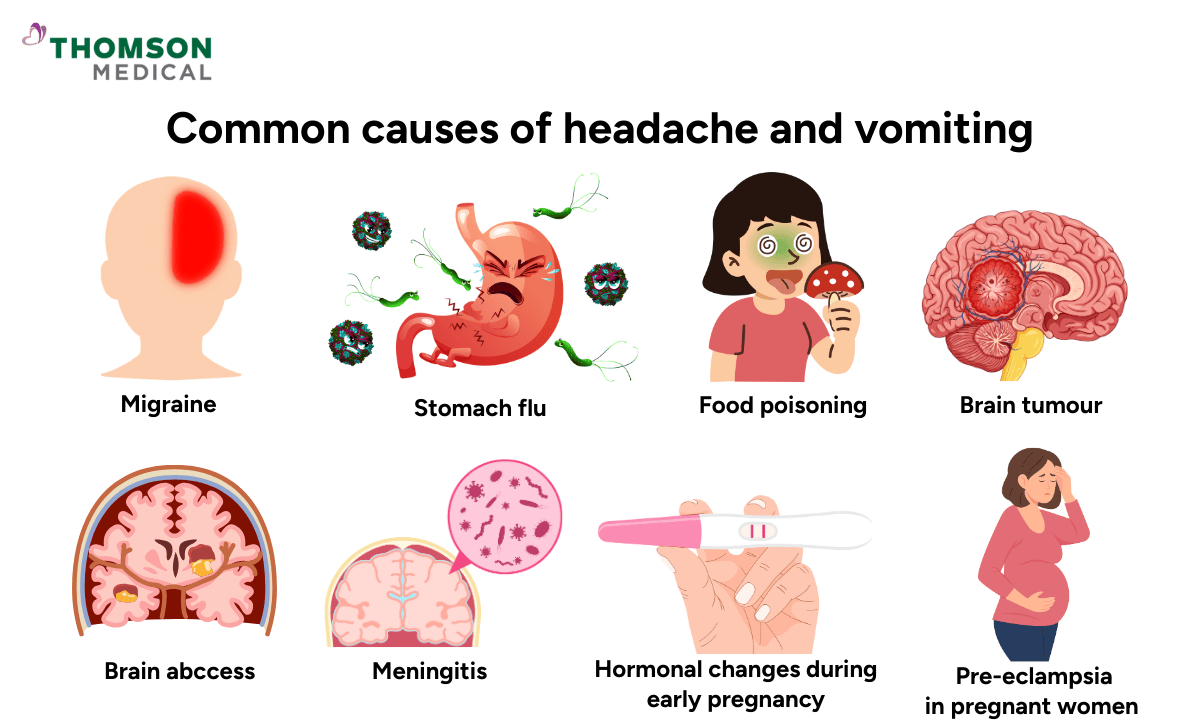
Headache and vomiting can come from different causes, from simple, temporary illnesses to more serious problems. Here are some common ones and what they usually look like.
Migraine
It is one of the most common reasons you might have a headache and vomiting together. Migraine headaches are often intense and throbbing, and you may feel sensitive to light and sound, with strong nausea.
Migraine headaches can feel overwhelming, but they're not dangerous. Many people manage them well with the right treatment.
Stomach flu (gastroenteritis)
Viral stomach infections can cause vomiting, nausea, weakness, and headaches all at once. Dehydration and body aches often make the headache worse.
It's miserable, but most cases get better on their own with rest, fluids, and time.
Food poisoning
Food poisoning can cause both headache and vomiting. When your body reacts to contaminated food, you may experience repeated vomiting, stomach cramps, nausea, fever, and exhaustion. Dehydration and the stress on your body can lead to headaches.
Food poisoning is miserable, but most cases get better with rest, fluids, and time.
Meningitis
Headache and vomiting can be early signs of meningitis. Meningitis is a serious infection of the protective membranes surrounding the brain and spinal cord. It is uncommon but important to recognise because it can worsen quickly without treatment.
Pregnancy-related causes
In early pregnancy, hormonal changes can bring on nausea, vomiting, and headaches together. This is very common and, while uncomfortable, is usually not harmful. Your doctor can help you manage these symptoms safely.
Sometimes, severe headache and vomiting during pregnancy can be a sign of pre-eclampsia, which is a serious condition involving high blood pressure, vision changes, swelling, and upper stomach pain. This isn't common, but it needs immediate medical attention, as early treatment protects both you and your baby.
Brain abscess
A brain abscess is a rare but serious infection in the brain that can cause headache, vomiting, fever, confusion, and other brain-related symptoms. It often develops from untreated infections in other parts of your body, like your ears, sinuses, or teeth.
It sounds scary, but early diagnosis and treatment can really help. With quick medical care, antibiotics and sometimes surgery, many people recover well.
Brain tumour
In rare cases, headache and vomiting can be a sign of a brain tumour. This usually happens because of pressure building up in your skull, rather than the tumour itself.
You might notice headaches that won't go away, get worse over time, are worse in the morning, or come with vision changes, seizures, or personality changes.
This is uncommon, and most people with headaches and vomiting don't have a brain tumour. But if your symptoms are getting worse, seem unusual, or aren't improving, getting checked can rule out serious problems and reassure you.
How your doctor can find the cause
When you’re feeling unwell, especially with symptoms like headache and vomiting, it’s natural to want a clear, immediate answer. But in medicine, finding the cause is often a process, not a single test or a single question.
Your doctor usually starts by asking questions such as:
When the symptoms began
How they feel
What makes them better or worse
Whether anything similar has happened before
Your medical history, current medications, recent illnesses, stress levels, and even sleep patterns can all offer important clues.
A physical examination helps look for signs that point toward specific causes. From there, your doctor may recommend some tests, such as:
Blood tests to look for infection, inflammation, or metabolic problems
Imaging scans (such as CT scans or MRI scans) if there are warning signs involving the brain or nervous system
Urine tests or pregnancy tests when relevant
This process is about reassurance as much as it is about detection: ruling out serious causes, identifying what’s likely, and helping you understand what’s happening in your body.
Treatment options
Treatment depends on what's causing your headache and vomiting, since these are symptoms rather than a diagnosis. The goal is to work out what's happening and treat that – not just help you feel better temporarily.
In many cases, treatment is straightforward. You might just need medicine to ease the pain, settle your stomach, or help you get fluids back in.
Sometimes treatment targets the specific cause, like:
Medicine for migraine attacks or brain-related issues, such as pain relievers or anti-nausea medications
Treatment for infections (antibiotics or antivirals when needed)
Care for hormone-related or pregnancy issues
Hospital treatment for serious problems like meningitis or severe dehydration
Not everything needs intensive treatment. Many people get better on their own with time and the right care. When you do need medical treatment, it usually works well, especially if you get help early.
What you can do at home

If your symptoms are mild and not getting worse, some gentle care at home can help you recover and feel better. You don't need to do anything complicated – often, small, simple steps bring the most relief.
Start with fluids
If you're feeling sick or vomiting, don't try to drink a lot at once. Instead:
Take small sips throughout the day
Oral rehydration solutions can replace lost fluids and salts
Skip alcohol and caffeine, as they make dehydration and stomach irritation worse
While you're actively vomiting, it's fine to avoid solid food and let your stomach settle. Right now, staying hydrated is more important. Once the nausea eases, you can start eating again slowly with bland foods like toast, rice, bananas, or soup.
Make your space comfortable
Headaches and nausea often make you more sensitive to light and sound. Try:
Resting in a quiet, dark room
Taking a break from screens
Using blackout curtains or an eye mask
These tips can help reduce stimulation and allow your nervous system to settle.
Rest in ways that feel good
When your head is pounding and your stomach feels unsettled, the last thing you want to do is any strenuous activity. Giving your body a chance to rest and recover can bring more relief than you expect.
Lying on your side, which usually feels more comfortable and safer
Keeping your head slightly raised to ease pressure and dizziness
Moving slowly and avoiding sudden changes in position
It's normal to feel worried when your head and stomach are both affected. But most causes of headache and vomiting are temporary and can be managed. If you're not sure what's happening, getting checked is always safer than guessing.

FAQ
When should I worry about headaches and vomiting?
It’s best to get urgent care if you have:
Severe or sudden headache
Symptoms that are getting worse instead of better
Fever, confusion, or changes in alertness
Stiff neck or severe neck pain
Weakness, numbness, or difficulty speaking
Blurred vision
Headache and vomiting during pregnancy
Recent head injury
Inability to keep fluids down due to ongoing vomiting
Is there a virus that causes headaches and vomiting?
Viruses like stomach flu (gastroenteritis), flu, and other viral infections commonly cause nausea, vomiting, and headaches together.
Which medicine is best for headache and vomiting?
It depends on the cause. Pain medication (like paracetamol or acetaminophen) and anti-nausea medications may help, but a doctor’s advice is best, especially if symptoms are persistent or severe.
Should I drink water after throwing up?
Yes, but sip slowly. Small, frequent sips of water or oral rehydration solutions help prevent dehydration without triggering more nausea.
What is the best sleeping position for headaches?
Rest in a quiet, dark room with your head slightly elevated. Lying on your side can help if you feel nauseated.
What foods can trigger headaches?
Common headache triggers include alcohol, caffeine, chocolate, aged cheese, processed meats, artificial sweeteners, spicy foods, and very salty foods, but triggers vary from person to person.
The information provided is intended for general guidance only and should not be considered medical advice. For personalised recommendations based on your medical conditions, request an appointment with Thomson Medical.
For more information, contact us:
Thomson Medical 24-Hour Urgent Care Centre (Novena)
- Call: 6350 8812
Notice:
The range of services, vaccinations, and tests may vary. Please contact us directly to enquire about the current availability.
Request an Appointment