

If you have been diagnosed with cervical cancer, it is completely natural to feel anxious and uncertain about what lies ahead. Many people in your situation have questions about how serious it is, whether it tends to grow quickly, and what this might mean for their future.
The way cervical cancer develops and spreads can vary from person to person. Learning more about how it behaves and what influences its progression can offer clarity and help you feel more in control when making decisions about your care.
Symptoms of cervical cancer
Cervical cancer is one of the most common cancers in women. It often develops slowly, and you may not notice any obvious symptoms in its early stages.
When symptoms show up, you may experience:
Abnormal vaginal bleeding
Pelvic pain
Discomfort during sexual activity
In some cases, you may also notice bleeding between periods or after menopause.
Because these symptoms can sometimes feel similar to normal menstrual changes or pregnancy-related discomfort, it’s easy to dismiss or overlook them. That’s why it’s important to take note of any unusual or persistent changes and let your doctor know as soon as possible.
With a Pap smear or cervical screening, your doctor can detect the problem early and help you get the right treatment promptly.
How cervical cancer spreads

Knowing how cervical cancer spreads will help you better understand your diagnosis and feel more prepared to discuss your treatment options with your doctor.
Cervical cancer begins in the cells of your cervix, but it can spread to the surrounding tissues and nearby lymph nodes. In more advanced stages, it may even spread to distant organs such as your lungs, liver, or bones.
The spread usually occurs gradually. At first, it may only affect the surface of your cervix, but over time, cancer cells can invade deeper tissues and enter your bloodstream or lymphatic system.
When detected early, your doctor can help control or even eliminate your cervical cancer before it has a chance to spread.
How aggressive is cervical cancer?
It’s natural to wonder how aggressive your cervical cancer might be. The truth is, it varies from person to person and depends on different factors.
Timeline
Most of the time, cervical cancer grows slowly over the years. It usually takes 10 to 15 years for HPV infection to turn into invasive cancer. This gives you opportunities to catch changes early through regular screening.
However, in some cases, cervical cancer can develop more quickly, especially if it’s caused by high-risk HPV types like HPV 16 or 18.
What affects how fast it grows
There are different factors that can affect how aggressive your cervical cancer is. These factors include:
The type of HPV:
High-risk HPV types often cause faster-growing cancers.
Your immune system:
A weakened immune system, such as from HIV or certain medications, may allow cervical cancer to progress more quickly.
Smoking:
This can speed up the development of cervical cancer.
Everyone’s journey is different. Having one or more of these factors doesn’t mean your cancer will definitely progress quickly. Your doctor will consider them when planning your treatment to make sure you get the care that’s right for you.
How it differs by stage
Early-stage cervical cancer (Stage 1) is usually treatable and may progress very slowly. At this stage, the cancer is still small and hasn’t spread beyond your cervix. It means treatment is usually successful.
Advanced-stage cervical cancer (Stages 2-4) tends to grow more quickly as the cancer has spread beyond your cervix. At these stages, treatment becomes more complex, but there are still many effective options available.
For this reason, it’s important to have regular cervical screening. It helps your doctor catch changes early when treatment is most effective.
If you've been diagnosed with cervical cancer or have concerns about abnormal symptoms, schedule an appointment with Thomson Medical today. Our specialists are here to guide you through your options and provide expert care tailored to your unique situation.
Our cervical cancer specialist
Loading...
Complications of cervical cancer
It’s helpful to know what complications can occur with cervical cancer so you can recognise the warning signs and seek medical help at the right time.
When cervical cancer is left untreated, it can cause:
Heavy vaginal bleeding
Pelvic pain
Urinary or bowel problems (if it presses on nearby organs)
Weight loss and fatigue
In advanced stages, cervical cancer can also spread to other parts of your body, which can affect your health and quality of life. However, with proper treatment and regular monitoring, many of these complications can be managed or prevented.
Treatment options for cervical cancer
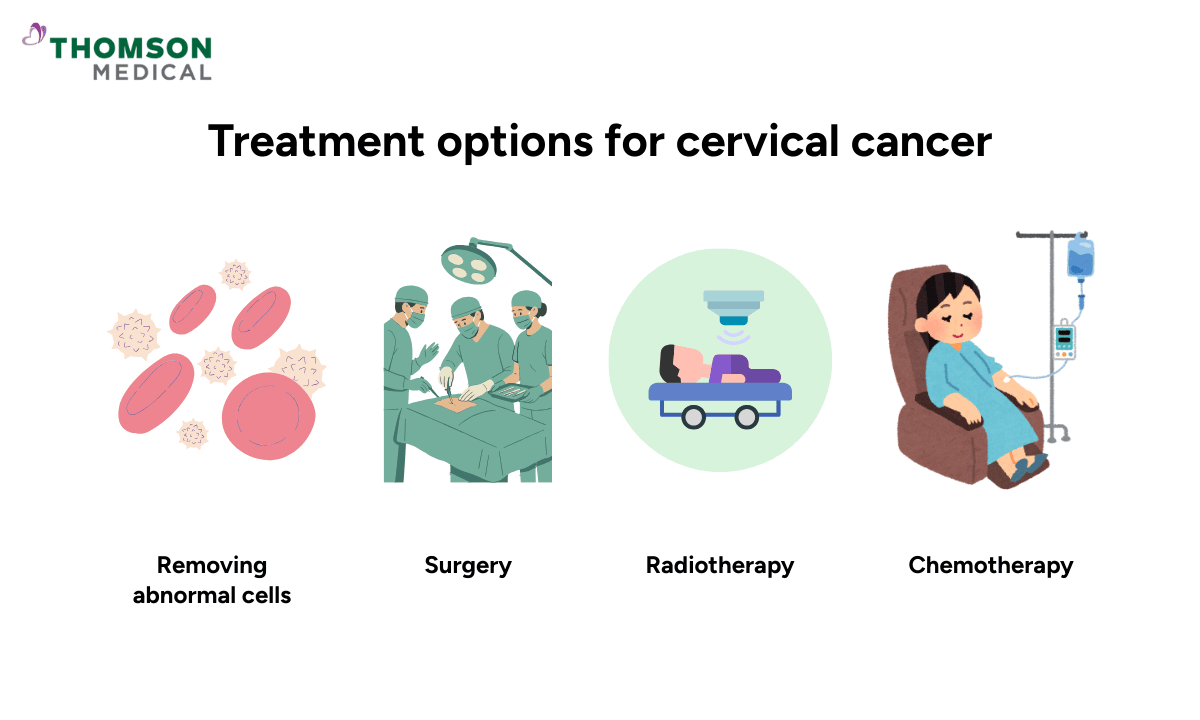
If you receive a cervical cancer diagnosis, you might be wondering what your treatment options are. There are many effective approaches available, and your doctor will assess your condition to choose the most suitable one for you.
Removing abnormal cells:
In the early stages of cervical cancer or when your doctor detects precancerous changes, they may suggest a loop electrosurgical excision procedure (LEEP) or cone biopsy to remove your abnormal cells.
Surgery:
If you have small and early-stage tumours, your doctor may suggest a hysterectomy to remove your uterus or a trachelectomy to remove part of your cervix. They may also remove nearby lymph nodes to check whether cancer has spread and to help prevent further spread.
Radiotherapy:
Radiotherapy (also called radiation therapy) uses targeted radiation to kill cancer cells or shrink tumours. Your doctor usually recommends this approach for more advanced cervical cancer or when surgery isn’t the best option for your condition.
Chemotherapy:
Chemotherapy uses drugs to kill rapidly dividing cancer cells throughout your body. It’s usually combined with radiotherapy for more advanced cervical cancer or when cancer has spread beyond your cervix.
It’s normal to feel worried when learning about these treatment options. Remember, your doctor will be by your side to guide you through each step, monitor your progress closely, and adjust your treatment plan to make sure you achieve the best possible outcome.
Whether you’re navigating cervical cancer or planning for the future after treatment, schedule an appointment with Thomson Medical. Our specialists will create a personalised care plan that prioritises your health.
FAQ
Can you be cured of cervical cancer?
Yes, cervical cancer can be cured, especially when it’s detected early.
Early-stage cervical cancer has a high treatment success rate with procedures such as surgery, removal of abnormal cells, or targeted therapies.
Even if you have advanced cervical cancer, you can effectively manage it with a combination of surgery, chemotherapy, and radiotherapy. The chances of a cure depend on the stage of your cancer, its size, how far it has spread, and your overall health.
How fast does cervical cancer spread?
Cervical cancer usually develops slowly over several years, often beginning as precancerous changes caused by persistent high-risk human papillomavirus (HPV) infection.
If cervical cancer isn’t treated, it can invade deeper cervical tissue and then spread to nearby organs or distant parts of your body.
The speed of progression is different for everyone. It depends on factors such as the type of HPV, your immune system strength, and overall health. Early detection through screening is key to preventing the cancer from spreading.
Can you live 10 years after cervical cancer?
Yes. Many people live 10 years or longer after being diagnosed with cervical cancer, especially if it's detected and treated early.
Your outlook depends on when the cancer is found, how you respond to the treatment, and your ongoing medical care. Regular follow-ups and healthy lifestyle choices can also make a difference in your long-term health.
Even if the cancer is more advanced, it can still be managed effectively for many years with modern treatments.
What are the worst symptoms of cervical cancer?
If you have advanced cervical cancer, common symptoms you may experience include:
Heavy or persistent vaginal bleeding
Severe pelvic pain
Difficulty with urination or bowel movements due to tumour pressure
Anaemia, unexplained weight loss, and fatigue
In later stages, the cancer may spread to other organs, causing complications such as bone pain or breathing difficulties. Recognising symptoms early and seeking care promptly can prevent the cancer from reaching these severe stages.
At what stage is cervical cancer untreatable?
It can be difficult to treat cervical cancer effectively when it has spread to distant organs or tissues. This stage is called metastatic cancer.
At this point, your care plan shifts to palliative measures, which focus on relieving your symptoms, making you more comfortable, and enhancing your quality of life.
What is the survival rate for cervical cancer?
Survival rates for cervical cancer vary depending on when you are diagnosed. However, survival rates just give you a general picture, and every person’s journey is unique.
For early-stage cervical cancer, the five-year survival rate can be higher than 90%.
For more advanced cases where the cancer has spread beyond your cervix, survival rates decrease, but treatments such as combined chemotherapy and radiotherapy can still improve your outcomes.
Your doctor can give you more personalised information based on your diagnosis and specific situation.
The information provided is intended for general guidance only and should not be considered medical advice. For personalised recommendations and tailored advice based on your unique situation, please consult a specialist at Thomson Medical. Schedule an appointment with Thomson Medical today.
For more information, contact us:
Thomson Specialists (Women's Health)
Thomson Women's Clinic (TWC)
- Novena:
6592 6686 (Call), 8611 8986 (WA) - Bukit Batok:
6569 0668 (Call), 8686 3525 (WA) - Choa Chu Kang:
6893 1227 (Call), 8282 1796 (WA) - Jurong:
6262 8588 (Call), 6262 8588 (WA) - Katong (female doctor):
6970 2272 (Call), 8611 9020 (WA) - Punggol:
6243 6843 (Call), 8811 0328 (WA) - Sembawang: 6753 5228
- Sengkang: 6388 8125
- Serangoon (female doctor): 6382 3313
- Tampines: 6857 6266
- Tiong Bahru: 6276 1525
Notice
The range of services may vary between TWC/TS locations. Please contact your preferred branch directly to enquire about the current availability.
Request an Appointment