

Finding out you have a polyp can raise a lot of questions. One of the most common is how quickly it might grow, especially if the discovery came as a surprise.
The reassuring reality is that most polyps grow slowly. Many take months to years to develop, and a good number remain small without causing any problems. However, this is not the same for every polyp.
Knowing what affects polyp growth can help you ask the right questions and feel more confident about what to do next.
What is a polyp?
A polyp is a small bump that grows on the inside of an organ, such as the colon, uterus, or nose. Most polyps are not cancerous, grow slowly, and may not affect your health. Many people have polyps without knowing it.
However, some polyps, especially some types in the colon or uterus, may develop into cancer over time if left untreated.
How long does it take for a polyp to grow?
There isn't one timeline that works for everyone. Growth can vary depending on the type of polyp, where it is located, and your individual health factors.
Colon polyps
In most cases, colon polyps tend to grow slowly over several years. Some types, such as adenomatous polyps, may take around 10 to 15 years to develop and potentially change over time.
This gradual progression is why regular screening, such as colonoscopy, can be very effective in detecting and removing polyps early, often before they cause any problems.
Uterine polyps
Uterine polyps may behave a little differently, as they are influenced by hormonal changes, particularly oestrogen.
They often develop gradually over months to years. Some may remain small and stable, while others can slowly increase in size over time, depending on hormonal factors.
Nasal polyps
Nasal polyps are commonly linked to ongoing inflammation, such as allergies or chronic sinus conditions.
They usually form slowly over time, often over months or longer, with symptoms like nasal blockage developing gradually. Managing the underlying inflammation can help you control their growth and reduce the likelihood of recurrence.
What affects how quickly a polyp grows?
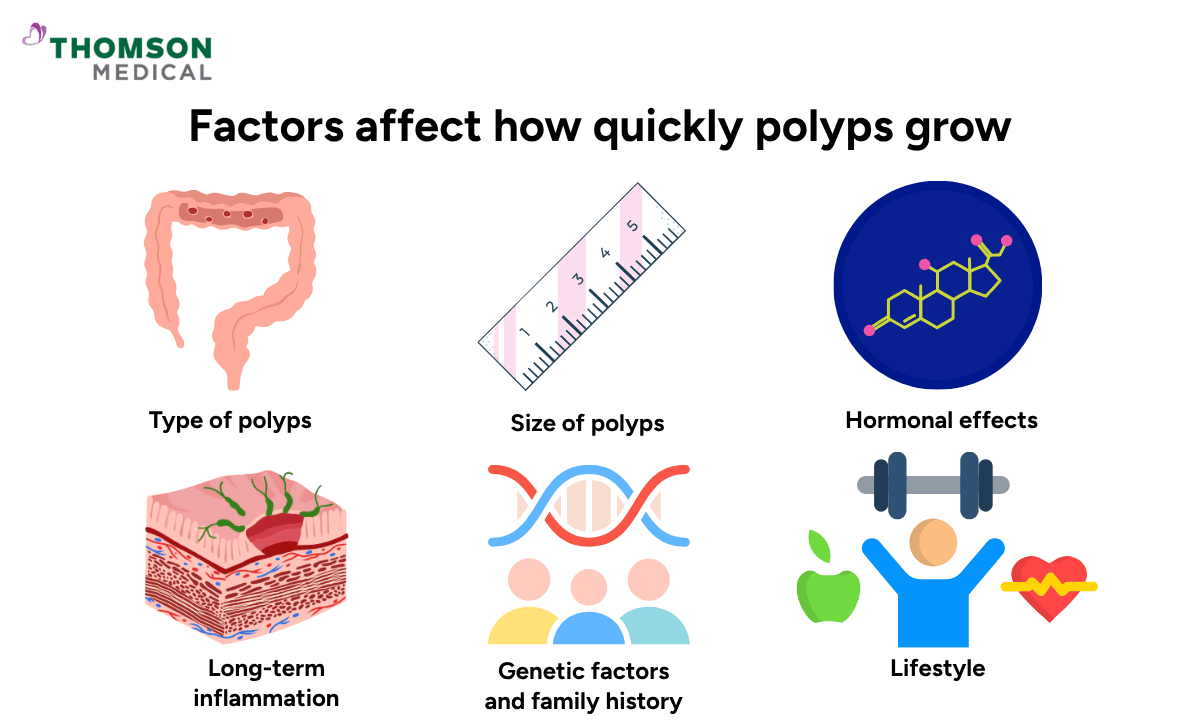
Polyps do not grow at a fixed or predictable rate. Their growth varies from person to person, which is why outcomes can differ even with similar polyps.
This can be influenced by:
Type of polyps:
Some types, like adenomatous colon polyps, are more likely to grow and change than others.
Size of polyps:
Larger polyps are more likely to keep growing and may have a higher risk of abnormal changes.
Hormonal effects:
Oestrogen can make uterine polyps grow.
Long-term inflammation:
Changes can happen over time if the tissue is irritated for a long time.
Genetic factors and family history:
Having a family history of colon polyps or colorectal cancer may increase your likelihood of developing similar conditions.
Lifestyle:
Your diet, smoking, drinking, and general health may also affect the growth rate.
Your doctor will consider all of these factors together when deciding how closely your polyp needs to be reviewed.
If you’ve been told you have a polyp or are unsure what your results mean, request an appointment with Thomson Medical to review your symptoms and help you understand whether it needs monitoring or further evaluation.
Signs that a polyp may be growing
It's important to be aware of any signs that could mean polyp growth. As polyps get bigger, they may start to affect the tissue or function around them.
Here are some common signs to watch for:
Uterine polyps |
|
Colon polyps |
|
Nasal polyps |
|
If you notice any of these symptoms, please check with your doctor. While they don’t always mean polyps are growing or harmful, it is worth having them assessed and seeing if any treatment is needed.
Our specialists
Loading...
Can you slow or prevent polyp growth?

It's not always possible to stop polyps from forming, but there are things you can do to improve your health and lower your risk.
It's helpful to:
Eat a balanced diet with a lot of fibre:
Fruits, vegetables, and whole grains support digestive health and may reduce the risk of certain polyps, especially in the colon.
Stay active:
Regular exercise is good for your metabolism, immune system, and hormone balance.
Manage hormonal health:
If you have uterine polyps, working with your doctor to address oestrogen imbalances may help reduce their growth.
Avoid smoking and drinking alcohol:
Smoking and drinking too much alcohol have been linked to a higher risk of abnormal tissue growth.
Go to regular follow-up and screening appointments:
Regular checkups and screenings can help find polyps early and notice any changes over time.
These steps help you maintain overall health and make it easier to find and manage any changes early on.
When should a polyp be removed?
Finding out you have a polyp can feel unsettling, but not all polyps need to be removed straight away.
Your doctor will usually recommend removal if:
The polyp is becoming bigger
It is causing symptoms
Some features need closer assessment, such as an irregular shape or unusual appearance on imaging
It affects your normal function, such as fertility, breathing, or bowel movement
Your doctor will consider your individual situation and discuss whether removal is appropriate based on your symptoms and overall health.
If you’re concerned about polyp growth or wondering whether removal is necessary, request an appointment with Thomson Medical to assess your individual situation and guide you on appropriate next steps for your care.
FAQ
What causes polyps to grow back?
Polyps can return for several reasons, such as:
Ongoing inflammation (such as in Crohn’s disease or ulcerative colitis)
Incomplete removal during a procedure
Genetic factors like family history
Lifestyle factors, including smoking, alcohol use, a high-fat, low-fibre diet, and obesity
How fast can a cancerous polyp grow?
Most polyps grow slowly. For many people, it may take around 10 to 15 years for certain types of polyps to develop into cancer, which allows time for detection and treatment.
Can polyp growth increase cancer risk?
Some types of polyps can increase the risk of cancer over time. However, not all polyps become cancerous, and regular monitoring helps detect any changes early.
Can polyps stop growing or shrink on their own?
Most polyps do not shrink or disappear on their own. While many remain small and harmless, they may stay the same or grow slowly over time.
Can polyp growth be prevented?
Polyp growth cannot always be prevented. However, regular screening and follow-up can help detect and manage polyps early, reducing the risk of complications.
Can a polyp grow in 5 years?
Yes, it is possible for a polyp to grow over a period of 5 years. Growth is usually gradual, which is why routine monitoring is important.
The information provided is intended for general guidance only and should not be considered medical advice. For personalised recommendations and advice based on your unique situation, please consult a specialist at Thomson Medical. Request an appointment with Thomson Medical today.
For more information, contact us:
Thomson Medical Concierge
- 8.30am - 5.30pm
- WhatsApp: 9147 2051
Need help finding the right specialist or booking for a group?
Our Medical Concierge is here to help you. Simply fill in our form, and we'll check and connect you with the right specialist promptly.
Notice:
The range of services may vary between Thomson clinic locations. Please contact your preferred branch directly to enquire about the current availability.
Get In Touch