
.png%3Fbranch%3Dprod&w=3840&q=75)
While breastfeeding is a natural process, it's also a skill perfected with practice. When feeding hurts more than expected, or your baby fusses at every feed, it's natural to feel overwhelmed. Many new mothers wonder if persistent pain is just part of it.
Some tenderness is common in the first few days, but ongoing pain signals a latch issue. This article guide you how to make your baby latch correctly and how to spot and fix common issues, and when to consult a lactation specialist.
Why a good latch matters for you and your baby
.png?branch=production)
The way your baby latches affects everything from how much milk they receive to how comfortable feeding feels for you. Getting this right early on sets the foundation for a positive breastfeeding experience.
What a proper latch does for your baby
When your baby latches correctly, they can draw milk efficiently and receive the nutrition they need at each feed. A good latch also supports healthy jaw and facial muscle development through natural sucking movements.
You may notice your baby feeds more calmly and settles more easily after feeds, as they swallow less air.
How the right latch protects you
A correct latch helps prevent the nipple soreness that can make feeding painful. When your baby takes in enough breast tissue, the pulling sensation feels firm but manageable, rather than sharp or burning.
Effective milk removal also signals your body to produce the right amount of milk for your baby's needs. When your breasts are emptied regularly and thoroughly, milk flows smoothly through the ducts, reducing the risk of breast engorgement and blockages.
This steady rhythm helps maintain a consistent milk supply without overproduction or underproduction.
When the latch needs adjustment
You might notice your baby seems fussy during feeds, takes longer than usual to finish, or still appears hungry afterward. Persistent nipple pain due to breastfeeding beyond the first few days or a decreasing milk supply often points to latching difficulties.
These challenges are common and usually respond well to simple adjustments. Most latching issues can be resolved with changes to positioning or technique, and you don't need to manage them alone.
If you're experiencing persistent nipple pain, fussiness during feeds, or concerns about your milk supply, schedule an appointment with Thomson ParentCraft Centre. Our lactation consultants can assess your baby's latch in person and create a personalised feeding plan that works for you and your baby.
Signs of a good latch
.png?branch=production)
Knowing what a proper latch looks and feels like helps you confirm that your baby is feeding effectively.
Signs your baby is latched correctly:
Your baby's mouth is wide open with both lips flanged outward
You can see more areola above their top lip than below the bottom lip
Their chin is pressed against your breast, while their nose remains clear or lightly touching
You feel a firm pulling sensation that may be intense but shouldn't be painful (some tenderness in the first few days is normal, but sharp or burning pain means adjustment is needed)
You can hear rhythmic sucking and swallowing sounds as your baby feeds
Your baby's cheeks look full and rounder, not dimpled or sucked in
When you notice these signs during feeding, your baby is likely latched well and getting the milk they need. If something doesn't look or feel right, gently break the latch and try again. There's no need to push through discomfort – adjusting mid-feed is completely normal as you both learn together.
How to make baby latch
If you're feeling uncertain about where to start, having a clear process can help you feel more in control. These steps give you a practical framework, though you'll likely adapt them to what works best for you and your baby:
Get comfortable first:
Settle yourself in a supported position with pillows behind your back and under your arms if needed.
Your shoulders should be relaxed, not hunched forward.
Position your baby tummy-to-tummy:
Hold your baby close with their entire body facing yours.
Their nose should be level with your nipple, not their mouth – this encourages them to tilt their head back slightly and open wide.
Wait for a wide open mouth:
Gently brush your nipple against your baby's top lip or nose to encourage a wider gape, like a yawn, before bringing them onto the breast.
Bring baby to breast quickly:
Once their mouth is wide open, bring your baby swiftly onto the breast – not the other way around.
Aim your nipple towards the roof of their mouth so they take in a good mouthful of breast tissue, not just the nipple.
Check the latch:
Once your baby is latched, look for the signs mentioned earlier.
If it feels painful or looks shallow, gently break the suction by sliding a clean finger into the corner of their mouth and try again.
Don't worry if it takes several tries to get it right. With each feed, you'll become more familiar with what works, and the process will start to feel more natural.
Recommended breastfeeding positions for newborns
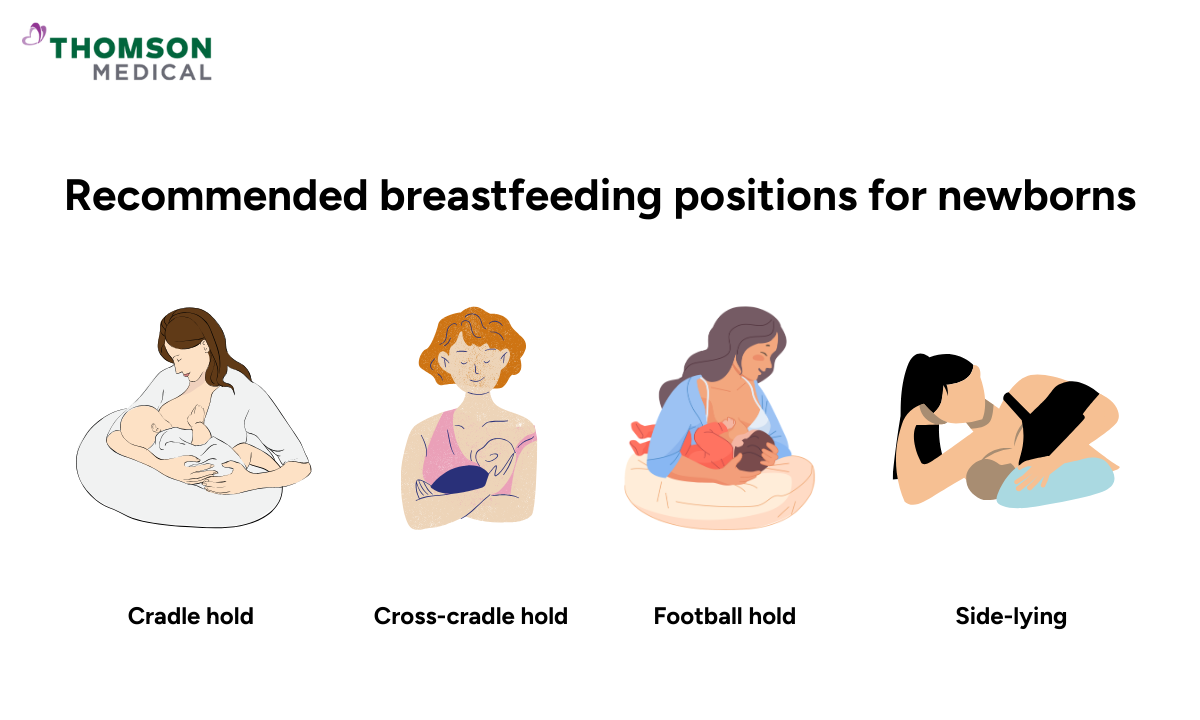
Finding a comfortable position can make latching feel easier and less stressful. If you're struggling with the latch, sometimes a simple change in how you're holding your baby can often make a big difference.
Try these approaches:
Cradle hold:
Your baby lies across your body with their head resting in the crook of your arm.
This classic position works well once you've both found your rhythm with latching.
Cross-cradle hold:
Similar to the cradle hold, but you support your baby's head with the opposite hand.
This gives you more control over guiding your baby to the breast, which can be helpful in the early weeks.
Football hold:
Tuck your baby under your arm with their legs pointing behind you.
This position keeps pressure off your abdomen after a caesarean section and gives you a clear view of the latch, making it easier to guide your baby onto the breast.
Side-lying position:
You and your baby lie on your sides facing each other.
This works well for night feeds or when you need to rest, though it may take a few attempts to get the latch right in this position.
What feels comfortable during one feed might not work for the next, and that's perfectly normal. Don't hesitate to switch positions throughout the day based on how you're feeling. Your comfort matters as much as your baby's during feeds.
If you're still uncomfortable after trying different holds, or if your baby seems frustrated, schedule an appointment at Thomson ParentCraft Centre. Our lactation consultants can assess your unique situation and find what works for you and your baby's needs.
Our ParentCraft trainers
Loading...
Common latching problems and solutions
Even with careful preparation, you'll likely encounter a few challenges along the way as you learn to breastfeed. When they come up, it doesn't mean you're doing something wrong – it usually just means you need to adjust your technique slightly.
Shallow latch or nipple feeding
A shallow latch happens when your baby only takes the nipple into their mouth instead of a good mouthful of breast tissue. This often causes sharp pain and can leave your nipples sore.
Gently break the latch and try again, waiting for a wide-open mouth. Aim your nipple towards the roof of your baby's mouth, and consider supporting your breast with your hand in a C-hold (thumb on top, fingers underneath) to guide more breast tissue into your baby's mouth.
If your baby seems sleepy or uninterested, try unwrapping them slightly or gently rubbing their back to help them become more alert.
Baby keeps sliding off the breast
If your baby repeatedly loses their latch, it's usually a positioning issue. Check that your baby's whole body is facing you, not just their head, and that they are well-supported at breast height.
Using a nursing pillow to bring your baby up to the breast can help you avoid hunching forward. Make sure you're bringing your baby to your breast firmly and quickly once their mouth is open wide.
Tongue-tie or lip-tie affecting latch
Tongue-tie (when the tissue under the tongue is too tight) or lip tie (when the tissue connecting the upper lip to the gum is restrictive) can sometimes make it difficult for your baby to latch deeply.
Signs include clicking sounds during feeds, your baby frequently losing the latch, or persistent nipple pain despite trying different positions. If you suspect a tongue or lip tie, consult your paediatrician, who can assess whether your baby would benefit from a simple procedure to release the tie.
While these solutions work for many mothers, persistent pain or concerns about your baby's weight gain deserve professional attention. A lactation consultant can observe a full feed and provide personalised guidance for your specific situation.
FAQ
How long does it take for a baby to learn to latch properly?
Most babies learn to latch within the first few days to two weeks. Some get it right away, while others need more practice. By around 4-6 weeks, most mothers and babies have established a comfortable feeding routine.
Is breastfeeding supposed to hurt at first?
Some tenderness in the first few days is normal as your nipples adjust, but breastfeeding shouldn't be painful. Sharp, burning, or persistent pain indicates the latch needs adjustment. If pain continues beyond the first week, seek help from a lactation consultant.
What should I do if my baby falls asleep before latching?
Try gently unwrapping your baby, stroking their feet, or changing their nappy to wake them slightly. You can also express a few drops of milk onto their lips to encourage interest. Skin-to-skin contact often helps sleepy babies become more alert and ready to feed.
How do I know if my baby is getting enough milk with each feed?
Signs include hearing swallowing sounds, at least 6-8 wet nappies per day after the first week, steady weight gain, and your baby seeming satisfied after feeds. Your baby should also have regular bowel movements in the early weeks.
Can using a pacifier or bottle affect my baby's ability to latch?
Introducing pacifiers or bottles too early (before 4-6 weeks) can sometimes cause nipple confusion, as the sucking technique is different. If you need to supplement, a lactation consultant can guide you on paced bottle feeding to minimise latch issues.
How can I help my baby latch if I have flat or inverted nipples?
Try using breast shells between feeds to help draw out your nipple, or use a nipple shield temporarily during feeding. The cross-cradle or football hold often works better, as they give you more control.
A lactation consultant can show you techniques specific to your situation – flat or inverted nipples don't mean you can't breastfeed successfully.
The information is intended for general guidance only and should not be considered medical advice. For personalised recommendations and advice based on your unique situation, please consult a specialist at Thomson Medical. Request an appointment with Thomson Medical today.
For more information, contact us:
Thomson ParentCraft Centre
Thomson Breast Centre
Request an Appointment