

A hysterectomy is one of the most common gynaecological surgeries, yet knowing what to expect during recovery is not always clear. How long will it take? What can you do, and what should you avoid? When will you start feeling like yourself again? These are all completely reasonable things to wonder about.
Recovery looks different for everyone. It depends on the type of surgery you had, your overall health, and the support you have around you. What stays the same, regardless of your situation, is that your body needs time, rest, and proper care to heal well.
Why might you need a hysterectomy?
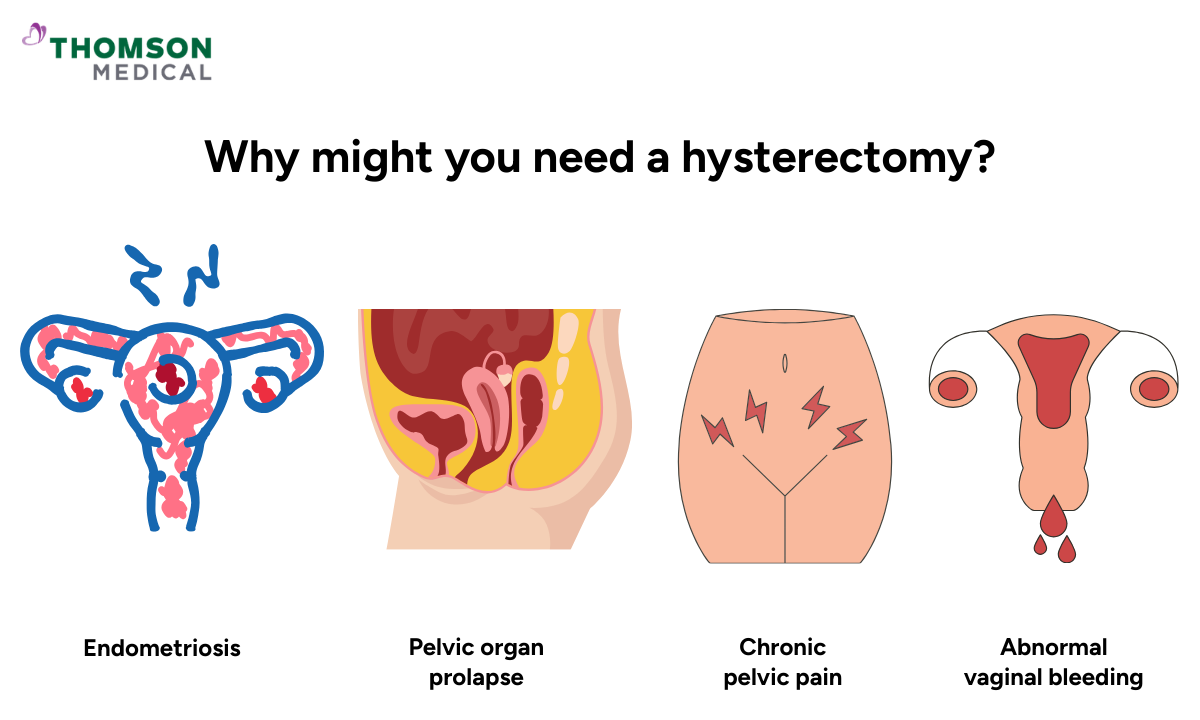
A hysterectomy is the surgical removal of the uterus, meaning you will no longer have periods and cannot become pregnant. Your doctor will usually recommend it when other treatments haven't worked or your condition poses a serious health risk.
Some of the most common reasons include:
Adenomyosis (where the womb lining grows into the womb muscle)
Chronic pelvic pain
Abnormal vaginal bleeding
Early gynaecological cancers, such as endometrial or cervical cancer
Your doctor will usually consider a hysterectomy when other treatments haven't worked for you or when your condition poses a serious risk to your health.
Gynaecologists at Thomson Medical
Loading...
How to prepare for a smoother recovery post-surgery
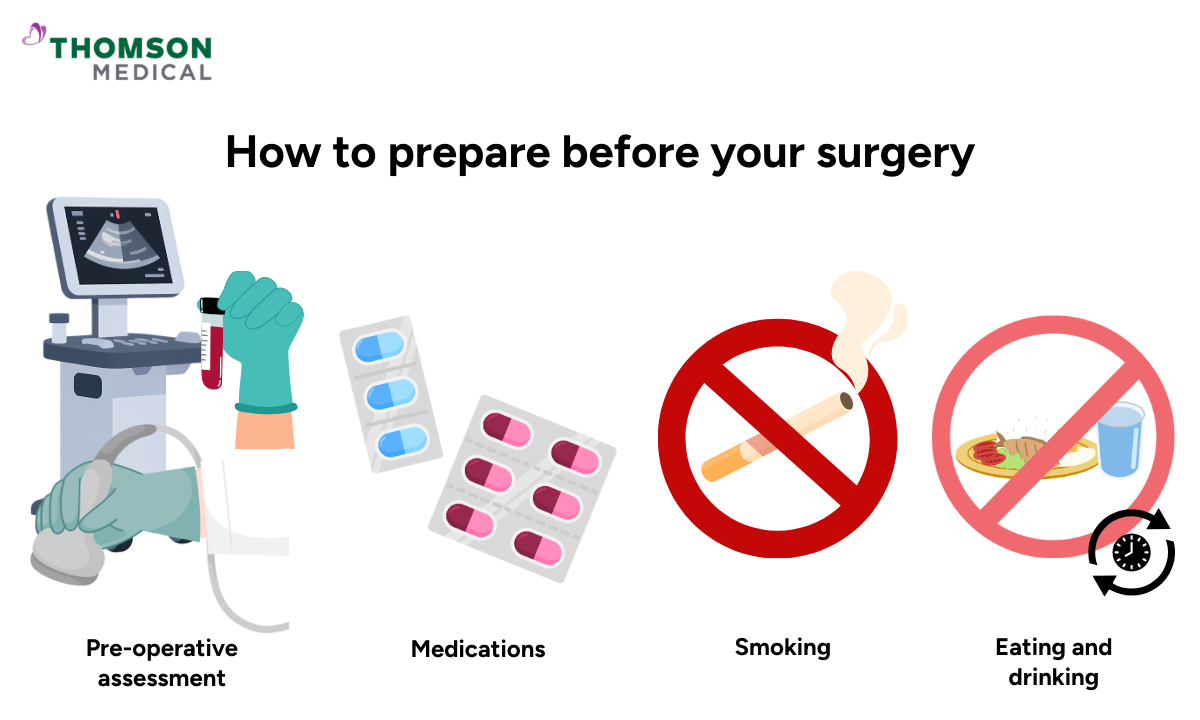
Preparing well before your surgery can help reduce complications and support a smoother recovery.
Your pre-operative assessment
Before your surgical procedure, your medical team will carry out a thorough assessment to make sure you are ready.
This may include:
A review of your medical history
A physical and pelvic examination
Imaging tests
This assessment helps your team plan your care and identify any issues that need addressing beforehand, such as anaemia from heavy bleeding, high blood pressure, or infections that should be treated before you have surgery.
Your medications
Your doctor will review all the medicines and supplements you take, including over-the-counter products.
Some may need to be paused before surgery, especially:
Aspirin
Warfarin
Anti-inflammatory painkillers such as ibuprofen
Herbal supplements
These medications can affect how your blood clots. Some thin the blood, while others interfere with platelet function (the cells that help stop bleeding). This can make it harder for your body to control bleeding during and after surgery.
Smoking
If you smoke, stopping at least four weeks before your surgery can significantly improve your wound healing and reduce your risk of chest infections and blood clots after surgery.
Eating and drinking
Your doctor may ask you to adjust when you eat and drink before surgery so that anaesthesia can be given safely.
To help your body prepare:
Eat light meals the day before and steer clear of heavy, greasy, or spicy foods
Do not eat any solid food for at least eight hours before your surgery
Avoid clear liquids and plain water for at least two hours before your surgery
These steps help ensure your stomach is empty during anaesthesia, reducing the risk of vomiting and preventing stomach contents from entering your lungs (aspiration).
What to wear
On the day of your surgery, keep it simple and comfortable. Wear loose, easy clothing and remove all jewellery before you arrive at the hospital.
These small preparations can make a meaningful difference to your safety during surgery and your recovery afterwards. Your medical team will guide you through each step and let you know exactly what to expect.
Proper preparation can make a big difference to your safety and recovery after surgery. Request an appointment with Thomson Medical to review your pre-operative plan, discuss medication adjustments, and get personalised guidance on how to prepare for your procedure.
What should I do in the first 24 hours after surgery?
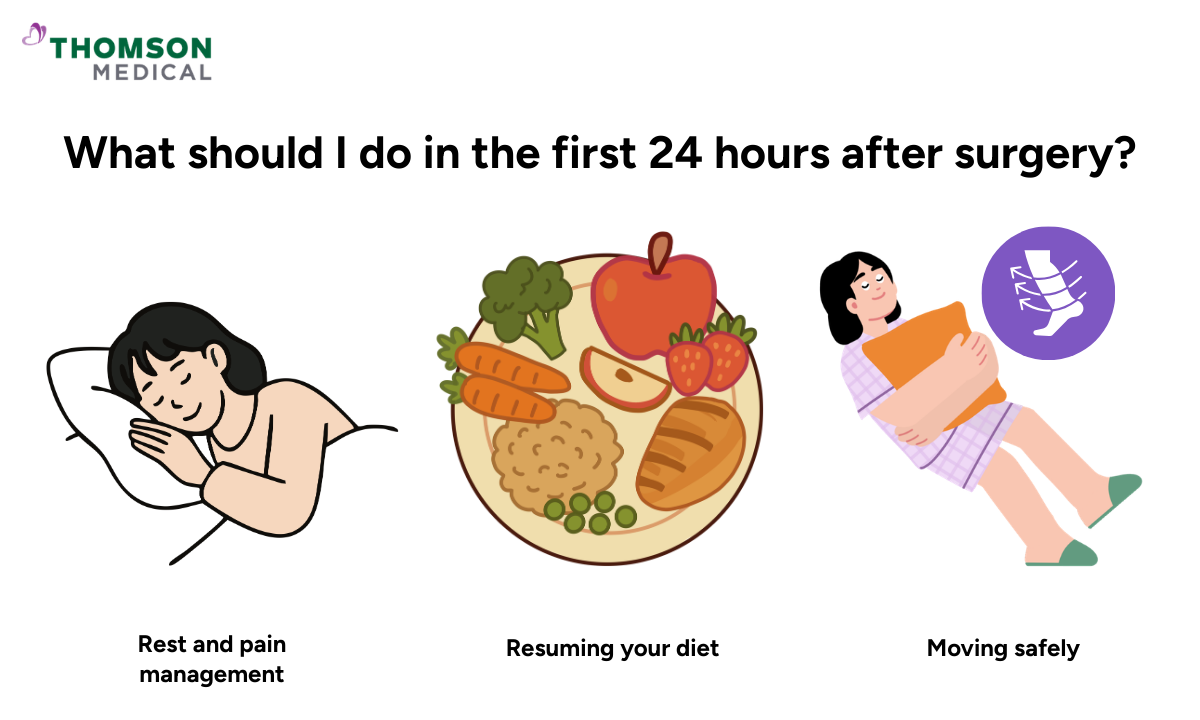
The first day after your hysterectomy is about rest and close monitoring while your body begins to recover from anaesthesia and surgery.
Rest and pain management
Good pain management in the early hours makes your recovery more comfortable and helps you move around sooner, which reduces your risk of complications.
A few things to keep in mind:
You will need to stay in bed until you are fully alert. The anaesthetic can leave you drowsy and unsteady for several hours.
Take your pain relief regularly as prescribed rather than waiting until your pain becomes severe. The pain may become easier to manage when you control it early.
You may wake up with a drainage tube near your wound site. This collects fluid and is usually removed within a day or two.
Your nurses will check on you regularly and adjust your pain medication to keep you comfortable. If your pain feels unmanageable despite medication, let your nurse know so they can review additional options available to help.
Resuming your diet
When you feel ready, start with small sips of water and then move on to light food. Fibre-rich foods such as fruits, vegetables, and wholegrains can help prevent constipation, which is common after surgery. This happens because anaesthesia and pain medication slow your bowels. If needed, your medical team may recommend stool softeners to help.
Moving safely
Getting moving early is one of the most important things you can do to reduce your risk of blood clots in your legs (deep vein thrombosis or DVT).
When you do begin to move around:
Wear compression socks to support circulation in your legs
Move your feet up and down while resting in bed to keep the blood flowing
Avoid sudden or forceful movements when you are getting in and out of bed
Hold a pillow firmly against your tummy when you cough or sneeze to ease any discomfort
The idea of going home while you are still recovering can feel worrying, especially if you are worried about managing on your own. Most people are discharged home within one to three days after surgery, depending on the type of hysterectomy you had and how your recovery is progressing.
How can I care for myself at home?
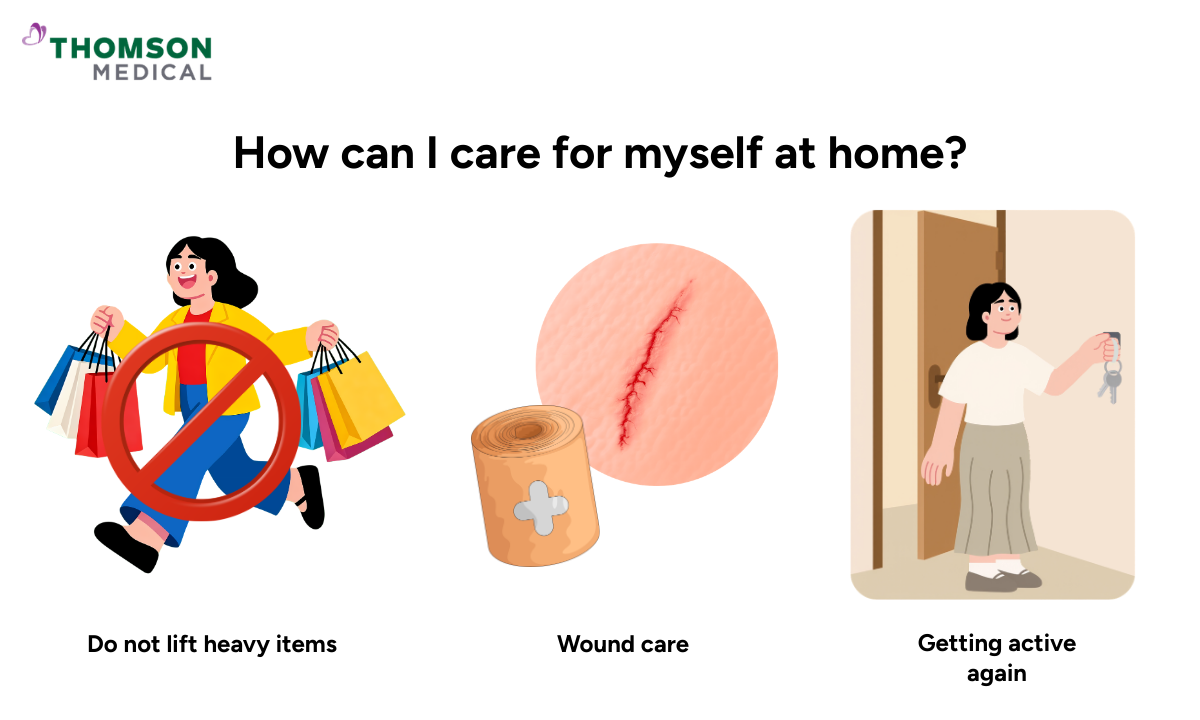
Once you are back home, your focus shifts to allowing your body to heal while gradually increasing your activity level over the following weeks.
Rest and daily life
Giving your body enough time to rest is an important part of recovery.
During the first two to six weeks at home:
Rest as much as possible during the first two weeks
Ask help with household tasks for at least four to six weeks
Do not lift heavy items such as shopping bags, children, laundry, or pets for at least six weeks after your surgery
These precautions help protect your internal stitches while your body heals and reduce the risk of bleeding or other complications.
Wound care
Taking care of your wound helps prevent infection and supports proper healing. Keep your incision site clean and dry as it heals.
As your wound heals, be aware of possible signs of infection, such as increased redness, warmth, swelling, or unusual discharge.
Getting active again
Physical activity after a hysterectomy needs to be built up gradually. Your pelvic tissues and internal stitches need six weeks to heal sufficiently, while full internal healing can take three months.
Tips as you recover:
Walking around your house in the first few days is encouraged, as it helps improve circulation
Low-impact exercise, such as swimming or light jogging, can be considered after six weeks, provided your surgeon confirms your healing is on track
High-impact exercise, like running or heavy lifting, should wait until at least three months, after your internal tissues have fully healed
Always listen to your body. If something feels uncomfortable or painful, it's a sign to slow down.
Pelvic rest and sexual activity
Pelvic rest means avoiding anything that puts pressure on your healing pelvic area, including sexual activity, tampons, and douching, for at least six weeks after your surgery.
This six-week guideline is based on how long your internal stitches and vaginal cuff (the closed top of your vagina where your cervix was) need to heal. Resuming sexual activity too soon can cause your stitches to separate, leading to bleeding or infection.
How can I support my emotional recovery?
Your emotional recovery is just as important as your physical healing. Some women feel relief after a hysterectomy, while others may experience a sense of loss, especially around fertility or changes to their body. Both reactions are completely understandable.
Emotional support during this time can come in:
Relaxation techniques such as deep breathing exercises or meditation
Activities and hobbies that bring you joy
Talking to someone you trust, whether a family member or a close friend
Connecting with others who have been through a similar experience
Ask your doctor about hormone replacement therapy (HRT) if you experience menopausal symptoms
If your mood doesn't improve after a few weeks, or if your feelings of sadness or anxiety interfere with your daily life, contact a counsellor. This can be a sign of depression, which is treatable and common after major surgery.
When to seek medical help
Most recoveries progress steadily, but some symptoms need prompt attention.
Contact your doctor if you notice:
Heavy vaginal bleeding soaking through a pad in an hour or less
Vaginal discharge that smells unpleasant or looks unusual
Fever of 37.8°C or above
Increasing pain, redness, swelling, or discharge from your incision site
Difficulty breathing or chest pain
Swelling or pain in one or both legs
These symptoms can sometimes point to an infection, a blood clot, or another complication that needs to be assessed quickly.
Recovering from a hysterectomy takes time, patience, and a good deal of kindness towards yourself. You deserve the right post-surgical care and support to heal well, and asking for help when you need it is always the right thing to do.
Request an appointment with Thomson Medical if you notice any of these warning signs or have concerns during your recovery. Our specialists can assess your symptoms promptly, guide you on next steps, and ensure you receive the appropriate post-surgical care to support safe and effective healing.
FAQ
How long does it take to fully recover from a hysterectomy?
Full recovery from a hysterectomy takes 6 to 8 weeks. You may return to work and resume normal daily activities after at least 6 weeks.
Can I take a shower or bath immediately after surgery?
You may shower 24 to 48 hours after surgery. Avoid swimming and soaking in a bathtub or hot tub for at least 6 weeks after surgery.
When is it safe to resume sexual activity after a hysterectomy?
You may resume vaginal sexual activity 6 weeks after surgery.
Will my scar fade over time, and how can I care for it?
Yes, your scar will fade over time. Keep your wound dry and clean, and avoid rubbing it or soaking it in water.
Can I continue taking my usual medications during recovery?
Yes, you may continue your usual medications during recovery. However, if you are taking herbal supplements or blood-thinning medications, please confirm with your doctor first.
Is it normal to feel emotional or anxious after a hysterectomy?
Yes, it is normal to feel emotional or anxious after a hysterectomy. Talk to your partner, family, or friends if you need support. Seek help from your doctor or a counsellor if you experience depression, anxiety, irritability, or prolonged stress.
The information provided is intended for general guidance only and should not be considered medical advice. For personalised recommendations and advice based on your unique situation, please consult a specialist at Thomson Medical. Request an appointment with Thomson Medical today.
For more information, contact us:
Thomson Specialists (Women's Health)
Thomson Women's Clinic (TWC)
- Novena:
6592 6686 (Call), 8611 8986 (WA) - Bukit Batok:
6569 0668 (Call), 8686 3525 (WA) - Choa Chu Kang:
6893 1227 (Call), 8282 1796 (WA) - Jurong:
6262 8588 (Call), 6262 8588 (WA) - Katong (female doctor):
6970 2272 (Call), 8611 9020 (WA) - Punggol:
6243 6843 (Call), 8811 0328 (WA) - Sembawang: 6753 5228
- Sengkang: 6388 8125
- Serangoon (female doctor): 6382 3313
- Tampines: 6857 6266
- Tiong Bahru: 6276 1525
Notice
The range of services may vary between TWC/TS locations. Please contact your preferred branch directly to enquire about the current availability.
Request an Appointment