

Pain or discomfort in your lower abdomen can be unsettling, especially when you are unsure what is causing it. The discomfort may come and go, or it may linger and start to affect your day, leaving you uncertain about what to do next.
There are many possible reasons for lower abdominal pain. Most are minor and temporary, but some situations do need medical attention. Understanding the difference can help you respond calmly and confidently, rather than feeling anxious or unsure.
This guide takes a closer look at common causes, warning signs to watch for, and when to seek care, so you can get the right help at the right time.
What is lower abdominal pain?
Lower abdominal pain refers to any discomfort you feel below your belly button, in the area between your hips.
Many important organs and systems, including your digestive tract, urinary system, and reproductive organs, are located in this area. This means there are many possible causes for your lower abdominal pain.
The pain can vary from:
Sharp and sudden:
This can be a sign that you need immediate attention.
Dull and cramping:
It is commonly linked to digestive or menstrual issues.
Constant:
This pain usually relates to ongoing inflammation or infection.
It’s normal to experience mild discomfort from time to time. However, if the pain persists or becomes severe, you may need medical evaluation. Knowing what’s normal for your body can help you recognise when something feels off so you can seek medical care promptly.
Common causes of lower abdominal pain
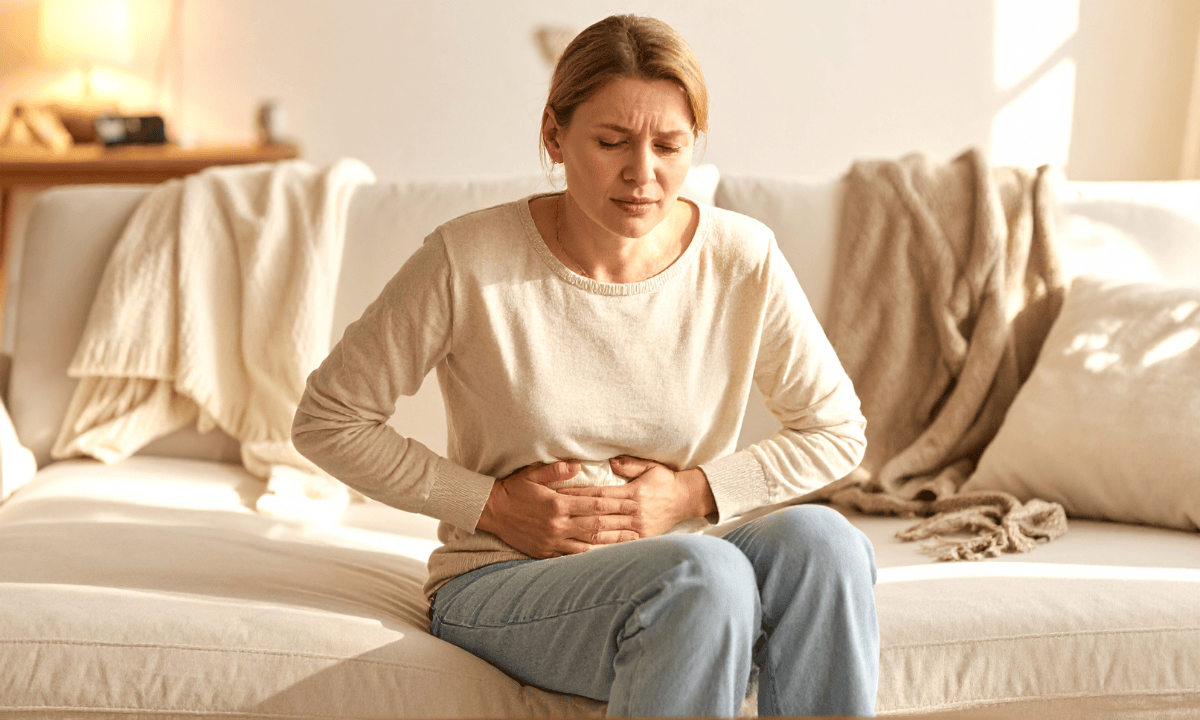
Lower abdominal pain has many possible causes. Some are specific to your gender, and others can affect everyone.
In women
If you’re a woman, you may experience some unique causes of lower abdominal pain related to your reproductive system. Some of these are part of a normal monthly cycle. Others signal something that may need more attention.
Common causes in women include:
Menstrual cramps:
Cramping before or during your period is common. You can manage it with over-the-counter medication. However, if you experience severe cramps that affect your daily life, it may be a sign of endometriosis or fibroids.
Ovarian cysts:
Ovarian cysts are fluid-filled sacs that develop on or in your ovaries. They usually cause no symptoms, but larger cysts can cause sharp pain, especially if they rupture or twist.
Endometriosis:
It happens when tissue similar to your uterine lining grows outside of your uterus. It usually causes chronic pelvic pain and can get worse during your periods. Without treatment, it can affect your fertility.
Pelvic inflammatory disease (PID):
PID is an infection of your reproductive organs that can cause lower abdominal pain. It often goes with other symptoms like abnormal discharge, fever, and pain during intercourse.
Ectopic pregnancy:
Ectopic pregnancy happens when a pregnancy develops outside your uterus, usually in a fallopian tube. It causes severe pain, often on one side of your lower abdomen.
If you’re experiencing lower abdominal pain with other symptoms and you’re unsure what’s causing it, don’t hesitate to seek medical care. Getting checked early can make all the difference in your treatment and recovery.
Our O&G specialist
Loading...
In men
For men, lower abdominal pain commonly stems from issues in the reproductive system or groin area. Knowing the cause behind it is key to getting the right treatment.
Common causes in men include:
Inguinal hernia:
This happens when tissue pushes through a weak spot in your abdominal muscles. This creates a visible bulge in your groin area. You may notice the pain gets worse when you cough, bend over, or lift something heavy.
Prostatitis:
This is inflammation or infection of your prostate gland that causes pain not only in your lower abdomen but also in your groin or lower back.
Testicular torsion:
This is when your testicle twists and cuts off its blood supply. It causes sudden, severe pain in the testicle that may radiate to your lower abdomen. This condition needs surgery within hours.
Epididymitis:
This is an inflammation of the tube at the back of your testicle, usually caused by infection. You may experience pain and swelling in your scrotum, along with a fever.
Lower abdominal pain shouldn’t be ignored, especially when it becomes severe or involves your testicles. Sudden testicular pain is a medical emergency that needs care within hours. For other persistent pain, schedule an appointment with your doctor soon.
In both men and women
Many conditions can cause lower abdominal pain in both men and women, including
Appendicitis:
The pain will start around your belly button and then move to your lower right abdomen. It usually gets worse over 12-24 hours and goes alongside fever, nausea, and loss of appetite.
Urinary tract infection (UTI):
This is an infection in any part of your urinary system. It causes lower abdominal pain, a burning sensation when you urinate, and a frequent urge to go to the bathroom. UTIs are more common in women.
Kidney stones:
These are hard deposits that form in your kidneys and can move into your urinary tract. They can cause severe, cramping pain that comes in waves. The pain then often radiates from your back or side down to your lower abdomen and groin.
Irritable bowel syndrome (IBS):
This is a chronic digestive condition affecting your large intestine. It causes cramping, bloating, gas, and changes in bowel habits.
Diverticulitis:
This is an inflammation of small pouches in the colon wall. It causes pain (usually on the lower left side) along with fever and changes in bowel habits.
Lower abdominal pain can happen for many reasons. Some can be treated at home with over-the-counter medication, while others may need immediate medical care. The only way to know for certain what’s behind your symptoms is to see your doctor for evaluation.
Our gastroenterology specialist in Singapore
Loading...

How is lower abdominal pain diagnosed?
When you visit your doctor with lower abdominal pain, they’ll first help you identify the cause. Here is what you can expect during the process:
Medical history and physical examination
Your doctor will start by asking questions about your pain, such as:
Where exactly does it hurt?
When did it start?
What does the pain feel like?
Does anything make it worse?
Are you experiencing any other symptoms?
They’ll also examine your abdomen, gently pressing different areas to check for tenderness, swelling, or anything unusual. This assessment will give your doctor important clues about what might be going on.
Diagnostic tests
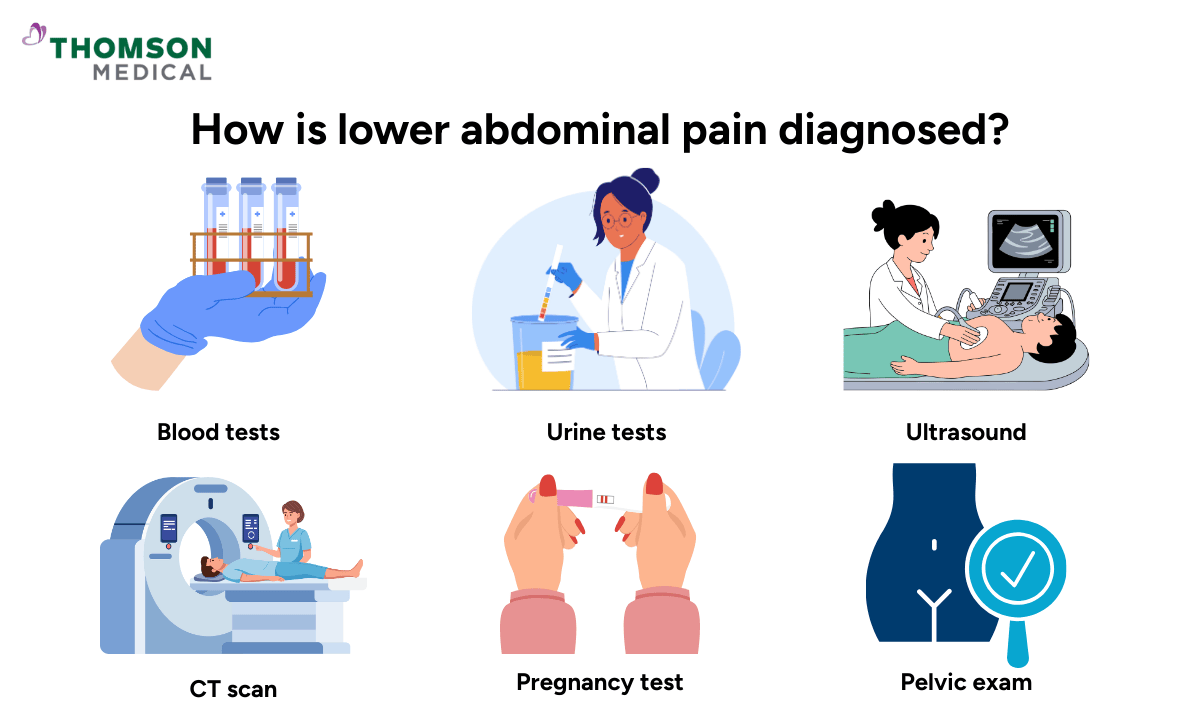
Based on your symptoms and what they find out from the physical examination, your doctor may suggest these tests:
Blood tests:
to check for signs of infection, inflammation, or pregnancy.
Urine tests:
to detect UTIs, kidney problems, or pregnancy.
Ultrasound:
to visualise organs like your appendix, ovaries, kidneys, or gallbladder.
CT scan:
to have detailed images that can identify issues like appendicitis, kidney stones, or diverticulitis.
Pelvic exam:
to check for gynaecological issues in women.
Pregnancy test:
to confirm or rule out pregnancy in women of childbearing age.
You won’t need to go through all of these tests. Your doctor will only choose the ones that are suitable for you based on your specific condition. The goal here is to get you answers and the right treatment.
When to seek emergency care
Some symptoms alongside lower abdominal pain can indicate a medical emergency.
You should seek immediate care if you experience:
Severe, sudden pain:
If you experience sharp pain that comes on quickly, don’t wait for it to go away on its own. Your body is telling you something needs urgent attention.
Pain with fever:
If your temperature is over 38°C, it may be because of an infection.
Persistent vomiting:
It can be a sign of a serious digestive issue, especially if you can’t keep down fluids.
Abdominal rigidity or severe tenderness:
When you touch your abdomen, if it feels hard or board-like, it could signal internal bleeding. It may sound frightening, but this condition is treatable if you receive appropriate medical care.
Vaginal bleeding during pregnancy:
If you notice any bleeding with abdominal pain while pregnant, seek medical care right away. Your doctor will check on you and your baby quickly and provide appropriate care.
Blood in urine or stool:
Blood in stool may indicate kidney stones, a UTI, or a digestive tract problem.
Unable to pass stool or gas:
If you experience this with severe bloating, it could signal bowel obstruction.
Severe pain in the testicles:
This is especially concerning if the pain starts suddenly. It’s usually a surgical emergency but is treatable with prompt care.
Dizziness, fainting, or rapid heartbeat:
If your pain goes along with these signs, it could be internal bleeding or severe infection. Both conditions are treatable, especially when they’re addressed quickly.
If you have any of these warning signs, don’t hesitate to seek help. It’s always better to have concerning symptoms checked out. Early treatment not only prevents complications later on but also brings peace of mind and helps you feel better sooner.
Our urgent care centre specialist
Loading...

FAQ
How to relieve lower abdominal pain?
If you have a mild pain, you can try these things at home:
Get some rest
Apply a heating pad to your abdomen
Drink plenty of water
Take over-the-counter pain relievers like paracetamol
Avoid heavy meals and opt for bland, easy-to-digest foods
However, if your pain doesn’t improve after a day or two or worsens, it’s best to see your doctor rather than continuing to self-treat.
What organs are in your lower abdomen?
Your lower abdomen contains parts of your large and small intestine, your bladder, and your appendix.
If you're a woman, your uterus, ovaries, and fallopian tubes are also located here.
For men, the prostate sits just below the bladder. The ureters, the tubes that carry urine from your kidneys to your bladder, run through this area too.
What's the difference between lower abdominal pain and pelvic pain?
These terms overlap a bit. Pelvic pain usually refers to pain in the very lowest part of your abdomen and the area around your reproductive organs and bladder.
Lower abdominal pain, on the other hand, is a broader term that covers everything below your belly button.
Can stress cause lower abdominal pain?
Yes. Stress and anxiety can lead to digestive problems, including abdominal cramping, bloating, and changes in bowel habits. This is especially common if you have IBS.
Is lower abdominal pain a sign of pregnancy?
Yes, it can be. Some mild cramping in early pregnancy is normal. It’s your uterus expanding. However, if you’re experiencing severe lower abdominal pain in pregnancy, especially if accompanied by bleeding, you should see your doctor right away.
How long should I wait before seeing a doctor about abdominal pain?
If your pain is severe, came on suddenly, or you're experiencing any red flag symptoms like fever, vomiting, or bleeding, seek care immediately.
For milder pain, you can try home remedies for a day or two and see if things improve. But if the pain persists beyond 48 hours, gets worse, or you develop new symptoms, it’s best to make an appointment with your doctor.
The information provided is intended for general guidance only and should not be considered medical advice. For personalised recommendations based on your medical conditions, request an appointment with Thomson Medical.
For more information, contact us:
Thomson Medical 24-Hour Urgent Care Centre (Novena)
- Call: 6350 8812
Notice:
The range of services, vaccinations, and tests may vary. Please contact us directly to enquire about the current availability.
Request an Appointment